
Buying a duplex, triplex, or fourplex with an FHA loan can be one of the smartest moves a homebuyer makes. You get a place to live and rental income that may help cover your mortgage payment. But before you dive in, it's important to understand the rules around understanding FHA loan limits for multi-family property with owner occupant requirements. These limits vary by location, property size, and current federal guidelines — and knowing them upfront could save you time, money, and frustration. This article breaks it all down in plain language so you can move forward with confidence.
What Makes FHA Loans Unique for Multi-Family Buyers
FHA loans are backed by the Federal Housing Administration and are known for their flexible qualification requirements. They typically allow lower down payments and more lenient credit score standards compared to conventional mortgages. What many people don't realize, though, is that FHA loans can be used to purchase properties with up to four units — not just single-family homes.
The key condition is simple but important: the borrower must intend to live in one of the units as their primary residence. This is what's known as the owner-occupant requirement. Without it, an FHA loan generally cannot be used for the purchase. This rule exists because the FHA program is designed to help individuals and families achieve homeownership, not to fund purely investment-driven purchases.
For buyers who are open to living in one unit while renting out the others, this arrangement can be a powerful wealth-building strategy. The rental income from the additional units may help offset the monthly mortgage payment, making homeownership more affordable over time. Many first-time homebuyers and real estate investors alike have used this approach to get started in the housing market with a relatively modest down payment.
How FHA Loan Limits Are Structured by Property Type
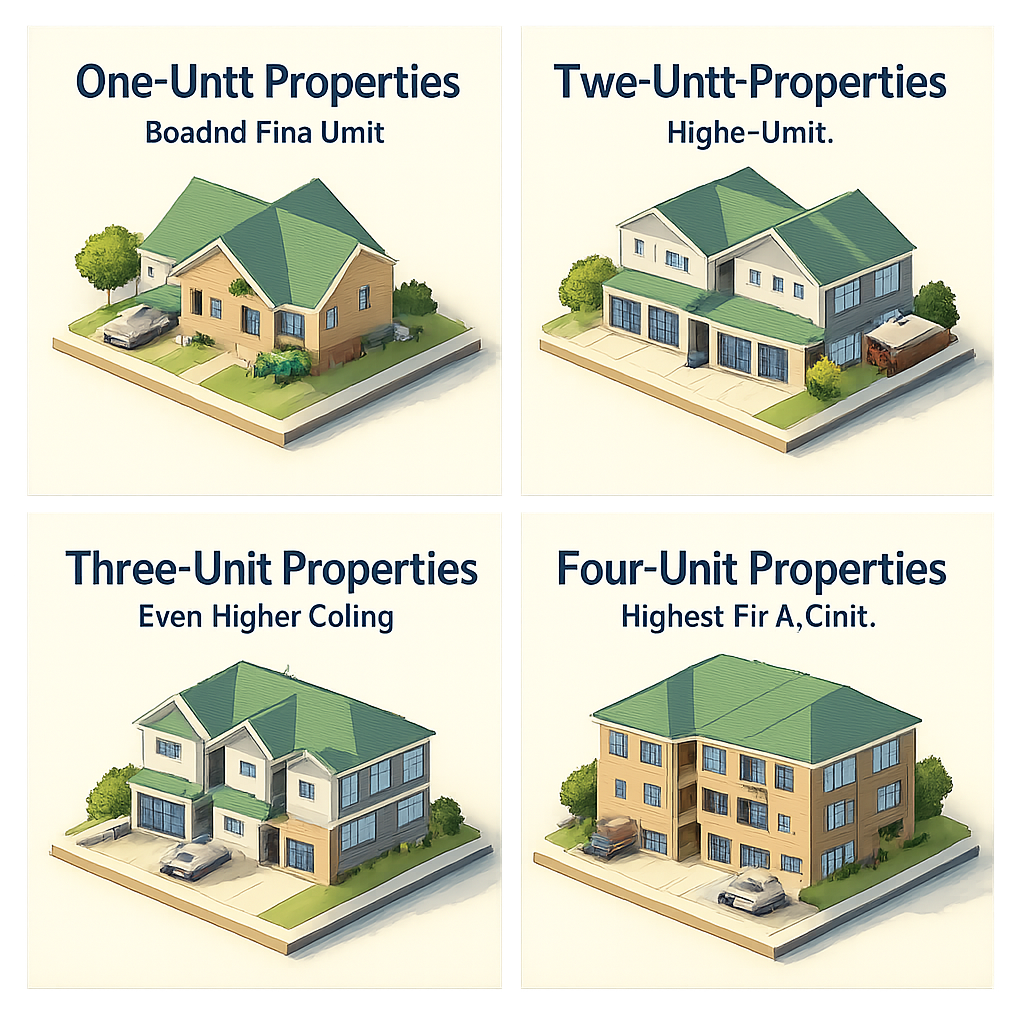
One of the most important things to understand is that FHA loan limits are not one-size-fits-all. The Federal Housing Administration sets limits that vary based on two key factors: the geographic location of the property and the number of units in the building. This tiered structure means that a fourplex in a high-cost metropolitan area will have a significantly higher loan limit than a duplex in a rural county.
Each year, the FHA updates its loan limits in response to changes in home prices across the country. These adjustments are tied to the conforming loan limits set by the Federal Housing Finance Agency (FHFA). Generally speaking, FHA limits fall into two broad categories: standard limits for lower-cost areas and high-cost limits for more expensive housing markets. A smaller number of areas may also qualify for special exception limits that can be even higher.
Here's how the unit-count structure typically works:
- One-unit properties: Carry the baseline FHA loan limit for a given area.
- Two-unit (duplex) properties: Have a higher limit, often significantly above the one-unit cap.
- Three-unit (triplex) properties: Carry an even higher ceiling than duplexes.
- Four-unit (fourplex) properties: Receive the highest FHA limit tier available in any given county.
Because limits change annually and vary by county, it's always wise to check the most current figures through the HUD website or by speaking with an FHA-approved lender before making purchasing decisions.
Understanding FHA Loan Limits for Multi-Family Property with Owner Occupant Rules
When it comes to understanding FHA loan limits for multi-family property with owner occupant requirements, the occupancy rule is non-negotiable. FHA guidelines require that the borrower move into one of the units within 60 days of closing and maintain it as their primary residence for at least one year. This is a firm requirement, not a suggestion. Lenders and the FHA take this seriously, and misrepresenting your intent to occupy can have serious legal consequences.
Beyond occupancy, there are additional property standards the home must meet. The FHA requires that multi-family properties pass an appraisal conducted by an FHA-approved appraiser. The appraiser evaluates both the market value of the property and its condition, ensuring it meets minimum health and safety standards. Common issues that could create problems include outdated electrical systems, roofing concerns, or structural deficiencies.
Borrowers should also be aware that the FHA may allow a portion of the anticipated rental income from the non-owner-occupied units to be counted toward qualifying income. This can make it easier to meet debt-to-income ratio requirements, which is particularly helpful for buyers who might not qualify based on their personal income alone. The specific rules for how rental income is calculated and verified can vary by lender, so it's important to ask upfront.
Down Payment and Credit Requirements Worth Knowing
One of the biggest appeals of the FHA program is its relatively low down payment requirement. For borrowers who meet the minimum credit score threshold — typically 580 or higher under standard FHA guidelines — the down payment requirement may be as low as 3.5% of the purchase price. Borrowers with credit scores between 500 and 579 may still qualify, but could face a higher down payment requirement of around 10%.
For multi-family properties, these same down payment rules apply, though the dollar amounts involved are naturally higher due to the larger purchase prices. On a fourplex, for example, even a 3.5% down payment can represent a substantial sum of money depending on the local market. That said, when you factor in the potential rental income from the other units, the overall financial picture may still be more favorable than purchasing a single-family home with a conventional loan.
It's also worth noting that FHA loans require mortgage insurance premiums (MIP). This includes an upfront premium paid at closing as well as an annual premium built into monthly payments. While this adds to the overall cost of the loan, many buyers find the trade-off worthwhile given the lower barrier to entry. Comparing total loan costs across different financing options is always a smart step before committing.
Geographic Variations and Why Location Shapes Your Borrowing Power
Location plays a huge role in how much you can borrow with an FHA loan on a multi-family property. In high-cost areas — such as parts of California, New York, Hawaii, and other expensive metros — FHA loan limits for multi-unit properties can be considerably higher than in lower-cost regions. This reflects the reality that home prices in these areas are simply much higher, and the FHA adjusts accordingly to remain relevant and useful in those markets.
In contrast, borrowers in rural or lower-cost areas will face more modest loan limits. This doesn't mean FHA financing isn't a good fit for those markets — it simply means the property must be priced within the applicable county limit to be eligible. If you find a multi-family property you love but its purchase price exceeds the FHA limit for your area, you may need to explore other financing options such as conventional loans or portfolio lenders.
Working with a knowledgeable lender who is familiar with your local market can make a real difference here. They can quickly tell you whether a specific property falls within FHA limits and help you think through alternatives if it doesn't. Don't assume a property qualifies — always verify before making an offer.
Common Pitfalls to Avoid When Pursuing Multi-Family FHA Financing
Even well-prepared buyers can run into trouble when pursuing FHA financing for multi-family properties. Here are some of the most common mistakes to watch out for:
- Underestimating property condition issues: FHA appraisals are more rigorous than conventional ones. Properties with deferred maintenance or safety concerns may fail the appraisal, causing delays or deal failures.
- Counting on rental income too early: While some lenders may allow projected rental income to help with qualification, the rules around this can be strict. You may need to show a lease agreement or documented rental history to use that income in your application.
- Ignoring mortgage insurance costs: MIP adds to your monthly payment and overall loan cost. Make sure your budget accounts for this so there are no surprises after closing.
- Not verifying the loan limit before shopping: It's easy to fall in love with a property before checking whether it fits within FHA limits. Always confirm the local limit for your unit count first.
- Assuming all lenders offer multi-unit FHA loans: Not every lender has experience with two-, three-, or four-unit FHA transactions. Seek out lenders who specialize in this area for a smoother process.
Being proactive about these potential hurdles can help you avoid costly setbacks and keep your transaction moving forward on schedule.
●Conclusion
Navigating the world of multi-family home financing doesn't have to be overwhelming. With a solid grasp of fha multi-family property owner occupant loan limits and how they apply in your target area, you're already ahead of most buyers. The FHA program offers a genuine opportunity to own a home, reduce your living expenses through rental income, and begin building long-term equity — all with a relatively accessible entry point.
At LoanWise, we're here to help you make sense of your options and connect with lenders who understand the nuances of multi-unit FHA financing. Whether you're a first-time homebuyer eyeing a duplex or a seasoned homeowner looking to expand your real estate footprint, understanding the rules is the first step toward making a confident, well-informed decision. Reach out today to explore what's possible for your situation.