
Refinancing your home with an FHA loan can be a smart financial move — especially if you're looking to lower your monthly payment, tap into your home's equity, or switch from an adjustable rate to a fixed one. But before you move forward, it's important to understand one key piece of the puzzle: what are closing costs for FHA loan refinance? These fees are a standard part of nearly every mortgage transaction, and knowing what to expect can help you plan more confidently and avoid surprises at the closing table. This guide walks you through the most common FHA refinance closing fees, how they're calculated, and practical ways to manage them.
How FHA Refinance Closing Costs Work
When you refinance a mortgage through an FHA-backed loan, you're essentially replacing your current loan with a new one. Just like with your original purchase, this process involves a range of third-party services — and each one comes with a cost. These expenses are bundled together and referred to as closing costs.
Understanding what are closing costs for FHA loan refinance starts with recognizing that they typically fall into two broad categories: lender fees and third-party fees. Lender fees are charged directly by the financial institution processing your loan, while third-party fees cover services from outside providers like appraisers, title companies, and government recording offices.
Closing costs on an FHA refinance may typically range somewhere between 2% and 6% of your loan amount, though the exact figure will depend on your location, lender, loan size, and the specific type of refinance you're pursuing. It's worth comparing multiple lenders, since fees can vary more than most borrowers expect.
Breaking Down Common FHA Refinance Closing Fees
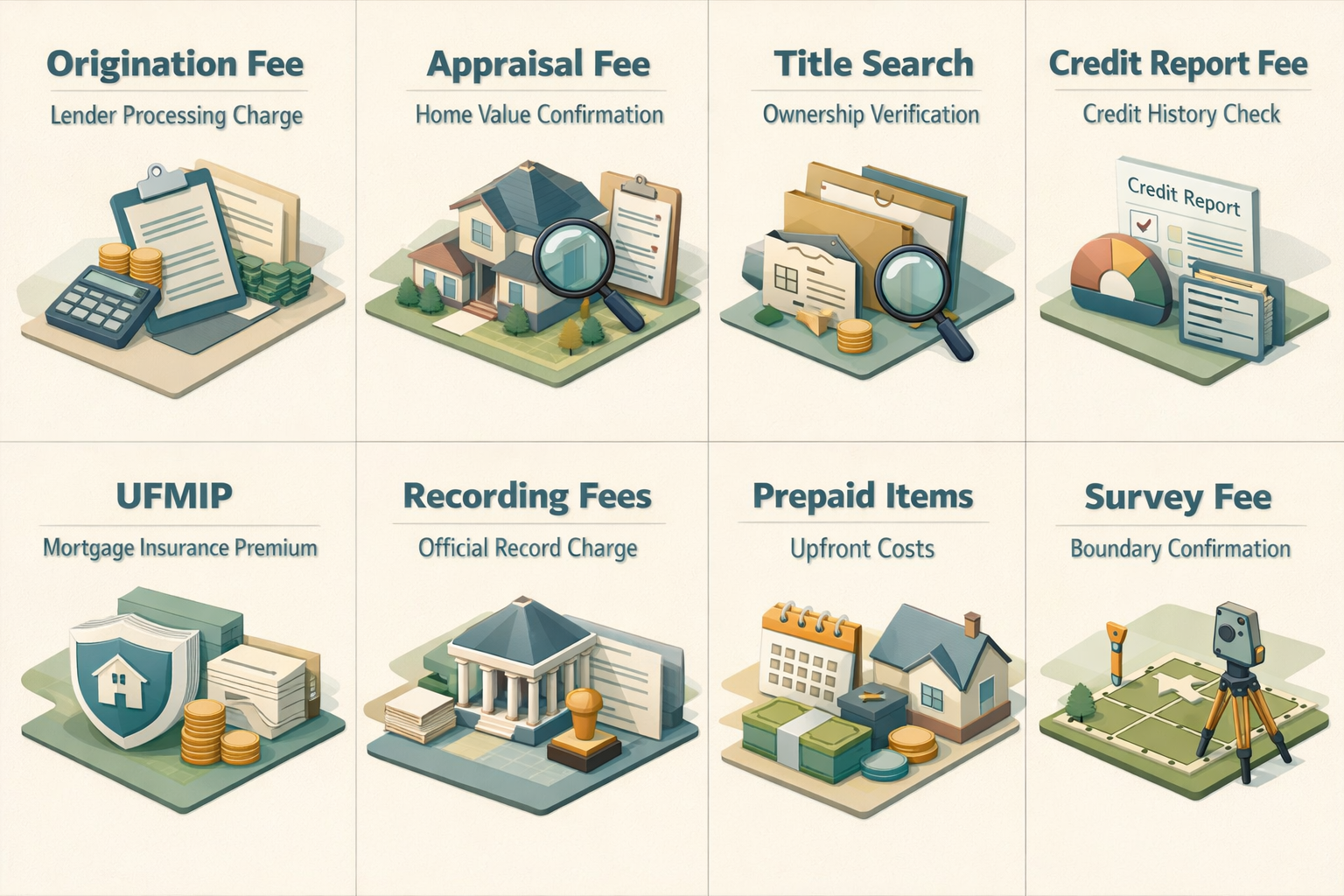
Not all FHA refinance closing fees are the same, and some may surprise first-time refinancers. Here's a closer look at the most common charges you're likely to encounter:
- Origination Fee: This is what the lender charges for processing and underwriting your loan. It's often expressed as a percentage of the loan amount and can sometimes be negotiated.
- Appraisal Fee: Many FHA refinances require a new home appraisal to confirm the property's current market value. This is a third-party cost paid to a licensed appraiser and typically ranges from a few hundred dollars up, depending on your area.
- Title Search and Title Insurance: A title company will verify that your home's ownership history is clear of disputes or liens. You may also be required to purchase a new lender's title insurance policy.
- Credit Report Fee: Lenders pull your credit history as part of the approval process, and this small fee covers that cost.
- FHA Upfront Mortgage Insurance Premium (UFMIP): This is one of the most notable FHA-specific costs. The FHA requires borrowers to pay an upfront mortgage insurance premium, which is typically 1.75% of the base loan amount. This can often be rolled into the loan balance rather than paid at closing.
- Recording Fees: Your local government charges a fee to officially record the new mortgage in public records.
- Prepaid Items: These aren't exactly fees but are costs collected upfront — such as prepaid homeowner's insurance, property taxes, and mortgage interest for the remainder of the current month.
- Survey Fee: In some cases, a property survey may be required to confirm boundary lines, though this isn't always mandatory.
It's a good idea to review your Loan Estimate carefully when you apply. This document breaks down each expected cost so you can compare it against what you see on your Closing Disclosure before the final signing.
FHA Streamline Refinance: A Lower-Cost Alternative
If you already have an FHA-insured mortgage, you may qualify for the FHA Streamline Refinance program — and it could come with meaningfully lower closing costs. This refinance option is designed to be faster and simpler than a traditional refinance, with reduced documentation requirements and, in many cases, no new appraisal needed.
Because the streamline process skips some of the standard steps, certain third-party fees — like the appraisal — may not apply. However, you'll still likely encounter lender fees, title costs, and the FHA upfront mortgage insurance premium unless you're eligible for a reduced rate.
There are two types of FHA Streamline Refinances worth knowing:
- Non-Credit Qualifying Streamline: The lender doesn't pull a new credit report or verify income in the same way as a standard refinance. This can speed up the process and reduce some costs.
- Credit Qualifying Streamline: Required in certain situations — for example, when adding or removing a borrower — and involves a more thorough credit review.
Even with the streamline option, it's wise to ask for a full breakdown of expected FHA refinance closing fees so you can confirm the refinance truly makes financial sense for your situation.
Can You Roll Closing Costs Into Your FHA Refinance?
One of the questions homeowners most commonly ask is whether they can avoid paying closing costs out of pocket. With an FHA refinance, you may have a few options worth exploring:
Rolling Costs Into the Loan: In some refinance scenarios, it may be possible to add certain closing costs to your new loan balance. This means you won't need to bring as much cash to closing, but it does increase the amount you owe — and the interest you'll pay over time. The FHA Upfront Mortgage Insurance Premium, for example, is commonly rolled into the loan.
Lender Credits: Some lenders offer what's known as a no-closing-cost refinance, where they cover your upfront fees in exchange for a slightly higher interest rate. This could be a smart move if you plan to sell or refinance again within a few years and don't want to wait to recoup those upfront costs.
Seller or Third-Party Concessions: In a refinance situation, this option is generally not applicable the same way it is in a home purchase, since there's no seller involved. However, understanding what a lender can and cannot roll in is key to evaluating your true out-of-pocket costs.
Each approach has trade-offs. Rolling in fees increases your loan balance and long-term interest expense. Accepting lender credits means a higher rate for the life of the loan — or until you refinance again. It's worth running the numbers or speaking with a licensed mortgage advisor to find the right balance.
How to Compare Lenders and Minimize What You Pay
Shopping around is one of the most effective ways to reduce your FHA refinance closing fees. Lenders have some flexibility in what they charge — especially for origination fees — and getting multiple quotes can reveal meaningful differences in total costs.
Here are some practical strategies to help you keep costs in check:
- Request Loan Estimates from at least three lenders. Federal law requires lenders to provide this standardized document within three business days of receiving your application. It breaks down all projected fees so you can compare apples to apples.
- Negotiate lender fees. Origination charges and processing fees may have some flexibility, especially if you have strong credit or are an existing customer of the institution.
- Ask about discount points. Paying points upfront lowers your interest rate. Depending on how long you plan to stay in the home, this might — or might not — make financial sense.
- Check for fee waivers or promotions. Some lenders periodically offer reduced fees as part of a promotion, particularly for existing customers or borrowers with strong credit profiles.
- Understand your break-even point. Calculate how long it would take for your monthly savings to offset the closing costs you pay. If you plan to move or refinance again before reaching that point, reconsider whether this refinance is the right move at this time.
What to Expect During the Closing Process
Once you've locked in your rate and your loan has been approved, you'll enter the final stage: closing. For most FHA refinances, this involves signing a set of legal documents and paying any remaining out-of-pocket costs. Here's a brief overview of what typically happens:
Closing Disclosure Review: At least three business days before your scheduled closing, your lender must provide a Closing Disclosure — a document that outlines your final loan terms, monthly payment, and a complete itemization of all closing costs. Compare this carefully against your original Loan Estimate. If you see unexpected new charges, ask questions before you sign anything.
Right of Rescission: For most refinances on a primary residence, federal law gives you a three-business-day window after closing to cancel the transaction if you change your mind. This is called the right of rescission and is a valuable consumer protection.
Funding: Once the rescission period ends and all documents are verified, your lender will fund the loan. Your old mortgage will be paid off, and your new FHA loan officially begins.
Being prepared and asking the right questions throughout this process can make a significant difference in how smoothly your refinance goes — and how much you ultimately pay.
●Conclusion
Understanding what are closing costs for FHA loan refinance is a critical step in making an informed decision about your home financing. From origination fees and appraisals to the FHA upfront mortgage insurance premium and title costs, these expenses add up — but they don't have to catch you off guard. By comparing lenders, reviewing your Loan Estimate carefully, and exploring options like lender credits or rolling certain costs into your loan balance, you can approach your refinance with greater confidence. If you're ready to take the next step, connect with a licensed mortgage advisor at LoanWise to explore your FHA refinance options and get a personalized fee breakdown tailored to your situation.