
Buying a condo with an FHA loan can be a smart move for first-time homebuyers and budget-conscious borrowers alike. But before you sign on the dotted line, it's important to understand the full picture — including the closing costs that come with the deal. Many buyers focus on the down payment and monthly mortgage payment, but closing costs can add up quickly and catch you off guard if you're not prepared. So, what are closing costs for FHA loan on condo purchase? That's exactly what we'll break down in this guide. From lender fees to FHA-specific charges, you'll get a clear look at what to expect and how to plan ahead with confidence.
Understanding Closing Costs and Why They Matter for Condo Buyers
Closing costs are the fees and expenses you pay when finalizing a home purchase. They're separate from your down payment and typically due at the time of closing — the day you officially take ownership of the property. For FHA loans, these costs follow a similar structure to conventional mortgages but include a few unique charges that buyers should know about.
For condo purchases specifically, closing costs can be slightly more involved. That's because condos must meet certain eligibility standards, which may require additional documentation and review. Understanding these costs upfront helps you budget accurately and avoid surprises at the closing table.
In general, closing costs on an FHA loan may range from roughly 2% to 5% of the loan amount, though your actual total will depend on your lender, location, loan size, and the specific condo you're purchasing. This range is commonly cited in the lending industry, though it's always a good idea to request a Loan Estimate from your lender early in the process so you know exactly what you're working with.
Breaking Down the Key Fees in FHA Condo Loan Closing Costs
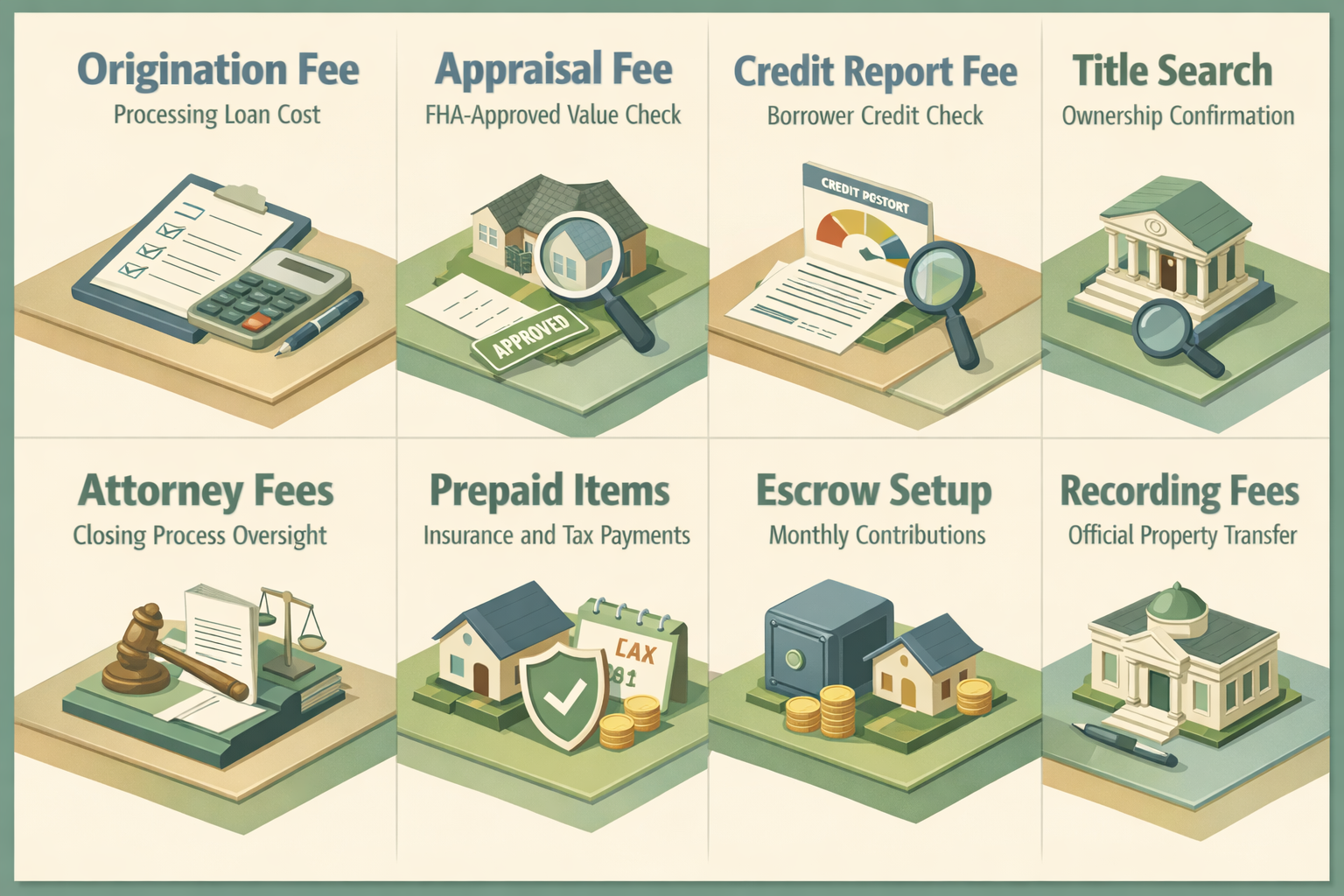
When asking what are closing costs for FHA loan on condo purchase, it helps to look at each fee individually. Here's a breakdown of the most common charges you're likely to encounter:
- Origination Fee: Charged by the lender for processing your loan. This may be a flat fee or a percentage of the loan amount.
- Appraisal Fee: FHA loans require a specific FHA-approved appraisal to confirm the property's value and ensure it meets HUD's minimum property standards. Condo appraisals may cost slightly more due to the complexity involved.
- Credit Report Fee: Lenders pull your credit report as part of the application process, and this cost is typically passed on to the borrower.
- Title Search and Title Insurance: A title search confirms there are no outstanding liens or ownership disputes. Title insurance protects both you and your lender if issues arise after closing.
- Attorney or Settlement Fees: Depending on your state, a real estate attorney or settlement agent may be required to oversee the closing process.
- Prepaid Items: These include prepaid homeowners insurance, prepaid property taxes, and prepaid interest for the days between closing and your first mortgage payment.
- Escrow Account Setup: FHA loans typically require an escrow account to collect monthly contributions toward property taxes and insurance. You may need to fund this account at closing.
- Recording Fees: Charged by the local government to officially record the property transfer.
Each of these fees contributes to your total closing cost, so it's worth reviewing your Loan Estimate carefully to understand what each charge covers.
The FHA Upfront Mortgage Insurance Premium — A Cost Unique to FHA Borrowers
One of the most significant costs specific to FHA loans is the Upfront Mortgage Insurance Premium (UFMIP). This is a one-time fee charged by the Federal Housing Administration to help fund the FHA mortgage insurance program that protects lenders in case of borrower default.
The UFMIP is currently set at 1.75% of the base loan amount for most FHA loans. So, on a $250,000 loan, that would amount to $4,375. While this is a substantial cost, the good news is that borrowers have the option to roll this fee into the loan balance rather than paying it out of pocket at closing. Keep in mind that doing so will slightly increase your monthly payment and the total interest you pay over the life of the loan.
In addition to the upfront premium, FHA borrowers also pay an Annual Mortgage Insurance Premium (MIP), which is broken into monthly installments and added to your regular mortgage payment. This ongoing cost is separate from your closing costs but is an important factor when calculating the total cost of an FHA loan over time.
Using an FHA mortgage calculator can help you see how the UFMIP and annual MIP affect both your closing costs and your long-term monthly budget. Many online calculators let you toggle whether to roll the UFMIP into the loan or pay it at closing, giving you a clearer picture of both scenarios.
FHA Condo Loan Requirements That Could Affect Your Closing Timeline
Not every condo is eligible for FHA financing. Before you can close on a condo with an FHA loan, the property must meet specific FHA condo loan requirements set by the U.S. Department of Housing and Urban Development (HUD). Understanding these requirements can help you avoid delays and unexpected costs during the purchase process.
Here are the key eligibility factors to be aware of:
- FHA-Approved Condo Project: The condo complex itself must either be on the FHA-approved condo list or qualify for what's known as Single Unit Approval, which allows individual units in non-approved complexes to be financed with an FHA loan under certain conditions.
- Owner-Occupancy Ratio: HUD generally requires that a minimum percentage of units in the complex be owner-occupied rather than renter-occupied. This threshold may vary based on the project size and circumstances.
- HOA Financial Health: The homeowners association (HOA) must demonstrate financial stability. Lenders will review HOA budget documents, reserve funds, and any pending litigation that could affect the community's financial standing.
- Insurance Requirements: The condo project must carry adequate hazard, liability, and, where applicable, flood insurance coverage.
- Delinquency Rates: HUD guidelines typically require that no more than a certain percentage of HOA dues be delinquent at the time of the loan application.
If the condo you're interested in doesn't already hold FHA approval, your lender may need to submit documentation to pursue Single Unit Approval. This process can add time to your closing and may involve additional administrative costs, so it's worth confirming the condo's status early in your home search.
How to Use an FHA Mortgage Calculator to Estimate Your Total Costs
One of the most useful tools available to FHA condo buyers is an FHA mortgage calculator. These online tools let you plug in your loan amount, interest rate, loan term, and other variables to estimate your monthly payment and total loan costs — including closing costs and mortgage insurance premiums.
Here's how to get the most out of an FHA mortgage calculator when planning your condo purchase:
- Enter the Purchase Price and Down Payment: FHA loans require a minimum down payment of 3.5% for borrowers with a credit score of 580 or higher. If your score falls between 500 and 579, you may need a 10% down payment. Input these figures to see your base loan amount.
- Include the UFMIP: Some calculators allow you to add the 1.75% upfront mortgage insurance premium to the loan total. This shows you the adjusted loan amount if you choose to finance this cost.
- Factor in Annual MIP: The annual MIP rate depends on your loan term, loan amount, and loan-to-value ratio. A good calculator will automatically apply the appropriate rate based on the information you enter.
- Estimate Closing Costs Separately: While most FHA mortgage calculators focus on monthly payments, some include a closing cost estimator. If yours doesn't, add your estimated closing costs — roughly 2% to 5% of the loan amount — as a separate line item in your budget.
- Compare Scenarios: Use the calculator to compare different loan amounts, interest rates, or down payment sizes to find the combination that works best for your financial situation.
Running these numbers before you make an offer gives you a much clearer picture of what you can realistically afford and what you'll need to bring to the closing table.
Strategies to Reduce or Offset FHA Closing Costs on a Condo Purchase
Closing costs don't have to be an overwhelming financial burden. There are several strategies that homebuyers can explore to reduce or offset these expenses when purchasing a buy a condo with an FHA loan.
Negotiate Seller Concessions: FHA guidelines allow sellers to contribute up to 6% of the sale price toward the buyer's closing costs. In a buyer's market or when a seller is motivated, this can be a powerful way to reduce your out-of-pocket expenses at closing. Be sure to negotiate this as part of your purchase offer.
Ask About Lender Credits: Some lenders offer lender credits, where they cover a portion of your closing costs in exchange for a slightly higher interest rate. This trade-off can make sense if you're short on cash upfront but plan to refinance or sell within a few years before the higher rate significantly impacts your total cost.
Shop Multiple Lenders: Closing costs can vary meaningfully from one lender to another. Comparing Loan Estimates from at least two or three lenders can help you identify the most competitive offer and potentially save hundreds or thousands of dollars in fees.
Look Into Down Payment Assistance Programs: Many state and local housing agencies offer down payment assistance programs that may also help cover closing costs for eligible buyers. These programs often target first-time homebuyers and those within certain income limits, so it's worth checking what's available in your area.
Time Your Closing Strategically: Closing at the end of the month reduces the amount of prepaid daily interest you'll owe, since interest is calculated from your closing date to the end of the month. This won't dramatically change your total costs, but it's a small way to keep expenses as low as possible.
●Conclusion
Understanding what are closing costs for FHA loan on condo purchase is an essential step in planning a successful home purchase. From lender origination fees and appraisal costs to the FHA-specific upfront mortgage insurance premium, these expenses can add up — but they're also manageable with the right preparation. By familiarizing yourself with FHA condo loan requirements, using an FHA mortgage calculator to model your costs, and exploring strategies like seller concessions and lender shopping, you can approach closing day with confidence. At LoanWise, we're here to help you navigate every step of the FHA loan process. Ready to get started? Connect with one of our lending specialists today to explore your options and get a personalized loan estimate for your condo purchase.