Buying a townhome is an exciting step, especially for first-time homebuyers who want the feel of a single-family home without the full maintenance burden. Many townhomes are governed by a Homeowners Association, or HOA, which adds a layer of complexity when you're financing with an FHA loan. One of the most common questions buyers ask is: what are closing costs for FHA loan on a townhome with HOA? The honest answer is that it depends on several factors, including the loan amount, your location, the lender you choose, and HOA-specific requirements. This article breaks it all down so you can walk into closing with confidence and no surprises.
Understanding FHA Loan Closing Costs: The Basics
FHA loans are backed by the Federal Housing Administration and are popular among buyers who may not have a large down payment or a perfect credit score. These loans come with their own set of closing costs that are similar to conventional loans in many ways, but with a few important differences.
Closing costs on an FHA loan typically range from 2% to 6% of the loan amount, though the exact figure varies widely. For a $300,000 townhome purchase, that could mean anywhere from $6,000 to $18,000 in closing costs before your down payment is even factored in. It's important to understand that these costs are separate from your 3.5% minimum down payment requirement.
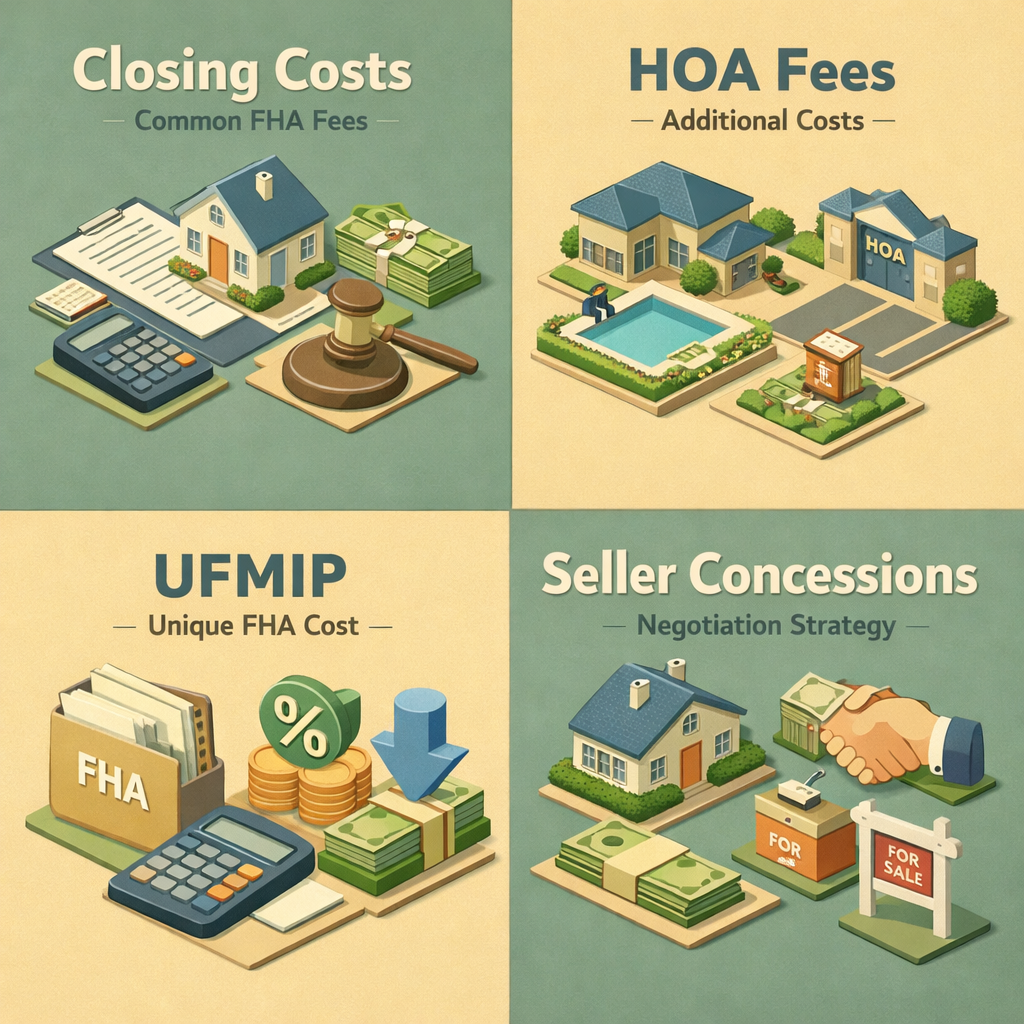
Common FHA loan closing costs include:
- Origination fees: Charged by the lender to process your loan application, often expressed as a percentage of the loan amount.
- Appraisal fee: FHA requires a specific FHA appraisal, which may cost slightly more than a standard appraisal. This fee typically runs between $400 and $700, depending on the property and location.
- Credit report fee: A relatively small charge, usually under $50, for pulling your credit history.
- Title search and title insurance: These protect both you and the lender against ownership disputes and may cost several hundred to over a thousand dollars.
- Attorney or settlement fees: Required in some states, these cover the legal side of the transaction.
- Prepaid items: This includes prepaid homeowners insurance, prepaid interest for the days remaining in the month of closing, and an initial escrow deposit for property taxes and insurance.
- FHA Upfront Mortgage Insurance Premium (UFMIP): This is a unique FHA cost. It's currently set at 1.75% of the base loan amount and can be rolled into the loan, which many buyers choose to do.
Understanding these components is the first step toward estimating your total cash needed at closing. Your lender is required to provide a Loan Estimate within three business days of your application, which will detail all expected costs.
How HOA Fees and Requirements Affect Your FHA Closing Costs
When you're buying a townhome in an HOA community, there are additional fees and requirements that can affect both your closing costs and your loan approval. FHA has specific rules about which HOA communities qualify for FHA financing, so this is a critical area to understand early in your home search.
First, let's talk about the extra costs you may encounter at closing related to the HOA:
- HOA transfer fee: When ownership changes hands, many HOAs charge a transfer fee to update their records. This can range from a nominal amount to several hundred dollars, depending on the association.
- HOA capital contribution or move-in fee: Some communities require new owners to contribute to the reserve fund or pay a one-time move-in fee at closing. This amount varies widely by community.
- HOA document review fee: Your lender or title company may need to review HOA governing documents, financial statements, and meeting minutes. Some HOAs charge a fee for providing this documentation package.
- Prepaid HOA dues: You may be required to prepay a portion of HOA dues at closing, typically covering dues for the remainder of the month or the next billing cycle.
Beyond direct fees, the HOA itself must meet FHA eligibility requirements. FHA requires that the project or community be approved, meaning it must meet specific criteria related to owner-occupancy ratios, financial health of the HOA, adequate reserve funds, and insurance coverage. If the townhome community isn't already on the FHA-approved condo or planned unit development list, your lender may need to seek approval, which can add time and, in some cases, additional costs to the process.
It's also worth noting that your ongoing HOA monthly dues will be factored into your debt-to-income ratio by the lender. This could affect how much home you qualify for, even if it doesn't show up as a direct closing cost.
Breaking Down the FHA Upfront Mortgage Insurance Premium for Townhome Buyers
One of the most significant costs unique to FHA loans is mortgage insurance. Unlike conventional loans where mortgage insurance may be avoided with a 20% down payment, FHA loans require both an upfront premium and an annual premium regardless of your down payment amount.
The Upfront Mortgage Insurance Premium (UFMIP) is currently 1.75% of the base loan amount. On a $280,000 loan (after a 3.5% down payment on a $290,000 townhome), that equals $4,900. The good news is that most buyers choose to roll this cost into the loan rather than paying it out of pocket at closing. While this increases your loan balance slightly, it reduces the cash you need on closing day.
In addition to the upfront premium, you'll also pay an Annual Mortgage Insurance Premium (MIP), which is divided into monthly payments. The annual MIP rate typically depends on your loan term, loan-to-value ratio, and loan amount. For many buyers putting down the minimum 3.5%, the annual MIP might be around 0.55% of the loan balance, though rates can vary. This ongoing cost is important to factor into your monthly budget as a townhome owner.
It's worth asking your lender to show you a side-by-side comparison of rolling the UFMIP into the loan versus paying it at closing. In most cases, rolling it in makes sense financially, but your specific situation may differ.
What Are Closing Costs for FHA Loan on a Townhome With HOA: A Realistic Estimate
Let's put the numbers together with a realistic example. Say you're purchasing a townhome for $320,000 in a planned HOA community. You put down 3.5%, bringing your loan amount to approximately $308,800.
Here's a rough breakdown of what your closing costs to expect might look like:
- Loan origination fee (1%): Approximately $3,088
- FHA appraisal: $500–$700
- Title search and insurance: $1,000–$2,000
- Settlement or attorney fee: $500–$1,200
- Credit report fee: $30–$50
- Recording fees: $100–$300
- HOA transfer fee: $200–$500
- HOA document review fee: $100–$400
- Prepaid HOA dues: $200–$600 (varies by community)
- Prepaid homeowners insurance: $800–$1,500 (first year)
- Prepaid mortgage interest: Varies by closing date
- Initial escrow deposit: $1,500–$3,000
- UFMIP (if paid at closing): Approximately $5,404
Based on these estimates, total closing costs — excluding the down payment — could range from roughly $8,000 to $20,000 or more, depending on your location, lender, and HOA. If you roll the UFMIP into the loan, your out-of-pocket closing costs could be meaningfully reduced.
Keep in mind that these are estimates. Your Loan Estimate and the Closing Disclosure you receive before closing will give you the precise figures for your specific transaction. Always review these documents carefully and ask your lender to explain any line items you don't recognize.
Smart Ways to Reduce Your Out-of-Pocket Costs at Closing
The good news is that there are several strategies homebuyers can use to lower the cash needed at the closing table. None of these strategies eliminate closing costs entirely, but they can make buying a townhome with an FHA loan more financially manageable.
Negotiate Seller Concessions
FHA guidelines allow sellers to contribute up to 6% of the purchase price toward the buyer's closing costs. In a buyer-friendly market, negotiating seller concessions is a practical way to reduce what you pay out of pocket. Work with your real estate agent to include a seller concession request in your offer, especially if the property has been sitting on the market.
Shop Multiple Lenders
Not all lenders charge the same origination fees or offer the same lender credits. Getting loan estimates from at least three lenders allows you to compare costs side by side. Some lenders may offer a slightly higher interest rate in exchange for lender credits that offset your closing costs — a tradeoff worth evaluating based on how long you plan to stay in the home.
Roll the UFMIP Into the Loan
As mentioned earlier, rolling the 1.75% upfront mortgage insurance premium into your loan balance keeps that amount out of your out-of-pocket closing costs. Most FHA borrowers take this approach, and it's permitted under FHA guidelines.
Look Into Down Payment Assistance Programs
Many state and local housing finance agencies offer down payment assistance programs that can also help cover closing costs. These programs may come in the form of grants, forgivable loans, or low-interest second mortgages. Eligibility requirements vary by program and location, so it's worth researching what's available in your area.
Close at the End of the Month
Prepaid interest is charged from your closing date to the end of the month. Closing near the end of the month means fewer days of prepaid interest, which can save you a modest but meaningful amount.
FHA Townhome Approval: What Buyers Need to Know Before Making an Offer
One of the most common pitfalls for FHA buyers pursuing a townhome is discovering late in the process that the HOA community doesn't meet FHA requirements. This can delay or even derail your purchase, so it's important to check eligibility early.
FHA treats many townhomes as part of a planned unit development (PUD) or, in some cases, a condominium project. The distinction matters because the approval process differs between the two. Your lender can help you determine how HUD classifies the specific property you're considering.
For FHA approval, the HOA community generally needs to meet criteria such as:
- A minimum percentage of units being owner-occupied rather than renter-occupied
- No single entity owning more than a certain percentage of the units
- Adequate reserve funds held by the HOA
- Appropriate master insurance coverage for the community
- No pending litigation involving the HOA that could affect the financial stability of the community
If the community isn't currently FHA-approved, your lender may be able to pursue a Single-Unit Approval process, which allows an individual unit to qualify even if the overall project isn't on the approved list. This process has its own requirements and may add time to your closing timeline, so factor that into your planning.
Working with a lender who has experience with FHA loans in HOA communities is valuable. They'll know what documentation to request, what red flags to watch for, and how to navigate the approval process efficiently.
●Conclusion
Understanding what are closing costs for FHA loan on a townhome with HOA is essential planning for any buyer pursuing this path. Between lender fees, FHA-specific premiums, title costs, and HOA-related charges, the total can add up quickly — but it's manageable with the right preparation. Start by getting a Loan Estimate from a qualified FHA lender, verify that the townhome community meets FHA guidelines early in your search, and explore every option available to reduce your out-of-pocket expenses. With smart planning and the right team by your side, your townhome purchase can move forward with clarity and confidence. Ready to take the next step? Connect with a LoanWise mortgage specialist today to get a personalized closing cost estimate for your FHA townhome purchase.