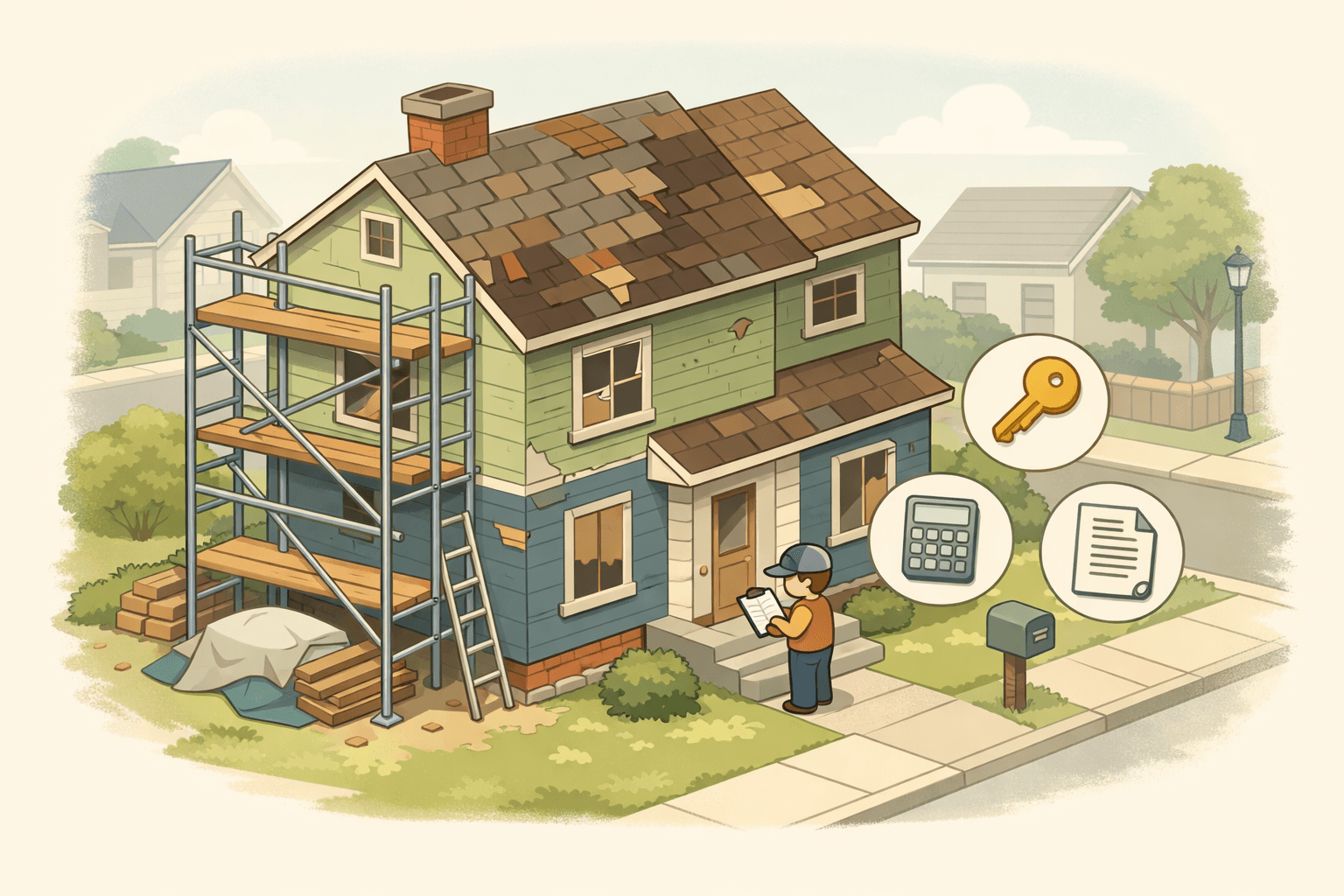
Buying a fixer upper can be one of the smartest moves a homebuyer makes — especially when financing costs are kept in check. But if you're using a government-backed mortgage to purchase and renovate a property, it's natural to ask: what are closing costs for FHA loan on a fixer upper? The answer involves more than a standard mortgage. It blends traditional closing fees with renovation-specific charges that are unique to FHA rehab loan programs. Understanding every layer of this cost structure helps you budget confidently and avoid surprises at the closing table.
How FHA Fixer Upper Loans Work Before You See Any Fees
Before diving into the fee breakdown, it helps to understand which FHA program actually finances a fixer upper. The most common option is the FHA 203(k) loan, a federally backed mortgage that rolls both the purchase price and the cost of repairs into a single loan. There are two versions: the Standard 203(k) for major structural renovations and the Limited 203(k) for smaller cosmetic improvements typically capped at a lower renovation budget.
Unlike a conventional purchase mortgage, the 203(k) requires additional steps — including a HUD-approved consultant for the Standard version, contractor bids, and a detailed work write-up. Each of these steps introduces fees that don't appear on a traditional FHA loan. That's why the total cost picture for an FHA fixer upper loan is notably broader than what most first-time homebuyers initially expect.
It's also worth noting that FHA loans require a minimum down payment — typically 3.5% for borrowers with a qualifying credit score. This down payment is based on the total loan amount, which includes both the purchase price and the estimated renovation costs. So even before closing fees enter the picture, your upfront cash requirement may be higher than you'd see on a move-in-ready home purchase.
What Are Closing Costs for FHA Loan on a Fixer Upper: The Full Breakdown
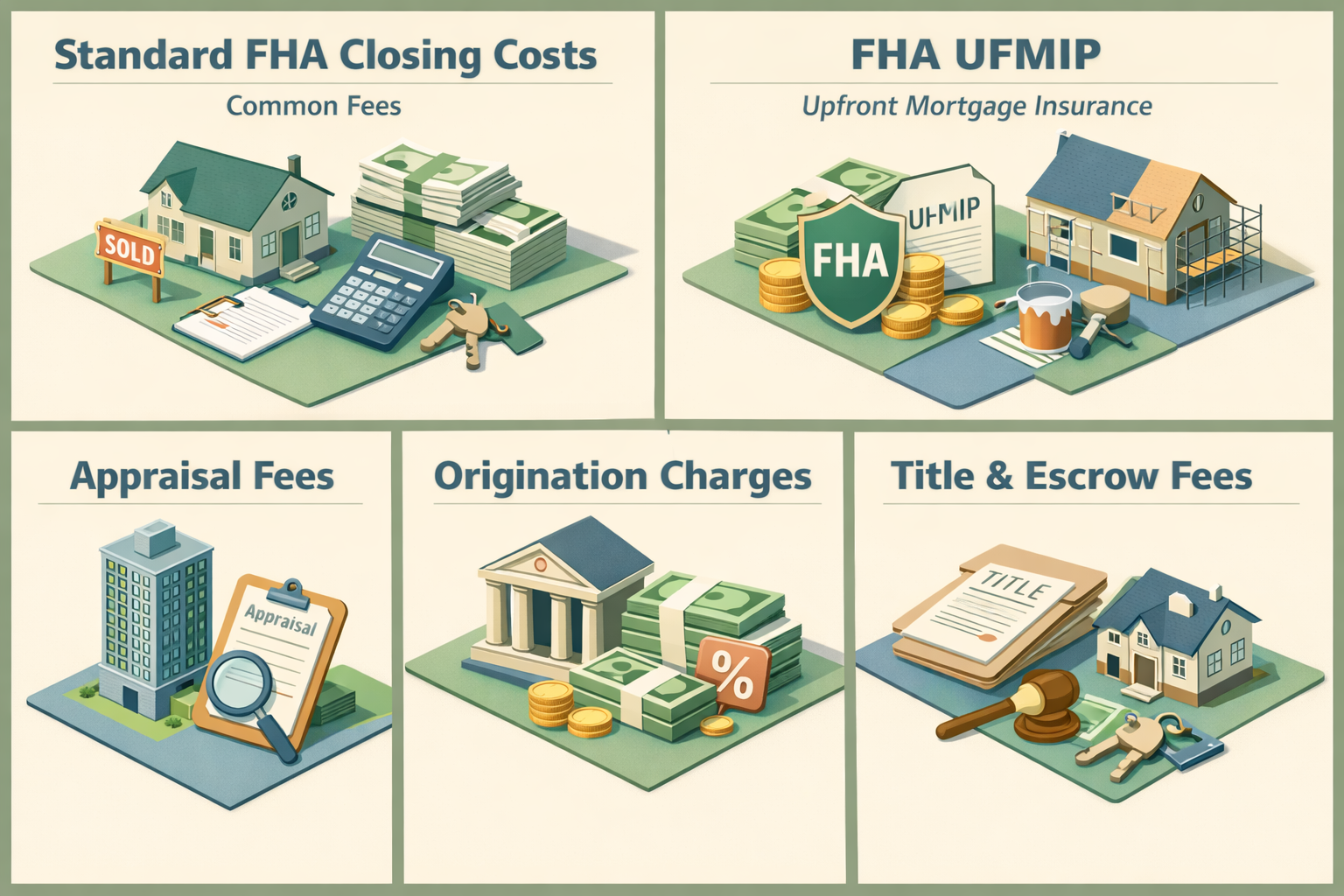
When lenders and real estate professionals talk about closing costs, they're referring to a collection of fees paid at — or near — the time the loan is finalized. For an FHA fixer upper, these costs typically fall into several distinct categories.
Standard FHA Closing Costs
These are the fees you'd see on virtually any FHA-insured loan:
- Origination fee: Charged by the lender for processing and underwriting your loan. This may be a flat fee or a percentage of the loan amount.
- Appraisal fee: FHA loans require an FHA-approved appraisal. For a fixer upper, this appraisal is more complex because it must estimate the property's after-improved value — what the home will be worth once renovations are complete.
- Title search and title insurance: Protects both the lender and the borrower against ownership disputes or liens on the property.
- Credit report fee: A small charge the lender pays to pull your credit history.
- Prepaid items: These include prepaid homeowners insurance, prepaid property taxes, and prepaid mortgage interest for the days between closing and your first payment due date.
- Escrow setup: An initial deposit into your escrow account to cover future tax and insurance payments.
FHA Upfront Mortgage Insurance Premium (UFMIP)
All FHA loans carry an Upfront Mortgage Insurance Premium, which is currently set at 1.75% of the base loan amount. This fee can be rolled into the loan rather than paid out of pocket at closing, which is a meaningful relief for buyers who are already stretching their budget for renovations. However, rolling it in increases your total loan balance and your monthly payments over time.
In addition to the UFMIP, FHA borrowers also pay an annual mortgage insurance premium (MIP) as part of their monthly payment. This ongoing cost continues for the life of the loan in most cases, or for 11 years if your down payment was at least 10%.
FHA Loan Renovation Costs That Show Up at Closing
Here's where the fixer upper scenario truly diverges from a standard purchase. FHA loan renovation costs introduce several additional fees that are specific to the 203(k) rehab process. These charges reflect the extra coordination, oversight, and risk management involved in financing a property that doesn't yet meet habitable or market-ready standards.
HUD Consultant Fee (Standard 203k Only)
If you're using the Standard 203(k) loan for major renovations, you'll need to hire a HUD-approved 203(k) consultant. This professional inspects the property, reviews contractor bids, prepares the required work write-up, and monitors construction draws throughout the project. Their fee typically ranges based on the total cost of repairs and may be included as part of your financed renovation budget or paid upfront at closing.
Contingency Reserve
Lenders generally require a contingency reserve on 203(k) loans — commonly between 10% and 20% of the total renovation budget. This reserve acts as a financial cushion in case unexpected costs arise during construction, such as discovering hidden structural damage behind walls. If the reserve isn't fully used, any remaining funds may be applied toward the loan principal after project completion.
Supplemental Origination Fee
Some lenders charge an additional origination fee specific to the 203(k) program to account for the added complexity of administering a construction-tied mortgage. This is separate from the standard origination fee and may be subject to FHA fee caps, so it's worth asking your lender for a clear itemization.
Title Update Fees
Because construction draws are released in stages after closing, lenders often require periodic title updates to confirm no new liens have attached to the property during the renovation period. These title update fees are typically modest but represent an ongoing administrative cost tied to the rehab process.
Estimated Ranges: How Much Should You Budget Overall
Closing costs on a standard FHA loan often range from approximately 2% to 5% of the loan amount, though the actual figure varies based on the lender, the property location, and the specific loan terms. For an FHA fixer upper loan, total closing costs — including 203(k)-specific fees — could push toward or beyond the higher end of that range, particularly if the renovation scope is large.
For example, if you're financing a $250,000 purchase with $50,000 in renovations, your total loan amount could approach $300,000 (plus the financed UFMIP). Closing costs at 3% to 5% of that figure would place your out-of-pocket expenses — before the down payment — somewhere between roughly $9,000 and $15,000. These are illustrative figures only; your actual costs will depend on your lender, location, and the specifics of your renovation plan.
It's also worth remembering that some of these costs may be negotiable or financeable. The 203(k) program allows certain renovation-related fees to be rolled into the loan, reducing what you need to bring to closing. Always ask your loan officer which fees can be included in the financed amount and which must be paid out of pocket.
Can Sellers or Lenders Help Cover These Fees
One practical strategy that many homebuyers overlook is seller concessions. On FHA loans, sellers are generally permitted to contribute up to 6% of the purchase price toward the buyer's closing costs. On a fixer upper, this can be a powerful negotiating tool — especially if the seller is motivated to move a property that needs significant work.
Additionally, some lenders offer lender credits in exchange for a slightly higher interest rate. This arrangement lets you reduce your out-of-pocket closing costs today, though you'll pay somewhat more over the life of the loan. Whether this trade-off makes sense depends on how long you plan to stay in the home and what your cash reserves look like after the down payment.
Down payment assistance programs are another avenue worth exploring. Many state housing finance agencies offer grants or second mortgages specifically designed to help first-time buyers cover closing costs and down payments on FHA loans. Eligibility criteria vary by state, income level, and program, so researching options in your area early in the process is a smart move.
Practical Tips to Manage Your Out-of-Pocket Expenses
Navigating the cost structure of an FHA fixer upper loan is much easier when you go in with a clear strategy. Here are some approaches that may help keep expenses manageable:
- Get a Loan Estimate early: Lenders are required to provide a Loan Estimate within three business days of your application. Review it carefully and compare fees across multiple lenders to find the most competitive offer.
- Shop third-party fees: You have the right to shop for certain settlement services, including title insurance and settlement agents. Comparing providers can sometimes yield meaningful savings.
- Negotiate contractor bids: Since renovation costs directly affect your loan size — and therefore your closing costs and monthly payments — getting competitive contractor bids matters. Multiple bids are typically required by FHA anyway, so use that process to your advantage.
- Ask about fee waivers: Some lenders will waive or reduce specific fees for well-qualified borrowers. It's always worth asking.
- Plan your renovation scope carefully: Overbidding a renovation can unnecessarily inflate your loan balance. Work with your HUD consultant to prioritize essential repairs and phase in cosmetic improvements over time if your budget allows.
Being proactive and organized throughout the loan process can make a meaningful difference in what you ultimately pay at closing.
●Conclusion
Understanding what are closing costs for FHA loan on a fixer upper is essential for any homebuyer considering this path to homeownership. While the fee structure is more complex than a standard mortgage, it's also more flexible — with opportunities to finance certain costs, negotiate seller contributions, and access assistance programs. The key is to work with an experienced lender who specializes in FHA 203(k) loans, ask detailed questions early, and compare your Loan Estimate carefully before committing. With the right preparation, an FHA fixer upper loan can be a smart and cost-effective way to turn a diamond in the rough into the home you've always wanted. Ready to explore your options? Connect with a LoanWise lending expert today to get a personalized cost estimate for your renovation purchase.