
Getting help from your parents to buy a home is more common than you might think. Many first-time homebuyers rely on family contributions to cover their down payment — and sometimes even a portion of their closing costs. But before you head to the closing table, it's important to understand exactly what are closing costs for conventional loan with gifted down payment from parents, how lenders treat gift funds, and what documentation you'll need to make everything go smoothly. This guide breaks it all down in plain, easy-to-follow language so you can walk into the process with confidence.
Understanding Closing Costs on a Conventional Loan
Closing costs are the fees and expenses you pay at the end of a real estate transaction — the final step before the home officially becomes yours. On a conventional loan, these costs typically cover a wide range of services and administrative requirements that lenders, title companies, and government agencies charge to complete the transaction.
So, what are closing costs for conventional loan with gifted down payment from parents? The closing costs themselves don't change based on where your down payment comes from. What changes is how the lender verifies and documents the source of your funds. The costs remain the same whether you saved the money yourself or received it as a gift.
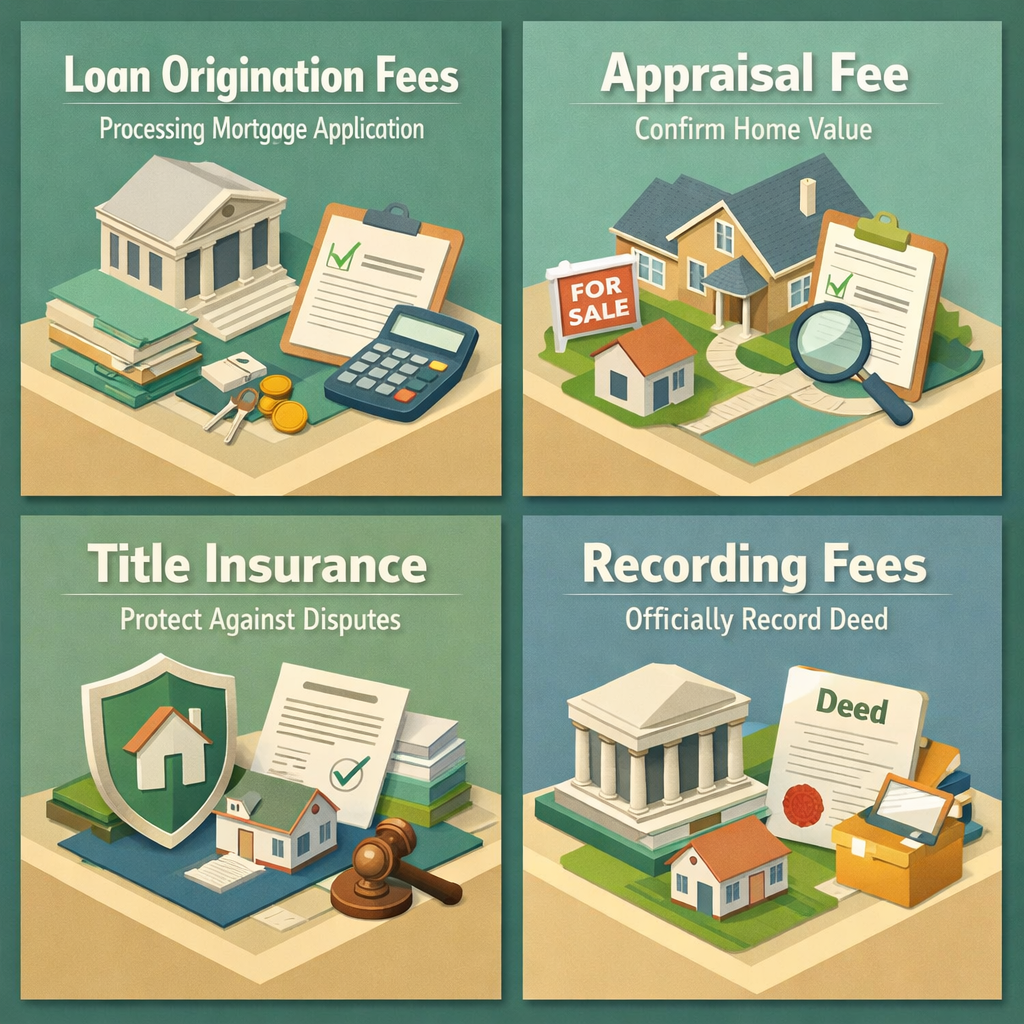
In general, conventional loan closing costs may include:
- Loan origination fees: Charged by the lender for processing your mortgage application.
- Appraisal fee: Paid to a licensed appraiser to confirm the home's market value.
- Title search and title insurance: Protects both the lender and the buyer against ownership disputes.
- Attorney or settlement fees: Required in some states to oversee the closing process.
- Prepaid items: These often include homeowners insurance premiums, prepaid interest, and property tax escrow deposits.
- Credit report fee: Charged to pull your credit history during underwriting.
- Recording fees: Paid to the local government to officially record the new deed.
Altogether, closing costs on a conventional loan typically range from 2% to 5% of the loan amount, though the exact figure depends on your location, lender, and loan details. On a $300,000 home, that could mean anywhere from $6,000 to $15,000 due at closing — in addition to your down payment.
How Gift Funds Work with a Conventional Mortgage
When a parent or close family member gives you money to help purchase a home, lenders refer to this as a gift fund. Conventional loans backed by Fannie Mae and Freddie Mac do allow gift funds — but there are specific rules about who can give the gift, how it must be documented, and whether it can be used for the down payment, closing costs, or both.
For conventional loans, gift funds are generally permitted from:
- Parents or legal guardians
- Siblings or other relatives
- Domestic partners or fiancés
- Close family friends in certain circumstances (depending on lender guidelines)
One key rule to understand: the gift must truly be a gift, not a loan. Lenders will look for a signed gift letter that clearly states the funds do not need to be repaid. If there's any suggestion that repayment is expected — even informally — the lender may disqualify the funds entirely.
Down payment gift parent mortgage scenarios are among the most common situations mortgage lenders encounter, so many have streamlined their documentation process. Still, it's important to follow the steps carefully to avoid delays.
What the Gift Letter Must Include
One of the most critical documents in any conventional loan closing costs gift funds scenario is the gift letter. This letter serves as formal proof that the money given to you is not a loan and doesn't need to be repaid. Most lenders will have their own template, but in general, the gift letter should include:
- The donor's name, address, and relationship to the borrower
- The exact dollar amount of the gift
- The address of the property being purchased
- A clear statement that no repayment is expected or required
- The donor's signature and date
In addition to the gift letter, your lender may also ask for bank statements from the donor to verify that the funds were available and transferred legitimately. Some lenders will want to see both the donor's bank statement showing the withdrawal and your bank statement showing the deposit. This is sometimes called a paper trail, and it's a standard part of the underwriting process for conventional loans.
Missing or incomplete documentation is one of the most common reasons gift fund transactions get delayed. Working with a knowledgeable loan officer can help you gather everything upfront so your closing timeline stays on track.
Can Gift Funds Cover Closing Costs Too?
Yes — in many cases, gift funds can be used to cover not just the down payment but also some or all of the closing costs. However, this depends on the size of your down payment and the type of conventional loan you're using.
Here's a helpful breakdown:
- If your down payment is 20% or more: The entire amount — including closing costs — may be covered by gift funds.
- If your down payment is between 5% and 19.99%: Gift funds may cover the full down payment, but lenders often want to see that you have at least some of your own funds in the transaction.
- If your down payment is less than 5%: Guidelines may become stricter. Some lenders may require that you contribute at least a small portion of your own savings, depending on Fannie Mae or Freddie Mac guidelines at the time.
It's worth noting that guidelines in this area can shift, so it's best to confirm the current rules with your loan officer before assuming your entire transaction can be funded through gift money. The conventional loan closing costs gift funds rules are generally more flexible than FHA or USDA guidelines, but they're not without boundaries.
Also keep in mind that using gift funds doesn't exempt you from paying closing costs — it simply gives you another source to draw from. Those fees are still owed at closing regardless of where the money originates.
How Lenders Verify the Source of Down Payment Gifts
Lenders take the verification of gift funds seriously because they need to ensure the money isn't a disguised loan that could affect your debt-to-income ratio. If you borrowed the funds and have an obligation to repay them, that changes your financial profile significantly — which is why lenders dig into the details.
The verification process for a down payment gift parent mortgage typically involves:
- Gift letter review: The lender will carefully review the signed gift letter for completeness and accuracy.
- Bank statement analysis: Both the borrower's and donor's statements may be requested to trace the movement of funds.
- Wire transfer or check documentation: Some lenders want to see a copy of the check or wire confirmation that shows the transfer from parent to child.
- Verification of donor's ability to give: If the gift is large, underwriters may want to confirm the donor had sufficient funds in their account before the transfer.
This may feel like a lot of paperwork, but it's a standard part of the mortgage process. The goal is to protect you as the borrower, ensure the loan is properly underwritten, and comply with investor guidelines set by Fannie Mae and Freddie Mac. Being organized and responsive during this stage can save you days — or even weeks — in processing time.
Smart Strategies for Using Gift Funds Without Stress
If you're planning to use a parental gift to help with your home purchase, a little preparation can go a long way. Here are some practical tips to make the process as smooth as possible:
- Transfer the funds early: If possible, have your parents transfer the gift at least 60 to 90 days before your loan application. When the funds have been sitting in your account for two or more statement cycles, many lenders may not require additional documentation — this is known as seasoned funds.
- Keep a clear paper trail: Avoid cash gifts. Wire transfers or checks are much easier to document and verify during underwriting.
- Get the gift letter signed early: Don't wait until closing week. Have your parents sign the gift letter as soon as you enter contract on a home.
- Talk to your loan officer upfront: Every lender may have slightly different internal requirements. Discussing your situation early gives you time to address any issues before they become closing-day problems.
- Don't use the gift funds to repay any debts: Moving large sums around before closing can trigger questions. Keep the funds stable once they've been deposited.
Using a gift the right way isn't complicated — it just requires clear communication and a bit of planning. The more transparent you are with your lender, the more smoothly the process tends to go.
●Conclusion
Understanding what are closing costs for conventional loan with gifted down payment from parents is an important step in planning your home purchase. The closing costs themselves — ranging from appraisal fees to title insurance to prepaid items — are the same regardless of where your funds come from. What matters to your lender is proper documentation: a clear gift letter, a traceable paper trail, and transparency throughout the process.
Gift funds can be a powerful tool for homebuyers, especially when purchasing your first home. When used correctly, a parental gift can cover not just your down payment but potentially your closing costs as well. The key is working with a knowledgeable loan officer who can guide you through the lender's specific requirements and help you avoid common pitfalls.
If you're ready to explore your conventional loan options or have questions about how gift funds might fit into your home purchase plan, connect with a LoanWise mortgage specialist today. We're here to help you make confident, informed decisions on the path to homeownership.