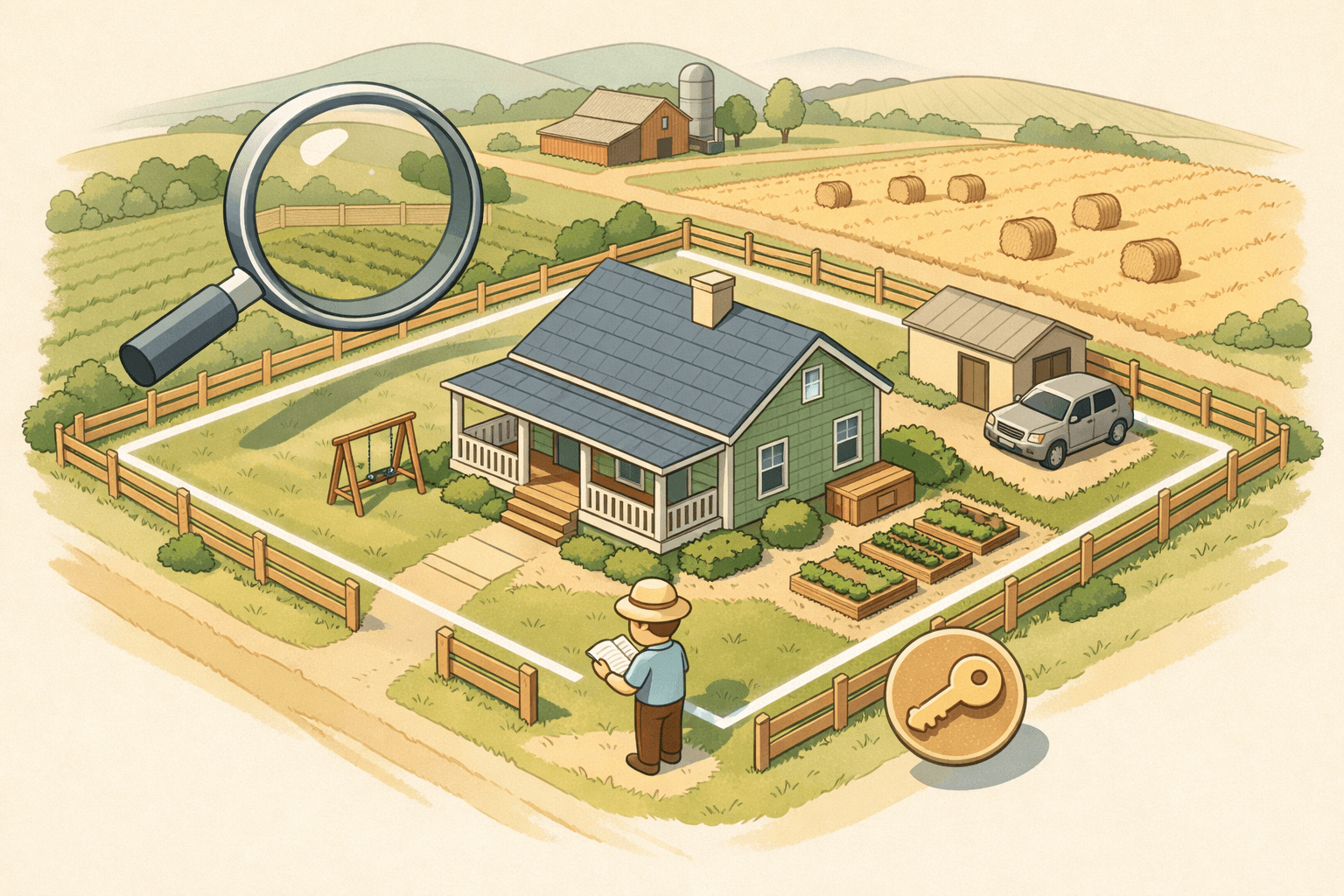
Buying a home in a rural area can be an exciting step, but when that property sits on agriculturally zoned land, the financing process can get a little more complex. Many homebuyers are surprised to learn that understanding USDA loan requirements for a property with agricultural zoning involves more than just checking income limits or credit scores. The U.S. Department of Agriculture's loan programs are designed to support rural homeownership, but they come with specific rules about what kind of property qualifies. Whether you're a first-time homebuyer eyeing a farmhouse or a homeowner considering a rural refinance, this guide will walk you through what you need to know — clearly and confidently.
What Makes a USDA Loan Different from Other Mortgage Programs
The USDA loan program — formally known as the USDA Rural Development Guaranteed Housing Loan — is a government-backed mortgage designed to help low-to-moderate-income borrowers purchase homes in eligible rural and suburban areas. One of its most appealing features is the ability to finance a home with zero down payment, which makes it attractive for buyers who may not have significant savings but have steady income.
Unlike FHA or conventional loans, USDA loans come with geographic restrictions. The property must be located in a USDA-designated rural area, which the agency defines based on population thresholds and community classifications. What many borrowers don't realize, though, is that some of these rural areas also carry agricultural zoning designations — and that's where things can get nuanced.
USDA loans are offered through two main channels: the Section 502 Guaranteed Loan Program (backed by approved private lenders) and the Section 502 Direct Loan Program (funded directly by the USDA for very low-income households). Both programs share similar property eligibility requirements, but the direct loan program may have slightly stricter guidelines depending on the lender or USDA office overseeing the application.
How Agricultural Zoning Affects USDA Loan Property Eligibility
Agricultural zoning typically means that local governments have designated land primarily for farming, ranching, or other agricultural uses. Homes sitting on this kind of land can still qualify for USDA financing — but there are important conditions that must be met.
The USDA requires that any property used as collateral for its loan programs must be considered a modest home that is primarily residential in nature. This is a critical point. Even if a property has an agricultural zoning designation, the loan is intended to finance the home itself — not the farmland or any income-producing agricultural operation associated with it.
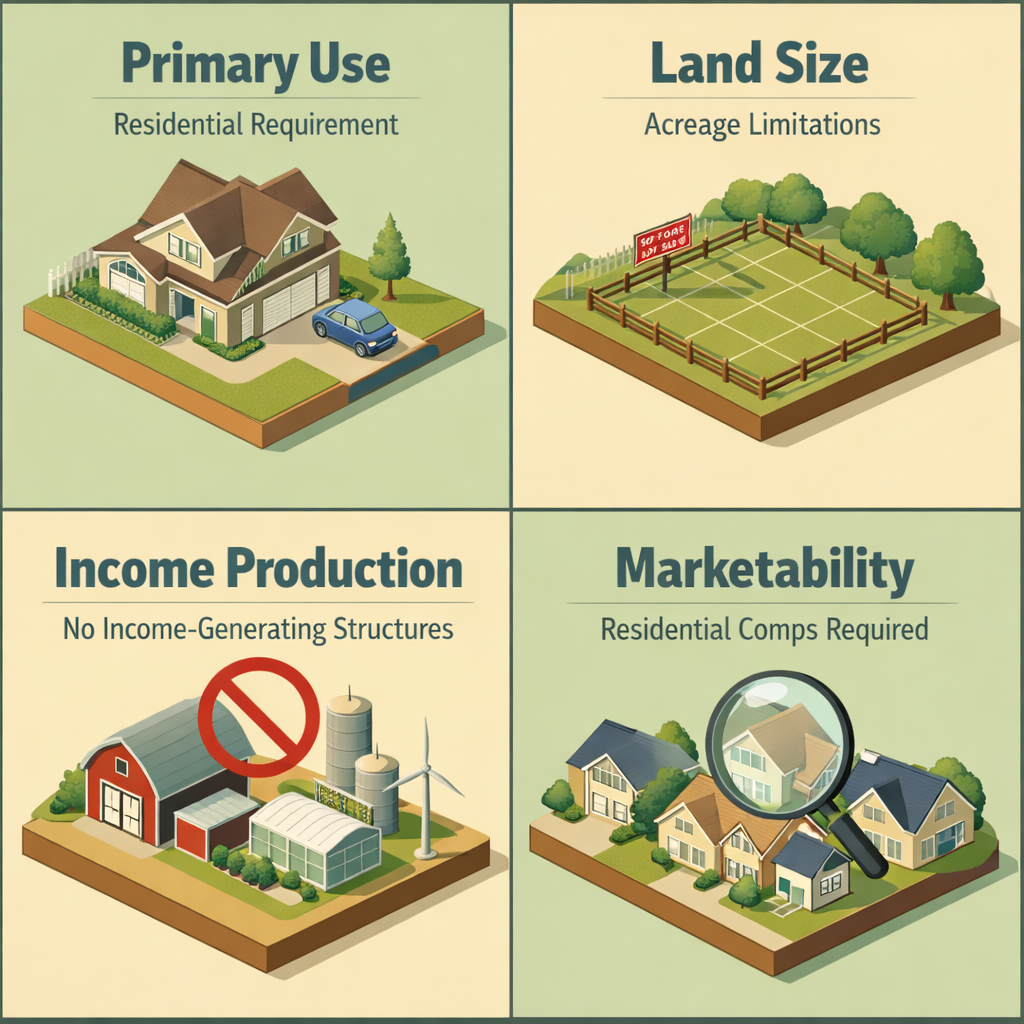
Here are some key factors the USDA typically evaluates when a property carries an agricultural zoning label:
- Primary use must be residential: The home must function as the borrower's primary residence. It cannot be used mainly for farming or commercial agricultural activity.
- Land size limitations: USDA guidelines generally limit the size of the land that can be included in the loan. Larger acreages may be acceptable if the lender and USDA determine the extra land doesn't diminish the property's residential character, but there's no universal acreage cap — this is often evaluated case by case.
- No income-producing agricultural operations: If the property includes barns, silos, greenhouses, or other structures tied to active farming operations that generate income, this could disqualify it — or at minimum, complicate the appraisal and eligibility review.
- Marketability: The property must be readily marketable as a residential home, meaning comparable sales (comps) in the area should reflect residential use rather than purely agricultural transactions.
It's also worth noting that the USDA relies heavily on appraisals from certified appraisers familiar with rural properties. The appraiser's assessment of the property's primary use and marketability plays a significant role in whether agricultural zoning becomes a roadblock or a non-issue.
Borrower Eligibility: Income, Credit, and Residency Standards
Even if a property clears the agricultural zoning hurdle, the borrower still needs to meet USDA program qualifications. These guidelines are designed to ensure the program serves its intended audience — rural residents with modest incomes who may not qualify for conventional financing.
Income Limits
USDA loans are subject to household income limits, which vary by location and household size. These limits are typically set at 115% of the area median income (AMI) for the guaranteed loan program. Because income limits differ across counties and states, borrowers should check the USDA's official eligibility map or speak with an approved lender to confirm their household qualifies.
Credit Requirements
While the USDA doesn't publish a strict minimum credit score, most approved lenders look for a score of at least 640 for streamlined processing. Borrowers with scores below that threshold may still qualify, but they'll likely face more manual underwriting and additional documentation requirements. A clean payment history and manageable debt levels are viewed favorably by underwriters reviewing USDA applications.
Primary Residency Requirement
USDA loans are strictly for primary residences. Borrowers must occupy the home as their main dwelling — investment properties or vacation homes are not eligible. This aligns directly with the agricultural zoning question: if a borrower intends to operate a working farm on the property rather than live there as a home, the application is unlikely to be approved under this program.
What the Appraisal Process Looks Like for Agriculturally Zoned Homes
The appraisal is one of the most pivotal steps when financing a home on agriculturally zoned land through a USDA loan. The USDA requires a property to meet its minimum property standards (MPS), which focus on safety, structural soundness, and livability. But when agricultural zoning is in the picture, the appraiser's job becomes more layered.
Appraisers evaluating these properties must typically determine:
- Whether the home's value is driven primarily by its residential features or its land and agricultural potential
- Whether comparable sales used to support the home's value come from residential transactions or agricultural land sales
- Whether any outbuildings or farm structures contribute to or detract from the property's residential marketability
If the appraiser finds that the property's value is largely tied to its agricultural use — rather than its function as a home — this could trigger additional scrutiny from the USDA. In some cases, lenders may require a second opinion or a more detailed analysis before the loan can move forward.
It's also possible that the USDA agricultural property zoning classification may cause the appraisal to exclude certain farm-specific improvements from the loan's collateral value. Borrowers should be prepared for these nuances and work with lenders experienced in rural mortgage financing.
Common Misconceptions About USDA Loans and Farm Properties
There's a lot of confusion out there about what USDA loans can and can't finance. Let's address some of the most common misunderstandings head-on.
Misconception 1: USDA Loans Can Finance Working Farms
The USDA's Rural Development housing loan programs are not designed to finance active farming operations. They're residential mortgage products. The USDA does have separate Farm Service Agency (FSA) loan programs specifically for farmers and ranchers — but those are entirely different products with different qualifications and purposes.
Misconception 2: Any Rural Property Automatically Qualifies
Being located in a rural area doesn't automatically make a property eligible. The land must fall within a USDA-designated eligible zone, which you can verify on the USDA's online eligibility map. Agricultural zoning at the county or municipal level doesn't always align perfectly with USDA rural designation boundaries.
Misconception 3: Large Acreage Is Always a Disqualifier
This is partly true but not an absolute rule. Some USDA-approved lenders have successfully closed loans on properties with several acres of land — as long as the residential nature of the home was clearly established and the extra land didn't dominate the property's character or value. Borrowers with larger parcels should consult directly with an experienced USDA lender to evaluate feasibility on a case-by-case basis.
Tips for Homebuyers Navigating USDA Approval on Zoned Agricultural Land
If you're serious about pursuing a USDA loan on a property with agricultural zoning, there are some practical steps you can take to improve your chances of a smooth approval process.
- Work with a USDA-experienced lender: Not all mortgage lenders are equally familiar with rural property nuances. Find a lender who has a track record of closing USDA loans on properties with agricultural designations.
- Get a pre-appraisal opinion: Before you make an offer, consider having a rural property specialist give you an informal opinion on whether the home's primary character is residential. This can help you avoid surprises during underwriting.
- Gather documentation early: If the property has outbuildings or farm equipment, be ready to clarify that these won't be used for income-producing agricultural activity. Written statements or lease agreements (if applicable) may help support your case.
- Verify USDA eligibility online: Use the USDA's official eligibility mapping tool to confirm the property's location qualifies before applying too much time or money in the process.
- Understand your income relative to local limits: Since income thresholds vary by county, double-check your household's eligibility before assuming you qualify. A mortgage professional can pull the current limits for your specific area.
Understanding USDA loan requirements for a property with agricultural zoning isn't just about knowing the rules — it's about working strategically within them. Preparation, transparency, and the right team of professionals can make a meaningful difference in your outcome.
●Conclusion
Navigating the overlap between USDA loan agricultural property zoning and standard mortgage requirements might feel overwhelming at first, but it's entirely manageable with the right guidance. The key takeaway is that USDA loans can work for properties on agriculturally zoned land — but only when the home's primary purpose is residential, the borrower meets program qualifications, and the property holds up under a rigorous appraisal. If you're a homebuyer exploring rural properties or a homeowner considering refinancing a rural home, speaking with a knowledgeable USDA-approved lender is the best first step. At LoanWise, we're here to help you understand your options and find a path to financing that fits your goals. Reach out today to connect with a loan specialist who understands the unique complexities of rural home financing.