
Owning a property with a separate guest house can be a significant financial asset. Whether you use it for rental income, housing family members, or simply as extra living space, that additional structure may add meaningful value to your home. But when it comes to understanding HELOC requirements for a property with a separate guest house, many homeowners find themselves in unfamiliar territory. Lenders tend to evaluate these properties differently than standard single-family homes, and knowing what to expect can make the process far less stressful. This article walks you through everything you need to know — from how your equity is calculated to how the guest house affects your appraisal and approval odds.
What Is a HELOC and How Does It Work for Unique Properties
A Home Equity Line of Credit (HELOC) is a revolving line of credit secured by the equity in your home. Unlike a traditional loan, it works somewhat like a credit card — you draw funds as needed during a set draw period, typically around ten years, and then repay the balance during a repayment period that often follows.
For most single-family homes, the process is fairly straightforward. But properties with additional structures — like a detached guest house, in-law suite, or accessory dwelling unit (ADU) — introduce a layer of complexity. Lenders must determine how to classify the property, how to value it, and how much risk it presents. These factors can directly influence your credit limit, interest rate, and even whether you qualify at all.
It's worth noting that not every lender handles non-standard properties the same way. Some may be more comfortable with guest houses that are modest and clearly secondary to the main residence. Others might require more detailed documentation or a specialized appraisal process before moving forward. Shopping around and working with a lender experienced in properties like yours can make a meaningful difference.
How Lenders Classify Properties with a Separate Guest House
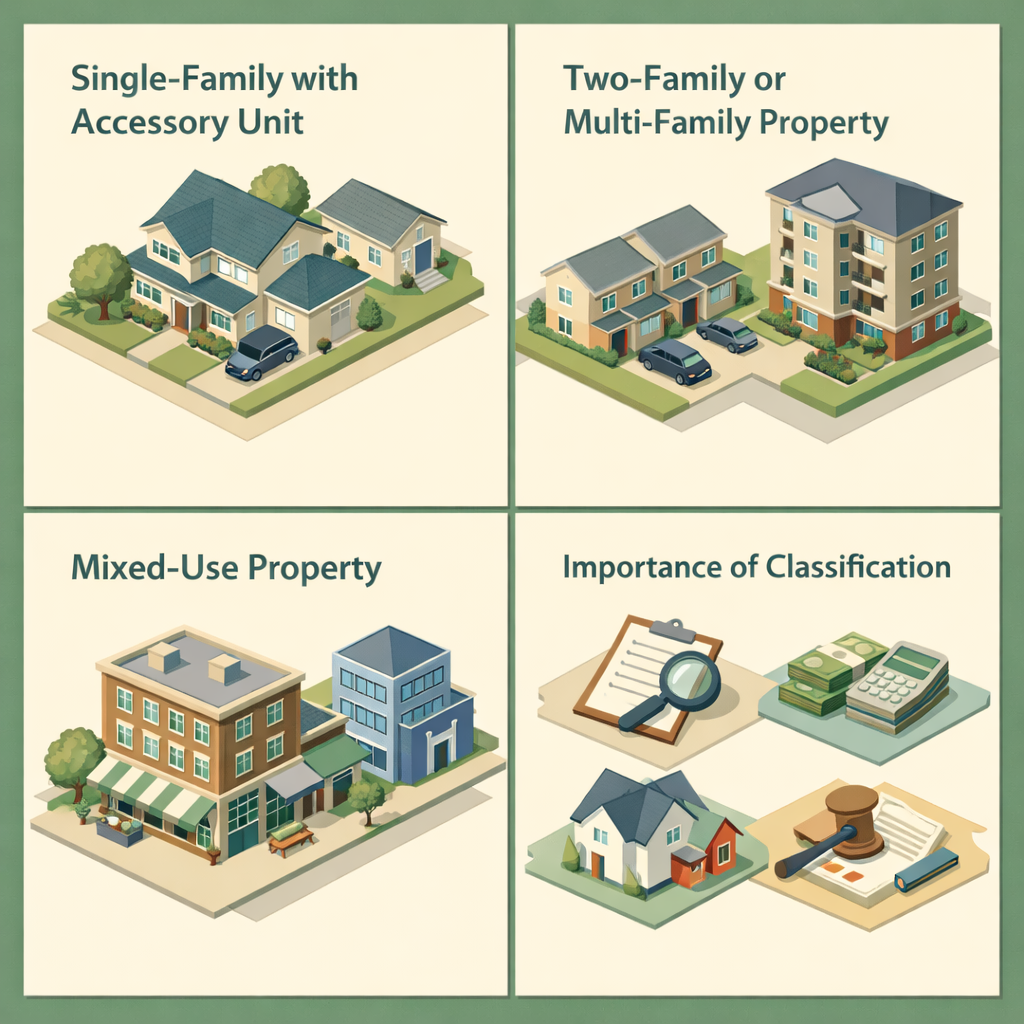
One of the first things a lender will do is classify your property. This step matters more than many homeowners realize, because the classification affects which loan programs apply, how the appraisal is conducted, and what guidelines must be followed.
A property with a guest house may be classified in several ways:
- Single-family with accessory unit: This is the most common classification when the guest house is smaller, clearly secondary, and located on the same parcel as the main home.
- Two-family or multi-family property: If the guest house has its own separate entrance, kitchen, and utilities, lenders might view it as a second dwelling unit, which could push the classification into multi-family territory.
- Mixed-use property: In rarer cases, if the guest house is used for business purposes, it may fall into a different lending category entirely.
The classification matters because HELOCs on multi-family properties often come with stricter requirements, including higher equity thresholds and additional underwriting scrutiny. If your guest house has a full kitchen and separate utilities, be prepared to explain its use and provide documentation to support the classification your lender applies.
HELOC Guest House Appraisal: What the Process Looks Like
The appraisal is one of the most critical steps in securing a HELOC, and it becomes even more important when a guest house is involved. A HELOC guest house appraisal typically requires the appraiser to evaluate both structures together as part of a single property assessment.
Here's what that process generally involves:
- Comparable sales analysis: The appraiser looks for recently sold homes in your area that are similar in size, features, and configuration. Finding true comparables for properties with guest houses can be challenging in some markets, which may affect how confidently value can be assigned.
- Gross living area calculation: Appraisers typically only count conditioned, finished living space. A guest house with proper heating, cooling, and insulation may be included in the total square footage, but a basic studio without climate control might not.
- Income approach consideration: If the guest house generates rental income, some appraisers may factor that income potential into the property's value — though this depends on the lender's guidelines and the appraiser's methodology.
- Condition and compliance review: The guest house must typically meet local building codes. Unpermitted structures could be flagged, potentially lowering your appraised value or complicating the approval process.
It's a good idea to ensure your guest house is permitted and in good condition before ordering an appraisal. Structural issues, code violations, or lack of proper permits could reduce your home's appraised value and limit how much equity you can access.
Equity Requirements and Loan-to-Value Limits You Should Know
To qualify for a HELOC, lenders typically require that you retain a certain amount of equity in your home after the line of credit is established. This is expressed as a combined loan-to-value ratio (CLTV), which compares all outstanding loan balances — including your first mortgage and the new HELOC — against your home's appraised value.
Most lenders cap the CLTV at around 80% to 90%, though this can vary. For properties with guest houses classified as multi-family, some lenders may impose lower CLTV limits, meaning you'd need more equity to qualify for the same credit line.
For example, if your property is appraised at $500,000 and your lender allows a maximum CLTV of 85%, you could have a total of up to $425,000 in outstanding balances. If your existing mortgage balance is $300,000, you might access a HELOC of up to $125,000 — assuming you meet all other eligibility criteria.
Keep in mind that the presence of a guest house could either help or complicate this math. If the appraiser values the guest house favorably and it increases your total property value, you may qualify for a larger line. But if the guest house is unpermitted or reduces your appraisal, your available equity could shrink.
Credit Score and Income Documentation for Mixed-Structure Homes
Beyond the appraisal and property classification, lenders will also evaluate your financial profile carefully. The credit and income requirements for a HELOC on a property with a guest house are often similar to those for standard homes, but there are a few nuances worth understanding.
In terms of credit, most lenders look for a score of at least 620, though better rates and terms typically become available at 700 or above. A stronger credit profile can help offset any concerns a lender might have about the complexity of your property.
When it comes to income documentation, things can get a bit more involved if your guest house is rented out. Lenders may ask for:
- Signed lease agreements showing rental income from the guest house
- Tax returns or Schedule E forms confirming reported rental income
- Bank statements demonstrating consistent rent deposits
- A rental history of at least one to two years in some cases
On the positive side, rental income from a guest house could potentially strengthen your debt-to-income (DTI) ratio, making it easier to qualify. However, if the rental income isn't well-documented or hasn't been reported on your taxes, lenders may not count it — and in some cases, it could raise questions about how the property has been used.
Common Challenges Homeowners Face and How to Navigate Them
Understanding HELOC requirements for a property with a separate guest house means being honest about the hurdles that can come up. Here are some of the most common issues homeowners encounter — and practical ways to address them:
- Unpermitted guest house: If the structure was built without proper permits, you may need to work with your local municipality to get it permitted before applying for a HELOC. This process takes time but can significantly improve your chances of approval and your appraised value.
- Low comparable sales: In markets where homes with guest houses are rare, appraisers may struggle to find strong comps, which could result in a conservative valuation. Providing the appraiser with a list of similar properties — even from nearby areas — may help.
- Lender reluctance: Not all lenders are comfortable with non-standard properties. If you're turned down by one institution, it's worth approaching portfolio lenders or credit unions that may have more flexibility in their underwriting guidelines.
- Higher DTI due to existing obligations: If you carry significant debt, the added complexity of a guest house property might push lenders to scrutinize your financials more closely. Reducing existing debt before applying could help improve your DTI ratio.
Patience and preparation tend to go a long way here. Gathering your documents early, working with an experienced real estate attorney or mortgage advisor, and choosing the right lender for your situation can help smooth out the process considerably.
Tips for Strengthening Your HELOC Application on a Multi-Structure Property
If you're planning to apply for a HELOC and your home includes a guest house, there are several proactive steps you can take to put your best foot forward:
- Get permits in order: Ensure all structures on your property are properly permitted and comply with local building codes before the appraisal.
- Document rental income thoroughly: If you rent out the guest house, keep meticulous records of lease agreements, payment history, and tax filings.
- Improve your credit score: Pay down revolving balances, avoid new credit inquiries, and resolve any errors on your credit report in advance.
- Choose the right lender: Look for lenders with experience in properties that include ADUs, guest houses, or secondary structures. Specialty lenders and community banks may offer more flexible options.
- Request a pre-appraisal consultation: Some homeowners find it helpful to speak with a licensed appraiser informally before the formal process begins. This can help you understand how the guest house might be valued and whether any improvements could increase your overall property value.
Taking these steps ahead of time not only improves your chances of approval but may also help you secure a more favorable credit limit and interest rate. Being proactive and organized signals to lenders that you're a responsible borrower — which matters more than many people think.
●Conclusion
Understanding HELOC requirements for a property with a separate guest house takes a bit more research and preparation than a standard home equity application — but it's absolutely achievable with the right approach. From navigating the HELOC guest house appraisal process to ensuring your equity position is strong and your financial documents are in order, each step plays an important role in the outcome. If your property includes a guest house, don't let the complexity discourage you. Instead, treat it as an opportunity to work with knowledgeable professionals, get your paperwork organized, and position yourself as a confident, well-prepared borrower. At LoanWise, we're here to help you make the most of the equity you've built — whatever your property looks like. Reach out to one of our lending specialists today to explore your options and start the conversation.