
Buying your first home is one of the most exciting milestones in life — but if you're carrying student loan debt, it can also feel like one of the most daunting. Many first time homebuyers worry that their student loans will disqualify them from getting a mortgage, or that they simply won't be able to borrow enough to buy a home in their market. The good news is that the Federal Housing Administration (FHA) has specific programs and guidelines designed with borrowers like you in mind. Understanding FHA loan limits for first time homebuyers with student debt is a critical first step toward turning your homeownership dream into a reality. This article breaks down how FHA loans work, what the loan limits mean for you, and how your student debt factors into the approval process.
What Are FHA Loans and Why Do They Matter for First Time Buyers
FHA loans are mortgage products backed by the Federal Housing Administration, a division of the U.S. Department of Housing and Urban Development (HUD). Because the federal government insures these loans, lenders are typically willing to extend financing to borrowers who might not qualify for a conventional mortgage. This makes FHA loans one of the most popular options for first time homebuyers across the country.
There are several features that make FHA loans particularly attractive to new buyers:
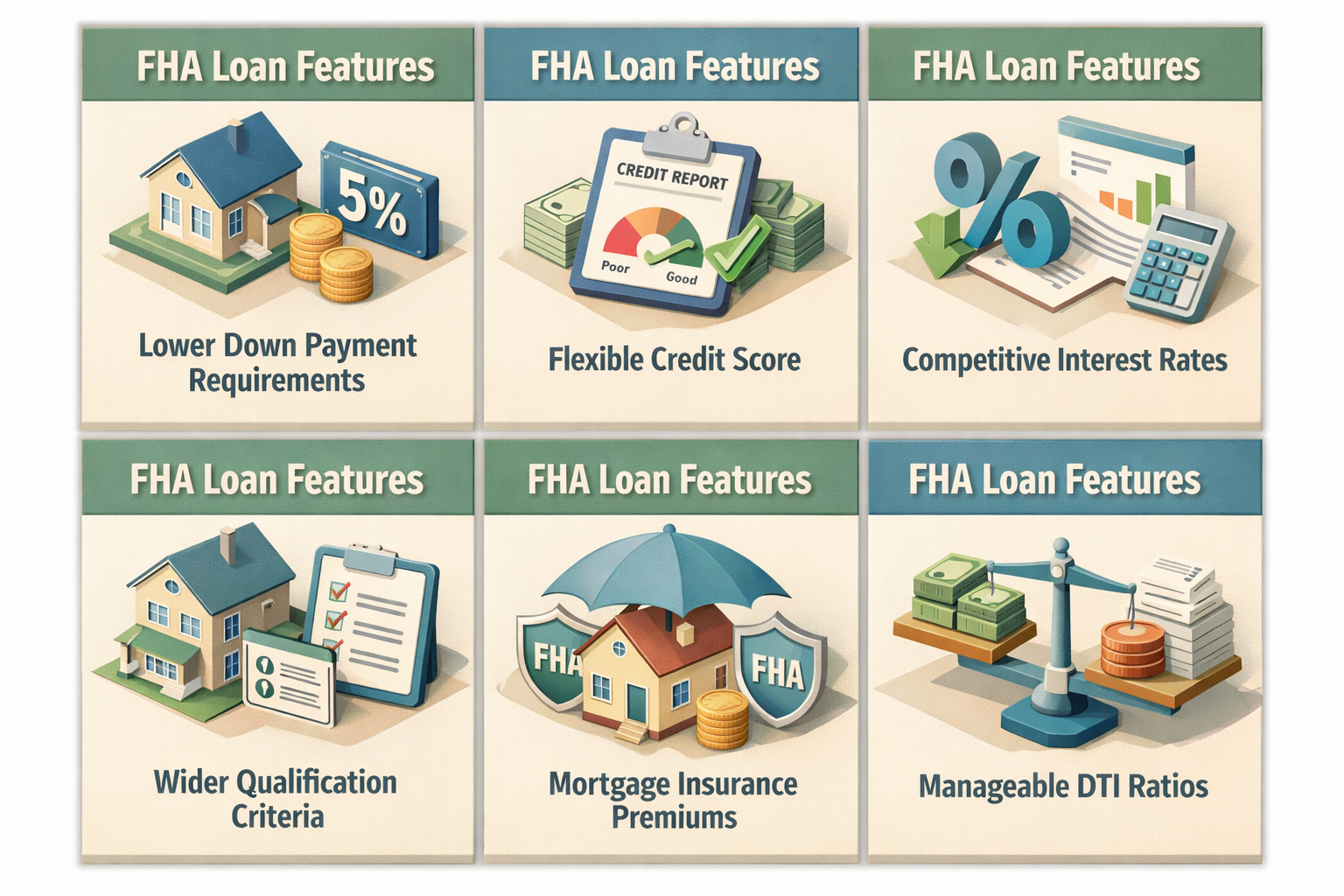
- Lower down payment requirements: Eligible borrowers may be able to put down as little as 3.5% of the purchase price, which is significantly less than the 20% often associated with conventional loans.
- More flexible credit score thresholds: FHA guidelines may allow borrowers with credit scores as low as 580 to qualify for the 3.5% down payment option, though individual lenders may set their own minimum requirements.
- Competitive interest rates: Because lenders carry less risk on government-backed loans, the interest rates offered can sometimes be more favorable than those on conventional products.
- Wider qualification criteria: FHA loans tend to accommodate borrowers with higher debt-to-income (DTI) ratios, which is especially relevant for those managing student loan payments.
It's worth noting that FHA loans do require borrowers to pay mortgage insurance premiums (MIP), both upfront and on an ongoing monthly basis. This adds to the overall cost of the loan, so it's important to factor that into your long-term budget planning.
Breaking Down FHA Loan Limits and How They Vary by Location
One of the most important concepts to understand when exploring FHA financing is the loan limit. The FHA sets a maximum amount it will insure for a single mortgage, and that ceiling varies depending on where the property is located. These limits are adjusted annually by HUD and are based on median home prices in each county or metropolitan area.
Generally speaking, FHA loan limits fall into two broad categories:
- Floor limits: These apply to lower-cost housing markets and represent the minimum FHA loan limit nationwide. For a single-family home, this floor is typically set at a percentage of the conforming loan limit established by the Federal Housing Finance Agency (FHFA).
- Ceiling limits: These apply to high-cost areas where home prices are significantly above the national median. Major metropolitan areas like San Francisco, New York City, and Los Angeles often have ceiling limits that are substantially higher than the national floor.
Because these numbers change year to year, it's always a good idea to check the most current FHA loan limits for your specific county before you begin house hunting. If the home you're interested in is priced above the FHA limit for your area, you would need to either look for a less expensive property, make a larger down payment to cover the gap, or explore alternative loan programs such as conventional or jumbo financing.
For first time buyers with student debt, staying within the FHA loan limit is especially important. Borrowing at or below the limit keeps your monthly obligations more manageable and may improve your debt-to-income ratio enough to clear the lender's approval threshold.
How Student Loan Debt Affects Your FHA Mortgage Qualification
Student debt is one of the most common financial concerns among first time homebuyers today, and it directly influences how lenders evaluate your mortgage application. The key metric lenders look at is your debt-to-income (DTI) ratio — the percentage of your gross monthly income that goes toward recurring debt payments, including credit cards, car loans, and of course, student loans.
FHA guidelines typically allow a maximum DTI of up to 43%, though some lenders may approve higher ratios under certain compensating circumstances. Here's where things get nuanced when it comes to student loans:
- Loans in repayment: If you're actively making payments on your student loans, lenders will use your actual monthly payment amount when calculating your DTI.
- Loans in deferment or forbearance: This is where first time buyers often run into confusion. Even if your student loans are currently deferred, FHA guidelines still require lenders to account for a projected payment in your DTI calculation. Historically, lenders used 1% of the outstanding loan balance as the estimated payment, but HUD has revised its guidance over time. As of more recent policy updates, lenders may be permitted to use the actual documented payment from the loan servicer if that payment is greater than zero — even during deferment.
- Income-driven repayment plans: If you're enrolled in an income-driven repayment (IDR) plan with a qualifying monthly payment, lenders may be able to use that lower payment figure. This can meaningfully reduce your calculated DTI and improve your chances of approval.
It's worth speaking with a HUD-approved housing counselor or a knowledgeable mortgage professional to understand exactly how your student loan repayment status will be treated under current FHA guidelines. The rules in this area have evolved, and what applied a few years ago may no longer reflect today's policy.
Understanding FHA Loan Limits for First Time Homebuyers with Student Debt in Practice
Let's put this all together with a practical example. Suppose you're a first time buyer earning $60,000 per year with $40,000 in remaining student loan debt. You're enrolled in an income-driven repayment plan with a monthly payment of $200. You also have no other significant debt obligations.
Here's how an FHA lender might assess your situation:
- Your gross monthly income is approximately $5,000.
- Your student loan payment of $200 per month represents 4% of your gross monthly income on its own.
- If your estimated new mortgage payment — including principal, interest, taxes, insurance, and MIP — comes to around $1,400 per month, your total DTI would be approximately 32%, which falls comfortably within FHA's typical guidelines.
In this scenario, understanding FHA loan limits for first time homebuyers with student debt becomes very practical. If you're shopping in a county with an FHA loan limit of $498,257 (a commonly referenced floor in recent years), you'd need to ensure the home's purchase price, minus your down payment, stays within that ceiling. If your target home is priced at $400,000 and you put down 3.5% ($14,000), your loan amount would be approximately $386,000 — well within the limit.
Of course, every borrower's situation is different. Factors like your credit score, employment history, savings, and the specific lender you work with will all play a role. The example above is illustrative and not a guarantee of approval or specific terms.
Strategies to Strengthen Your FHA Application When You Have Student Loans
Even if your student debt is substantial, there are several steps you can take to improve your position as a mortgage applicant. These strategies may help you qualify for a better loan amount, a lower interest rate, or both.
- Enroll in an income-driven repayment plan: As discussed above, moving to an IDR plan could reduce your documented monthly student loan payment, which directly lowers your DTI ratio.
- Pay down other debts first: If you have credit card balances or a car loan, reducing those obligations before applying for a mortgage can free up room in your DTI calculation.
- Build your credit score: A higher credit score may give you access to better rates and terms. Paying all bills on time, keeping credit card utilization low, and avoiding new credit applications in the months before you apply can all help.
- Save for a larger down payment: While FHA allows as little as 3.5% down, putting more money down reduces your loan amount and may improve your overall financial profile in the eyes of lenders.
- Consider down payment assistance programs: Many state and local housing agencies offer grants or second mortgage products specifically for first time buyers. These programs can sometimes be combined with FHA financing, effectively reducing your out-of-pocket costs.
- Document your employment and income thoroughly: Lenders want to see stability. Two years of consistent employment history and clear income documentation can go a long way toward building lender confidence.
Working with an experienced mortgage advisor who understands FHA loan limits and student loan guidelines can make a significant difference in how your application is structured and presented.
Common Misconceptions About FHA Loans and Student Debt
There are quite a few myths circulating about FHA loans and student debt that can discourage potential homebuyers from even applying. It's worth addressing some of the most common ones directly.
Myth 1: You can't get an FHA loan if you have student debt. This is simply not true. Having student loans does not automatically disqualify you from FHA financing. What matters is how that debt affects your overall DTI ratio and whether you meet the other eligibility requirements.
Myth 2: Deferred student loans don't count against you. Unfortunately, this isn't accurate either. As noted earlier, FHA guidelines do require lenders to account for deferred student loan obligations in some way when calculating your DTI. The specific method may vary based on current HUD guidance, but deferred loans are not ignored entirely.
Myth 3: FHA loans are only for low-income borrowers. FHA loans don't have income caps for most programs. They're available to a wide range of buyers — the qualifying factors are primarily your credit profile, DTI ratio, and the loan amount relative to the FHA limit for your area.
Myth 4: The FHA loan limit is the same everywhere. As we covered earlier, FHA limits vary significantly by county. Assuming the national floor applies to a high-cost metro area could lead to serious miscalculations in your homebuying budget.
Separating fact from fiction is an essential part of being a well-prepared buyer. The more clearly you understand how the program actually works, the better positioned you'll be to make smart, confident decisions.
●Conclusion
Navigating the mortgage process as a first time homebuyer with student debt might feel overwhelming, but it's far from impossible. The FHA loan program exists specifically to help buyers who may not fit the conventional lending mold — and that includes millions of Americans who are still paying off their education. By understanding FHA loan limits for first time homebuyers with student debt, you can set a realistic budget, structure your application strategically, and move forward with confidence. Whether you're just starting to research your options or you're ready to apply, working with a knowledgeable lending professional can help you make the most of what the FHA program has to offer. Your path to homeownership may be closer than you think.