Purchasing a home is one of the most significant financial decisions most people will ever make. For many homebuyers, putting down just 5% on a conventional loan — often with the help of a co-signer — can make homeownership feel achievable. But beyond the down payment itself, there's another layer of expenses that frequently catches buyers off guard: closing costs. Understanding closing costs for conventional loan with co-signer and 5% down is essential if you want to enter the process prepared, confident, and without financial surprises. In this guide, we'll break down what these costs include, how a co-signer fits into the picture, and what strategies might help you manage your overall expenses at the closing table.
What Are Conventional Loan Closing Costs and Why Do They Matter?
Conventional loan closing costs are the fees and expenses paid at the end of a real estate transaction — the moment when ownership officially transfers from seller to buyer. Unlike government-backed loans such as FHA or VA mortgages, conventional loans are not insured by a federal agency, which means lenders may structure certain fees slightly differently. That said, the general categories of conventional loan closing costs tend to follow a fairly predictable pattern.
Closing costs typically range from about 2% to 5% of the loan amount, though this can vary based on the lender, the property's location, and the specific terms of your loan. On a $300,000 home purchased with a 5% down payment — meaning you're financing roughly $285,000 — that could translate to anywhere from approximately $5,700 to $14,250 in closing costs. It's worth noting that these are estimates, and your actual figures will depend on your unique transaction details.
Why do these costs matter so much? Because many first-time homebuyers budget carefully for their down payment but overlook the closing cost requirement entirely. Arriving at the closing table underprepared can delay or even derail a purchase. Understanding these fees in advance helps you plan your budget wisely and avoid last-minute financial stress.
A Breakdown of Common Fees You'll Encounter
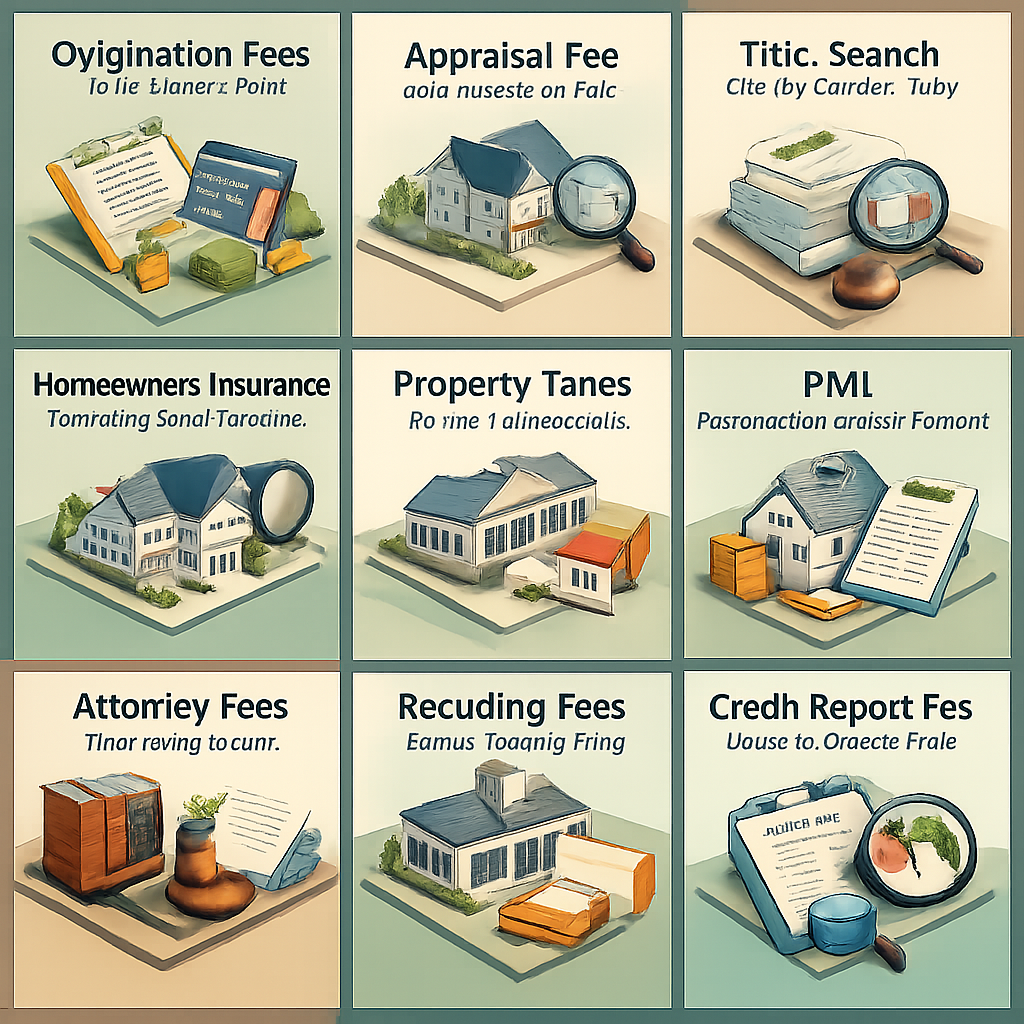
Conventional loan closing costs are made up of multiple individual charges, each serving a specific purpose. Here's a closer look at what you might expect to see on your Closing Disclosure:
- Origination fees: Charged by the lender for processing and underwriting your loan. These can sometimes be negotiated.
- Appraisal fee: Covers the cost of having a licensed appraiser assess the property's market value. Lenders require this to confirm the home is worth what you're paying.
- Title search and title insurance: A title search ensures the property has no outstanding liens or legal disputes, while title insurance protects both you and the lender from future claims.
- Homeowners insurance (prepaid): Most lenders require the first year's premium to be paid upfront at closing.
- Property taxes (prepaid): Depending on your closing date and local tax cycle, you may need to prepay a portion of property taxes into an escrow account.
- Private mortgage insurance (PMI): Because you're putting down less than 20%, PMI is typically required on a conventional loan. You may pay an initial premium at closing in addition to monthly PMI premiums.
- Attorney or settlement fees: In some states, a real estate attorney must oversee the closing, which adds to your costs.
- Recording fees: Charged by local government to officially record the deed and mortgage documents.
- Credit report fee: A small fee for pulling your credit history during the application process.
These line items can add up quickly, which is why reviewing your Loan Estimate — provided within three business days of submitting your application — is so important. It gives you a detailed, standardized breakdown that you can use to compare lenders and plan your budget.
How a Low Down Payment Shapes Your Total Loan Cost
Opting for a low down payment conventional loan at 5% down is a popular choice among buyers who haven't yet accumulated a large cash reserve. It allows people to enter the housing market sooner, rather than spending years saving toward a 20% down payment. However, it does come with some financial trade-offs that are worth understanding clearly.
The most direct impact is the requirement for private mortgage insurance. PMI is added because the lender takes on more risk when you borrow a higher percentage of the home's value. Your PMI rate may depend on factors like your credit score, loan size, and the specific lender's policies. The good news is that PMI isn't permanent — on conventional loans, you can typically request its removal once your equity reaches 20%, and lenders are generally required to cancel it automatically when your loan-to-value ratio reaches 78%.
A smaller down payment also means a larger loan balance, which in turn results in higher monthly principal and interest payments. Over time, the interest paid on a higher loan balance adds up. Still, for many buyers, the ability to purchase sooner — and begin building equity — outweighs the short-term cost of PMI and slightly higher payments. The key is going in with a clear picture of the full financial commitment, including both your down payment and closing costs.
Understanding Closing Costs for Conventional Loan with Co-Signer and 5% Down
Adding a co-signer to a conventional loan application is a strategy some buyers use when their own credit score, income, or debt-to-income ratio doesn't fully meet lender requirements. A co-signer — sometimes referred to as a non-occupant co-borrower in mortgage terminology — agrees to take on legal responsibility for the loan if the primary borrower cannot make payments. This added security may help you qualify for financing you might not otherwise obtain on your own.
When it comes to understanding closing costs for conventional loan with co-signer and 5% down, it's important to recognize that the presence of a co-signer doesn't necessarily change the types of closing costs you'll pay, but it may influence certain aspects of your loan's overall cost structure. For example, if a co-signer's stronger credit profile helps you secure a lower interest rate, your prepaid interest costs at closing could be slightly different than they would have been at a higher rate. A better rate profile may also affect discount point decisions — some buyers pay upfront points at closing to buy down their interest rate.
It's also worth noting that some lenders may charge additional underwriting or processing fees when a co-signer is involved, since both applicants' financial profiles must be fully evaluated. Always ask your lender to clarify whether co-signer involvement affects any specific line items on your Loan Estimate.
Co-Signer Mortgage Requirements You Need to Know
Not everyone qualifies to be a co-signer, and understanding co-signer mortgage requirements before you approach someone about this arrangement is important for both parties. Lenders typically evaluate a co-signer's financial standing just as rigorously as the primary borrower's. Here's what lenders often look for:
- Strong credit history: A co-signer with a solid credit score — generally 620 or higher for conventional loans, though higher scores are more favorable — can help strengthen the overall application.
- Stable income and employment: Lenders want to see that the co-signer has reliable income that could, in theory, support the loan payments if necessary.
- Acceptable debt-to-income ratio: Even after including the new mortgage obligation, the co-signer's total monthly debts should ideally fall within lender guidelines.
- Relationship to the borrower: Many conventional loan programs — particularly those backed by Fannie Mae or Freddie Mac — have guidelines about who may serve as a non-occupant co-borrower. Family members are commonly accepted; some programs may have restrictions on unrelated co-signers.
It's also essential for the co-signer to understand the full weight of this commitment. The mortgage will appear on their credit report, and any missed payments by the primary borrower could negatively affect the co-signer's credit. This is a financial and personal responsibility that both parties should discuss thoroughly before moving forward.
Strategies to Reduce or Manage What You Pay at the Closing Table
The good news is that closing costs aren't always fixed. There are several legitimate strategies that may help you reduce or manage these expenses, giving you more breathing room when you're already stretching to cover a down payment.
- Shop multiple lenders: Lender fees can vary significantly from one institution to another. Getting Loan Estimates from at least two or three lenders gives you a basis for comparison and potential leverage in negotiations.
- Negotiate seller concessions: In some markets, especially when inventory is higher, sellers may agree to contribute toward your closing costs as part of the purchase negotiation. Conventional loan guidelines typically allow sellers to contribute between 3% and 9% of the purchase price toward buyer closing costs, depending on your down payment amount and occupancy status.
- Ask about lender credits: Some lenders offer a higher interest rate in exchange for credits that reduce your upfront closing costs. This approach — sometimes called a no-closing-cost loan — trades short-term savings for a slightly higher monthly payment over time.
- Review every fee carefully: Some fees, such as settlement or title fees, may be negotiable or shoppable. Your Loan Estimate will indicate which fees you can shop for, meaning you're free to use a provider of your choosing.
- Roll costs into the loan (in limited cases): While conventional loans don't typically allow closing costs to be rolled into the loan balance the same way some refinance products do, there may be structured options worth discussing with your lender.
Planning ahead and asking the right questions can make a meaningful difference in what you ultimately pay. Don't hesitate to advocate for yourself throughout the process.
●Conclusion
Navigating the home-buying process with a 5% down payment and a co-signer is entirely possible, and for many buyers, it's been the gateway to achieving homeownership sooner than expected. The key is entering the process well-informed. Understanding closing costs for conventional loan with co-signer and 5% down means knowing what fees to expect, how a co-signer affects your application and costs, and what strategies might help you manage your total out-of-pocket expenses. Every homebuyer's situation is unique, so working closely with a knowledgeable mortgage professional — one who can walk you through your personalized Loan Estimate and answer questions specific to your financial picture — is always a smart move. At LoanWise, we're here to help you make confident, informed decisions every step of the way. Reach out today to explore your conventional loan options and start your homeownership journey on solid ground.