Building a successful photography business takes more than talent behind the lens. It also takes the right tools. Whether you're looking to upgrade to a full-frame mirrorless camera, invest in professional lighting rigs, or add drone equipment to your service offerings, the cost of professional gear can add up quickly. For many freelance photographers, the challenge isn't identifying what they need — it's figuring out how to pay for it. That's where understanding the startup loan options for a freelance professional photographer needing equipment upgrades becomes essential. The good news is that there are more financing paths available today than ever before, and some of them are specifically designed with small business owners and self-employed professionals in mind.
Why Equipment Investment Is a Business Decision, Not Just a Purchase
Many freelance photographers think of gear purchases as personal expenses, but from a lending and business perspective, professional equipment is a capital investment. High-quality cameras, lenses, editing workstations, and studio lighting directly impact your ability to attract higher-paying clients, deliver better results, and expand into new markets like commercial photography, weddings, or corporate headshots.
When you frame your equipment needs as a business investment, you open the door to financing options that are specifically structured for commercial borrowers. Lenders who work with small businesses understand that revenue-generating assets — like professional camera systems — can justify a loan even when your business is relatively new. This perspective shift is important when you begin researching your options, because the type of loan you pursue should match the purpose of the purchase.
It's also worth noting that many business loan products allow borrowers to deduct interest payments as a business expense, which may provide some tax efficiency depending on your situation. Always consult with a qualified tax professional before making assumptions about deductibility.
Understanding the Lending Landscape for Self-Employed Professionals
One of the most common concerns freelance photographers have when exploring financing is whether their income qualifies. Since many photographers operate as sole proprietors or single-member LLCs, their income can appear irregular or inconsistent on paper — especially during the early stages of their business. Traditional lenders may view this as a risk factor.
However, the lending market has evolved significantly. There are now lenders who specialize in working with self-employed borrowers and can evaluate your income based on bank statements, invoices, or profit-and-loss statements rather than W-2s alone. This flexibility is particularly valuable for a freelance professional whose income may vary seasonally or project to project.
When approaching any lender, it helps to have your financial documentation organized and ready. This typically includes:
- Bank statements from the past 12 to 24 months
- Business tax returns if you've been operating for at least one year
- A simple business plan or statement of purpose outlining how the equipment will generate revenue
- Invoices or contracts showing existing or upcoming client work
Having these materials ready demonstrates financial responsibility and could strengthen your application significantly.
Startup Loan Options for a Freelance Professional Photographer Needing Equipment Upgrades
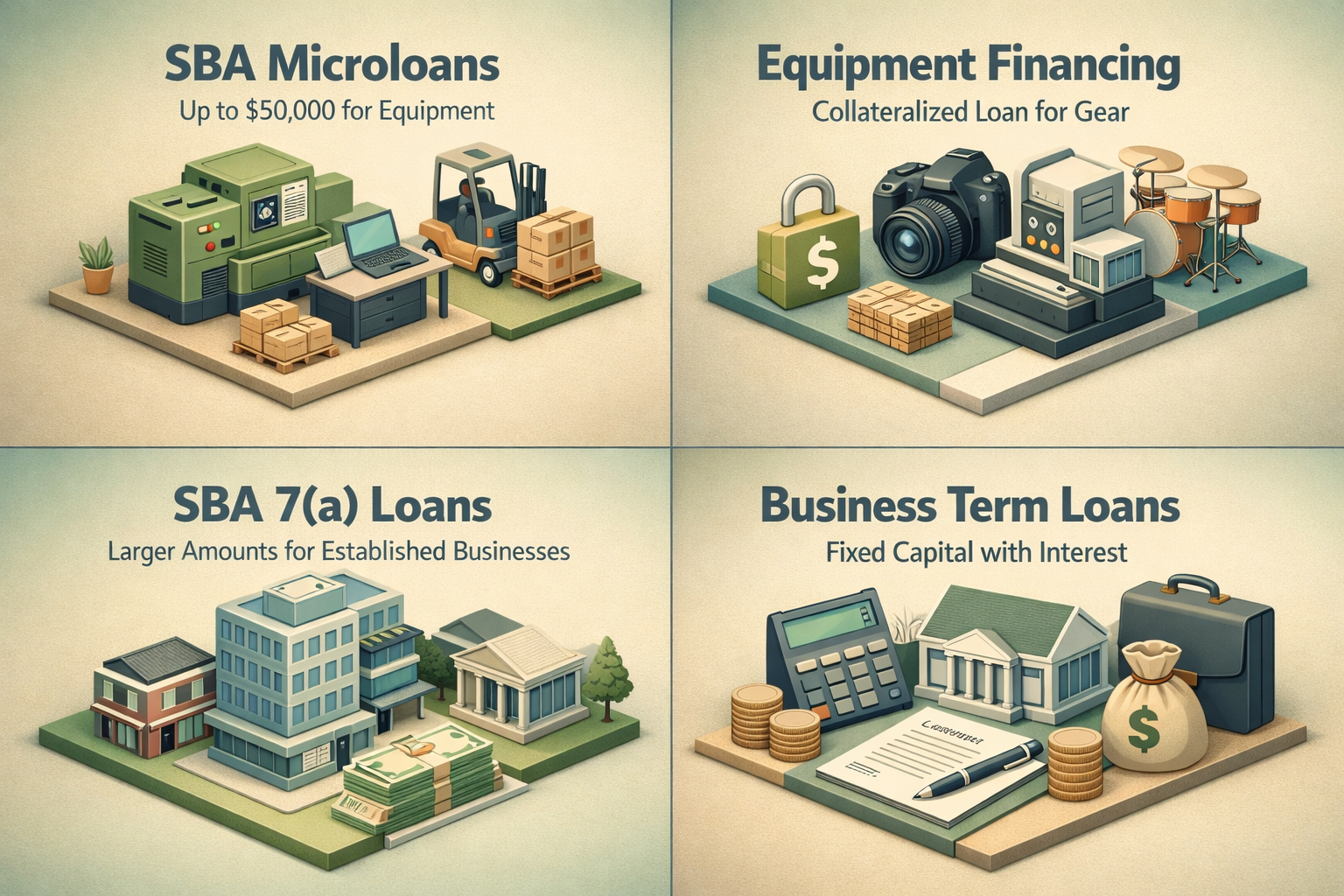
There's no single "best" loan for every photographer, but several financing products are worth exploring depending on your business stage, credit profile, and how much you need to borrow. Here's a breakdown of the most common startup loan options for a freelance professional photographer needing equipment upgrades:
SBA Microloans
The U.S. Small Business Administration (SBA) offers a microloan program that provides loans of up to $50,000 through nonprofit intermediary lenders. These loans are often accessible to newer businesses and those with limited credit history. Microloans can typically be used for working capital, supplies, and — importantly — equipment purchases. Because they're administered through community-based organizations, the application process may be more flexible and supportive than a traditional bank loan.
Equipment Financing
Equipment financing is a loan type specifically designed for purchasing business equipment. In most cases, the equipment itself serves as collateral, which may make it easier to qualify — even if you're early in your business journey. This could be an attractive option for photographers looking to finance camera systems, lighting setups, or editing hardware. Repayment terms often align with the expected useful life of the equipment, which can make monthly payments more manageable.
SBA 7(a) Loans
For photographers who've been operating for at least a year and have some documented revenue, the SBA 7(a) loan program may offer access to larger loan amounts with competitive terms. These loans can be used for a wide variety of business purposes, including equipment, and are partially guaranteed by the SBA, which may encourage lenders to work with borrowers who might not qualify for conventional financing on their own.
Business Term Loans
A traditional business term loan provides a lump sum of capital that you repay over a fixed period with interest. Online lenders and community banks often offer term loans to small business owners and may have more flexible qualification criteria than large national banks. If your photography business has been operating for at least six months and shows consistent revenue, a term loan could be worth exploring.
Business Lines of Credit as a Flexible Financing Alternative
Unlike a term loan, a business line of credit gives you access to a pool of funds that you can draw from as needed and repay over time. This revolving structure can be especially useful for photographers who need to make multiple equipment purchases over time rather than one large upfront investment.
For example, you might use a line of credit to purchase a new lens now, then draw on it again a few months later to invest in a new lighting kit when a commercial client contract comes in. You typically only pay interest on the amount you've drawn, not the full credit limit — which can make this a cost-efficient option for managing cash flow.
That said, qualifying for a business line of credit may require a more established business history compared to some other loan types. Lenders will likely want to see consistent revenue and a reasonable credit profile before approving access to revolving funds.
How Your Credit Profile Affects Your Loan Eligibility
Your personal and business credit scores play a meaningful role in determining which loan products you can access and at what interest rate. For newer freelancers who haven't yet established a business credit profile, lenders will often evaluate personal credit history instead. A stronger credit score may open the door to better terms, lower rates, and higher borrowing limits.
If your credit history has some blemishes, don't be discouraged. Some lenders — particularly those focused on startups and self-employed borrowers — may weigh other factors like revenue consistency, client contracts, or professional experience more heavily. It could be worth taking a few months to improve your credit before applying, if your equipment needs aren't immediately urgent.
Some practical steps that may help improve your credit standing include:
- Paying down existing revolving balances to reduce your credit utilization ratio
- Reviewing your credit report for errors and disputing any inaccuracies
- Avoiding new hard inquiries in the months before applying for a business loan
- Opening a dedicated business checking account to demonstrate financial separation between personal and business finances
Alternative Funding Sources Worth Considering for Photographers
Beyond traditional and SBA-backed loans, there are a few alternative funding avenues that may be worth exploring depending on your circumstances.
Crowdfunding and Client Retainers
Some creative professionals have successfully used crowdfunding platforms or advance retainer agreements with established clients to fund equipment upgrades. While not a traditional loan, these strategies can generate upfront capital without taking on debt. However, they tend to work better for photographers who already have an engaged audience or strong client relationships.
Vendor Financing and Lease Programs
Major photography equipment retailers and manufacturers sometimes offer financing programs or lease-to-own options directly to buyers. These programs may feature promotional interest rates or deferred payment periods, though it's important to read the terms carefully. High deferred interest rates can become costly if the balance isn't paid off during the promotional window.
Business Credit Cards
For smaller purchases — a new lens, a software subscription, or a storage upgrade — a business credit card with a 0% introductory APR period might offer a short-term, interest-free financing window. This strategy requires discipline to pay off the balance before the promotional period ends, but it could be a useful tool for managing smaller equipment investments.
Building a Strong Loan Application as a Freelance Photographer
Regardless of which loan product you pursue, the strength of your application can make a significant difference in the outcome. Lenders want to see that you understand your business, that you have a clear plan for how borrowed funds will generate returns, and that you're financially responsible.
Here are a few strategies that may help you present the strongest possible case:
- Quantify the opportunity: If a new camera system would allow you to book higher-end weddings or commercial shoots, estimate the revenue impact and include that in your business narrative.
- Show existing client relationships: Letters of intent, contracts, or testimonials from long-term clients can help demonstrate demand for your services.
- Keep your financials clean: Separate business and personal accounts, and make sure your bookkeeping is up to date before applying.
- Choose the right lender for your profile: Community banks, credit unions, and online lenders focused on small businesses may be more receptive to freelance photographer applications than large national banks with rigid underwriting criteria.
Taking the time to prepare thoroughly before applying isn't just about improving approval odds — it's also about ensuring you borrow the right amount at terms that genuinely support your business growth rather than strain it.
●Conclusion
Navigating the world of small business lending can feel overwhelming at first, especially when you're focused on running your creative business day to day. But understanding the startup loan options for a freelance professional photographer needing equipment upgrades puts you in a far better position to make informed, confident decisions about your financial future. Whether you explore an SBA microloan, equipment financing, a business line of credit, or an alternative funding path, the key is matching the right product to your specific situation. Take the time to assess your credit profile, organize your financial documentation, and speak with a knowledgeable lender who understands the unique needs of self-employed professionals. At LoanWise, we're here to help you find the financing solution that works for your business — so you can focus on what you do best.