
Smart Multi-Family Home Mortgage Strategies
Securing a mortgage for a multi-family home requires a different approach than traditional residential financing. Real estate investors who understand the unique requirements and opportunities in multi-family financing often find themselves with access to better terms and more scalable investment strategies. Multi-family properties offer distinct advantages, from steady rental income streams to improved cash flow potential, but navigating the financing landscape requires specific knowledge and preparation.
The key to successful multi-family investing lies in understanding how lenders evaluate these properties differently. Unlike single-family homes where personal income drives approval, multi-family mortgages often focus on the property's income-generating potential. This shift in evaluation criteria opens doors for investors who might not qualify for traditional mortgages but have identified strong rental properties with solid cash flow prospects.
Understanding Multi-Family Mortgage Requirements
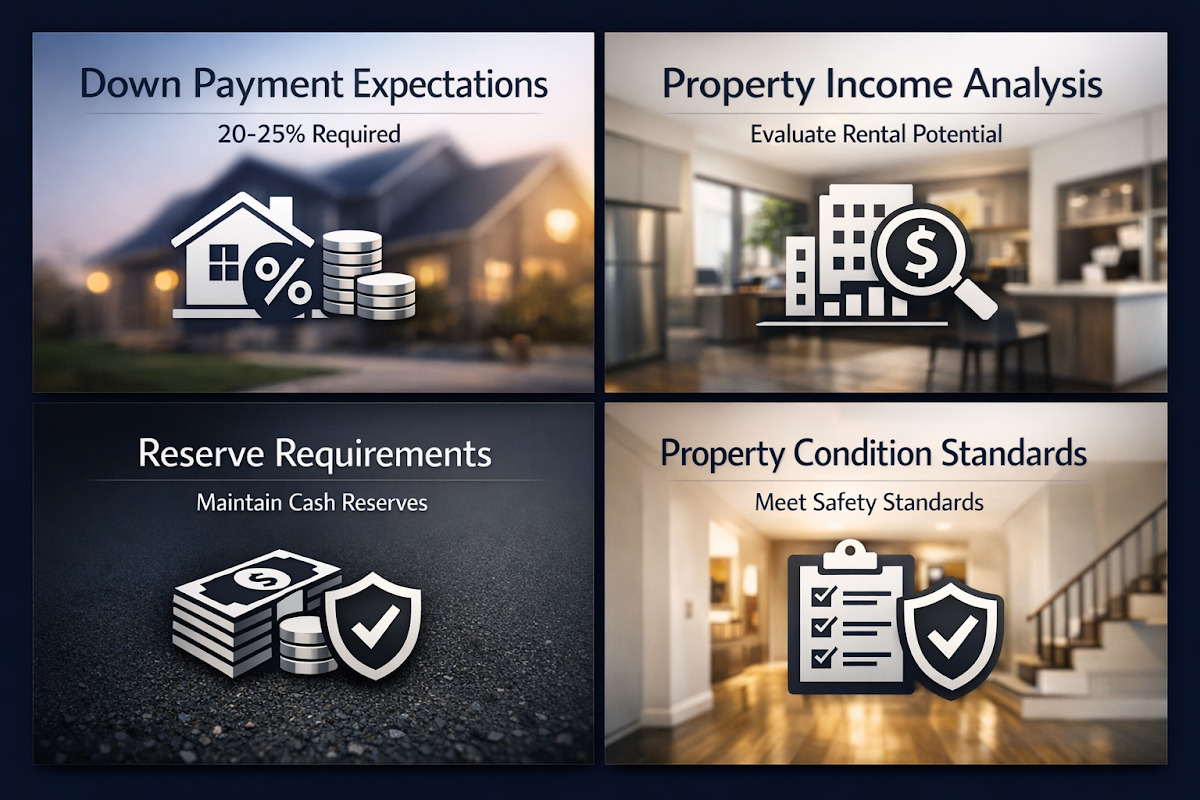
Understanding multi-family mortgage requirements forms the foundation of successful property investment. The financing process for multi-unit properties differs significantly from single-family home purchases, with lenders focusing on both the investor's qualifications and the property's income potential.
- Down Payment Expectations: Most lenders typically require 20-25% down for multi-family properties, though some programs may accept lower amounts for qualified investors. This higher down payment requirement reflects the increased risk associated with investment properties and helps ensure borrowers have sufficient equity in the deal.
- Property Income Analysis: Lenders evaluate the rental income potential of each unit, often requiring lease agreements or rental market analysis to verify income projections. This analysis helps determine whether the property can support the mortgage payments and provide positive cash flow for the investor.
- Reserve Requirements: Many lenders require investors to maintain cash reserves equal to several months of mortgage payments, ensuring they can handle vacancy periods or unexpected expenses. These reserves demonstrate financial stability and protect both the lender and borrower during challenging periods.
- Property Condition Standards: Multi-family properties must meet specific habitability and safety standards, often requiring professional inspections and appraisals that consider the income-producing nature of the investment. Properties in poor condition may require additional funding for repairs before financing approval.
DSCR Loans for Multi-Family Properties
DSCR loans for multi-family properties provide a powerful financing solution that focuses on rental income rather than personal income verification. These loans evaluate the property's ability to generate sufficient cash flow to cover debt payments, making them particularly attractive for investors building portfolios.
- Income-Based Qualification: DSCR loans qualify borrowers based on the property's rental income potential rather than personal employment history or tax returns. This approach allows investors to finance properties based on cash flow projections, opening opportunities for those with complex income situations or multiple investment properties.
- Streamlined Documentation: The application process typically requires fewer personal financial documents, focusing instead on property analysis, rental agreements, and market comparisons. This streamlined approach can accelerate the financing timeline and reduce administrative burden for experienced investors.
- Portfolio Scaling Benefits: Investors can use DSCR loans to acquire multiple properties without the personal income limitations that might restrict traditional financing. Each property stands on its own merit, allowing for faster portfolio expansion when suitable investment opportunities arise.
- Flexible Terms: Many DSCR loan programs offer competitive interest rates and terms that may be more favorable than other investor loan products, particularly for properties with strong rental income potential. The terms often reflect the reduced risk associated with income-producing properties in stable markets.
Rental Income Qualification Strategies
Rental income qualification strategies help investors maximize their borrowing power by properly documenting and presenting income from multi-family properties. Understanding how lenders calculate and verify rental income can significantly impact loan approval and terms.
- Market Rent Analysis: Prepare comprehensive market rent studies that demonstrate the competitive rental rates in your area, using comparable properties and professional appraisals to support income projections. This analysis should account for current market conditions and seasonal variations that might affect rental rates.
- Lease Documentation: Maintain detailed lease agreements and rental histories that show consistent income streams and tenant stability, as lenders often multiply rental income by a factor of 75% to account for vacancy and management costs. Strong documentation of rental income history can improve qualification ratios and loan terms.
- Vacancy Factor Planning: Account for realistic vacancy rates in your income calculations, typically ranging from 5-10% depending on the local market and property type. Conservative vacancy projections demonstrate responsible investment analysis and may result in more favorable lending decisions.
- Professional Management Benefits: Consider professional property management services, as some lenders view professionally managed properties more favorably due to consistent rent collection and maintenance standards. Professional management can also provide detailed income and expense reports that strengthen your financing application.
Multi-Family Property Types and Financing
Multi-family property types and financing options vary significantly based on the size and classification of the investment. Understanding these distinctions helps investors choose properties that align with their financing capabilities and investment goals.
- Small Multi-Family Properties (2-4 units): These properties often qualify for residential financing programs with more favorable terms and lower down payment requirements. Many lenders treat 2-4 unit properties similarly to single-family homes, potentially offering better interest rates and more flexible qualification criteria for owner-occupied investments.
- Medium Multi-Family Properties (5-50 units): Properties in this range typically require commercial financing but may offer improved returns and financing benefits due to their scale and management efficiency. The 5-50 unit range often provides the sweet spot for investors seeking strong cash flow with manageable complexity and financing terms.
- Government-Backed Programs: Various government programs, including FHA and GSE loans, provide favorable financing terms for qualifying multi-family properties, particularly those serving affordable housing needs. These programs may offer lower down payments, competitive rates, and longer amortization periods that improve cash flow for investors.
- Bridge and Short-Term Financing: Some multi-family investments benefit from bridge loans or short-term financing during renovation periods or when preparing properties for long-term financing. These options provide flexibility for value-add strategies and property improvements that enhance long-term financing opportunities.
Market Conditions and Financing Opportunities
Market conditions and financing opportunities in the multi-family real estate sector continue to evolve, with increased lending capacity and favorable terms available for qualified investors. Recent changes in lending guidelines and government-sponsored enterprise loan limits have created new opportunities for multi-family investment.
- Increased Lending Capacity: The FHFA has raised loan caps for 2026, with Fannie Mae and Freddie Mac receiving $176 billion in combined lending authority, representing a 20% increase from 2025. This expanded capacity may provide more financing options and competitive terms for multi-family investors seeking to acquire or refinance properties.
- Interest Rate Environment: Current market conditions may present opportunities for investors to secure favorable financing terms, particularly for properties with strong income potential and experienced management. Rate fluctuations create windows of opportunity for refinancing existing properties or acquiring new investments with improved terms.
- Regional Market Variations: Different markets offer varying opportunities for multi-family investment, with some regions showing stronger rental demand and property appreciation potential. Understanding local market dynamics helps investors identify areas with favorable financing terms and investment prospects.
- Lender Competition: Increased competition among mortgage lenders has led to more diverse loan products and competitive terms for multi-family properties, particularly for investors with strong credit profiles and investment experience. Shopping multiple lenders can reveal significant differences in terms, fees, and program offerings.
●Conclusion
Successfully securing a mortgage for a multi-family home requires understanding the unique aspects of investment property financing. From DSCR loans that focus on rental income potential to navigating the various property types and their financing requirements, investors who master these strategies position themselves for long-term success.
The current market environment offers compelling opportunities for multi-family investment, with increased lending capacity and competitive terms available for qualified investors. By focusing on properties with strong income potential, maintaining proper documentation, and working with experienced lenders who understand investor needs, you can build a profitable multi-family portfolio that generates consistent cash flow and long-term wealth accumulation.