
SBA Microloans for Small Businesses: A Comprehensive Guide
Small businesses often face significant challenges when seeking traditional financing, particularly during startup phases or early expansion periods. SBA Microloans for Small Businesses represent a valuable alternative financing option that could help bridge this gap. These government-backed loans typically offer amounts up to $50,000 with more flexible qualification requirements than conventional bank loans. For entrepreneurs and small business owners who might not qualify for traditional lending products, microloans may provide the capital needed to launch or grow their operations.
Common Questions About SBA Microloans
Understanding the basics of SBA microloans can help small business owners determine if this financing option aligns with their needs. Here are some frequently asked questions about this program.
Q: What is the maximum amount available through SBA microloans?
SBA microloans typically provide funding up to $50,000, though the average loan amount tends to be much smaller. The actual amount you might qualify for depends on your business needs, creditworthiness, and the specific microlender's criteria.
Q: How do SBA microloans differ from traditional SBA loans?
Microloans are administered through nonprofit community-based organizations rather than traditional banks. This structure often allows for more personalized service and may accommodate borrowers who don't meet conventional lending standards.
Q: Can startups qualify for SBA microloans?
Yes, startups may be eligible for microloans, making them particularly attractive for new businesses that haven't established extensive credit histories or collateral assets.
Key Benefits of SBA Microloans
SBA microloans offer several advantages that make them attractive to small business owners seeking accessible financing solutions for small businesses.
- Lower barrier to entry: Microloans typically have more relaxed credit and collateral requirements compared to traditional business loans, making them accessible to businesses that might not qualify elsewhere.
- Flexible use of funds: These loans can often be used for various business purposes including working capital, inventory purchases, equipment acquisition, and startup costs.
- Competitive interest rates: SBA microloans generally offer rates that may be more favorable than alternative financing options like merchant cash advances or credit cards.
- Business mentoring support: Many microlenders provide additional business counseling and technical assistance to help borrowers succeed beyond just providing capital.
SBA Microloan Eligibility Requirements
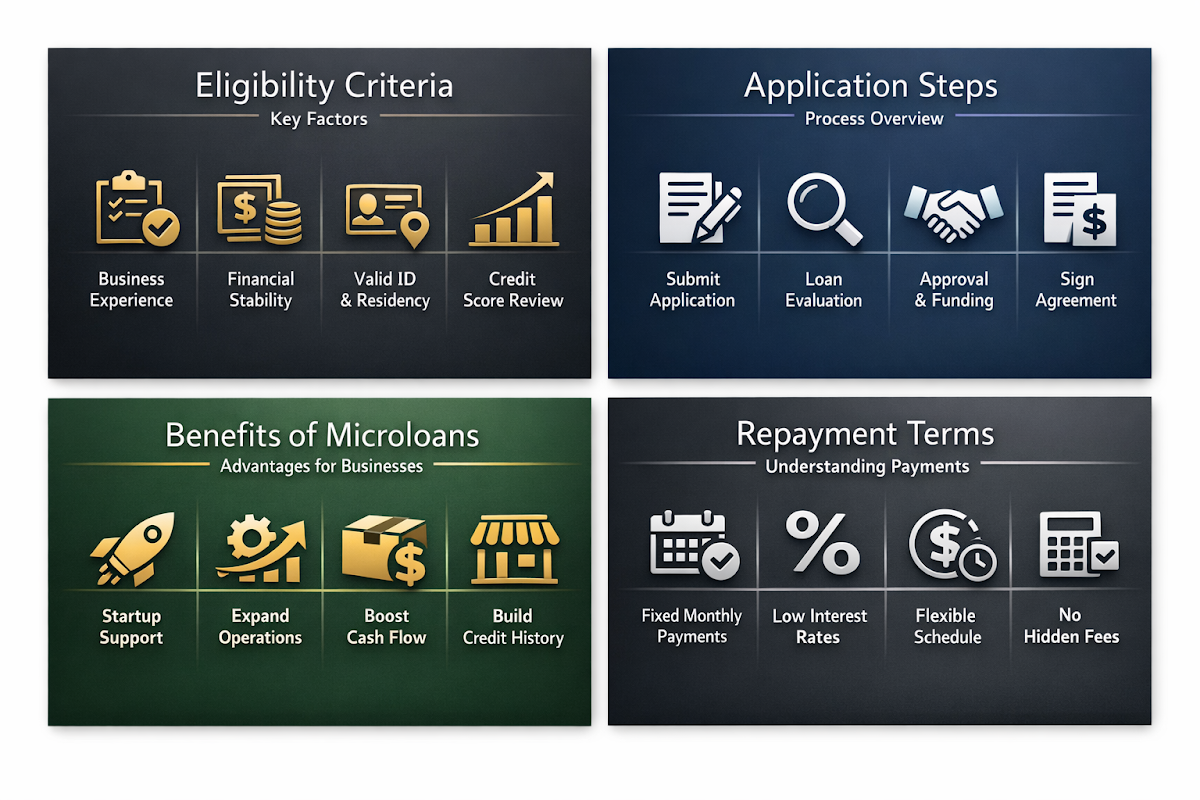
SBA microloan eligibility involves several factors that potential borrowers should understand before applying for this type of financing.
- Business size standards: Your business must meet SBA size requirements, which vary by industry but generally favor smaller operations with limited annual revenue or employee counts.
- For-profit operation: The business must be operated for profit and meet SBA eligibility criteria, excluding certain business types like lending institutions or speculative activities.
- Owner investment requirement: Borrowers typically need to demonstrate personal investment in the business, showing commitment to the venture's success.
- Credit considerations: While credit requirements may be more flexible than traditional loans, lenders still evaluate creditworthiness and repayment ability.
Step-by-Step Microloan Application Process
The microloan application process involves several key steps that borrowers should prepare for to increase their chances of approval.
- Identify qualified microlenders: Research SBA-approved microlenders in your area, as these nonprofit organizations serve as intermediaries between the SBA and borrowers. Each lender may have specific focus areas or preferences.
- Prepare comprehensive documentation: Gather financial statements, business plans, tax returns, and other required documents. The specific requirements may vary by lender but typically include proof of business operations and financial projections.
- Submit application and undergo review: Complete the lender's application process, which often includes personal interviews and detailed business discussions. The review process may take several weeks as lenders evaluate both financial and operational aspects.
- Finalize terms and receive funding: Upon approval, review loan terms carefully including interest rates, repayment schedules, and any additional requirements before accepting the funds.
Using Microloans for Startup Costs
Using microloans for startup costs can provide new businesses with essential capital during their most vulnerable early stages.
- Equipment and inventory purchases: Microloans can help cover the cost of essential business equipment, initial inventory, or technology needed to launch operations effectively.
- Working capital needs: New businesses often require cash flow support for operational expenses like rent, utilities, and payroll during the initial months before revenue stabilizes.
- Marketing and business development: Funds might be used for marketing campaigns, website development, or other activities designed to attract customers and establish market presence.
- Professional services and licensing: Startup costs often include legal fees, accounting services, business licenses, and other professional requirements necessary to operate legally and effectively.
Understanding Microloan Repayment Terms
Microloan repayment terms are designed to be manageable for small businesses while ensuring responsible lending practices.
- Repayment periods: Microloans typically offer repayment terms up to six years, though shorter terms are common. The specific timeline often depends on the loan amount and intended use of funds.
- Interest rate structure: Rates are generally competitive and may be fixed throughout the loan term, providing predictable monthly payments that help with cash flow planning.
- Payment schedules: Most microloans require monthly payments, though some lenders might offer seasonal payment options for businesses with irregular cash flows.
- Prepayment options: Many microlenders allow early repayment without penalties, which can help businesses save on interest costs if their cash flow improves ahead of schedule.
●Conclusion
SBA Microloans for Small Businesses represent a valuable financing option for entrepreneurs and small business owners who need accessible capital. While these loans may not provide the large amounts available through traditional commercial lending, they offer flexibility and support that can be crucial during startup phases or early expansion periods. The combination of reasonable terms, supportive lenders, and government backing makes microloans worth considering for businesses that need relatively modest amounts of capital. However, success with any financing depends on careful planning, realistic projections, and responsible money management. Small business owners should thoroughly evaluate their needs, explore multiple lenders, and ensure they can meet repayment obligations before committing to any loan product.