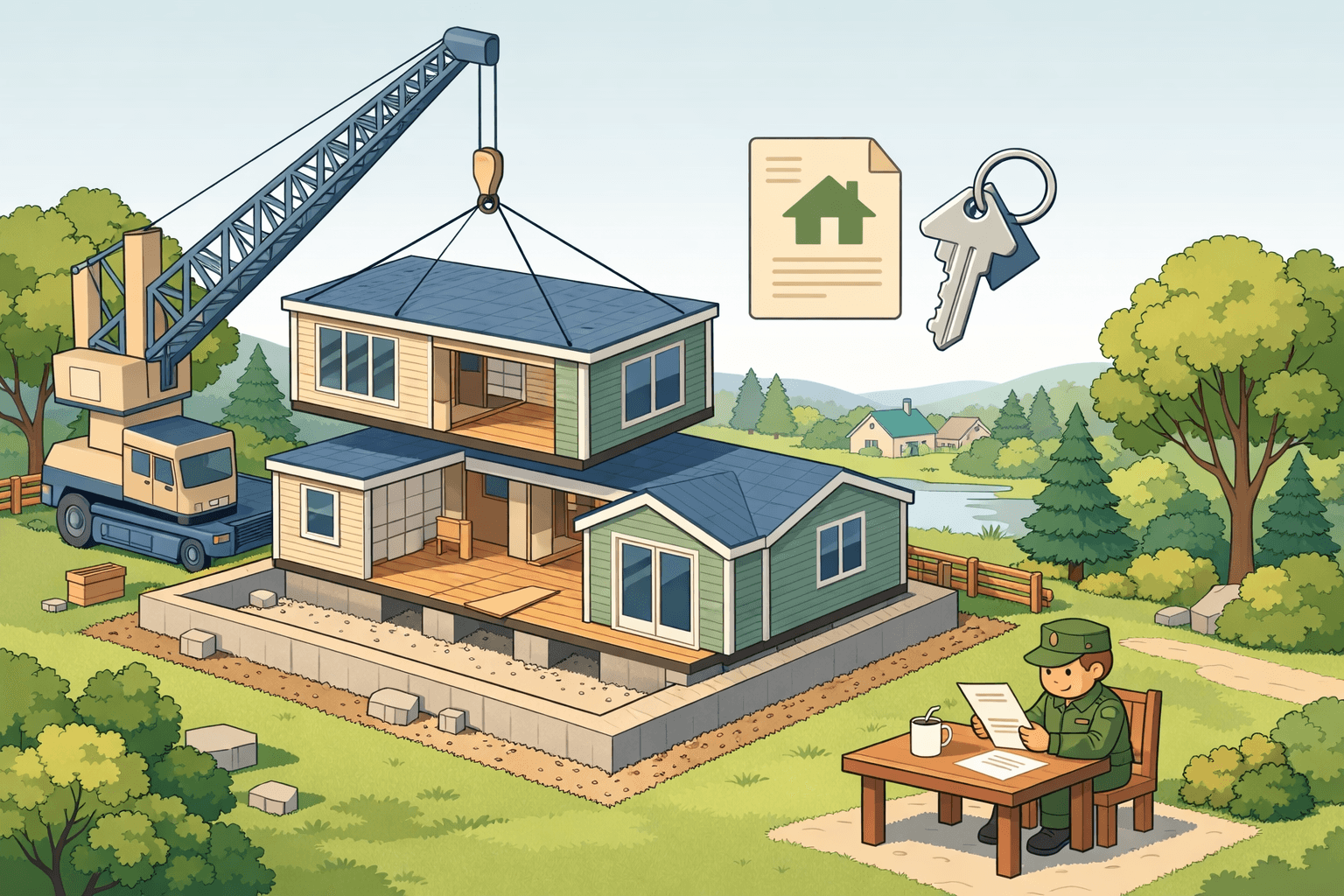
For veterans and active-duty service members, the VA home loan benefit is one of the most powerful financing tools available. It offers competitive interest rates, no down payment requirement in most cases, and no private mortgage insurance. But what happens when you want to use that benefit to purchase a modular home with land? The good news is that it's entirely possible — but there are specific hoops you'll need to jump through. Understanding the requirements for VA loan on a modular home with land before you start shopping could save you significant time, money, and frustration. This guide walks you through everything from eligibility basics to inspection standards so you can move forward with confidence.
What Is a Modular Home and How Does It Differ from a Manufactured Home
Before diving into the VA loan specifics, it's important to understand what a modular home actually is — because the VA draws a clear distinction between modular and manufactured housing, and that distinction matters a great deal for loan eligibility.
A modular home is built in sections at a factory and then transported to a permanent site, where it's assembled on a traditional foundation. Once completed, modular homes are typically subject to the same local and state building codes as site-built homes. They're designed to be permanent structures, and they closely resemble conventional construction in terms of quality and durability.
A manufactured home, on the other hand, is built entirely in a factory and transported to the site on a chassis with wheels. It's governed by the federal HUD code rather than local building codes. While VA loans can also apply to certain manufactured homes, the requirements and restrictions differ significantly.
Understanding this distinction is the first step toward a smoother loan process. If you're pursuing a modular home, you're generally in a more favorable position under VA guidelines than if you were pursuing a manufactured home. Lenders and appraisers will evaluate the property differently based on its classification, so confirming the home's category early on is essential.
Core VA Loan Eligibility: What Every Veteran Needs First
Before worrying about the property-specific requirements, veterans need to confirm their own personal eligibility for a VA loan. The Department of Veterans Affairs sets clear service-based criteria that must be met before any home purchase can move forward under this program.
- Certificate of Eligibility (COE): You'll need to obtain a COE from the VA, which confirms your entitlement to use the benefit. This can be requested online through the VA's eBenefits portal, through your lender, or by mailing VA Form 26-1880.
- Service Requirements: Eligibility typically extends to veterans who served at least 90 consecutive days during wartime, 181 days during peacetime, or six or more years in the National Guard or Reserves. Surviving spouses of service members who died in the line of duty may also qualify.
- Credit and Income Standards: While the VA doesn't set a minimum credit score, most VA-approved lenders typically look for a score of at least 620. You'll also need to demonstrate stable, sufficient income and meet the VA's residual income guidelines, which are designed to ensure you can cover basic living expenses after your monthly obligations.
- Occupancy Intent: VA loans are intended for primary residences only. You must certify that you intend to personally occupy the home as your primary dwelling.
Once your personal eligibility is confirmed, you can move into the property-specific requirements for a modular home purchase.
Key Requirements for VA Loan on a Modular Home with Land
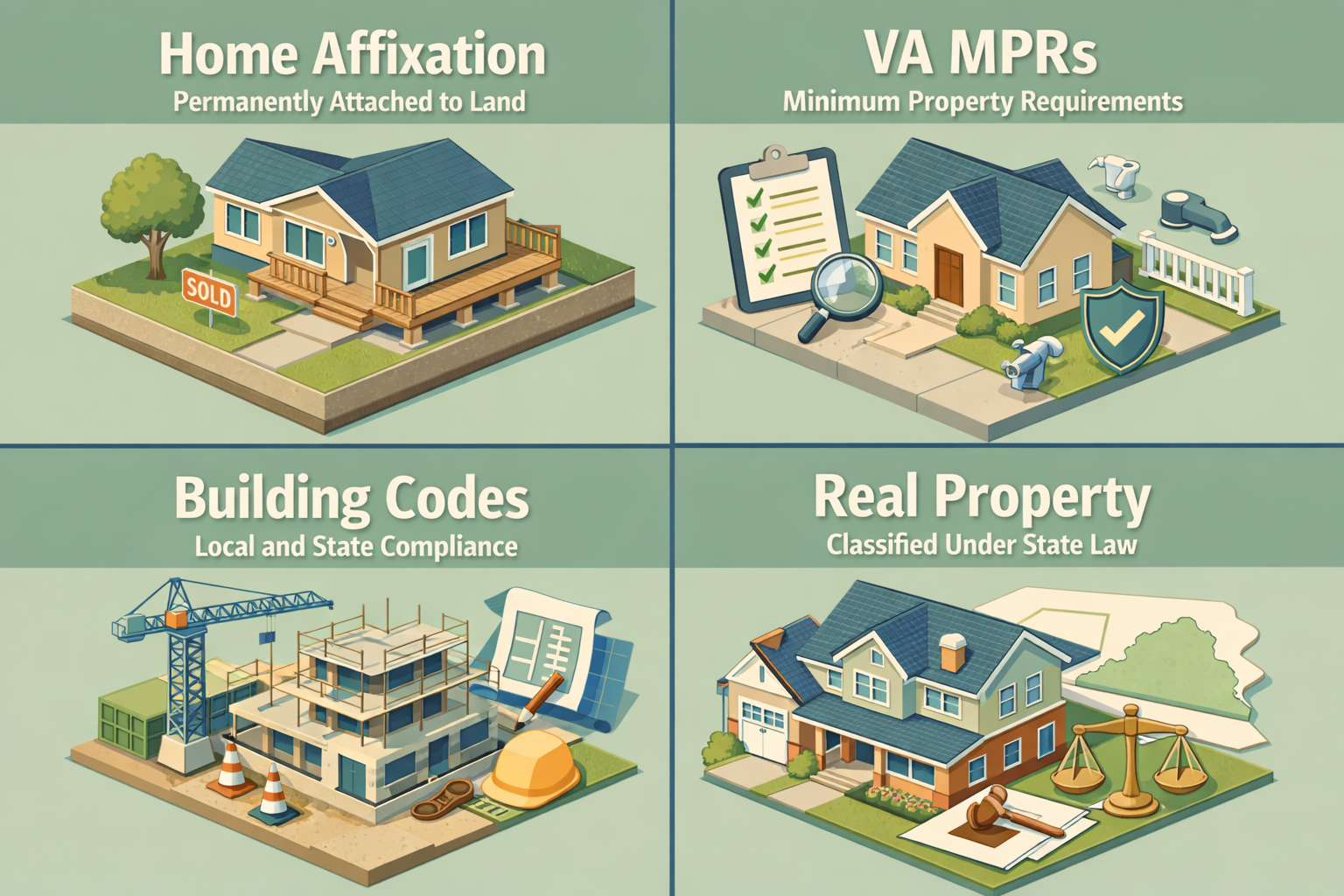
The requirements for VA loan on a modular home with land go beyond standard borrower qualifications. The property itself must meet a series of conditions set by both the VA and the lender. Here's what typically applies:
The Home Must Be Permanently Affixed to the Land
One of the most critical requirements is that the modular home must be permanently attached to a foundation. This means the home cannot be on a temporary or removable base. The land and the home are typically expected to be purchased together or, if the land is already owned, the home must be deeded along with the land as a single real estate transaction. This combined ownership is what allows the property to be treated similarly to a traditional site-built home under VA guidelines.
The Property Must Meet the VA's Minimum Property Requirements
All VA loan purchases must satisfy the VA's Minimum Property Requirements (MPRs). These standards are in place to ensure the home is safe, sound, and sanitary. For modular homes, this means the structure must be free of significant defects, have adequate heating and cooling systems, proper plumbing and electrical systems, and safe access to the property. The roof must be in good condition, and there should be no evidence of active termite infestation or other pest-related damage.
Local and State Building Codes Must Be Followed
Because modular homes are built in factories but governed by local codes, the home must comply with all applicable state and local building standards at the time of its construction. This is one area where modular homes have an advantage over manufactured homes — their compliance with local codes makes them more straightforward to finance through conventional and government-backed programs.
The Home Must Be Classified as Real Property
For a VA loan to apply, the modular home and the land it sits on must be classified as real property under state law. This typically means that any titles associated with the home as personal property must be retired and converted to real estate title. Your lender and title company can help navigate this process if it hasn't already been completed.
VA Loan Modular Home Inspection: What the Appraisal Process Involves
A thorough VA loan modular home inspection is a non-negotiable part of the purchase process. The VA requires that a VA-approved appraiser assess the property before the loan can be approved. This appraisal serves two purposes: confirming the home's market value and verifying that it meets the VA's Minimum Property Requirements.
Here's what you can generally expect during the VA appraisal for a modular home:
- Structural Integrity Check: The appraiser will assess the foundation, walls, roof, and overall structural soundness of the home. Any signs of settling, cracking, or structural damage could trigger a requirement for repairs before the loan is approved.
- Systems Inspection: Heating, cooling, electrical, and plumbing systems are reviewed to ensure they're functional and safe. The home must have an adequate heat source capable of maintaining a minimum indoor temperature of 50 degrees Fahrenheit in cold climates.
- Site and Access Review: The appraiser evaluates the lot itself, including drainage, access to the property, and any environmental concerns. Poor drainage that could lead to flooding or erosion may be flagged as a condition requiring attention.
- Comparable Sales Analysis: The appraiser also determines fair market value by comparing the modular home to similar properties that have recently sold in the area. This can sometimes be a challenge in rural markets where modular comps may be limited.
It's worth noting that the VA appraisal is not the same as a private home inspection. Veterans are strongly encouraged to hire an independent inspector in addition to the VA appraisal. This provides a more detailed look at the home's condition and can surface issues the appraisal alone might not capture.
Modular Home VA Loan Eligibility: Common Challenges and How to Navigate Them
While modular home VA loan eligibility is certainly achievable, veterans should be aware of some common obstacles that can arise during the process. Being prepared in advance can make a significant difference.
Finding a Willing Lender
Not all VA-approved lenders are equally experienced with modular home transactions. Some lenders may be unfamiliar with the nuances of modular construction or may have internal overlays — additional restrictions beyond VA guidelines — that make them hesitant to approve these loans. It's a good idea to shop around and specifically ask lenders about their experience financing modular homes before applying before committing to work with one.
Appraisal Gaps in Rural Markets
In areas where modular homes are less common, VA appraisers may struggle to find comparable sales. If the appraised value comes in below the purchase price, the veteran may need to negotiate with the seller or cover the difference out of pocket, as VA loans typically can't be used to finance amounts above the appraised value without additional arrangements.
Title and Classification Issues
If the modular home was previously titled as personal property — meaning it was treated more like a vehicle than real estate — it may need to go through a title conversion process. This can take time and may involve fees, so it's best to address this early in the transaction.
Age and Condition Concerns
Older modular homes may face more scrutiny during the appraisal process, particularly if they show signs of deferred maintenance or outdated systems. Sellers should be prepared for potential repair requirements if the home doesn't fully meet VA Minimum Property Requirements.
Financing the Land: What Veterans Should Know About Combined Purchases
When purchasing a modular home with land, veterans should understand how the land component fits into the VA loan structure. In most cases, the VA loan can cover both the modular home and the land — provided they are purchased together as a single transaction and the property is classified as real estate.
If a veteran already owns the land and is looking to place a modular home on it, some lenders may structure this as a construction-to-permanent loan or a purchase loan for the home alone. The specifics can vary by lender, so it's important to discuss your situation in detail with a VA-experienced loan officer.
Veterans should also consider the following when financing land alongside a modular home:
- Land Value: The VA appraisal will include the value of the land. The combined value of the land and home must support the loan amount being requested.
- Zoning and Use: The land must be zoned for residential use. Agricultural or commercial zoning could disqualify the property from VA loan eligibility.
- Utilities and Access: The property must have reasonable access to public or private utilities, including water, sewer or septic, and electricity. Well water is acceptable if it meets health and safety standards.
Taking the time to verify these details before making an offer can prevent costly surprises and keep your purchase on track.
●Conclusion
Purchasing a modular home with land using your VA benefit is a realistic and rewarding goal — one that many veterans have achieved successfully. The key is going in prepared. From confirming your personal eligibility and obtaining your Certificate of Eligibility, to understanding what the requirements for VA loan on a modular home with land entail at the property level, every step matters. Partnering with a lender who has genuine experience in modular home VA financing can make the entire process smoother and less stressful. At LoanWise, we're here to help you navigate every detail so you can put your hard-earned benefit to work and find the home that fits your life. Reach out to our team today to get started on your path to homeownership.