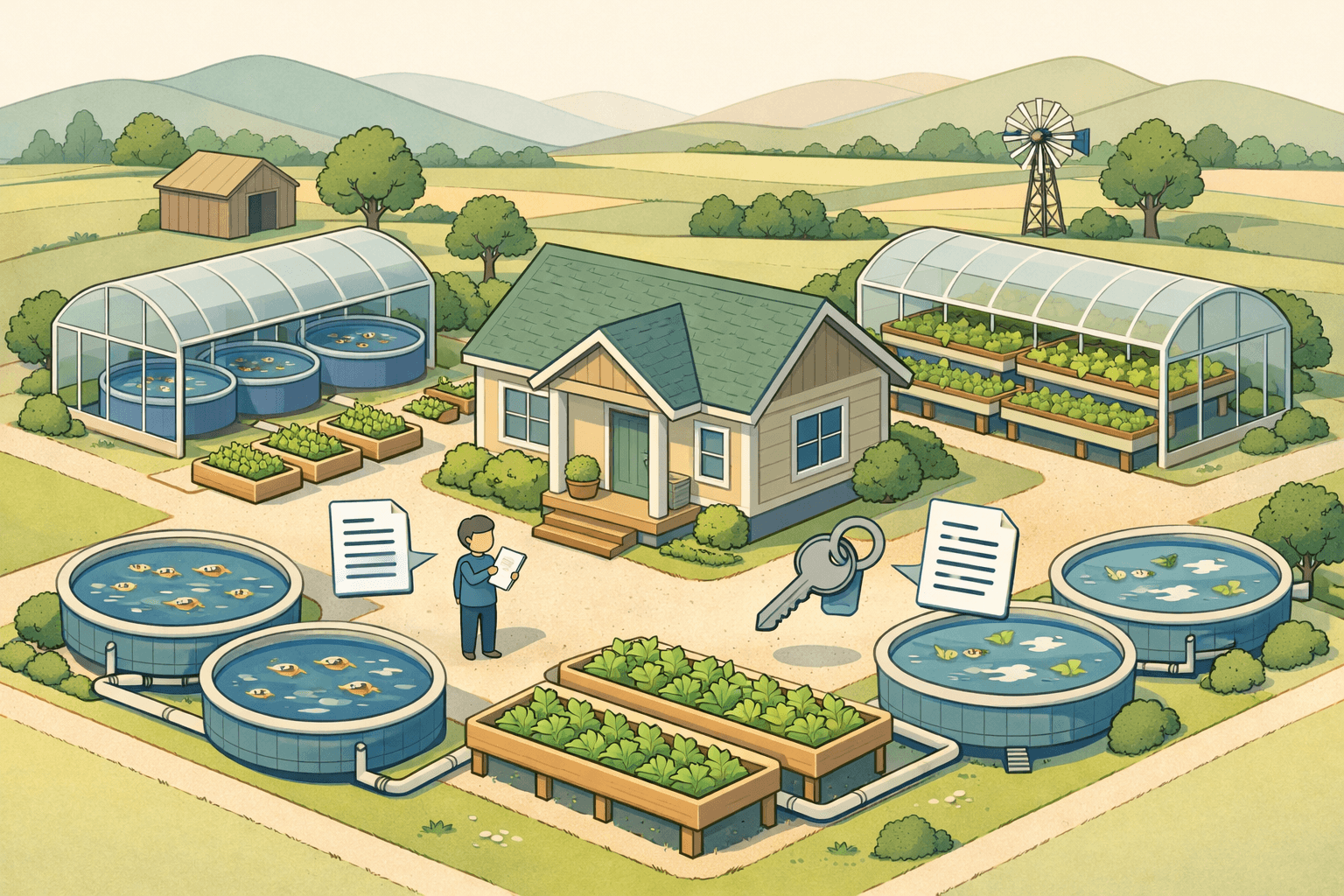
Aquaponics farming is growing in popularity as a sustainable and efficient method of producing both fish and vegetables in a single integrated system. For buyers and investors looking to purchase rural property set up for this type of operation, understanding the requirements for USDA loan on property zoned for aquaponics farming is a critical first step. The USDA's loan programs are designed to support rural homeownership and agricultural development, but they come with specific eligibility criteria that can be tricky to navigate — especially when the property serves a non-traditional farming purpose like aquaponics. This article breaks down everything you need to know before you apply.
What Is a USDA Loan and Who Is It Designed For?
The United States Department of Agriculture offers several loan programs aimed at encouraging homeownership and economic development in rural areas. The two most commonly used programs are the USDA Section 502 Direct Loan and the USDA Section 502 Guaranteed Loan. The Direct Loan program is funded directly by the government and targets low- to very-low-income borrowers. The Guaranteed Loan program, on the other hand, is offered through approved private lenders and backed by the USDA, making it accessible to a broader range of income levels.
Both programs share a common goal: helping eligible borrowers purchase, build, or improve homes in designated rural areas. For homebuyers and real estate investors eyeing properties with agricultural potential — including those suited for aquaponics farming — these programs may offer an attractive path to financing, particularly because they can allow for zero down payment in many cases.
However, it's important to understand that USDA loans are primarily residential mortgage products. This means the property must function first and foremost as the borrower's primary residence. Commercial farming operations are generally not eligible under these programs, which is a key nuance that aquaponics property buyers must keep in mind.
Understanding Rural Property Zoning for Farming Operations
One of the most significant factors affecting USDA loan eligibility for unique farming operations like aquaponics is how the property is zoned by local authorities. Zoning classifications can vary widely from county to county, and they directly affect whether a property qualifies for USDA financing.
USDA guidelines generally permit loans on properties located in rural areas that are zoned for residential or agricultural use. Properties zoned exclusively for commercial or industrial purposes are typically ineligible. However, many rural parcels carry mixed-use or agricultural zoning designations that may still qualify — provided the primary use of the property remains residential.
- Agricultural Zoning (A-1, A-2, etc.): Many rural properties used for small-scale farming carry agricultural zoning classifications. These are often compatible with USDA loan programs, as long as the land isn't classified as a commercial enterprise.
- Residential-Agricultural Mixed Zoning: Some jurisdictions allow a blend of residential and agricultural activity on the same parcel. This type of zoning tends to be the most favorable for USDA eligibility when aquaponics is involved.
- Commercial Farm Zoning: Properties designated primarily for commercial agricultural production may face significant hurdles under USDA residential loan programs.
It's worth noting that zoning alone doesn't determine USDA eligibility — the USDA also considers the primary use and character of the property. A borrower who intends to live on the land and operate a modest aquaponics system as a secondary activity may have a better chance of approval than one seeking to fund a full-scale aquaponics production facility.
Key Requirements for USDA Loan on Property Zoned for Aquaponics Farming
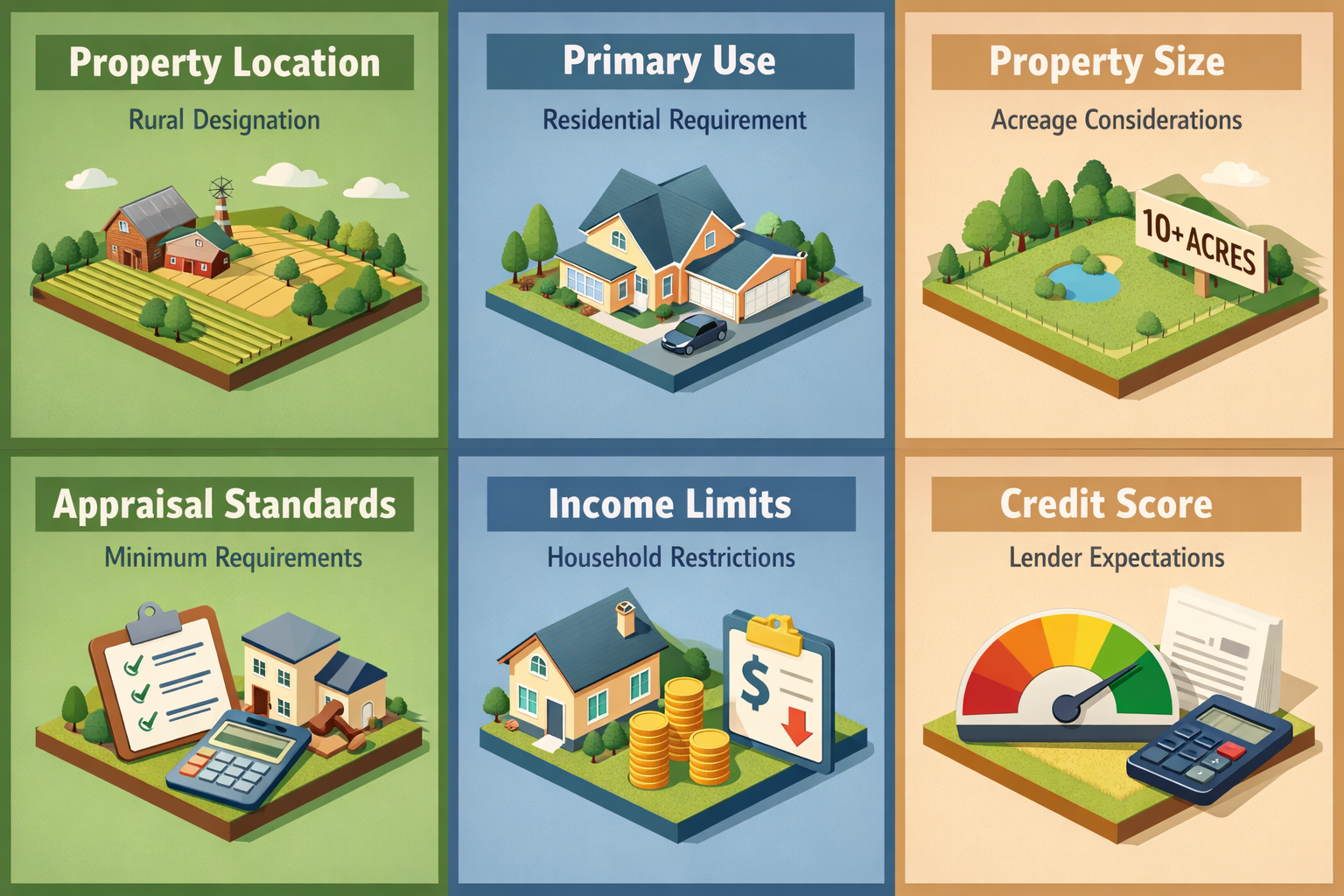
Meeting the requirements for USDA loan on property zoned for aquaponics farming involves satisfying both standard USDA eligibility criteria and property-specific conditions. Here's a closer look at the primary requirements borrowers should prepare for:
Property Location and Rural Designation
The property must be located in an area designated as rural by the USDA. Borrowers can check whether a specific address qualifies using the USDA's online eligibility map. Aquaponics farms are often located in rural communities, which can work in a buyer's favor — but the specific parcel still needs to meet the USDA's rural definition, which typically excludes areas with populations above 35,000.
Primary Residential Use
The home on the property must serve as the borrower's primary residence. USDA loans cannot be used to finance investment properties or vacation homes. If the aquaponics system is a secondary operation attached to the main dwelling, this requirement may be satisfied. However, if the property is set up primarily as a commercial aquaponics enterprise with residential space as an afterthought, lenders may be hesitant to approve it under a USDA residential loan program.
Property Size and Income-Producing Land Restrictions
The USDA does not set a strict acreage limit, but it does require that the land be typical for the area and not so large that it loses its residential character. Properties where the land value significantly exceeds the home's value may raise flags during the appraisal process. Additionally, if the property generates farm income, lenders may scrutinize whether that income changes the classification of the property from residential to commercial.
Appraisal and Structural Standards
All USDA-financed properties must meet minimum property standards. An approved USDA appraiser will assess the home to ensure it is safe, sanitary, and structurally sound. Aquaponics infrastructure — such as fish tanks, grow beds, plumbing systems, and greenhouse structures — may be viewed as personal property or outbuildings and may not be included in the appraised value of the home. Buyers should discuss this with their lender early in the process.
Borrower Eligibility: Income, Credit, and Citizenship Criteria
Beyond property-specific requirements, borrowers must also meet standard USDA eligibility criteria related to their financial profile and legal status.
Income Limits
USDA Guaranteed Loans are available to borrowers whose household income does not exceed 115% of the median income for their area. Income limits vary by location and household size, so buyers should verify their eligibility using the USDA's income eligibility tool. For borrowers with modest income looking to start or expand an aquaponics operation, this limit may actually be quite workable — particularly in rural areas where median incomes tend to be lower.
Credit Score Requirements
While the USDA doesn't technically set a minimum credit score, most approved lenders look for a score of at least 640 for streamlined processing. Borrowers with lower scores aren't automatically disqualified, but they may face more manual underwriting and stricter scrutiny. Maintaining a clean credit history, managing debt responsibly, and reducing outstanding balances before applying can strengthen an application considerably.
Debt-to-Income Ratio
USDA guidelines generally suggest that a borrower's housing costs should not exceed 29% of gross monthly income, and total debt obligations should stay below 41%. However, exceptions can be made with compensating factors such as strong credit history or significant financial reserves. Lenders may also consider farm income — if the aquaponics operation generates verifiable revenue — as part of the borrower's total income picture, though documentation requirements for self-employed or farm-income borrowers tend to be thorough.
Citizenship and Residency
USDA loans are available to U.S. citizens and certain qualified non-citizens. The borrower must intend to occupy the property as their primary residence, which aligns well with the lifestyle of someone who manages a working aquaponics farm on-site.
How Agricultural Zoning Mortgage Requirements Affect the Appraisal Process
The appraisal is a pivotal step in the USDA loan process, and it can be particularly complex for properties with aquaponics systems. Because aquaponics farming is still considered a non-traditional or specialty agricultural use, appraisers may have limited comparable sales data to reference — known in real estate as "comps."
When comparable sales are scarce, appraisers may rely on alternative valuation methods, such as the cost approach or income approach, to determine the property's market value. However, it's important to understand that USDA appraisals focus on the residential component of the property. Features tied to the farming operation — like specialized irrigation systems, fish tanks, or hydroponic grow structures — may not add appraised value to the home itself.
This can create a potential gap between what the buyer paid for the property (including farm infrastructure) and what the USDA appraiser values it at. Buyers should be prepared for this possibility and may want to negotiate the purchase price accordingly or seek advice from a lender experienced in aquaponics farm USDA loan scenarios.
Additionally, if the property is located in an area with agricultural zoning and features significant farm infrastructure, the appraiser will need to determine whether the residential use is still the primary characteristic of the property. This judgment call can significantly affect whether the loan moves forward.
Tips for Strengthening Your USDA Loan Application for an Aquaponics Property
Securing a USDA loan for an aquaponics property may require more preparation than a standard rural home purchase. Here are some practical strategies to help improve your chances of approval:
- Work with an experienced lender: Not all USDA-approved lenders have experience with agricultural or specialty-use properties. Seek out lenders who understand rural property zoning for farming and have closed similar loans before.
- Document the residential nature of the property: Gather evidence — floor plans, photos, appraisal reports — that clearly illustrates the home is the centerpiece of the property, with the aquaponics operation as a secondary feature.
- Keep farm income records organized: If the aquaponics system generates income, be prepared to provide two years of tax returns, profit-and-loss statements, and farm records. Lenders and underwriters will want a clear picture of your financial activity.
- Verify USDA rural eligibility early: Before investing time in the application process, use the USDA's eligibility map to confirm the property's location qualifies as rural.
- Get pre-approved before you apply: Pre-approval helps you understand your borrowing power and signals to sellers that you're a serious buyer — especially important in rural markets where specialty properties may attract competitive interest.
- Consider the property's acreage carefully: If the parcel is very large or includes land that generates significant farm income, it may face appraisal or classification challenges. Discussing this with your lender before submitting an offer can save considerable time.
Exploring Alternative Financing Options for Aquaponics Farm Buyers
If a USDA residential loan doesn't fit your situation — perhaps because the property is primarily a commercial aquaponics operation or exceeds income limits — there may be other financing pathways worth exploring.
USDA Farm Service Agency (FSA) Loans
The USDA's Farm Service Agency offers separate loan programs specifically designed for agricultural operations, including beginning farmer loans, operating loans, and ownership loans. These are distinct from the Section 502 residential loans and may be better suited for buyers who intend to operate the aquaponics farm as their primary business. Eligibility criteria and loan terms differ significantly from the residential USDA programs.
Conventional Agricultural Mortgages
Some conventional lenders and agricultural banks specialize in financing rural and farm properties. These loans may offer more flexibility for properties with significant farming infrastructure, though they typically require a down payment and may carry stricter credit standards.
SBA Loan Programs
For borrowers who are primarily focused on building a business around their aquaponics operation, Small Business Administration loan programs — such as the SBA 7(a) or SBA 504 — could help finance equipment, operating costs, or real estate associated with the business. These programs are oriented toward the commercial side of the venture rather than residential financing.
Consulting with a knowledgeable mortgage advisor early in the process is the best way to evaluate which combination of financing tools fits your specific goals for the property.
●Conclusion
Navigating the requirements for USDA loan on property zoned for aquaponics farming takes patience, preparation, and the right lending partner. The USDA's rural home loan programs offer genuine opportunity for buyers who want to live on and cultivate specialty agricultural land — but the intersection of residential mortgage rules and non-traditional farming use creates a layer of complexity that shouldn't be underestimated. By understanding property eligibility, zoning classifications, appraisal nuances, and borrower qualification standards, you'll be far better positioned to move forward with confidence. At LoanWise, we're here to help you explore your options and connect with lenders who understand the unique demands of specialty rural properties. Reach out today to start the conversation.