
Buying a high-value home is an exciting goal, but the path to approval can feel complicated — especially when your income comes from freelance work, contract jobs, or a side hustle reported on a 1099. Add deferred student loans into the mix, and many borrowers assume they simply won't qualify. The good news? That assumption is often wrong. Understanding the requirements for a jumbo loan with 1099 income from a side hustle and deferred student loans can help you approach lenders with confidence and a clear plan. This guide walks you through what lenders look for, how they assess non-traditional income, and what your student loan status means for your application.
What Makes a Jumbo Loan Different From a Conventional Mortgage
A jumbo loan is a mortgage that exceeds the conforming loan limits set by the Federal Housing Finance Agency (FHFA). In most parts of the United States, this limit sits above $766,550 for a single-family home, though it may be higher in certain high-cost counties. Because jumbo loans can't be purchased by Fannie Mae or Freddie Mac, lenders hold them in their own portfolios — which means they carry more risk and come with stricter qualification standards.
For borrowers, this distinction matters a great deal. Lenders writing jumbo loans tend to look more closely at income stability, cash reserves, credit history, and overall financial strength. They're not just checking a box on a government-backed checklist — they're making a judgment call about whether you're a reliable long-term borrower. That's why knowing the specific requirements becomes even more important when your financial profile includes self-employment or 1099 income.
How Lenders Evaluate 1099 Income From a Side Hustle
When you earn income as an independent contractor, freelancer, or gig worker, that income is reported on a 1099 form rather than a W-2. Lenders don't treat this income the same way they'd treat a salary. Instead, they typically require documentation and a track record that demonstrates the income is consistent and likely to continue.
Most lenders will want to see at least two years of self-employment or 1099 income history. This is usually verified through federal tax returns — both personal and, if applicable, business returns. Lenders will look at your net income after deductions, not your gross earnings. This is an important distinction because many self-employed borrowers write off a significant portion of their income, which can reduce what counts toward qualifying.
Some key factors lenders may consider include:
- Consistency of income: Is your 1099 income steady year over year, or does it fluctuate significantly?
- Type of side hustle: Is it in a field where demand is stable, or does it carry market volatility?
- Profit and loss statements: For those who operate as a sole proprietor or LLC, lenders may request year-to-date P&L statements prepared by a CPA.
- Bank statements: Some jumbo lenders, particularly those offering non-QM (non-qualified mortgage) products, may accept 12 to 24 months of bank statements as an alternative income verification method.
It's worth noting that a side hustle alone may not be enough if you also have primary W-2 employment. In that case, lenders might blend your income sources — but they'll still scrutinize the 1099 portion carefully. If your side hustle is your sole income source, you'll need to present a particularly strong overall financial picture.
The Role of Deferred Student Loans in Your Jumbo Loan Application
Deferred student loans are loans where repayment has been temporarily postponed — often because the borrower is still in school, in a grace period, or enrolled in an income-based deferment program. Many borrowers assume that because payments aren't currently due, these loans won't affect their mortgage application. Unfortunately, that's not typically how lenders see it.
For jumbo loans, lenders will almost certainly count deferred student loan debt against your debt-to-income (DTI) ratio, even if no payments are currently required. The DTI ratio compares your monthly debt obligations to your gross monthly income, and it's one of the most critical figures in the underwriting process. For jumbo loans, lenders often prefer a DTI of 43% or lower, though some may be flexible depending on other compensating factors.
When it comes to calculating the monthly payment for deferred loans, different lenders use different methods. Some may use a percentage of the outstanding balance — commonly around 0.5% to 1% of the total loan balance per month — as an estimated payment figure. Others may use the actual documented payment that would apply once deferment ends. This means a borrower with $80,000 in deferred student loans could have an estimated monthly obligation of $400 to $800 added to their DTI calculation, even if they're currently paying nothing.
Understanding how your specific lender handles deferred student loan debt is crucial. It may be worth asking your loan officer directly how they'll treat those balances so you can plan accordingly before submitting your application.
Meeting the Credit and Reserve Requirements for Jumbo Lending
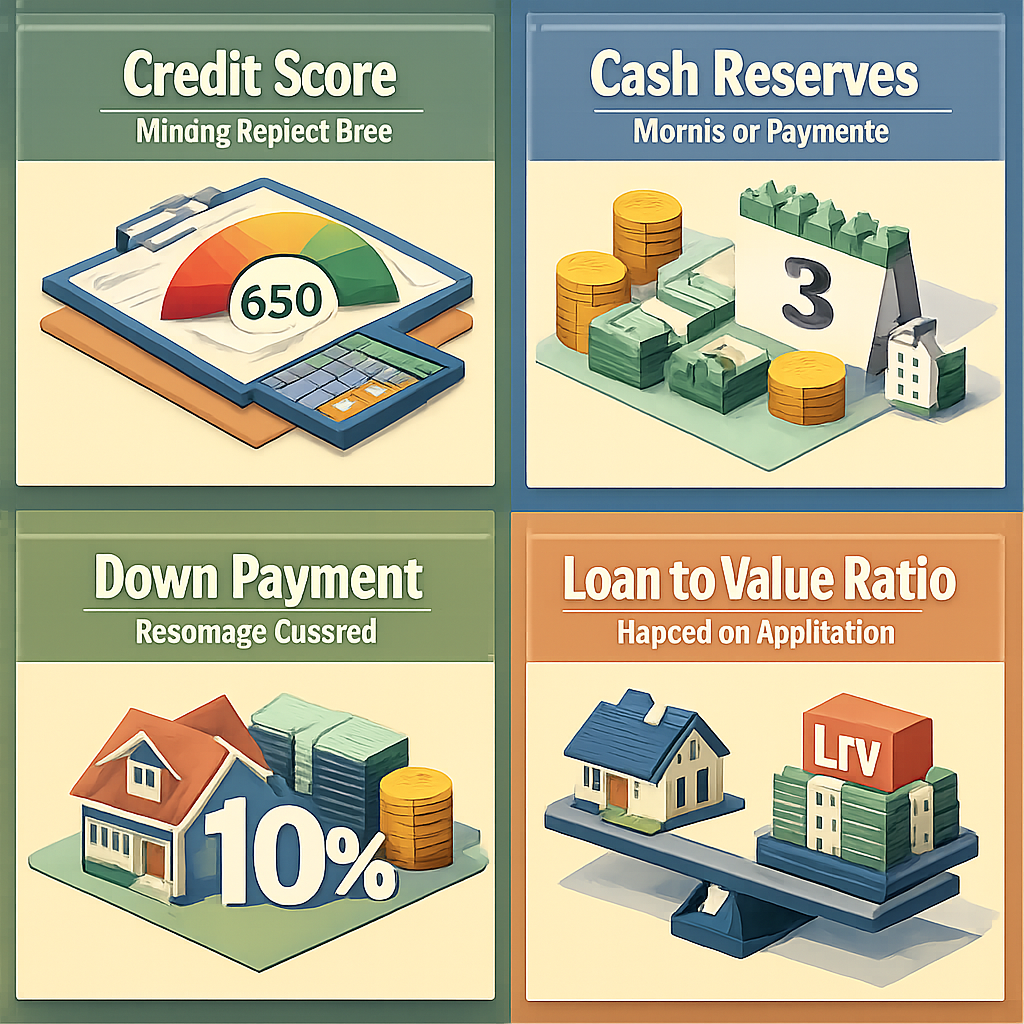
Beyond income and debt, jumbo lenders place a strong emphasis on creditworthiness and financial reserves. Because these loans involve larger sums, lenders want reassurance that borrowers can weather unexpected financial setbacks without defaulting.
Here's what you might typically expect:
- Credit score: Most jumbo lenders look for a minimum credit score of 700 to 720. Some portfolio lenders may go lower, but scores above 740 or 760 often unlock the most competitive interest rates.
- Cash reserves: Lenders frequently require anywhere from 6 to 18 months of mortgage payments held in reserve accounts after closing. This could include savings, retirement accounts, or investment portfolios.
- Down payment: Jumbo loans commonly require a down payment of at least 10% to 20%, and some lenders may require more for very large loan amounts or borrowers with non-traditional income.
- Loan-to-value ratio (LTV): A lower LTV — meaning you're borrowing less relative to the home's value — can strengthen your application considerably.
For borrowers with 1099 income, strong cash reserves can act as a powerful compensating factor. If your income documentation is complex, showing that you have substantial savings can help reassure lenders that you're a low-risk borrower despite the non-traditional income structure.
Non-QM Jumbo Loans: A Flexible Path for 1099 Earners
If you find that traditional jumbo loan guidelines don't fit your financial situation, non-qualified mortgage (non-QM) products may offer a more accessible route. Non-QM loans don't follow the standard ability-to-repay rules set by the Consumer Financial Protection Bureau for qualified mortgages, which allows lenders to use alternative income verification methods and more flexible underwriting criteria.
For borrowers with 1099 income from a side hustle, non-QM lenders might accept:
- 12 or 24 months of personal or business bank statements in place of tax returns
- A CPA-prepared income letter confirming self-employment and income estimates
- Asset depletion or asset dissipation calculations, where lenders count a portion of your liquid assets as qualifying income
These options can be especially helpful if your tax returns show a lower net income due to deductions, but your bank deposits reflect a stronger actual cash flow. Keep in mind that non-QM jumbo loans may come with slightly higher interest rates or stricter reserve requirements to compensate for the flexible underwriting. It's important to compare total loan costs — not just the rate — when evaluating these products.
The requirements for a jumbo loan with 1099 income from a side hustle and deferred student loans may look different depending on whether you pursue a traditional or non-QM product, so it's wise to speak with a knowledgeable loan officer who can map out both paths.
Practical Steps to Strengthen Your Application Before You Apply
Preparation is one of the most powerful tools available to non-traditional borrowers. Here are some practical steps that could improve your chances of approval before you submit a jumbo loan application:
- Organize two years of tax returns: Make sure your federal returns are complete, accurate, and filed on time. Lenders may be cautious about borrowers with unfiled or amended returns.
- Reduce your DTI where possible: Paying down high-interest consumer debt or credit card balances can lower your DTI ratio, which may offset the impact of deferred student loans in the lender's calculation.
- Build your reserves: If possible, increase your liquid savings before applying. Lenders feel more confident when they see substantial reserves — especially for borrowers with variable income.
- Check your credit report: Review all three major credit bureau reports for errors or outdated negative items. Disputing inaccuracies could give your score a meaningful boost.
- Document your side hustle professionally: Consider having a CPA prepare your business financials and provide a letter confirming your self-employment status and income stability.
- Understand your student loan terms: Know the balance of your deferred loans and what your projected monthly payment will be once deferment ends. This helps you anticipate how lenders will calculate your DTI.
Taking these steps before you apply can make a meaningful difference in how underwriters view your file — and can sometimes be the difference between a conditional approval and a clean one.
Finding the Right Lender for Your Unique Financial Profile
Not all lenders approach jumbo loan 1099 income student loans situations the same way. Portfolio lenders — banks and credit unions that hold loans on their own books — often have more flexibility than lenders who sell loans to the secondary market. Some specialty lenders focus specifically on self-employed borrowers or high-net-worth individuals and have underwriting teams experienced with complex income documentation.
When shopping for a jumbo loan with a non-traditional income profile, consider asking lenders the following questions:
- How do you calculate qualifying income for 1099 or self-employed borrowers?
- How will my deferred student loans be factored into my DTI?
- Do you offer bank statement programs or non-QM jumbo products?
- What are your reserve requirements for this loan amount?
- How flexible are you on DTI if other financial factors are strong?
Getting pre-qualified with multiple lenders — rather than just one — can reveal which institution is most comfortable with your profile and offer you the most competitive terms. A mortgage broker who specializes in non-traditional borrowers may also be a valuable resource, as they can match you with lenders whose guidelines fit your situation without requiring you to shop around independently.
●Conclusion
Navigating the requirements for a jumbo loan with 1099 income from a side hustle and deferred student loans requires careful planning, thorough documentation, and an understanding of how lenders think about non-traditional financial profiles. While the standards for jumbo lending are generally stricter than conventional mortgages, there are lenders and loan products designed to serve borrowers in exactly your situation. By organizing your financial records, managing your debt obligations strategically, and partnering with the right lending professionals, buying the high-value home you've been working toward is well within reach. At LoanWise, our team is ready to help you explore your options and find a path that fits your unique financial story — reach out today to get started.