
Buying a high-value home is an exciting milestone, but it comes with a unique set of financing challenges — especially if you earn commission-based income reported on a 1099 and carry deferred student loans. Understanding the requirements for jumbo loan with 1099 commission income and deferred student loans is essential before you start shopping for your dream home. Jumbo loans exceed conforming loan limits set by the Federal Housing Finance Agency, which means lenders apply stricter standards across the board. Add variable self-employed income and student debt to the picture, and it becomes even more important to know exactly where you stand. This guide walks you through what lenders typically expect, how they evaluate your income, and what steps you can take to strengthen your application.
What Makes Jumbo Loans Different from Conventional Mortgages
Jumbo loans are mortgage products designed to finance properties that exceed the conforming loan limits established by the Federal Housing Finance Agency. In most parts of the United States, that threshold sits above $766,550 for a single-family home, though it may be higher in designated high-cost areas. Because these loans can't be purchased or guaranteed by Fannie Mae or Freddie Mac, lenders take on more risk — and they respond by tightening their qualification criteria.
For borrowers with straightforward W-2 employment, jumbo lending is already more demanding than a standard conventional mortgage. For 1099 commission earners, the bar is raised even further. Lenders want assurance that your income is stable, verifiable, and likely to continue. Since 1099 income can fluctuate from month to month and year to year, underwriters often apply more scrutiny than they would for a salaried employee.
Key ways jumbo loans differ from conforming mortgages include:
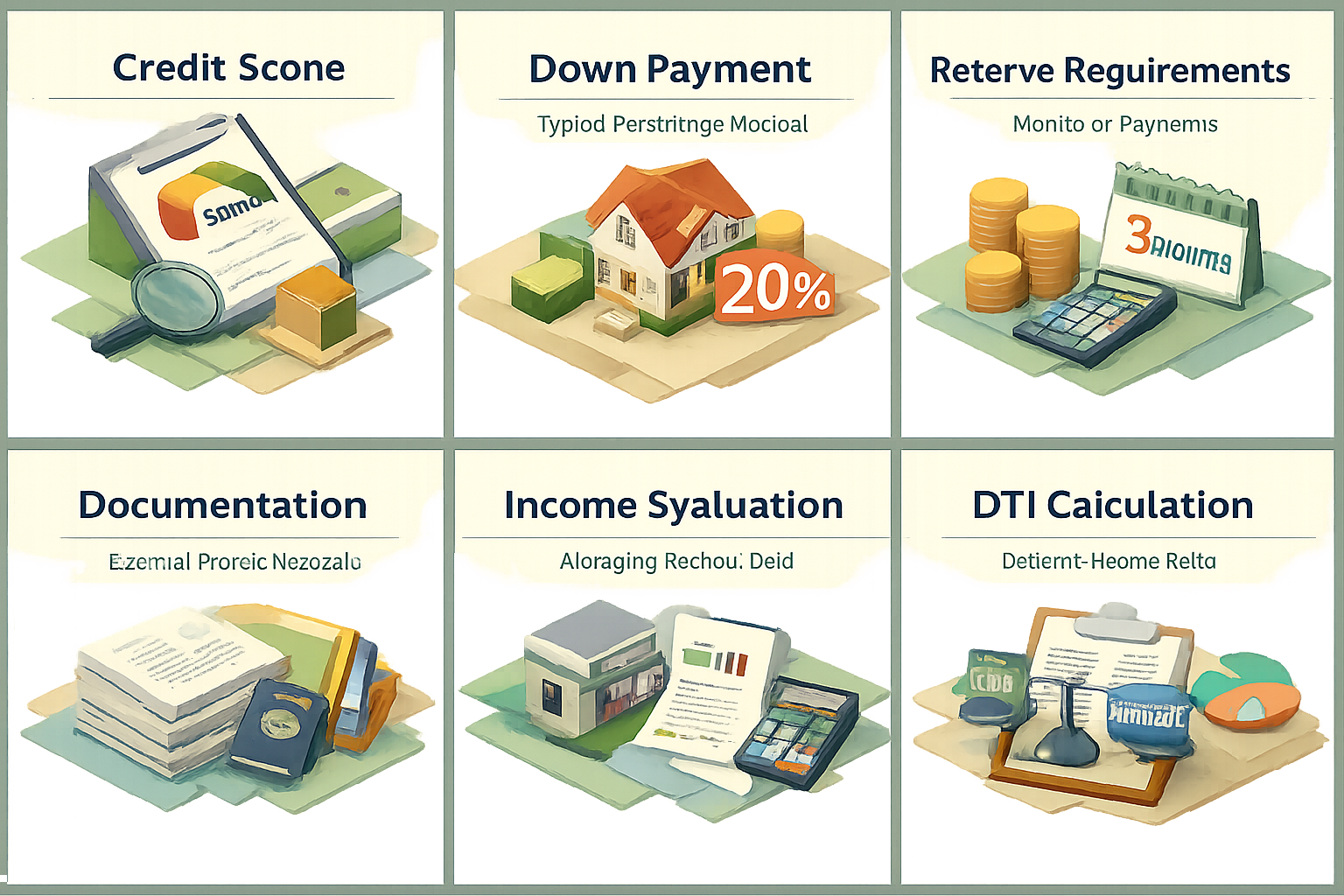
- Higher credit score minimums — most jumbo lenders typically require a credit score of at least 700, though many prefer 720 or higher
- Larger down payment expectations — down payments of 10% to 20% or more are commonly required
- Lower debt-to-income (DTI) ratio thresholds — many lenders prefer a DTI at or below 43%, with some setting the ceiling even lower
- More extensive documentation — expect requests for two years of tax returns, bank statements, and profit-and-loss statements
- Cash reserve requirements — lenders may want to see six to twelve months of mortgage payments held in liquid assets
Understanding these baseline differences helps set realistic expectations before you pursue a high-balance mortgage as a non-traditional earner.
How Lenders Evaluate 1099 Commission Income for Jumbo Qualification
One of the most significant hurdles in meeting the requirements for jumbo loan with 1099 commission income and deferred student loans is demonstrating that your earnings are reliable. Commission-based professionals — including real estate agents, financial advisors, independent contractors, and sales consultants — often experience income variability that makes underwriters cautious.
Lenders generally calculate qualifying income for 1099 earners by averaging your net income over the past two years. This means they'll typically look at your Schedule C or Schedule E on your federal tax returns and use the adjusted net figure after business expenses — not your gross 1099 earnings. If your income has been declining year over year, some lenders may only use the most recent year's figure or may decline the application altogether.
Documents You'll Likely Need to Provide
When applying for a jumbo loan 1099 income earner, be prepared to gather a comprehensive documentation package. Most lenders will request:
- Two years of personal federal tax returns (all schedules included)
- Two years of 1099 forms from all income sources
- A year-to-date profit-and-loss statement, ideally prepared or reviewed by a CPA
- Two to three months of business and personal bank statements
- Evidence of active business operations, such as a business license or client contracts
- Documentation of any assets held in reserve
Some lenders offer bank statement loans as an alternative pathway for self-employed borrowers who have strong cash flow but significant write-offs on their tax returns. Under this approach, lenders may use 12 to 24 months of bank deposits to calculate qualifying income rather than relying solely on tax returns. This can be a valuable option for commission earners whose taxable income appears lower than their actual cash flow suggests.
It's worth noting that consistency matters greatly. A two-year history of 1099 commission income in the same field is typically a minimum expectation. If you've recently transitioned from W-2 employment to self-employment or commission-based work, lenders may require additional time in your current income arrangement before approving a jumbo loan.
The Impact of Deferred Student Loans on Your Jumbo Loan Eligibility
Many high-income professionals — doctors, attorneys, engineers, and financial consultants — carry significant student loan balances that are currently in deferment. While deferment temporarily pauses your required payments, it does not make those loans invisible to a jumbo lender. How your deferred student loans are treated can meaningfully affect your debt-to-income ratio and, by extension, your loan approval.
For jumbo loan 1099 income student loan deferment scenarios, lenders follow their own internal guidelines rather than being bound by Fannie Mae or Freddie Mac rules. This creates some variability across lenders, but common approaches include:
- Using a percentage of the outstanding balance — many lenders will count 1% of your total student loan balance as a monthly obligation, regardless of whether payments are currently due. On a $150,000 student loan balance, that translates to $1,500 per month added to your DTI calculation.
- Using a fully amortized payment — some lenders estimate what your monthly payment would be once the deferment period ends and use that projected figure in your DTI.
- Using the actual documented payment — a smaller number of lenders may accept a $0 payment if the deferment is active and documented, though this approach is less common in jumbo underwriting.
Because jumbo lenders have more flexibility in setting their own guidelines, it's especially important to shop among multiple lenders or work with a mortgage broker who can match you with an institution whose student loan deferment policy works in your favor. Even a modest difference in how a lender treats deferred debt could be the deciding factor between approval and denial.
Strategies to Manage Student Loan Impact on Your DTI
If deferred student loans are threatening to push your DTI above a lender's threshold, there are a few strategies that may help:
- Pay down other revolving debts, such as credit cards or auto loans, to reduce your overall monthly obligations
- Consider increasing your down payment to lower the loan amount and reduce your proposed mortgage payment
- Explore income-driven repayment plans that could reduce your projected monthly student loan payment once deferment ends
- Work with a CPA to optimize your tax return presentation and potentially increase your qualifying net income
Credit Score and Reserve Requirements That Jumbo Lenders Typically Expect
Your credit profile plays a central role in any mortgage application, but its importance is amplified in jumbo lending. Most jumbo lenders look for a minimum FICO score of 700, and many prefer scores of 720 or higher. Borrowers with scores at or above 740 may qualify for more competitive interest rates and face fewer documentation hurdles.
For 1099 commission earners, maintaining a strong credit score can be more challenging due to income variability. High credit utilization during slower earning periods or missed payments can create blemishes that lenders scrutinize closely. Before applying for a jumbo loan, it may be worth spending several months actively managing your credit profile — paying down card balances, avoiding new credit inquiries, and ensuring all accounts are current.
Liquid Asset Reserves: A Critical Safety Net for Jumbo Lenders
Reserve requirements are another area where jumbo loans stand apart. Lenders want to know that even if your commission income dips, you have the financial cushion to continue making mortgage payments. Most jumbo lenders require borrowers to demonstrate reserves equivalent to six to twelve months of total housing costs — principal, interest, taxes, and insurance (PITI).
For a 1099 earner, demonstrating adequate reserves is especially powerful because it offsets the perceived risk of income variability. Eligible reserve assets typically include checking and savings accounts, investment accounts, retirement accounts (often counted at a percentage of their value to account for early withdrawal penalties), and proceeds from the sale of another property.
It's important to note that reserves must generally be sourced and seasoned — meaning the funds should have been in your accounts for at least 60 to 90 days, with clear documentation of their origin. Large, unexplained deposits in your bank statements could raise red flags during underwriting.
Down Payment Expectations and Loan-to-Value Considerations
When it comes to down payments, jumbo loans typically require more skin in the game than conforming mortgages. While some conventional loans allow down payments as low as 3%, jumbo products generally start at 10% and often recommend 20% or more — particularly for borrowers with complex income profiles.
For a 1099 commission earner with deferred student loans, offering a larger down payment can serve multiple purposes. First, it reduces the loan amount, which directly lowers your monthly mortgage payment and improves your DTI ratio. Second, it signals financial strength and reduces the lender's exposure, which may make underwriters more willing to accommodate the added complexity of your income type and debt situation.
Some lenders structure jumbo loan offerings at specific loan-to-value (LTV) tiers. For example, a borrower putting down 20% might qualify for a lower interest rate and fewer documentation requirements compared to one putting down only 10%. If you're close to a beneficial LTV threshold, it may be worth waiting a bit longer to save additional funds before applying.
Private mortgage insurance (PMI) is typically not available for jumbo loans, which is another reason lenders prefer higher down payments. Without PMI as a backstop, the lender bears the full risk if the loan defaults and the property value falls short of the outstanding balance.
Working with the Right Lender for Complex Jumbo Scenarios
Not all mortgage lenders have the same appetite for jumbo loans involving non-traditional income sources. Portfolio lenders — institutions that keep loans on their own books rather than selling them to the secondary market — often have more flexibility in underwriting complex scenarios. Community banks, credit unions, and private lenders may be more willing to manually underwrite a jumbo loan for a high-earning 1099 professional than a large retail bank with rigid automated systems.
Working with a knowledgeable mortgage broker can be particularly valuable in these situations. Brokers have access to multiple lenders and can match your profile with an institution whose guidelines align with your income structure and student loan situation. They can also help you understand which lenders use bank statements for income qualification, which ones apply the most favorable treatment to deferred student loans, and which reserve levels will satisfy underwriters without requiring you to liquidate long-term investments.
Non-QM Jumbo Loans as an Alternative Pathway
For borrowers who don't fit neatly into traditional underwriting boxes, non-qualified mortgage (non-QM) jumbo products may offer a viable path to homeownership. Non-QM loans are designed for borrowers with complex financial profiles — including self-employed individuals, high-net-worth buyers with significant assets but lower taxable income, and professionals with unconventional income documentation.
Common non-QM jumbo options include bank statement loans, asset depletion loans (where lenders divide your liquid assets over a set period to calculate qualifying income), and DSCR-based loans for investors. These products typically carry slightly higher interest rates than traditional jumbo loans, but they can make homeownership accessible when conventional underwriting would otherwise close the door. Always compare the total cost of borrowing and consult with a trusted mortgage professional before committing to any non-QM product.
●Conclusion
Navigating the requirements for jumbo loan with 1099 commission income and deferred student loans requires preparation, documentation, and the right lending partner. While the process is more involved than a standard mortgage application, it's far from impossible — especially for high-earning professionals who've built strong credit histories and healthy financial reserves. The key is understanding how lenders view your income, how they treat deferred student debt in their DTI calculations, and what steps you can take proactively to present the strongest possible application. Whether you pursue a traditional jumbo product through a portfolio lender or explore a non-QM alternative, working with experienced mortgage professionals who understand the nuances of jumbo loan 1099 income student loan deferment scenarios can make all the difference. At LoanWise, we're here to help you find the right financing path for your unique situation — reach out today to speak with a mortgage specialist who understands complex borrower profiles.