
Facing a bankruptcy can feel like the end of the road for your financial goals — but it doesn't have to be. Many homebuyers are surprised to learn that qualifying for an FHA-backed mortgage after a bankruptcy filing is genuinely possible. The Federal Housing Administration has long been a lifeline for borrowers who've experienced financial hardship, and its guidelines reflect that mission. Understanding the requirements for FHA loan with recent bankruptcy filing is the first step toward reclaiming your path to homeownership. This guide walks you through the waiting periods, credit standards, and practical steps that could get you closer to a mortgage approval sooner than you might expect.
What Makes FHA Loans Different From Conventional Mortgages
FHA loans are government-backed mortgages insured by the Federal Housing Administration. Because the federal government absorbs a portion of the lender's risk, FHA-approved lenders can afford to be more flexible with borrowers who have imperfect credit histories — including those who've gone through bankruptcy.
Compared to conventional loans, FHA mortgages typically offer more forgiving qualification standards. Borrowers may qualify with lower credit scores and smaller down payments than most conventional programs require. This makes FHA lending one of the most accessible mortgage pathways for first-time homebuyers and individuals rebuilding after financial setbacks.
- Lower minimum credit score thresholds compared to conventional financing
- Down payment requirements as low as 3.5% for qualifying borrowers
- Structured waiting periods after bankruptcy rather than outright disqualification
- Mortgage insurance premiums (MIP) required, which protect the lender if the borrower defaults
It's worth noting that while FHA guidelines set a baseline, individual lenders may apply their own overlay requirements — meaning a specific lender's standards could be stricter than what the FHA itself mandates. Shopping around and comparing lenders is always a smart move.
The Two Types of Bankruptcy and How They Affect FHA Eligibility
Not all bankruptcies are treated the same under FHA guidelines. The two most common types for individuals are Chapter 7 and Chapter 13, and each carries its own waiting period and set of conditions for FHA loan eligibility.
Chapter 7 Bankruptcy
A Chapter 7 bankruptcy involves the liquidation of non-exempt assets to discharge most unsecured debts. It's typically the faster process, often resolved within a few months. Under FHA guidelines, borrowers are generally required to wait two years from the discharge date before they may apply for an FHA-insured mortgage.
After that two-year period, borrowers must also demonstrate that they've re-established good credit or chosen not to take on new credit obligations. Lenders will look closely at how you've managed your finances since the discharge. Consistent, on-time payments on any new accounts could work in your favor.
Chapter 13 Bankruptcy
Chapter 13 involves a structured repayment plan, typically lasting three to five years, under court supervision. Borrowers who file Chapter 13 may be eligible for FHA financing after 12 months of satisfactory payments under their repayment plan — provided the court grants permission for the new mortgage and the borrower meets other eligibility criteria.
This is a meaningful distinction. Unlike Chapter 7, you don't necessarily have to wait until your bankruptcy is fully discharged. However, lender approval may still hinge on individual underwriting standards, so thorough documentation of your payment history under the repayment plan will be essential.
Requirements for FHA Loan With Recent Bankruptcy Filing: A Closer Look
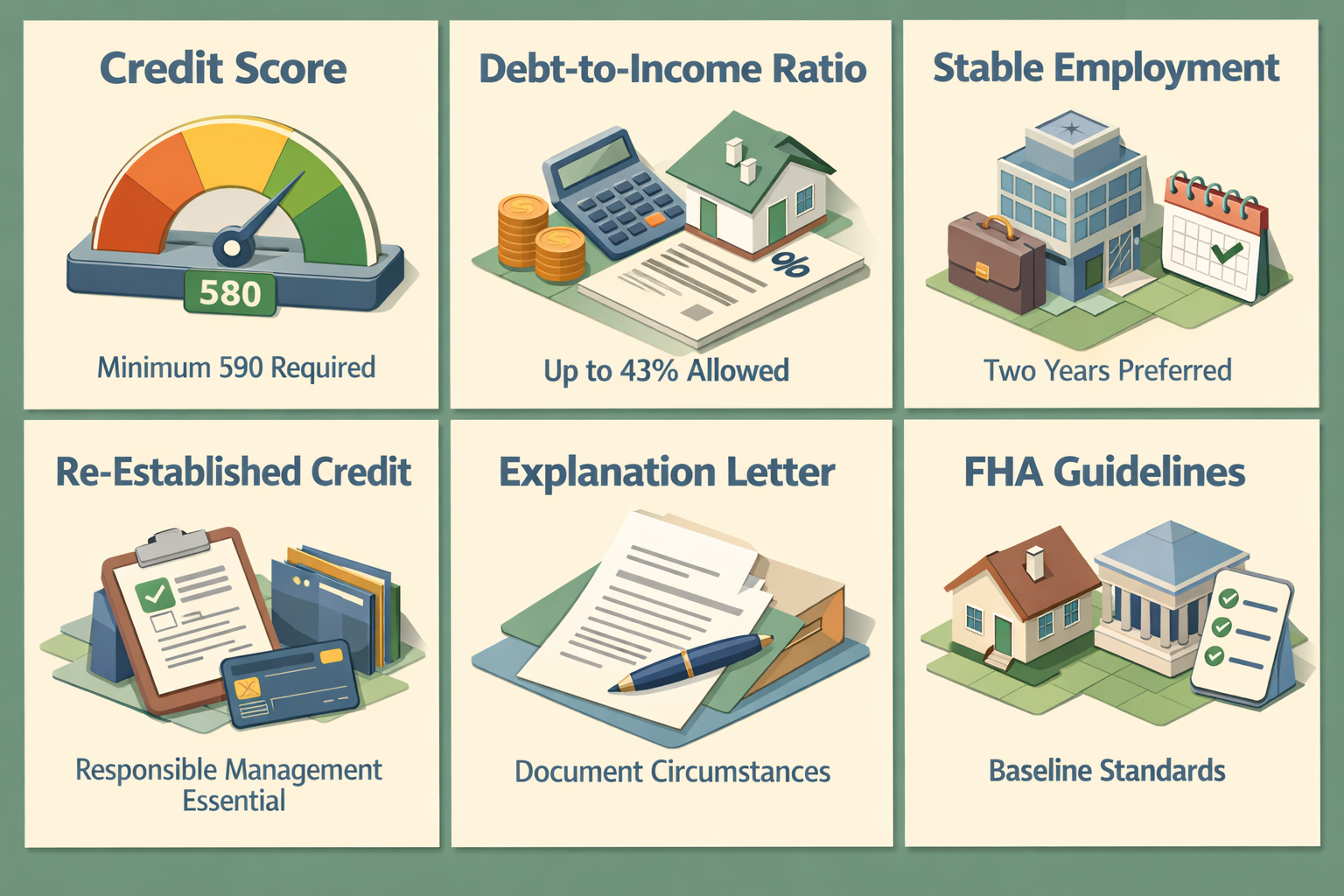
Beyond the waiting period, several other conditions shape whether a borrower qualifies. Meeting the requirements for FHA loan with recent bankruptcy filing involves more than simply waiting out the clock. Here's what lenders and the FHA typically evaluate:
- Credit score: FHA guidelines generally allow a minimum credit score of 580 for the 3.5% down payment option. Borrowers with scores between 500 and 579 may still qualify but could be required to put down 10%. After a bankruptcy, rebuilding your score to at least 580 — or ideally higher — is a key priority.
- Debt-to-income ratio (DTI): Lenders assess your monthly debt obligations against your gross monthly income. FHA guidelines typically allow a DTI of up to 43%, though some lenders may permit higher ratios with compensating factors.
- Stable employment and income: Demonstrating steady employment — ideally for at least two years — signals financial reliability. Self-employed borrowers may face additional documentation requirements.
- Re-established credit: Showing that you've responsibly managed credit since the bankruptcy is critical. This could include secured credit cards, installment loans, or other accounts with a consistent payment record.
- Explanation letter: Most lenders will request a written explanation of the circumstances that led to the bankruptcy. Events like job loss, medical emergencies, or divorce may be viewed more favorably than patterns of financial mismanagement.
Each lender may weigh these factors differently, so it's wise to consult with multiple FHA-approved lenders to understand your options fully.
FHA Loan After Bankruptcy Credit Score: Why It Matters More Than You Think
Your FHA loan after bankruptcy credit score plays a central role in determining not just whether you qualify, but how favorable your loan terms will be. Even within the FHA program, a higher credit score can mean a lower interest rate, reduced mortgage insurance costs, and a stronger overall application.
After a bankruptcy, your credit score may drop significantly — sometimes by 100 points or more, depending on your pre-filing score and other account history. Rebuilding that score before applying for a mortgage could make a meaningful difference in the long run.
Practical Steps to Rebuild Credit After Bankruptcy
- Open a secured credit card: These cards require a cash deposit as collateral and are commonly available to borrowers with damaged credit. Using one responsibly and paying the balance in full each month can gradually improve your score.
- Become an authorized user: If a trusted family member or friend has a long-standing, well-managed credit account, being added as an authorized user may help boost your credit history.
- Monitor your credit report: Check all three major credit bureaus — Equifax, Experian, and TransUnion — for errors or outdated information. Dispute anything inaccurate promptly.
- Keep balances low: Credit utilization — how much of your available credit you're using — is a significant scoring factor. Keeping balances below 30% of your credit limit is generally recommended.
- Avoid new hard inquiries: Applying for too much new credit in a short period can temporarily lower your score. Be selective about what you apply for during your rebuilding phase.
Consistency is key. Lenders want to see a sustained pattern of responsible behavior rather than a last-minute flurry of activity right before your mortgage application.
Extenuating Circumstances: Can You Qualify Sooner?
In some cases, the FHA has historically acknowledged what it calls extenuating circumstances — situations where a bankruptcy resulted from events largely beyond the borrower's control. A severe illness, unexpected job loss, or natural disaster might fall into this category.
Under certain FHA programs and lender-specific policies, borrowers who can document that their bankruptcy was caused by such circumstances — and that they've since recovered financially — may qualify for a shorter waiting period. However, these exceptions are not universal and may depend heavily on the individual lender's willingness to apply them.
If you believe your bankruptcy was driven by genuinely extraordinary circumstances, it's worth asking FHA-approved lenders directly about what documentation they'd need and whether any exceptions might apply to your situation. Being thorough and transparent in your explanation could work in your favor.
Building a Stronger Application Before You Apply
The waiting period after a bankruptcy isn't dead time — it's an opportunity to position yourself as a more competitive borrower. Here are strategies worth considering as you work toward your FHA mortgage application:
- Save for a larger down payment: While FHA loans allow as little as 3.5% down, putting more down could strengthen your application and reduce your monthly mortgage insurance obligations.
- Reduce existing debts: Paying down outstanding balances — on car loans, student loans, or any remaining accounts — can improve your DTI ratio and signal fiscal responsibility.
- Maintain stable employment: Lenders favor borrowers with a consistent employment history. If possible, avoid changing jobs frequently during your rebuilding period.
- Work with a HUD-approved housing counselor: The U.S. Department of Housing and Urban Development offers access to certified counselors who can help you create a personalized path to approval for achieving mortgage readiness.
- Organize your documentation: Tax returns, pay stubs, bank statements, and the bankruptcy discharge papers should all be organized well in advance of your application.
Think of this preparatory phase as laying a foundation. The more solid your financial profile when you finally apply, the smoother the underwriting process is likely to be.
Working With the Right Lender Makes All the Difference
Not every FHA-approved lender approaches post-bankruptcy applications the same way. Some lenders specialize in working with borrowers who have challenging credit histories and may offer more guidance through the process. Others may apply stricter overlays that make approval harder, even if you technically meet FHA's baseline requirements.
When evaluating lenders, consider asking these questions:
- Do you regularly work with borrowers who've recently filed for bankruptcy?
- What are your specific credit score and DTI requirements beyond FHA minimums?
- Are there any lender overlays I should be aware of for post-bankruptcy applications?
- What documentation will you need regarding the bankruptcy?
Getting pre-qualified with multiple lenders can give you a clearer picture of your options without committing to any single institution. Comparing loan estimates side by side — including interest rates, mortgage insurance premiums, and closing costs — helps ensure you're getting the most favorable terms available to you.
LoanWise connects borrowers with experienced lending professionals who understand the nuances of FHA financing, including applications after financial hardship. Taking that first step to explore your options costs nothing and could bring you closer to homeownership than you might think.
●Conclusion
Bankruptcy may leave a mark on your financial history, but it doesn't define your future as a homeowner. Understanding the requirements for FHA loan with recent bankruptcy filing — from mandatory waiting periods to credit rebuilding strategies — puts you in control of your next chapter. By focusing on your FHA loan after bankruptcy credit score, maintaining stable finances, and partnering with the right lender, you could be in a much stronger position than you realize. The road back to homeownership takes patience and planning, but it's a road that many borrowers have successfully traveled. Start your journey informed, stay consistent, and reach out to a qualified lending professional when you're ready to take the next step.