
Divorce is one of life's most significant transitions — and for many people, it also marks the beginning of a new chapter as an independent homebuyer. Whether you're looking to purchase your first solo home or refinance after a settlement, understanding the requirements for conventional loan with recent divorce decree is a critical first step. Lenders will look at your finances through a fresh lens after a divorce, and knowing what to expect can make the difference between approval and delay. This guide walks you through everything you need to know to confidently pursue a conventional mortgage after divorce.
How Divorce Affects Your Mortgage Eligibility
When a marriage ends, so does the financial partnership that lenders once evaluated together. After a divorce, you're typically applying as a single borrower — which means lenders now assess your income, credit, debts, and assets independently. This shift can work in your favor or present new challenges, depending on your individual financial situation.
One of the first things lenders will consider is whether your divorce decree has been finalized. A finalized divorce decree is a legal document that officially ends the marriage and outlines the division of property, debt responsibilities, alimony, and child support. Without this document, lenders may not be able to accurately assess your financial obligations, which could stall the loan process.
It's also worth noting that a conventional mortgage after divorce settlement may require more documentation than a standard purchase loan. Lenders want to verify that the terms of the decree have been fully executed — meaning both parties have legally transferred or assumed responsibility for any shared debts or properties mentioned in the agreement.
Key Documents Lenders Require After a Divorce
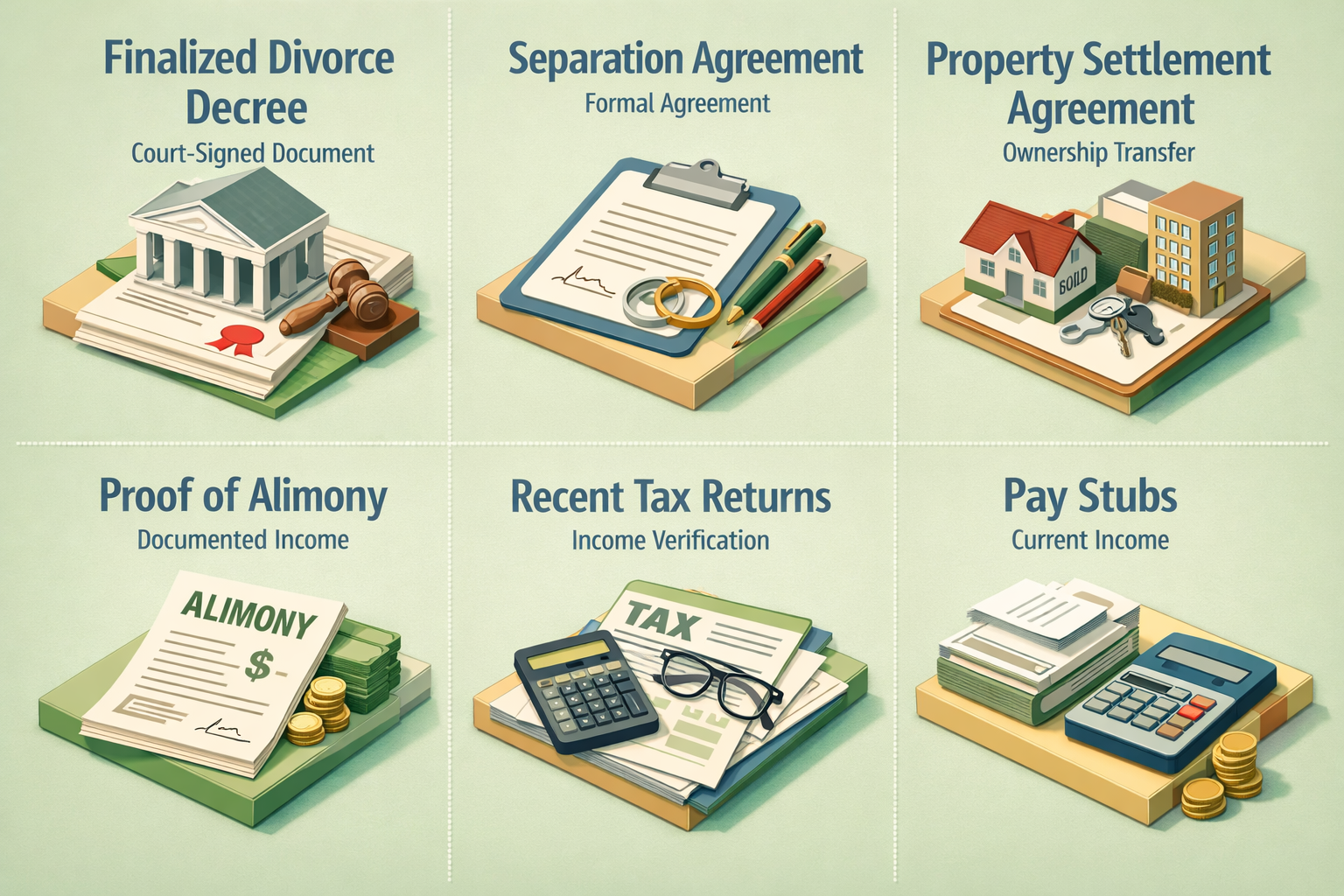
Documentation is central to the mortgage approval process, and it becomes even more important after a major life event like divorce. Here are the key documents you'll likely need to provide when meeting the requirements for conventional loan with recent divorce decree:
- Finalized Divorce Decree: Lenders typically require a complete, court-signed copy of your divorce decree. This document outlines property division, spousal support, and child custody arrangements — all of which may affect your qualifying income and debt load.
- Separation Agreement: If you and your former spouse reached a formal separation agreement before the divorce was finalized, lenders may request this as supplemental documentation.
- Property Settlement Agreement: If the family home or other real estate was part of the settlement, lenders will want to see how ownership was transferred and whether any related mortgage liability was removed from your name.
- Proof of Alimony or Child Support Income: If you receive alimony or child support, lenders may count this as qualifying income — but typically only if it's documented in the decree and has a history of consistent payment. Most lenders want to see at least six to twelve months of payment history.
- Recent Tax Returns and Pay Stubs: These help lenders verify your current income as an individual borrower, separate from any joint financial history.
Being organized with your paperwork upfront can help avoid delays and demonstrate financial readiness to your lender.
Understanding Income Qualification After a Divorce Settlement
Income qualification is one of the more nuanced aspects of applying for a conventional mortgage after divorce settlement. Your income picture may have changed significantly — perhaps you went from a dual-income household to a single income, or you now receive spousal support that wasn't part of your financial profile before.
Here's how lenders typically treat various income sources post-divorce:
- Employment Income: Your base salary, hourly wages, or self-employment income will be evaluated as usual. Lenders generally look for a two-year employment history to confirm stability.
- Alimony (Spousal Support): This income may be counted toward your qualifying income if it's court-ordered, documented in the decree, and demonstrated to continue for at least three years from the date of application. Lenders may also require proof that payments have been received consistently.
- Child Support: Similar to alimony, child support may be used as qualifying income if it meets the lender's continuance and documentation standards.
- Investment or Rental Income: If you retained investment properties or rental assets in the settlement, that income could also be factored into your qualification.
On the flip side, if you're paying alimony or child support, those obligations will count as monthly debts — which affects your debt-to-income (DTI) ratio. Lenders use your DTI to determine how much mortgage payment you can comfortably handle, so it's important to factor these obligations into your budget planning.
Credit Score and Debt-to-Income Ratio Standards for Conventional Loans
Even after a divorce, conventional loan guidelines remain consistent in terms of minimum credit and DTI standards. However, your scores may have shifted during the marriage dissolution process — especially if joint accounts were mismanaged or if you're working to establish credit independently for the first time.
For a conventional loan, borrowers typically need a minimum credit score of 620, though many lenders prefer scores of 680 or higher for more competitive rates and terms. If your credit took a hit during the divorce process — from missed payments on shared accounts, for instance — it may be worth spending a few months rebuilding before applying.
Here are some general credit and DTI standards to be aware of:
- Minimum Credit Score: Generally 620 or higher for conventional loan eligibility, though higher scores improve your rate options.
- Debt-to-Income Ratio: Most conventional lenders prefer a DTI at or below 45%, though some programs allow up to 50% with strong compensating factors such as a large down payment or significant cash reserves.
- Removing Joint Debts: If the divorce decree assigns certain debts to your former spouse, you may still be legally liable if those accounts remain in your name. Lenders will count all debts tied to your credit profile — not just the ones the decree assigns to you — unless the loan or account has been formally refinanced or closed.
It's a smart move to pull your credit reports after your divorce is finalized and dispute any inaccuracies related to joint accounts that no longer reflect your current obligations.
Down Payment and Asset Division Considerations
One of the most practical challenges homebuyers face after a divorce is the down payment. Assets that were previously shared — savings accounts, retirement funds, or equity from the marital home — may now be divided. As a result, the funds available for a down payment might look quite different than before.
For a conventional loan, the minimum down payment is typically 3% to 5% of the purchase price, though putting down 20% or more allows you to avoid private mortgage insurance (PMI). Depending on what you received in the property settlement, you may have access to funds from:
- Proceeds from the sale of the marital home
- Buyout funds received from your former spouse
- Individual savings or investment accounts awarded in the settlement
- Gifts from family members, subject to lender documentation requirements
If you received a lump sum from the divorce settlement — such as a cash buyout from shared equity — lenders will typically want to see documentation of where those funds originated. Bank statements, the settlement agreement, and possibly a letter of explanation may be required to source and verify these funds properly.
It's also worth considering that if you retained the marital home and are now refinancing to remove your former spouse from the mortgage, lenders will evaluate your individual qualifications to carry the loan on your own. This is a common scenario in a conventional mortgage after divorce settlement and may require a cash-out refinance if you're also buying out your former partner's equity share.
Tips to Strengthen Your Application After a Divorce
Meeting the requirements for conventional loan with recent divorce decree is absolutely achievable — and many homebuyers successfully qualify for a conventional financing shortly after their divorce is finalized. Here are some proactive steps that could improve your chances of approval:
- Wait for the Decree to Be Finalized: Lenders generally cannot process applications that depend on pending divorce proceedings. A finalized decree gives both you and the lender legal clarity.
- Close or Separate Joint Accounts: Work to close shared credit accounts or have them formally transferred to one party. This helps both you and your former spouse build independent credit histories.
- Build a Consistent Payment History: Whether you're receiving or paying support, a documented track record of consistent transactions strengthens your application.
- Save Beyond the Minimum: Having additional cash reserves — typically two to six months of mortgage payments in savings — can offset risk in the lender's eyes and improve your approval odds.
- Work With an Experienced Loan Officer: A lender familiar with post-divorce mortgage applications can help you navigate documentation requirements, explain how support income is calculated, and identify the right loan program for your situation.
- Get Pre-Approved Early: Pre-approval not only tells you your budget but also surfaces any potential issues — such as joint debts still on your credit — before you're deep in the homebuying process.
●Conclusion
Divorce is undeniably challenging, but it doesn't have to stand in the way of your homeownership goals. By understanding the requirements for conventional loan with recent divorce decree, gathering the right documentation, and taking proactive steps to strengthen your financial profile, you can position yourself for a successful application. Whether you're purchasing a new home as a fresh start or refinancing to assume full ownership after a settlement, LoanWise is here to help you navigate every step of the process. Connect with one of our experienced loan officers today to discuss your unique situation and explore the loan options that fit your new chapter.