
Buying a home is one of the biggest financial steps most people will ever take, and saving up for a down payment can feel like the hardest part. Fortunately, many homebuyers don't have to do it alone. If a sibling is willing to chip in, you may be able to use that money toward your down payment on a conventional loan — but there are specific rules you'll need to follow. Understanding the requirements for conventional loan with gifted down payment from sibling and 10% down is essential before you apply. This guide walks you through everything you need to know, from eligibility and documentation to lender expectations and common pitfalls to avoid.
Can a Sibling Give You Money for a Down Payment on a Conventional Loan?
The short answer is yes — a sibling can gift you funds for a conventional loan down payment. However, not all gifts are treated equally by lenders, and conventional loan guidelines set by Fannie Mae and Freddie Mac have specific rules about who can give a gift and how it must be documented.
Conventional loans follow guidelines established by Fannie Mae (through its Selling Guide) and Freddie Mac (through its Single-Family Seller/Servicer Guide). Both of these agencies allow gift funds from relatives, and siblings are explicitly listed as eligible donors. This means your brother or sister can contribute toward your down payment without disqualifying you from conventional financing.
That said, the lender will want to verify that the money is truly a gift — not a loan in disguise. If the funds need to be repaid, even informally, they could affect your debt-to-income ratio and loan eligibility. The key distinction between a gift and a loan is that a legitimate gift comes with no expectation of repayment.
What the 10% Down Payment Requirement Means for Gift Eligibility
When you put 10% down on a conventional loan, the gift fund rules become more favorable compared to lower down payment scenarios. Here's why that matters.
For conventional loans with less than 20% down, lenders typically require that at least some portion of the down payment comes from the borrower's own funds — especially if the loan-to-value (LTV) ratio is high. However, when the 10% down payment is met or exceeded, Fannie Mae guidelines generally allow the entire down payment to come from a gift, as long as the property is a primary residence or second home.
This is an important detail for homebuyers relying on a sibling's contribution. With a 10% down payment, you may not need to contribute any of your own savings to the down payment itself, though you'll still need funds for closing costs and reserves unless those are also covered by a separate source.
It's worth noting that gift funds typically cannot be used for investment properties under conventional loan guidelines. If you're purchasing a rental or investment home, you'll likely need to source your down payment elsewhere.
Understanding the Gift Letter: A Non-Negotiable Document
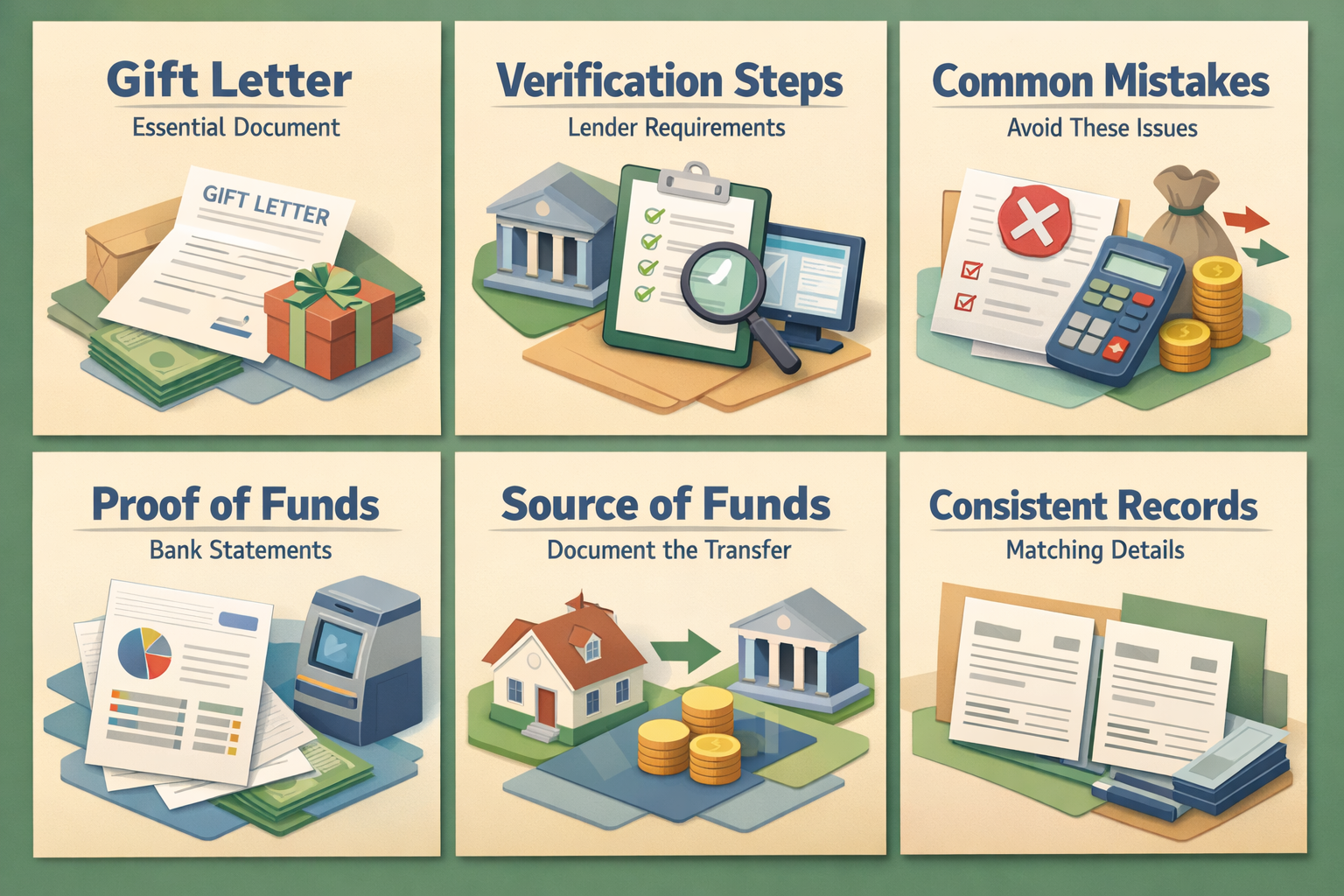
One of the most critical pieces of documentation in the requirements for conventional loan with gifted down payment from sibling and 10% down is the gift letter. This is a signed statement from your sibling confirming that the funds are a gift and not a loan.
A proper gift letter for a conventional loan should include the following elements:
- The donor's name, address, and phone number — your sibling's full contact information.
- The recipient's name — your name as the borrower.
- The property address — the home you're purchasing.
- The dollar amount of the gift — the exact amount being contributed.
- The relationship between donor and recipient — clearly stating that the donor is your sibling.
- A statement confirming no repayment is required — this is the most legally significant part of the letter.
- The donor's signature and the date — both are required for the document to be valid.
Lenders may have their own gift letter templates, so it's a good idea to ask your loan officer for the preferred format early in the process. Using the lender's template helps ensure nothing is missing and reduces the chance of delays during underwriting.
How Lenders Verify the Source and Transfer of Gift Funds
Beyond the gift letter, your lender will also want to verify that the gift funds actually exist and have been properly transferred. This is part of the standard underwriting process for a conventional loan sibling gift with a 10% down payment.
Here's what lenders typically look for:
- Bank statements from the donor — your sibling may need to provide recent bank statements showing the funds in their account, particularly if the gift hasn't been deposited into your account yet.
- Evidence of the transfer — this could be a wire transfer confirmation, a copy of a check, or a bank statement showing the deposit into your account.
- Your bank statements — lenders will review your account history to confirm the funds have been received and to check for any unusual activity that might suggest the money is a loan.
If the gift funds were deposited into your account more than 60 days before you apply for the loan, they may be considered seasoned funds. In that case, lenders often require less documentation because the money has been in your account long enough to be treated as your own assets. However, policies on seasoned funds can vary by lender, so it's best to confirm this with your loan officer.
It's also important that the funds flow in a traceable way. Cash gifts are problematic because they're difficult to document. Encourage your sibling to transfer the funds electronically or by check to create a clear paper trail.
Credit and Income Requirements When Using a Sibling's Gift
Using a gift for your down payment doesn't change the core borrower qualification standards for a conventional loan. You'll still need to meet the lender's credit, income, and debt requirements independently.
For most conventional loans with a 10% down payment, you can generally expect the following baseline requirements:
- Minimum credit score — most conventional lenders require a credit score of at least 620, though some may set the bar higher depending on other risk factors. A stronger score, such as 700 or above, may help you secure a better interest rate.
- Debt-to-income (DTI) ratio — conventional guidelines typically allow a maximum DTI of around 45%, though some automated underwriting approvals may allow up to 50% in certain cases.
- Stable employment and income — lenders will verify your income through W-2s, tax returns, or pay stubs, depending on your employment situation.
- Private mortgage insurance (PMI) — because you're putting down less than 20%, you'll likely be required to carry PMI until you build enough equity in the home.
It's also worth remembering that the gift itself does not count as income. Your sibling's contribution helps with the down payment, but it won't improve your DTI or qualifying income in the eyes of the lender.
Common Mistakes to Avoid When Using a Down Payment Gift from a Sibling
Even when all the pieces seem to be in place, there are a few missteps that could complicate or delay your loan approval. Here's what to watch out for when using a down payment gift conventional loan sibling arrangement:
- Depositing the gift too close to closing — large deposits that appear suddenly in your account right before closing can raise red flags with underwriters. Try to plan the transfer well in advance.
- Informal agreements to repay the gift — even a handshake deal to pay your sibling back could technically disqualify the gift. Keep the arrangement clean and make sure no repayment is expected or implied.
- Missing or incomplete gift letter — a gift letter that lacks required details can hold up your approval. Double-check with your loan officer that the letter meets all guidelines.
- Using the gift for ineligible property types — as mentioned, gift funds are generally not allowed for investment properties under conventional guidelines.
- Not accounting for closing costs and reserves — the gift covers your down payment, but you may still need personal funds for closing costs and cash reserves. Make sure your financial picture is complete.
Working with a Lender Who Understands Gift Fund Guidelines
Not all lenders handle gift fund situations the same way. While Fannie Mae and Freddie Mac set the overarching guidelines, individual lenders may have their own overlays — additional requirements on top of the agency standards. This means one lender might ask for more documentation than another, even for the same loan scenario.
When you're navigating the requirements for conventional loan with gifted down payment from sibling and 10% down, working with an experienced loan officer can make a real difference. A knowledgeable lender can help you:
- Confirm that your sibling qualifies as an eligible gift donor under their specific guidelines.
- Obtain the correct gift letter template and explain what documentation your sibling will need to provide.
- Review your bank statements in advance to identify any potential issues before underwriting.
- Structure the timeline of the gift transfer to minimize documentation headaches.
Getting pre-approved early in the process gives you a clearer picture of where you stand and what you'll need to gather. It also helps you move quickly when you find the right home, which matters in competitive real estate markets.
●Conclusion
Using a sibling's gift to cover a 10% down payment on a conventional loan is absolutely possible — and for many homebuyers, it's a practical path to homeownership that might otherwise feel out of reach. The key is understanding the rules and preparing your documentation carefully. A proper gift letter, a traceable fund transfer, and a borrower profile that meets conventional loan standards are the foundation of a successful application. If you're ready to explore your options, connecting with a lending professional who specializes in conventional financing can help you move forward with confidence. At LoanWise, we're here to help you understand your choices and find the right loan for your situation.