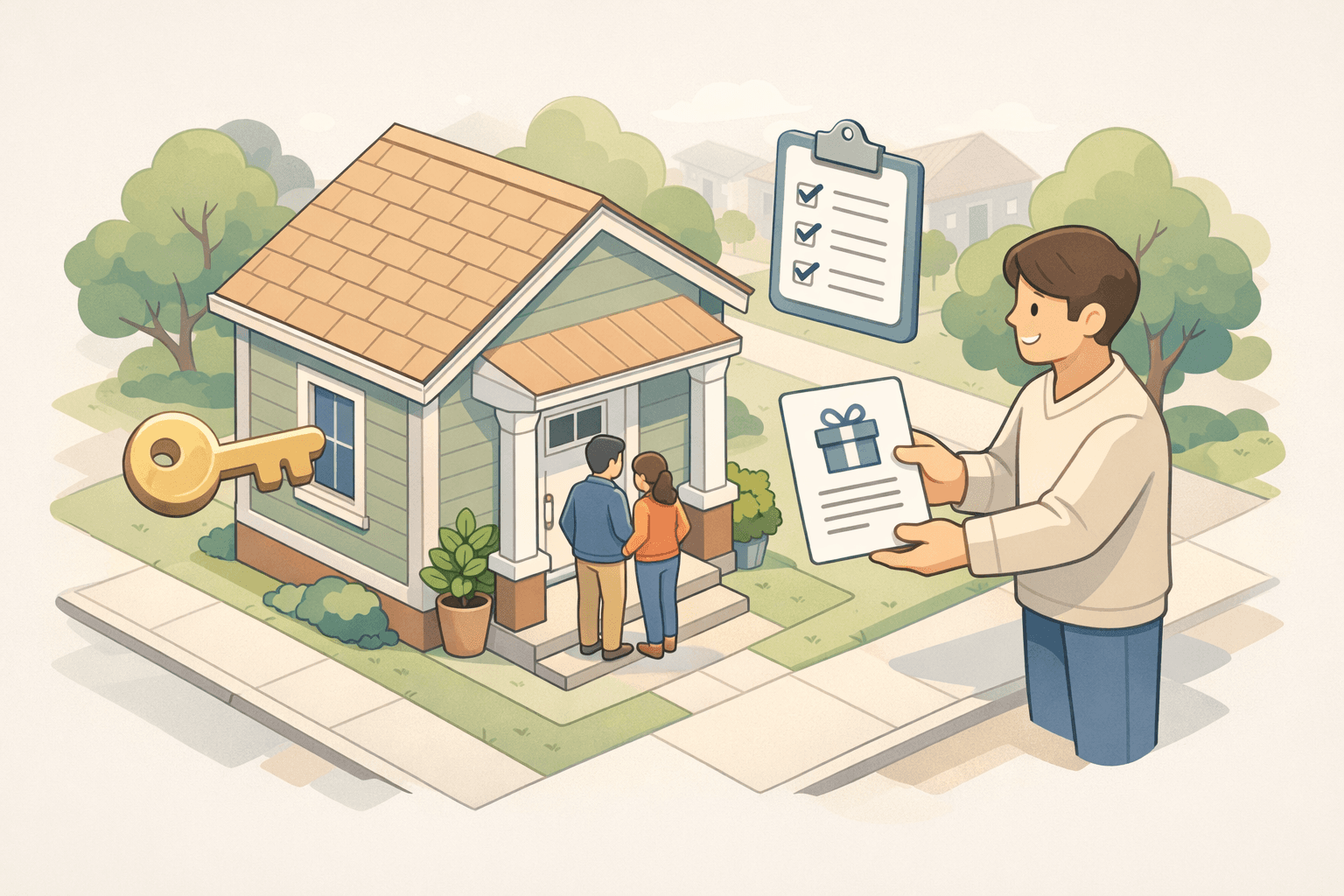
Buying a home is one of the biggest financial milestones in life, and saving for a down payment is often the hardest part. For many first-time homebuyers, a helping hand from a parent or family member can make all the difference. The good news is that conventional loans do allow gifted funds — but there are specific rules you'll need to follow. Understanding the requirements for conventional loan with gifted down payment from parent can help you avoid delays and get your financing approved without unnecessary surprises. This guide walks you through everything you need to know, from gift letter documentation to lender expectations.
What It Means to Use Gifted Funds on a Conventional Loan
A gifted down payment is money given to a homebuyer by a third party — typically a parent or close family member — to help cover the cost of purchasing a home. Unlike a loan, a gift doesn't need to be repaid. That distinction is critical to lenders, because repayment obligations could affect a borrower's debt-to-income ratio and overall ability to afford the mortgage.
Conventional loans, which are backed by Fannie Mae or Freddie Mac rather than a government agency, do permit gifted funds under certain conditions. However, lenders need to verify that the money truly is a gift and not a disguised loan. This is why documentation requirements tend to be thorough and non-negotiable when gifted funds are involved.
It's also worth noting that the term "conventional loan" covers a range of products, including conforming loans that meet Fannie Mae and Freddie Mac guidelines. Most of the rules around gifted down payments are rooted in those agency guidelines, which lenders must follow to sell the loans on the secondary market.
Who Can Give the Gift: Eligible Donors Under Conventional Guidelines
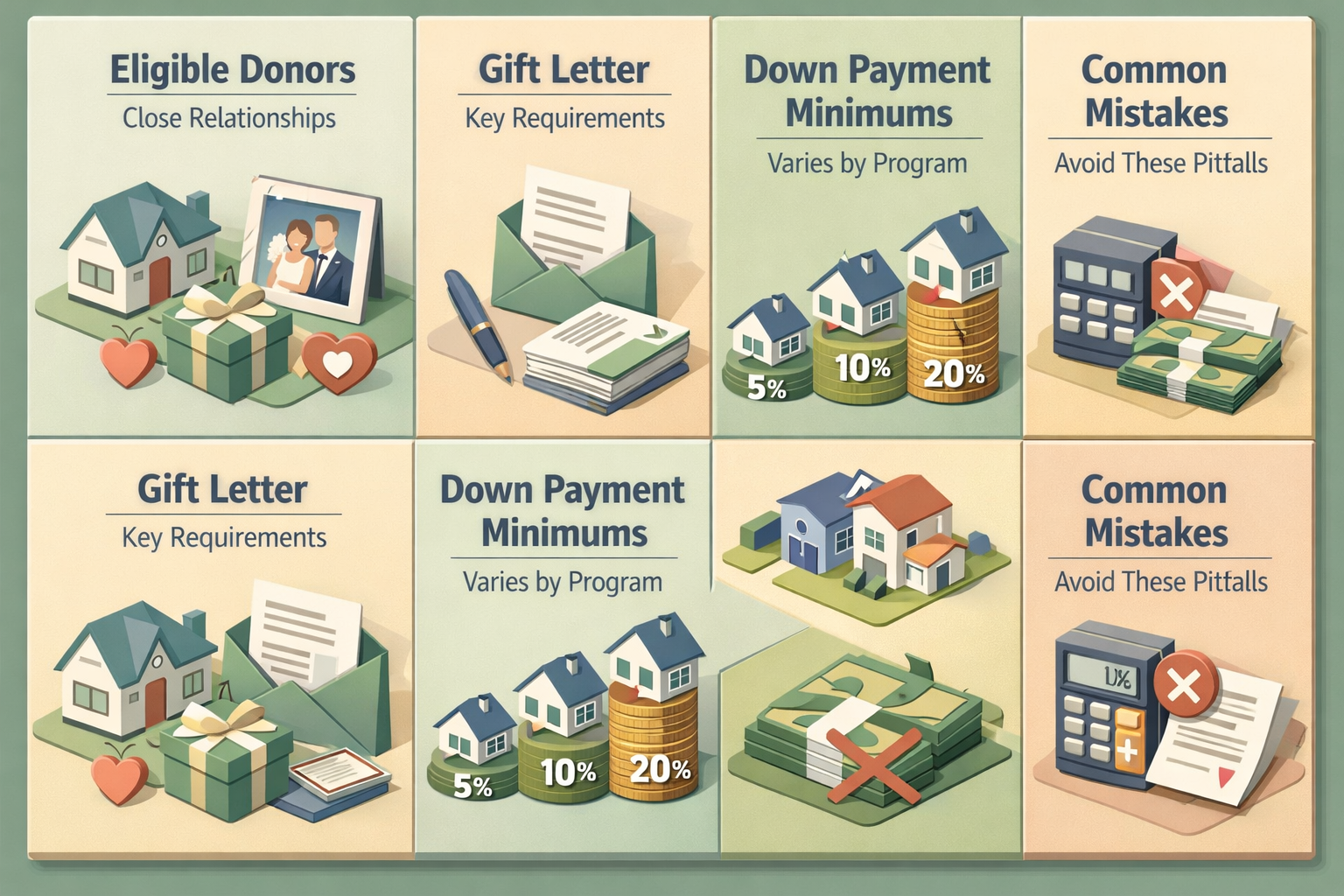
Not every source of gifted funds qualifies under conventional loan guidelines. Fannie Mae and Freddie Mac both maintain lists of eligible gift donors, and parents are among the most common and widely accepted sources. In general, the donor must have a close relationship with the borrower.
Typically accepted donors for conventional loans may include:
- Parents and stepparents
- Siblings and step-siblings
- Grandparents
- Children and stepchildren
- Aunts, uncles, and close relatives
- Domestic partners or fiancés
- Employers or labor unions in some cases
Gifts from non-relatives, friends, or distant acquaintances may not be permitted under standard conventional loan guidelines. If the donor relationship doesn't fit within approved categories, the funds might need to be treated differently or could potentially disqualify the transaction. Always confirm eligible donors with your lender before assuming a particular gift source will be accepted.
The Gift Letter: A Non-Negotiable Document for Lender Approval
One of the most important requirements for conventional loan with gifted down payment from parent is the gift letter. This is a written statement from the donor — in this case, your parent — that confirms the money being provided is a true gift with no expectation of repayment.
A properly formatted gift letter typically needs to include:
- The donor's full name, address, and relationship to the borrower
- The exact dollar amount of the gift
- The address of the property being purchased
- A clear statement that the funds are a gift and not a loan
- A statement confirming no repayment is required or expected
- The donor's signature and the date
Lenders take gift letters very seriously. If the letter is missing any key elements or appears inconsistent with the paper trail of funds, it could raise red flags during the underwriting process. It's a good idea to use a template provided by your lender or loan officer to make sure nothing is left out.
Keep in mind that the gift letter alone is usually not enough. Lenders will also want to trace the movement of money through bank statements and other financial records to confirm that the gift was actually received and deposited.
Down Payment Minimums and How Gift Funds Are Applied
Conventional loans have varying down payment requirements depending on the loan program, borrower profile, and property type. For many borrowers, the minimum down payment on a conventional loan is 3% to 5% of the purchase price, though some programs may require more depending on occupancy type or loan size.
When it comes to using gifted funds, the rules on how much of the down payment can come from a gift depend on how much you're putting down overall:
- 3% down: Some conventional programs allow the full down payment to come from a gift, provided the borrower meets credit and income requirements.
- 5% to 19.99% down: In many cases, at least some portion of the down payment may need to come from the borrower's own funds, especially for investment properties or multi-unit homes. For primary residences, gifted funds may cover the full amount.
- 20% or more down: Gift funds are generally more flexible at higher down payment levels, and lenders may impose fewer restrictions.
The property type also matters. Primary residences tend to have the most accommodating rules for gift funds, while second homes and investment properties may face stricter limitations. Always check the specific program guidelines with your lender before planning your down payment strategy.
Documenting the Gift: Tracing the Paper Trail Lenders Expect
Beyond the gift letter, lenders will require documentation that shows the funds actually moved from the donor to the borrower. This paper trail is essential for compliance with Fannie Mae and Freddie Mac guidelines and helps confirm that the gift is genuine and not a concealed loan or undisclosed debt.
Common documentation requirements may include:
- Donor's bank statements: These help verify that the donor actually had the funds available to give. Lenders may ask for one to three months of recent statements showing sufficient balance.
- Proof of transfer: This could be a wire transfer confirmation, a cashier's check copy, or a record of the deposit. The transfer should be clearly traceable from the donor's account to the borrower's account.
- Borrower's bank statements: These confirm that the gift was deposited and is now sitting in the borrower's account, ready to be used toward closing costs or the down payment.
Lenders want to see a clean, consistent flow of money. Large or unexplained deposits in a borrower's account can trigger additional scrutiny during underwriting. If a gift was deposited weeks before the application, some lenders may consider it "seasoned" and require less documentation — but this varies by lender and loan program.
If the gift funds are deposited well in advance of applying for the mortgage, they may blend into the account balance naturally. However, this doesn't eliminate the need for documentation entirely, so it's best to keep records of all transfers regardless of timing.
Credit and Income Requirements Still Apply When Using Gift Funds
It's important to understand that a gifted down payment doesn't change the borrower's responsibility to meet all other conventional loan standards. Lenders will still evaluate the borrower's credit profile, income, employment history, and overall financial stability regardless of where the down payment originates.
Here's what conventional lenders typically look at in addition to down payment source:
- Credit score: Most conventional loan programs require a minimum credit score of 620, though some lenders may set higher thresholds. A stronger credit score could also help secure better interest rates.
- Debt-to-income ratio (DTI): Lenders generally prefer a DTI at or below 45%, though some programs may allow slightly higher ratios with compensating factors. Since the gift is not a loan, it won't count as a liability in the DTI calculation — as long as the gift letter clearly states no repayment is required.
- Employment and income stability: Two years of consistent employment history is a common benchmark for conventional borrowers. Self-employed applicants may face additional documentation requirements.
- Reserves: Some lenders may require borrowers to have additional savings in reserve beyond the down payment and closing costs, particularly for higher loan amounts.
Using a gift doesn't weaken your loan application on its own — but it also can't substitute for a solid borrower profile. The strongest applications combine gifted funds with good credit, steady income, and manageable debt levels.
Common Mistakes to Avoid When Using a Parent Gift Down Payment on a Conventional Loan
Even well-meaning borrowers can run into trouble if they're not careful about how gifted funds are handled. Here are some of the most common pitfalls to watch out for when navigating the parent gift down payment conventional loan process:
- Treating the gift as an informal transaction: Transferring cash directly or combining funds without documentation makes it very difficult for lenders to verify the source. Always use traceable transfer methods.
- Failing to get the gift letter signed early: Waiting until the last minute to gather documentation can slow down the underwriting process and jeopardize your closing date.
- Having the donor repay a recent personal loan as a "gift": If the donor recently took out a loan and is passing the proceeds to the borrower, lenders may view this as an undisclosed liability. Transparency is essential.
- Neglecting to disclose the gift upfront: Always inform your loan officer about any gift funds from the very beginning. Attempting to present gifted money as personal savings can be considered mortgage fraud.
- Assuming all conventional loans have the same rules: Guidelines can vary slightly between lenders and loan programs. What one lender permits, another may question. Always clarify the specific requirements with your loan officer before proceeding.
Working closely with an experienced mortgage professional can help you navigate the process smoothly and avoid costly delays. The rules around gifted down payments are manageable — they just require attention to detail and proactive communication.
●Conclusion
Using a parent's gift toward a home purchase is a meaningful and widely accepted way to bridge the gap between savings and a sufficient down payment. The requirements for conventional loan with gifted down payment from parent are well-defined, and with the right preparation, the process can be straightforward. From securing a properly worded gift letter to maintaining a clear paper trail, following the guidelines set by Fannie Mae, Freddie Mac, and your individual lender will go a long way toward a smooth approval. If you're ready to explore your conventional loan options or have questions about how to structure a gifted down payment, the team at LoanWise is here to help you take the next step with confidence.