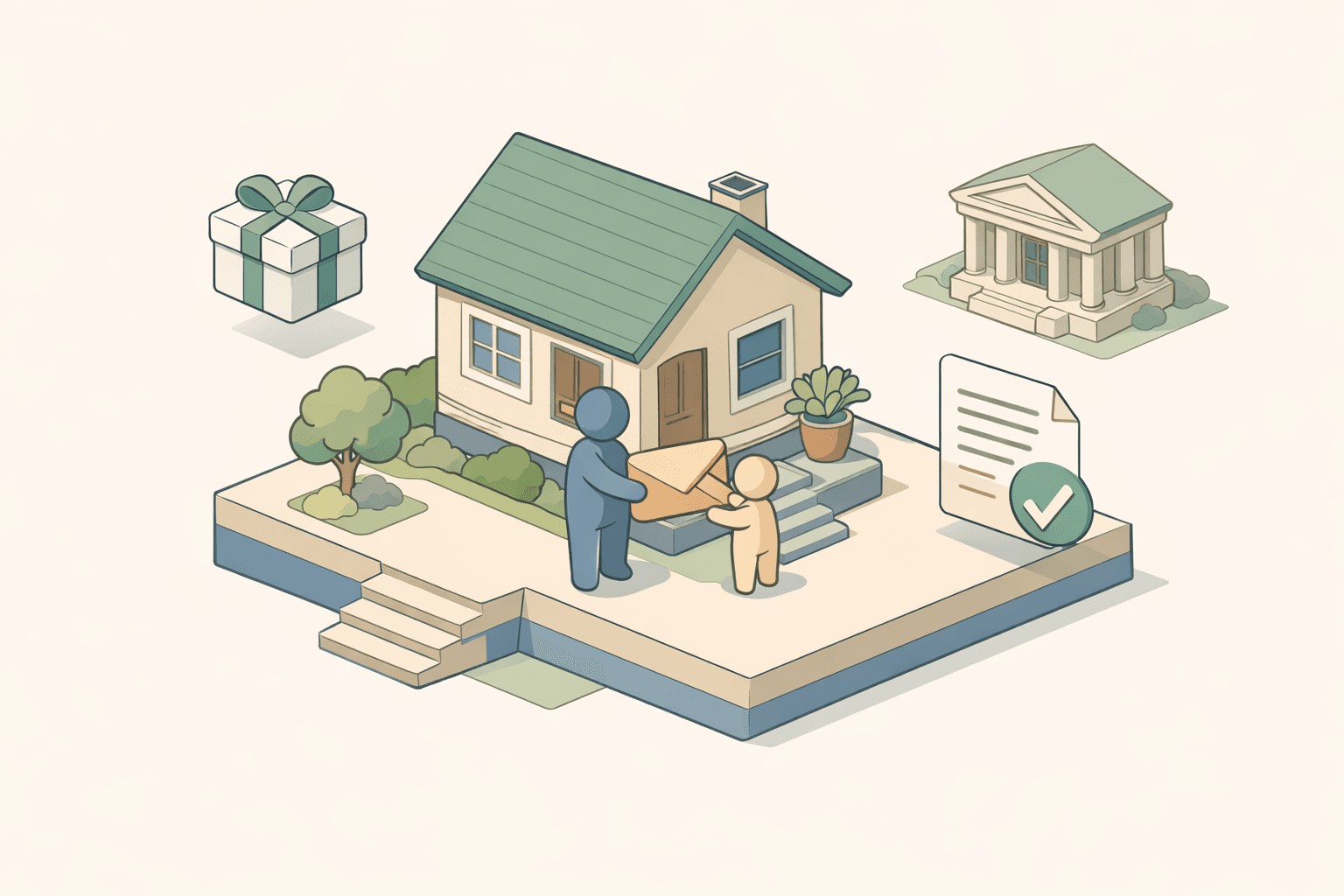
Buying a home is one of the biggest financial steps most people will ever take, and coming up with a down payment can feel like the hardest part. Fortunately, many homebuyers don't have to do it entirely on their own. Family members can contribute funds as a gift, and conventional loan programs may allow those gifted dollars to count toward your down payment. However, lenders don't simply take a family member's generosity at face value. There are specific requirements for conventional loan with gifted down payment from family that both the borrower and the gift donor must satisfy before closing day. Understanding these rules in advance can save you time, stress, and potential loan delays.
What Counts as a Gift in Mortgage Lending
In the mortgage world, a gift is defined as money given to a borrower with absolutely no expectation of repayment. This distinction matters enormously. If a lender suspects that gifted funds are actually a personal loan in disguise, they may treat the amount as a debt obligation, which could negatively affect your debt-to-income ratio and overall loan eligibility.
For a conventional loan backed by Fannie Mae or Freddie Mac guidelines, gift funds are generally permitted from a fairly specific group of people. Eligible donors typically include:
- Parents, grandparents, or other direct relatives
- Siblings and step-siblings
- Children or adopted children
- Domestic partners or fiancés in some cases
- Aunts, uncles, and cousins in certain situations
Most lenders will not allow gift funds from non-relatives, employers, or any organization with a financial interest in the transaction. It's worth confirming your specific donor's eligibility directly with your lender, since guidelines can vary slightly between loan programs and individual lenders.
How Much of Your Down Payment Can Be a Gift
One of the most common questions homebuyers have is whether the entire down payment can come from a family gift, or if they need to contribute some of their own money. The answer largely depends on how much you're putting down and how the property will be used.
For a primary residence, conventional loan guidelines may allow 100% of the down payment to come from gift funds, provided you're putting down at least 20%. When the down payment is less than 20%, some lenders may require the borrower to contribute a minimum percentage — often around 5% — from their own funds. This requirement can vary, so it's important to ask your lender early in the process.
If the property is a second home or investment property, the rules tend to be stricter. Lenders typically expect borrowers to use more of their own personal savings in those scenarios, and gift funds may only be allowed to cover a portion of the down payment or closing costs.
The key takeaway is that the requirements for conventional loan with gifted down payment from family depend significantly on the loan-to-value ratio and the type of property being purchased. Clarifying this with your mortgage advisor early on will help you plan your finances more effectively.
The Gift Letter for Mortgage Down Payment: What It Must Include
Perhaps the most critical document in the gifted down payment process is the gift letter for mortgage down payment. This is a signed statement from the donor that confirms the nature of the transaction and satisfies lender requirements for transparency.
A properly written gift letter should typically include:
- The donor's full name, address, and phone number
- The borrower's full name and relationship to the donor
- The exact dollar amount of the gift
- The source of the gifted funds (e.g., personal savings, investment account)
- The property address the gift is intended for
- A clear statement that the funds are a gift and not a loan, with no repayment required
- The donor's signature and the date
Lenders may also require a copy of the donor's bank statement showing the funds were available, along with proof that the money was transferred to the borrower's account. This paper trail is essential. Without it, underwriters may not be able to verify that the gift was legitimate, which could delay or even jeopardize your loan approval.
It's always a good idea to work with your loan officer when preparing the gift letter, as they can confirm that the format meets the specific lender's requirements and Fannie Mae or Freddie Mac guidelines.
Documenting and Sourcing Gift Funds Properly
Even with a valid gift letter in hand, lenders still need to verify the paper trail of the gift funds. This process is called asset sourcing, and it's a standard part of underwriting for any conventional loan application that involves gifted money.
Here's what proper documentation might look like:
- Donor's bank statement: Showing that the gift amount was available in the donor's account prior to the transfer.
- Transfer records: A wire transfer receipt, cashier's check copy, or bank-to-bank transfer confirmation.
- Borrower's bank statement: Demonstrating that the funds arrived in the borrower's account and that the balance reflects the deposit.
Lenders are particularly cautious about large, unexplained deposits. If the gifted funds appear in your account without a clear explanation, the underwriter may flag them and ask for additional documentation. This is why timing matters. Ideally, gift funds should be deposited into the borrower's account well before the loan application is submitted, giving the money time to be properly sourced and documented.
Some homebuyers make the mistake of assuming a verbal agreement or a simple note is enough. In reality, the documentation requirements are fairly thorough, and any gaps in the paper trail could raise red flags during underwriting review.
Credit, Income, and Other Eligibility Factors That Still Apply
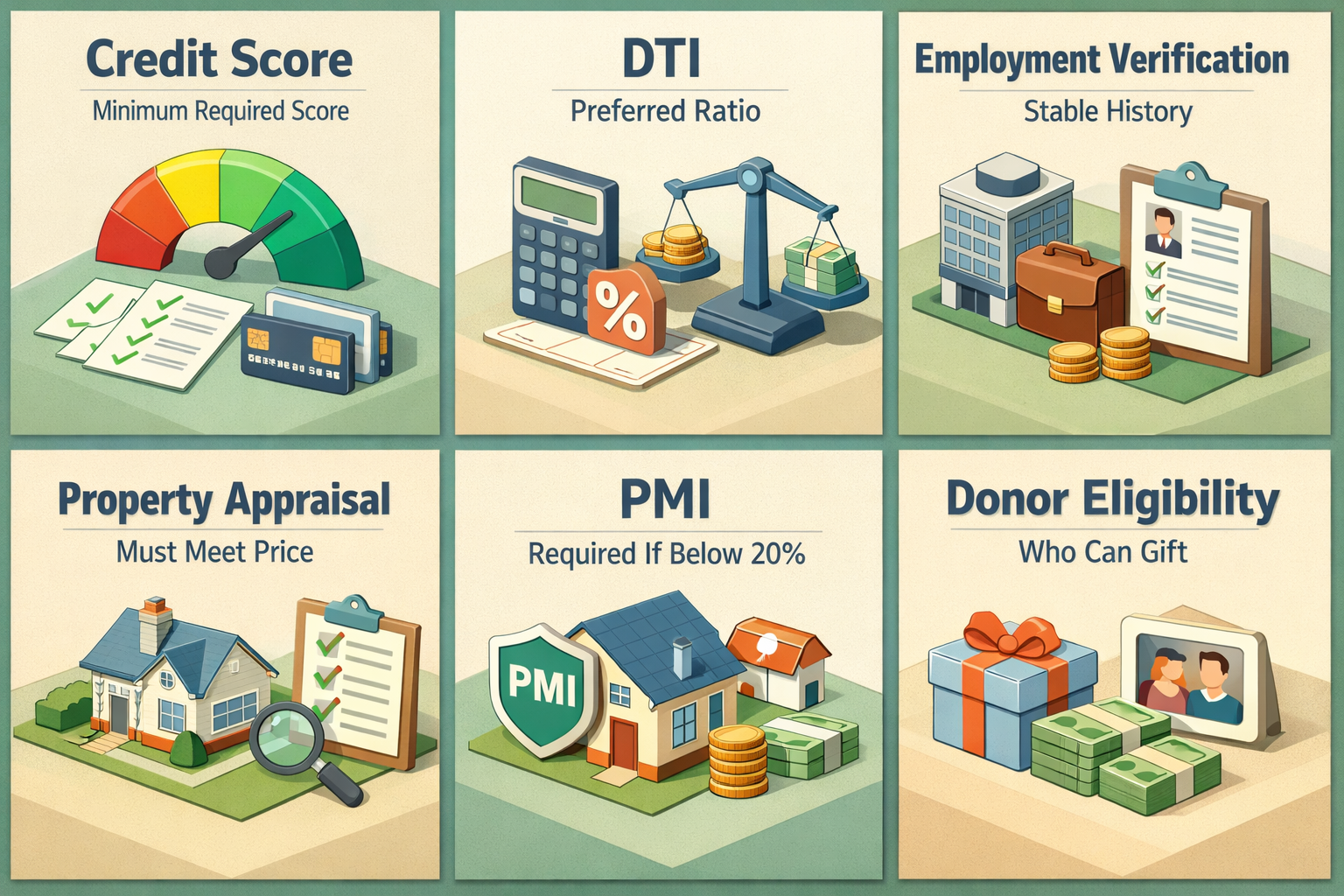
It's important to remember that using gift funds for a down payment doesn't change the rest of the conventional loan qualification process. Borrowers still need to meet all standard eligibility criteria set by the lender and the applicable agency guidelines.
Typical requirements that continue to apply include:
- Credit score: Conventional loans generally require a minimum credit score, often around 620, though higher scores may be needed for the most competitive rates and terms.
- Debt-to-income ratio (DTI): Lenders typically prefer a DTI below 43% to 45%, though some programs may allow for slight flexibility depending on compensating factors.
- Employment and income verification: Borrowers must provide proof of stable employment history and sufficient income to support the monthly mortgage payment.
- Property appraisal: The home must appraise at or above the purchase price for the loan to move forward.
- Private mortgage insurance (PMI): If the down payment — including gift funds — is less than 20%, PMI will likely be required until sufficient equity is built.
Meeting these requirements alongside the gifted down payment documentation gives you the strongest possible application. A loan advisor can help you evaluate your full financial picture and identify any areas that might need attention before you apply.
Common Mistakes Homebuyers Make with Gift Funds
Even well-intentioned homebuyers can run into trouble when using gift money for a down payment. Understanding the most frequent missteps can help you avoid unnecessary complications during the loan process.
1. Treating a loan like a gift. If a family member expects repayment — even informally — the funds are technically a loan. Lenders take this seriously, and misrepresenting the nature of the funds could be considered mortgage fraud.
2. Skipping the paper trail. Moving gift money around through multiple accounts before it lands in the borrower's account can make it very difficult to trace. Keep the transfer simple and direct whenever possible.
3. Depositing funds too close to closing. Large, last-minute deposits raise questions during underwriting. Depositing gift funds earlier in the process gives underwriters more time to verify the source.
4. Using an ineligible donor. Accepting a gift from someone who doesn't meet the lender's donor eligibility criteria — such as a seller, real estate agent, or unrelated third party — can result in the funds being disallowed entirely.
5. Not informing the lender upfront. Surprises during underwriting slow down the closing process. Disclosing that you'll be using gift funds from the very beginning allows your loan officer to guide you through the process correctly from day one.
●Conclusion
Understanding the requirements for conventional loan with gifted down payment from family is essential for any homebuyer hoping to use a family contribution toward their purchase. From preparing a thorough gift letter for mortgage down payment to documenting the transfer of funds and meeting all standard credit and income benchmarks, each step plays an important role in the approval process. While the rules may seem detailed, they exist to protect both borrowers and lenders — and with the right preparation, using a family gift can be a smooth and effective path to homeownership. If you're ready to explore your options, connecting with an experienced mortgage advisor at LoanWise can help you navigate the process with clarity and confidence.