
Buying a home is one of the biggest financial decisions you'll ever make, and coming up with a down payment can feel like the hardest part. Many homebuyers don't realize that a sibling can actually help fund their down payment — and that it's perfectly acceptable under conventional loan guidelines when done correctly. Understanding the requirements for conventional loan with 10% down payment from sibling can open a real door for buyers who need a little extra help getting started. This guide walks you through exactly what lenders expect, what documentation you'll need, and how to make the process as smooth as possible.
What Is a Conventional Loan and Why Does 10% Down Matter
A conventional loan is a mortgage that isn't backed by a government agency like the FHA, VA, or USDA. Instead, it follows guidelines set by Fannie Mae and Freddie Mac — the two government-sponsored enterprises that purchase most mortgages in the United States. Because these loans aren't government-insured, lenders tend to hold borrowers to stricter qualification standards.
When it comes to down payments, conventional loans offer some flexibility. While 20% down is often cited as the gold standard — mainly because it eliminates private mortgage insurance (PMI) — many lenders accept as little as 3% down for qualified buyers. A 10% down conventional loan sits comfortably in the middle, reducing the loan amount while keeping more cash in the buyer's pocket for closing costs, reserves, or home improvements.
Putting 10% down may also result in lower PMI premiums compared to putting just 3% or 5% down. This can make a meaningful difference in your monthly payment. It's a popular choice for buyers who want to demonstrate financial commitment without draining their entire savings account.
Can a Sibling Gift You a Down Payment for a Conventional Loan
Yes — under Fannie Mae and Freddie Mac guidelines, gift funds from a sibling are an acceptable source of down payment funds for a conventional loan. A sibling is considered an eligible donor because they qualify as a family member under these guidelines. This is good news for homebuyers who have generous family members willing to contribute to their purchase.
However, there's an important distinction that lenders will focus on: the money must be a true gift, not a loan in disguise. If the funds are expected to be repaid — even informally — they cannot be classified as a gift. Lenders take this seriously because repayable funds would affect your debt-to-income (DTI) ratio and your overall financial picture.
It's also worth noting that the gift funds must typically come from someone with a genuine familial relationship, and the lender will want documented proof of both the relationship and the gift itself. A sibling who's willing to help should be prepared to participate in the documentation process alongside the borrower.
Meeting the Requirements for Conventional Loan with 10% Down Payment from Sibling
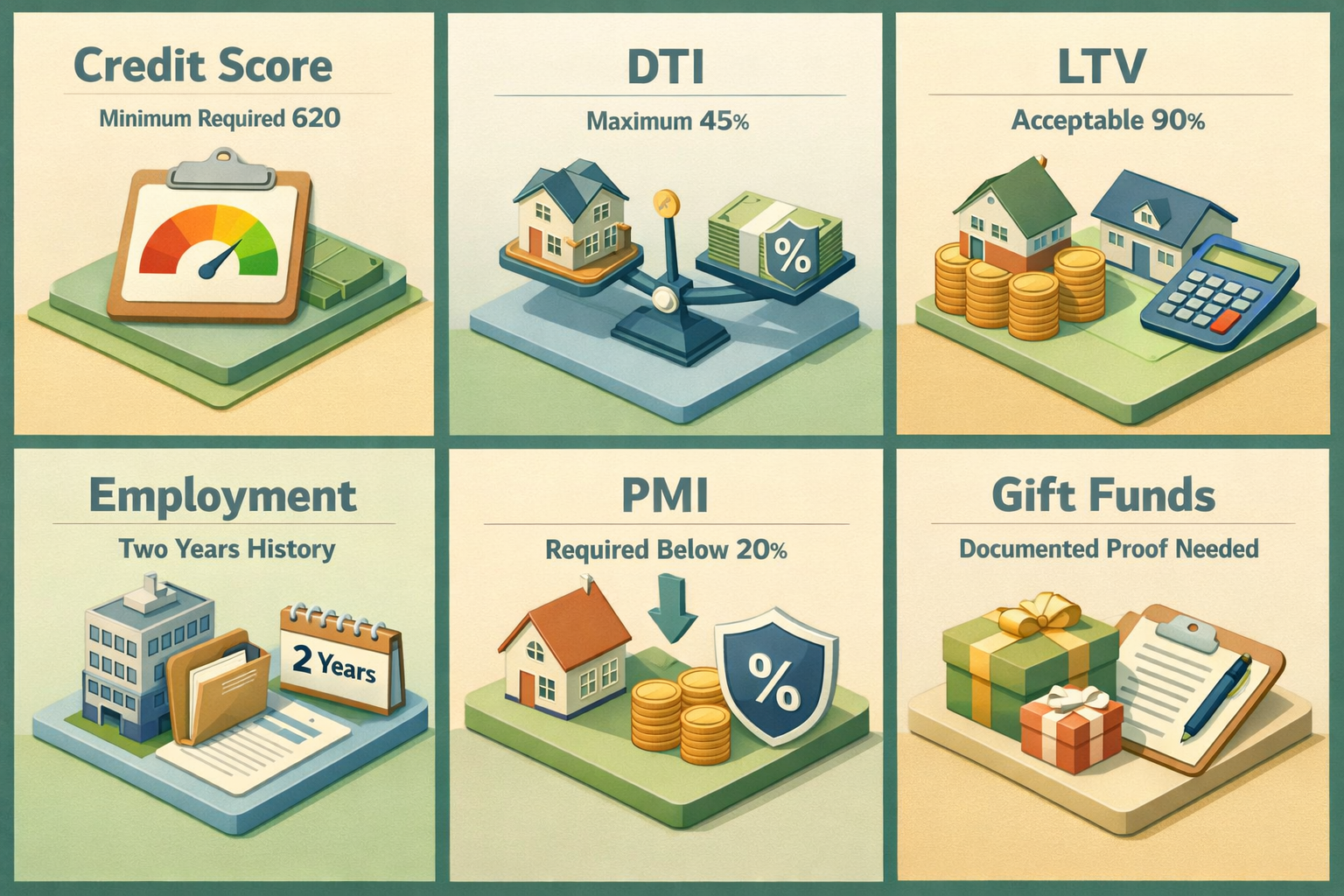
To satisfy the requirements for conventional loan with 10% down payment from sibling, you'll need to meet both the standard loan qualifications and the specific gift fund documentation rules. Here's a breakdown of what's typically required:
- Credit Score: Most conventional lenders require a minimum credit score of 620, though a higher score — generally 700 or above — may result in better interest rates and lower PMI costs.
- Debt-to-Income Ratio (DTI): Lenders typically look for a DTI of 45% or lower, though some may allow up to 50% with strong compensating factors like solid reserves or a high credit score.
- Loan-to-Value Ratio (LTV): With a 10% down payment, your LTV will be 90%, which is within the acceptable range for most conventional loan programs.
- Stable Employment and Income: Lenders will verify at least two years of employment history and require recent pay stubs, W-2s, and possibly tax returns.
- Private Mortgage Insurance (PMI): Because your down payment is less than 20%, PMI will likely be required. The cost varies based on your credit score and LTV.
- Gift Funds Documentation: This is the most critical piece when using a sibling's contribution. The gift must be fully documented according to lender and agency guidelines.
Meeting these criteria doesn't guarantee approval, but it does position you as a strong candidate in the eyes of most conventional lenders. If any of these areas need improvement, working with a mortgage advisor ahead of time can help you identify and address gaps before you apply.
The Sibling Gift Letter: What It Must Include and Why It Matters
One of the most important documents in the entire process is the gift letter. When using a sibling gift for down payment conventional loan purposes, both the borrower and the donor sibling must provide a signed gift letter. This letter is a formal statement that confirms the nature of the funds and protects you during underwriting.
A properly written gift letter should include the following elements:
- The donor's full name, address, and relationship to the borrower (in this case, sibling)
- The dollar amount of the gift
- The address of the property being purchased
- A clear statement that the funds are a gift and not a loan — meaning no repayment is expected or required
- The donor's signature and the date
Some lenders may also require the borrower to sign the letter confirming receipt. It's a straightforward document, but every detail matters. Even minor inconsistencies between the gift letter and the bank statements can raise red flags during underwriting and cause delays.
Your loan officer can provide a template gift letter that meets your lender's specific requirements. It's always best to use the lender's preferred format to avoid back-and-forth during processing.
How Lenders Verify and Source Gift Funds from a Sibling
Documentation doesn't stop at the gift letter. Lenders need to verify that the gift funds were actually transferred and that they came from an acceptable source. This process is known as sourcing and seasoning the funds.
Here's what the verification process typically looks like:
- Bank Statements from the Donor: Your sibling may need to provide bank statements showing that the gift funds were in their account before being transferred. This helps confirm the money didn't come from an unacceptable source, like a cash advance or undisclosed loan.
- Transfer Evidence: A copy of the wire transfer, cashier's check, or bank receipt showing the funds moving from your sibling's account to yours is typically required.
- Borrower's Bank Statements: Your own bank statements should show the deposit of the gift funds, and the amount should match what's stated in the gift letter exactly.
If the gift funds have been sitting in your bank account for a significant period — often 60 days or more — they may be considered "seasoned." Seasoned funds are generally easier to document because the lender may only need your bank statements without requiring the donor's information. However, this can vary by lender and loan program, so it's best to confirm the specific requirements with your mortgage professional early in the process.
The key takeaway is that transparency is everything. Any unexplained large deposits can trigger additional scrutiny, so clear paper trails make the underwriting process much smoother for everyone involved.
Common Pitfalls to Avoid When Using a Sibling's Gift
Even with the best intentions, mistakes can happen when gift funds are involved. Being aware of common pitfalls can save you time, stress, and potentially your loan approval.
- Treating the gift as a loan: Even a casual verbal agreement to repay your sibling could disqualify the funds. Lenders may ask you to confirm in writing that no repayment is expected.
- Moving funds around before applying: Transferring the gift into multiple accounts or withdrawing and redepositing the funds can make them harder to trace and document. Try to keep the money movement simple and direct.
- Waiting too long to disclose the gift: Lenders need to know about gift funds early in the application process. Surprising your loan officer at closing with a large unexplained deposit can derail the loan entirely.
- Not having enough of your own funds: Depending on the loan program and property type, lenders may require that a portion of the down payment come from the borrower's own funds. For a primary residence with 10% down, Fannie Mae guidelines may allow the entire down payment to come from gift funds, but requirements can vary. Always verify with your lender.
- Forgetting about closing costs: Gift funds can often be used for down payment purposes, but make sure you have enough to cover closing costs as well, which typically range from 2% to 5% of the loan amount.
Working closely with a knowledgeable loan officer can help you avoid these issues. They've seen the process many times and can guide you through the specific conventional loan requirements based on your situation and lender.
●Conclusion
Using a sibling's generosity to help fund your home purchase is not only possible — it's a well-established and accepted practice under conventional loan guidelines. The requirements for conventional loan with 10% down payment from sibling come down to proper documentation, clear communication with your lender, and meeting standard qualification criteria like credit score, DTI, and income verification. When everything is handled correctly, a sibling gift can be the financial bridge that makes homeownership a reality. If you're ready to take the next step, connect with a LoanWise mortgage specialist today to review your options and start your application with confidence.