Receiving an inheritance can open doors — including the door to homeownership. If you've recently inherited money and you're wondering whether you can use it toward a home purchase, the good news is that conventional mortgage lenders typically allow inherited funds as a source for your down payment. However, there are specific requirements for conventional loan with 10% down payment from inheritance that you'll need to understand before you apply. From documentation to seasoning rules, this guide walks you through everything homebuyers need to know to use inherited money confidently and correctly.
What Is a Conventional Loan and Why 10% Down Matters
A conventional loan is a mortgage that's not backed by a government agency like the FHA, VA, or USDA. Instead, these loans conform to guidelines set by Fannie Mae and Freddie Mac — the two government-sponsored enterprises that purchase most conventional mortgages from lenders.
One of the most attractive features of a conventional loan is its flexible down payment structure. While a 20% down payment allows you to avoid private mortgage insurance (PMI), many borrowers successfully put down as little as 3% to 5%. Putting down 10%, however, hits a useful middle ground — it reduces the loan amount, lowers your monthly PMI cost compared to smaller down payments, and demonstrates financial stability to lenders.
For homebuyers who've recently come into inherited money, a 10% down payment may be well within reach. But before your lender approves those funds, they'll want to verify exactly where the money came from — and that's where understanding the conventional mortgage requirements for an inherited down payment becomes essential.
Are Inherited Funds Considered a Gift or Something Else?
This is one of the most common questions homebuyers ask, and the answer matters for documentation purposes. Under Fannie Mae and Freddie Mac guidelines, inherited funds are generally treated differently from gift funds, even though they may feel similar on the surface.
A gift typically comes from a living relative who chooses to give you money. An inheritance, on the other hand, comes from the estate of a deceased person — whether through a will, trust, or estate distribution. Lenders and underwriters treat these two sources with slightly different documentation expectations.
In most cases, lenders classify inherited funds as personal assets rather than gifts, which can actually make them easier to use. Unlike gift funds, inherited money typically doesn't require a gift letter from a living donor. Instead, lenders generally want to see documentation that proves the funds came from an estate and that you're a legitimate beneficiary.
That said, lender policies can vary, and some may still request additional verification. It's always a good idea to ask your loan officer upfront how they classify and document inherited down payment funds.
Key Documentation Required for Inherited Down Payment Funds
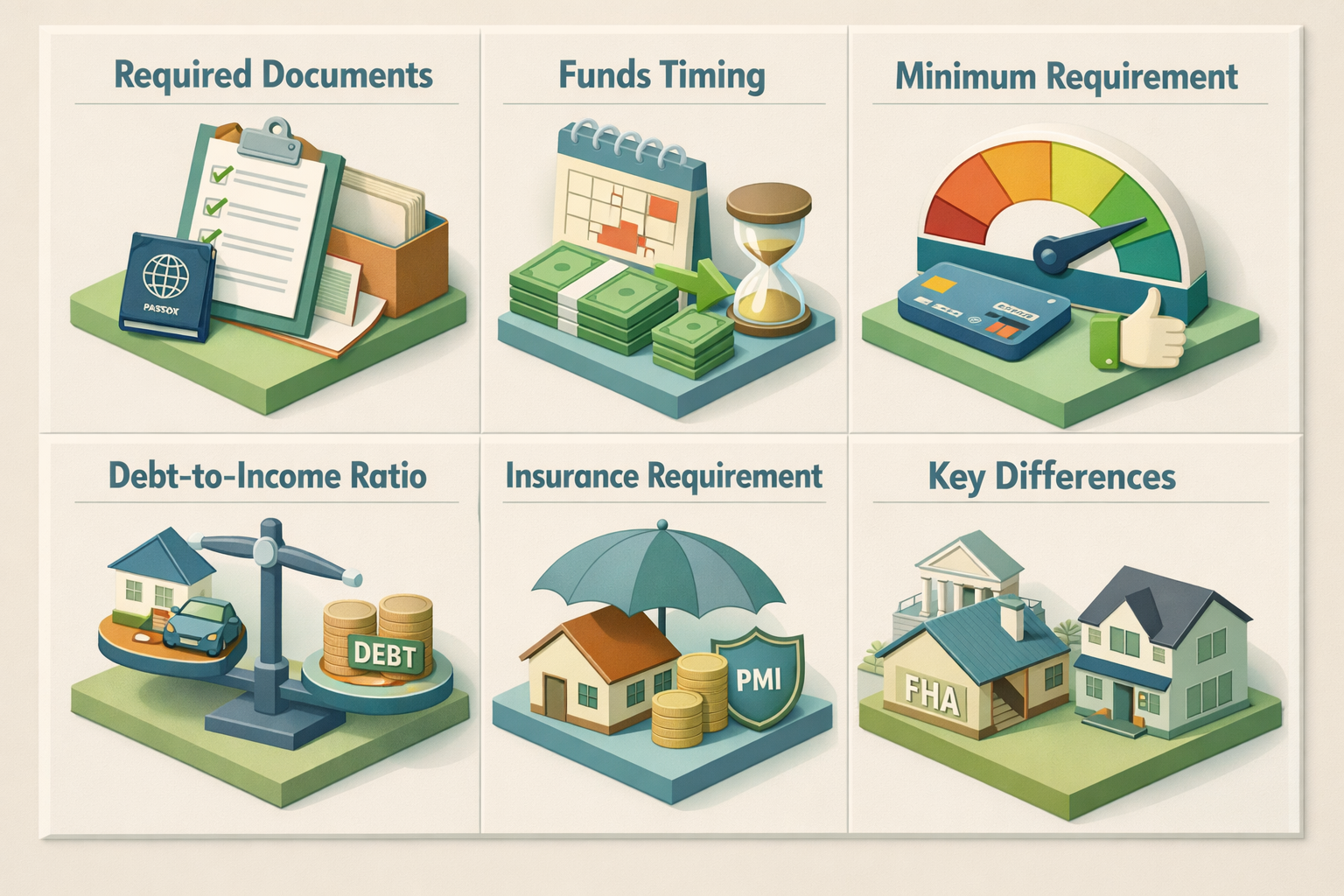
Meeting the requirements for conventional loan with 10% down payment from inheritance starts with having your paperwork in order. Underwriters are trained to trace every dollar of a down payment back to its source, and inherited funds are no exception. Here's what lenders commonly ask for:
- Copy of the will or trust document: This establishes that you're a named beneficiary and that the funds were legally transferred to you from the deceased's estate.
- Estate account statements: Lenders may want to see bank or estate account records that show the funds being distributed from the estate account into your personal account.
- Letter from the executor or estate attorney: A letter confirming the nature of the distribution, the amount, and your status as a beneficiary can help satisfy underwriting requirements.
- Your personal bank statements: Most lenders will request two to three months of your personal bank statements to show that the funds have been received and are available for use.
- Proof of the decedent's relationship to you: In some cases, lenders may ask for documentation confirming your relationship to the deceased, though this requirement can vary by lender.
The more clearly you can document the paper trail from the estate to your bank account, the smoother your loan approval process is likely to be. Working with an experienced mortgage professional can help you anticipate exactly what your lender will need.
Understanding Seasoning Rules — Does the Money Need to Sit in Your Account?
"Seasoning" refers to how long funds have been in your bank account before you apply for a mortgage. Lenders use seasoning requirements to ensure that down payment money is truly yours and not a short-term loan from another source.
For conventional loans, Fannie Mae guidelines generally state that if funds have been in your account for 60 days or more, lenders may not need to trace their source at all — they're considered seasoned assets. This can simplify the documentation process significantly.
If you received your inheritance recently and deposited it into your account less than 60 days before applying for a mortgage, your lender will likely need to source and document those funds. This is where having the estate documents, executor letters, and clear paper trail becomes especially important.
The practical takeaway for homebuyers is this: if you have time before your home purchase, letting inherited funds sit in your account for at least two full bank statement cycles could make the approval process much simpler. However, if you need to move quickly, it's still very possible to use recently received inheritance funds — you'll just need to be more thorough with your documentation.
Credit Score, DTI, and Other Conventional Mortgage Requirements
Beyond documenting your inherited down payment, you'll also need to meet the standard borrower qualification requirements for a conventional mortgage. These apply regardless of where your down payment comes from.
Credit Score
Most conventional lenders require a minimum credit score of 620 to qualify, though some lenders may set higher thresholds depending on their own guidelines. Borrowers with higher credit scores — typically 740 or above — tend to receive more favorable interest rates and may have a wider range of loan options available to them.
Debt-to-Income Ratio (DTI)
Your debt-to-income ratio compares your monthly debt obligations to your gross monthly income. Conventional loan guidelines generally allow a maximum DTI of around 45% to 50%, though lenders prefer to see it closer to 43% or lower. A lower DTI signals to lenders that you have enough income to comfortably manage your new mortgage alongside existing debts.
Stable Employment and Income
Lenders typically want to see at least two years of employment history and consistent, verifiable income. If you're self-employed, you may need to provide additional documentation such as tax returns, profit and loss statements, and business bank records.
Private Mortgage Insurance (PMI)
With a 10% down payment on a conventional loan, you'll likely be required to carry PMI until your loan-to-value (LTV) ratio reaches 80%. PMI premiums vary based on your credit score, loan size, and lender, but they add a modest monthly cost to your payment. The upside is that PMI can be removed once you've built sufficient equity — unlike some government-backed loan programs.
How Conventional Requirements Differ From FHA When Using Inherited Funds
Homebuyers sometimes wonder whether an FHA loan might be a better fit when using an inherited down payment. While FHA loans offer lower minimum credit score requirements and only require 3.5% down, there are a few important differences worth noting.
FHA loans tend to have stricter gift fund documentation requirements and may require a gift letter even for inherited funds in certain circumstances. Conventional loans backed by Fannie Mae or Freddie Mac often offer more flexibility when it comes to sourcing inherited assets, particularly when those funds have been seasoned in your account for at least 60 days.
Additionally, FHA loans require mortgage insurance premiums (MIP) for the life of the loan in many cases, whereas PMI on a conventional loan with 10% down payment can be canceled once you reach 20% equity. For borrowers who qualify for conventional financing, the long-term cost savings can be meaningful.
That said, if your credit score is below 620 or you're struggling to meet conventional DTI limits, an FHA loan could still be a viable path — especially if your inherited funds cover the required 3.5% minimum. A mortgage advisor can help you compare both options side by side based on your specific financial picture.
Tips for Using Inherited Money Smoothly in Your Home Purchase
Using inherited funds for a home purchase is entirely doable, but a little preparation goes a long way. Here are some practical tips to help the process go as smoothly as possible:
- Start gathering documents early: Reach out to the estate attorney or executor as soon as you know you want to buy a home. Having the will, trust documents, and distribution letters ready before you apply can save time during underwriting.
- Deposit the funds and let them season: If your timeline allows, depositing the inherited money into your bank account at least 60 days before applying may reduce the documentation burden significantly.
- Keep a clear paper trail: Avoid transferring the funds between multiple accounts unnecessarily. The fewer "hops" the money makes, the easier it is for underwriters to trace.
- Communicate openly with your loan officer: Be upfront about the source of your down payment from the very beginning. Hiding or failing to disclose inherited funds can create problems during underwriting and delay your closing.
- Get pre-approved before shopping: A pre-approval helps you understand exactly what you can afford and gives you a chance to resolve any documentation issues before you're under contract on a home.
- Consult a tax professional: While inherited money is generally not considered taxable income for the recipient in the U.S., the rules around estate taxes and inherited assets can be complex. A tax advisor can help you understand any potential implications.
Meeting the requirements for conventional loan with 10% down payment from inheritance is very achievable with the right preparation and a knowledgeable lending team by your side.
●Conclusion
Inheriting money is a meaningful financial event, and using it to purchase a home is one of the most impactful ways to build long-term wealth. Conventional mortgage lenders are well-equipped to work with inherited funds — as long as borrowers understand the documentation expectations and standard qualification criteria.
From sourcing and seasoning rules to credit scores and DTI requirements, every piece of the puzzle matters. The conventional mortgage requirements for an inherited down payment aren't designed to be obstacles — they're designed to create a clear, verifiable record that protects both you and your lender. With thorough preparation and the right guidance, your inherited funds can be the foundation for a home you're proud to call your own.
Ready to explore your options? Connect with a LoanWise mortgage specialist today to get personalized guidance on using your inherited funds toward a conventional home loan.