
Receiving a job relocation bonus is an exciting milestone — but it also opens the door to smart financial decisions you might not have considered before. If you're currently carrying an adjustable-rate mortgage, that bonus could be the key that unlocks a more stable and predictable financial future. Exploring your options for refinancing ARM mortgage with recent job relocation bonus income is a strategy worth understanding in depth. Whether you're concerned about rising interest rates, want to lock in a fixed payment, or simply want to put that bonus to work, refinancing your ARM could be one of the most impactful moves you make this year.
Understanding Adjustable-Rate Mortgages and Why Refinancing Makes Sense
An adjustable-rate mortgage, commonly called an ARM, starts with a fixed interest rate for an initial period — often five, seven, or ten years — and then adjusts periodically based on a financial index. While ARMs typically offer lower introductory rates compared to fixed-rate loans, the uncertainty that comes after the initial period can be stressful for homeowners.
Once the fixed period ends, your monthly payment could increase or decrease depending on market conditions. For homeowners who purchased their property during a low-rate environment, this adjustment period can mean significantly higher payments down the road. That's why many borrowers choose to refinance before the adjustment kicks in.
Refinancing an ARM into a fixed-rate mortgage allows you to trade that unpredictability for a consistent monthly payment. You'll know exactly what you owe each month, which makes budgeting much easier — especially if you've recently relocated for a new job and are still settling into a new financial routine.
How a Job Relocation Bonus Can Strengthen Your Refinance Application
A job relocation bonus is money your employer provides to help cover the costs of moving to a new city or region for work. These bonuses can range widely in size, and lenders treat them differently depending on how they're structured and documented.
Here's where things get interesting for refinancers. When you apply to refinance your mortgage, lenders assess your financial profile, including your income, assets, credit score, and debt-to-income ratio. A recent relocation bonus may help in several important ways:
- Boosting liquid assets: If the bonus has already been deposited into your bank account, it may be counted as verified liquid assets, which can strengthen your overall financial picture.
- Reducing the loan-to-value ratio: You could use the bonus toward a lump-sum principal payment before refinancing, which may lower your loan balance and improve your equity position.
- Covering closing costs: Refinancing isn't free. Typical closing costs can run between two and five percent of the loan amount. A relocation bonus could cover these expenses without draining your savings.
- Qualifying for better terms: Greater asset reserves often give lenders more confidence in your ability to repay, potentially improving the loan terms you're offered.
It's worth noting that lenders typically want to see that bonus funds have been in your account for at least sixty to ninety days, often referred to as the seasoning period. If your bonus is very recent, you may want to plan your refinance timeline accordingly.
Exploring the Best Refinance ARM Relocation Bonus Strategies for Homeowners
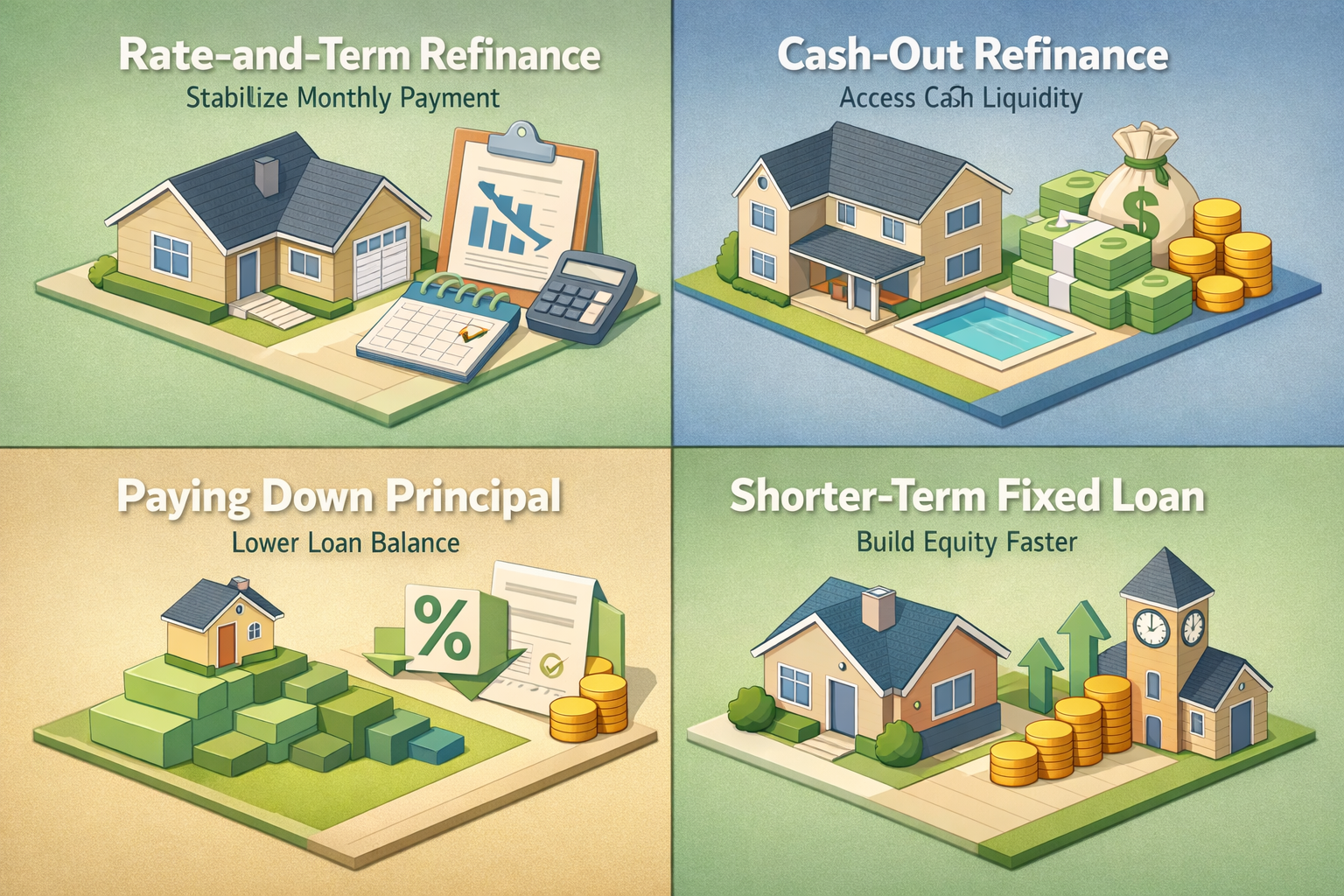
Not every refinancing approach works the same way, and the best strategy for you will depend on your goals, your current loan terms, and how much your relocation bonus is worth. Here are some of the most practical refinancing options to consider:
Rate-and-Term Refinance
This is the most straightforward type of refinance. You replace your existing ARM with a new loan — ideally a fixed-rate mortgage — at a new interest rate and loan term. Your goal here is to stabilize your monthly payment and potentially reduce your rate if market conditions allow. This option works well when your primary concern is predictability rather than accessing cash.
Cash-Out Refinance
If your home has appreciated in value since you purchased it, a cash-out refinance lets you borrow more than you currently owe and receive the difference in cash. Combined with a relocation bonus, this approach can give you significant liquidity. You might use those funds for home improvements in your new area, paying off higher-interest debt, or building an emergency fund as you settle into your new job.
Paying Down Principal Before Refinancing
Using your relocation bonus to reduce your outstanding loan balance before applying to refinance is another smart move. A lower balance means a lower loan-to-value ratio, which could qualify you for better rates and eliminate the need for private mortgage insurance if you're currently paying it.
Converting to a Shorter-Term Fixed Loan
If your new job comes with a meaningfully higher income, you might consider refinancing into a fifteen-year fixed-rate mortgage instead of a thirty-year loan. You'll likely pay a higher monthly payment, but you'll build equity faster and pay considerably less in total interest over the life of the loan.
What Lenders Look for When You're New to a Job After Relocation
One of the most common concerns among recently relocated borrowers is whether their new employment status will affect their ability to refinance. The good news is that lenders generally understand that job changes happen — especially when relocation is involved. However, they do scrutinize your employment history carefully.
Here's what lenders typically want to see:
- Continuity of income: Moving to a new employer in the same field is usually viewed more favorably than a complete career change. Lenders want to see that your earning capacity is stable or improving.
- Offer letter or pay stubs: If you've recently started your new job, you may need to provide an employment offer letter showing your salary, along with recent pay stubs to confirm you've begun receiving that income.
- Two-year employment history: Most conventional lenders want to see a two-year employment track record, though a recent job change for relocation purposes is typically explainable and documentable.
- Debt-to-income ratio: Your total monthly debts — including your projected new mortgage payment — should generally not exceed forty-three to forty-five percent of your gross monthly income, though some loan programs may allow slightly higher ratios.
If your income includes commissions, bonuses, or overtime in addition to your base salary, lenders may average that variable income over twenty-four months before including it in your qualifying figures. A relocation bonus, being a one-time payment, may not be counted as recurring income — but as mentioned earlier, it can still bolster your asset reserves significantly.
Credit Score and Equity Considerations That Could Shape Your Refinance Options
Beyond your income and employment, two other factors play a major role in what refinance options are available to you: your credit score and your home equity.
Credit Score Requirements
For a conventional refinance, most lenders look for a credit score of at least 620, though borrowers with scores of 740 or higher typically receive the most competitive rates. If your credit score has improved since you first took out your ARM — perhaps because you've paid down debt or built a stronger credit history — you may be in a better position now than when you originally financed.
Before applying, it may be worth checking your credit report for any errors or outdated information. Disputing inaccuracies can sometimes result in a meaningful score improvement within a few weeks.
Home Equity and Loan-to-Value Ratio
Your loan-to-value ratio — the percentage of your home's current value that you still owe — is another critical refinancing factor. Most conventional lenders prefer an LTV of eighty percent or lower to avoid requiring private mortgage insurance. If your home has appreciated in value since you purchased it, you may already be in a favorable equity position.
Using your relocation bonus to make a lump-sum payment before refinancing could push your LTV below key thresholds, potentially saving you money on both your interest rate and ongoing insurance costs.
Timing Your Refinance After Receiving a Relocation Bonus
Timing is everything when it comes to refinancing, and the presence of a recent relocation bonus adds another layer of planning to consider. Here are some key timing factors to keep in mind:
- Wait for the seasoning period: As noted earlier, lenders often want to see funds sitting in your account for sixty to ninety days before counting them as verified assets. Rushing to refinance before that window passes could mean your bonus isn't fully counted in your application.
- Monitor rate trends: Interest rates fluctuate based on economic conditions. If rates are currently favorable relative to your ARM's initial rate, refinancing sooner rather than later could lock in meaningful savings.
- Know your ARM's adjustment schedule: Review your existing loan documents to understand when your rate is next scheduled to adjust. If your ARM is approaching its first adjustment date, acting before that change occurs may protect you from a higher payment.
- Consider rate lock options: Once you've applied for a refinance, many lenders offer the option to lock in your interest rate for a period of thirty to sixty days or longer. This can protect you from rate increases while your application is being processed.
Working with a mortgage advisor who understands both ARM structures and employment income documentation can help you map out a timeline that makes the most of your relocation bonus without missing your optimal refinancing window.
●Conclusion
Navigating the options for refinancing ARM mortgage with recent job relocation bonus income doesn't have to feel overwhelming. With the right strategy and the right timing, your bonus could serve as the financial foundation that helps you transition from an unpredictable adjustable-rate loan to a stable, fixed-rate mortgage that fits your new chapter of life. Whether you choose a straightforward rate-and-term refinance, leverage a cash-out option, or use your bonus to pay down principal first, the key is to act with intention and work with experienced lending professionals who understand your full financial picture. At LoanWise, our team is here to help you evaluate every available path so you can make a confident, informed decision. Reach out today to explore what refinancing could look like for you.