
If you're carrying student loan debt and dreaming of homeownership, you're definitely not alone. Millions of Americans are juggling monthly student loan payments while trying to save for a down payment and qualify for a mortgage. The good news? Having student loans doesn't automatically disqualify you from buying a home. Lenders look at your full financial picture, and with the right preparation, a mortgage with student loans is entirely within reach. This guide breaks down exactly how student debt affects your mortgage eligibility, what lenders are really looking for, and what steps you can take to strengthen your application.
How Lenders View Student Loan Debt During the Mortgage Process
When you apply for a mortgage, lenders don't just look at your credit score. They analyze your entire debt load relative to your income — a calculation known as your debt-to-income ratio (DTI). Your DTI is one of the most important numbers in the mortgage approval process, and student loans play a direct role in it.
Your DTI is calculated by dividing your total monthly debt payments by your gross monthly income. Most conventional loan programs typically prefer a DTI at or below 43%, though some programs may allow higher ratios with compensating factors like strong credit or significant reserves.
Here's where student loans get a bit complicated: lenders don't all calculate your student loan payment the same way. If you're on an income-driven repayment (IDR) plan with a low monthly payment, some lenders may still use a higher estimated payment in their DTI calculation. For example, some loan programs may calculate your student loan obligation as a percentage of your outstanding balance — even if your actual monthly bill is lower. This could make your DTI appear higher than it actually is in practice.
Understanding how different loan programs treat student loan payments can make a meaningful difference in whether — and how much — you qualify for.
The Role of Your Debt-to-Income Ratio When Buying a Home With Student Debt
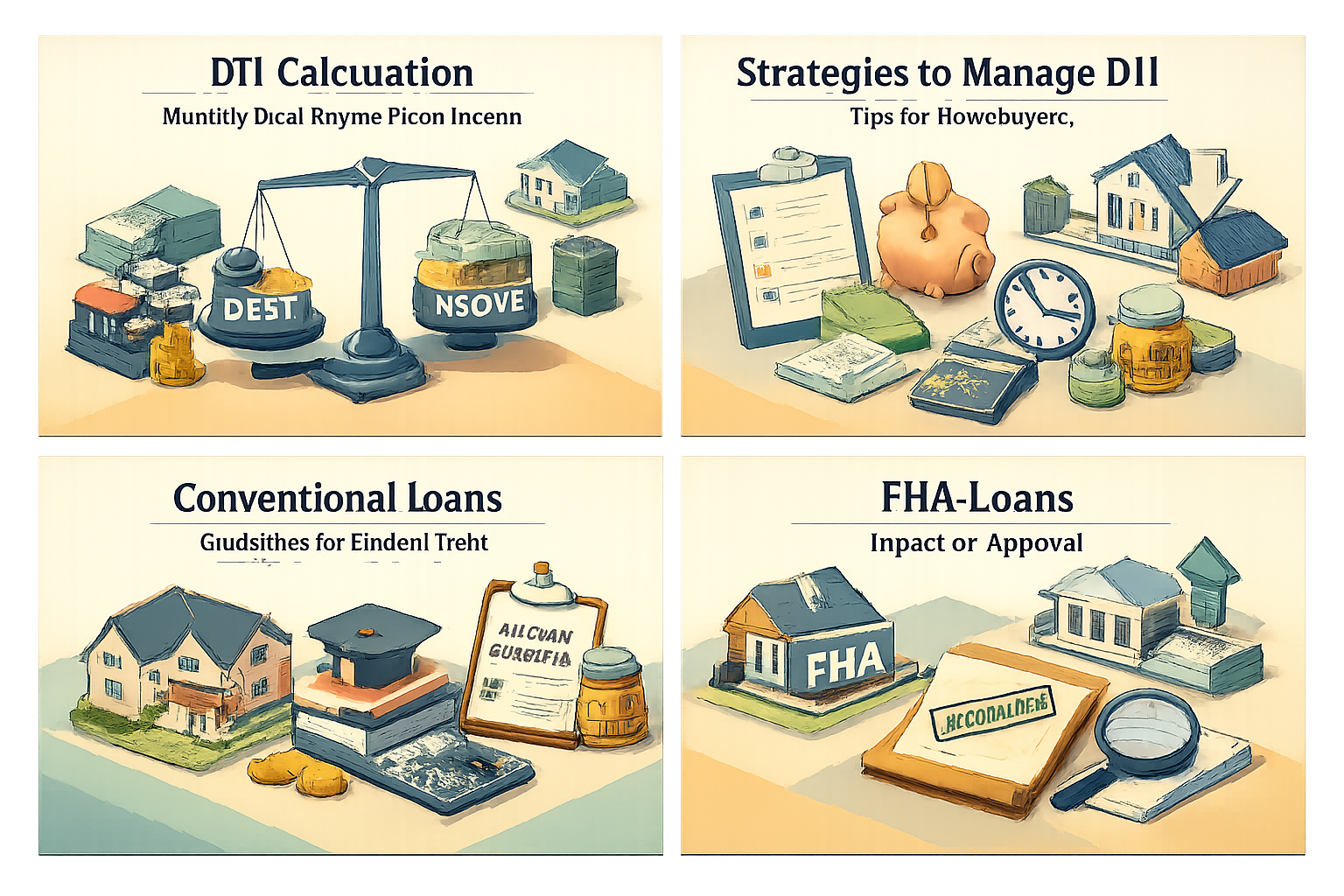
Let's say you earn $6,000 per month before taxes and you have a $400 student loan payment, a $300 car payment, and a target mortgage payment of $1,500. Your total monthly debts would be $2,200, giving you a DTI of roughly 37%. That's generally within acceptable range for most loan programs.
However, if your student loan balance is high and a lender applies a calculated payment rather than your actual IDR payment, your DTI could jump significantly — potentially pushing you outside the qualifying threshold.
Here are some strategies that may help manage your DTI when applying for a mortgage with student loans:
- Pay down other debts first: Eliminating credit card balances or smaller loans can reduce your total monthly obligations and improve your DTI quickly.
- Increase your income: Additional income sources — such as freelance work, rental income, or a second job — may be counted by lenders if properly documented.
- Choose a lower-priced home: A smaller loan amount means a lower projected mortgage payment, which naturally improves your DTI.
- Consider a co-borrower: Adding a co-borrower with income but lower debt can strengthen your overall application profile.
It's worth speaking with a loan officer early in the process to run the numbers and understand exactly where you stand before making any major financial moves.
Which Mortgage Programs May Work Best for Borrowers With Student Loans
Not all mortgage programs treat student loan debt the same way, and choosing the right one could be the key to getting approved. Here's a look at some of the most common options:
Conventional Loans
Conventional loans backed by Fannie Mae and Freddie Mac have specific guidelines for how they calculate student loan payments. Fannie Mae, for instance, generally allows lenders to use the actual monthly payment listed on your credit report — even if that payment is income-driven and lower than the standard repayment amount. This can be a significant advantage for borrowers on IDR plans. Freddie Mac has similar but slightly different rules, so it's worth exploring which program a particular lender uses.
FHA Loans
FHA loans are a popular choice among first-time homebuyers because they typically allow lower credit scores and smaller down payments. However, FHA guidelines have historically been stricter about how student loan payments are counted. Under current FHA rules, if your monthly student loan payment on your credit report is zero or very low, lenders may be required to use a calculated payment — typically a percentage of the outstanding balance — in the DTI calculation. This can work against borrowers on deferred payments or very low IDR plans.
VA Loans
For eligible veterans and active-duty service members, VA loans offer some of the most favorable terms available. VA guidelines for student loan debt can be more flexible in certain scenarios, particularly when loans are deferred for a specified period. If you qualify for a VA loan, it's worth discussing your student loan situation with a VA-approved lender in detail.
USDA Loans
USDA loans are designed for borrowers purchasing in eligible rural and suburban areas. Like FHA loans, USDA guidelines may require lenders to factor in a calculated student loan payment when actual payments are very low or deferred. Income limits also apply, so this program works best for moderate-income borrowers in qualifying locations.
How Your Credit Score Is Affected by Student Loans
Your credit score is the other major pillar of mortgage qualification, and student loans have a nuanced relationship with it. On one hand, student loans can actually help your credit profile. They typically appear as installment loans on your credit report, and a consistent payment history on these accounts can strengthen your score over time. Having a mix of credit types — including installment loans like student debt alongside revolving credit like credit cards — can also contribute positively to your score.
On the other hand, missed or late student loan payments can significantly damage your credit. Federal student loans that enter default are particularly harmful and may create serious obstacles to mortgage approval. Even loans that are technically in good standing but recently came out of a deferment or forbearance period may require some explanation to lenders.
Here are a few credit-related tips for prospective homebuyers with student loans:
- Make every payment on time: Payment history is the single largest factor in your credit score. Consistent on-time payments — even small ones — build a positive track record.
- Avoid applying for new credit before your mortgage: Each new credit application generates a hard inquiry that can temporarily lower your score.
- Check your credit report for errors: Student loan servicers sometimes make reporting mistakes. Review your report and dispute any inaccuracies before you apply for a mortgage.
- Keep credit card balances low: Your credit utilization ratio matters. Keeping card balances well below their limits can help boost your score.
Steps to Strengthen Your Mortgage Application When You Have Student Debt
Preparation is everything when you're seeking a mortgage with student loans. Taking deliberate steps in the months leading up to your application can make a real difference in both approval odds and the rate you're offered.
Get pre-approved early. A mortgage pre-approval gives you a clear picture of your borrowing power and signals to sellers that you're a serious buyer. It also surfaces any issues with your application — including DTI concerns — before you're under contract on a home.
Document your repayment plan clearly. If you're on an income-driven repayment plan, gather documentation from your servicer showing your current monthly payment amount. Some lenders will accept your actual payment if it's clearly documented, even if the program guidelines would otherwise require a calculated figure.
Avoid major financial changes before closing. Changing jobs, taking on new debt, or making large purchases before your mortgage closes can disrupt your approval. Lenders may re-verify your employment and finances close to closing, so stability matters.
Build your savings. A larger down payment reduces your loan-to-value ratio, which can open doors to better rates and more loan program options. It also demonstrates financial discipline to lenders. Even modest additional savings in reserves — funds left over after the down payment — can serve as a compensating factor if your DTI is near the limit.
Work with an experienced loan officer. Student loan guidelines can vary significantly by lender and loan program. An experienced mortgage professional who understands the nuances of student debt can help you find the best path forward based on your specific financial situation.
Common Misconceptions About Getting a Home Loan With Student Debt
There's a lot of misinformation out there about student loans and homeownership. Let's clear up some of the most common myths that may be holding potential buyers back.
Myth: You Need to Pay Off Student Loans Before Buying a Home
This is perhaps the most widespread misconception. In reality, you don't need a zero student loan balance to qualify for a mortgage. What matters is how your monthly obligations — including student loan payments — stack up against your income. Many borrowers successfully purchase homes while still making student loan payments every month.
Myth: Student Loans Always Hurt Your Mortgage Application
As noted earlier, student loans can actually help your credit profile if they're managed responsibly. A long history of on-time payments on a student loan can be a positive signal to mortgage underwriters. It's not the existence of student debt that's the problem — it's high balances relative to income or a troubled payment history that creates challenges.
Myth: All Lenders Calculate Student Loans the Same Way
Different lenders follow different program guidelines, and even within the same loan program, there may be interpretive flexibility. Shopping around and comparing how different lenders treat your student loan payment in their DTI calculation could genuinely change your qualifying loan amount.
Myth: You Should Rush to Refinance Student Loans Before Applying
Refinancing federal student loans into private loans before applying for a mortgage might seem like a smart move to lower your payment, but it's worth proceeding carefully. Refinancing federal loans eliminates access to income-driven repayment plans and federal forgiveness programs. It may also generate a new credit account that could temporarily affect your score. Discuss this decision with both a financial advisor and a mortgage professional before moving forward.
●Conclusion
Carrying student loan debt doesn't have to stand between you and homeownership. While student loans do affect your mortgage eligibility — primarily through your debt-to-income ratio and credit profile — they're a manageable factor for millions of buyers each year. The key is understanding how different loan programs treat student debt, taking proactive steps to strengthen your financial profile, and working with a knowledgeable lender who can guide you toward the right solution. Whether you're a first-time buyer, a returning homeowner, or someone exploring refinancing options, getting a mortgage with student loans is a realistic goal with the right preparation. Reach out to a LoanWise mortgage specialist today to explore your options and take the first step toward your new home.