
If you're getting ready to buy a home, you've probably heard both terms thrown around — mortgage pre-approval and pre-qualification. They may sound like they mean the same thing, but they're actually quite different. Understanding the distinction could make or break your ability to compete in a tight housing market. Whether you're a first-time homebuyer or someone looking to upgrade to a larger property, knowing where you stand financially before you start touring homes is one of the smartest moves you can make. This guide breaks down both processes clearly so you can move forward with confidence.
What Is Mortgage Pre-Qualification and How Does It Work?
Mortgage pre-qualification is typically the first step in the home financing journey. It gives you a rough estimate of how much you might be able to borrow based on basic financial information you provide to a lender. This usually includes your income, assets, debts, and credit score — but in many cases, the lender doesn't verify any of it at this stage.
Because pre-qualification relies on self-reported data, it's considered a fairly informal process. You can often complete it online in just a few minutes, and it generally doesn't require a hard credit inquiry. That means it won't affect your credit score. Think of it as a quick financial snapshot — helpful for getting a general idea of your budget, but not something most home sellers will take seriously on its own.
Pre-qualification is especially useful early in your home search when you're still figuring out what price range to target. It helps you avoid wasting time on homes outside your realistic budget and gives you a starting point for conversations with a mortgage lender or real estate agent.
Understanding Mortgage Pre-Approval and Why It Carries More Weight
Mortgage pre-approval is a more thorough and formal process. To get pre-approved, you'll need to submit a complete mortgage application along with supporting documentation. Lenders typically ask for recent pay stubs, W-2 forms, tax returns, bank statements, and authorization to pull your credit report. A hard credit inquiry is performed at this stage, which may cause a small, temporary dip in your credit score.
Once the lender reviews your full financial profile, they'll issue a pre-approval letter stating the specific loan amount you qualify for, the loan type, and often the interest rate you've been offered. This letter is based on verified information, which makes it significantly more credible than a pre-qualification.
In competitive real estate markets, a mortgage pre-approval can be the difference between having your offer accepted or losing a home to another buyer. Many sellers — and their agents — won't even entertain an offer that isn't backed by a pre-approval letter. It signals that you're a serious, financially vetted buyer who's ready to move forward.
Key Differences Between Pre-Qualification and Pre-Approval Side by Side
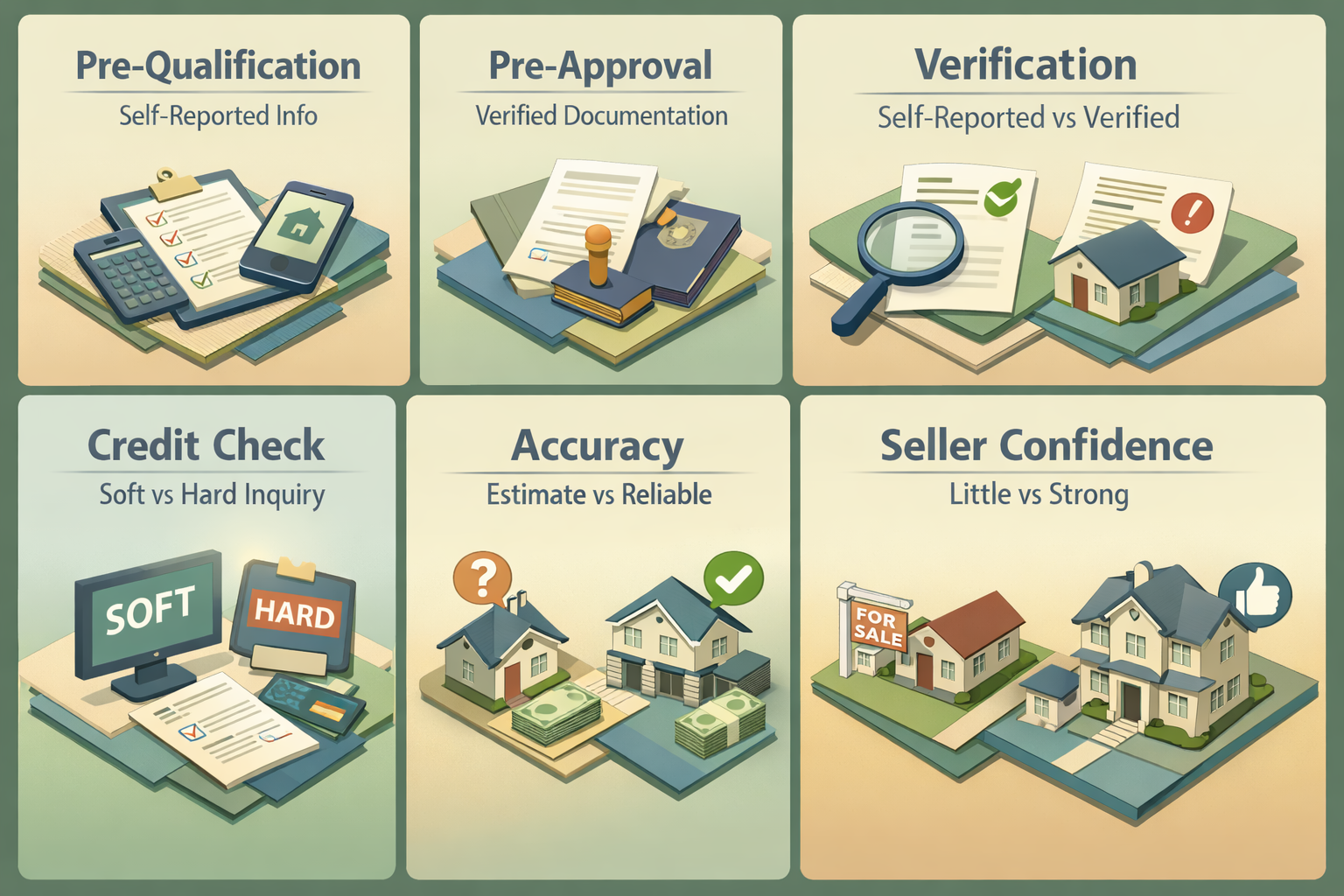
While both processes share the same general goal — helping you understand your borrowing potential — they differ in some important ways. Here's a clear breakdown:
- Verification: Pre-qualification uses self-reported information; pre-approval requires documentation and verification.
- Credit Check: Pre-qualification may use a soft inquiry or no inquiry at all; pre-approval involves a hard credit pull.
- Accuracy: Pre-qualification provides an estimate; pre-approval gives a more reliable borrowing ceiling.
- Seller Confidence: Pre-qualification holds little weight with sellers; pre-approval is widely recognized as a sign of a serious buyer.
- Time Required: Pre-qualification can take minutes; pre-approval may take a few days depending on the lender and documentation turnaround.
- Commitment Level: Neither is a guarantee of final loan approval, but pre-approval is much closer to a firm commitment.
It's worth noting that even a pre-approval letter isn't a guarantee you'll receive final mortgage approval. The underwriting process, home appraisal, and title review all happen after your offer is accepted and could still affect your loan. Still, pre-approval puts you in a much stronger position than pre-qualification alone.
How Your Credit Score and Debt-to-Income Ratio Affect Both Processes
Whether you're going through pre-qualification or mortgage pre-approval, your credit score and debt-to-income (DTI) ratio are two of the most important factors lenders consider. Your credit score reflects your history of repaying debts on time, while your DTI ratio compares your monthly debt obligations to your gross monthly income.
Most conventional loan programs typically require a minimum credit score in the mid-600s, though lenders often prefer scores of 700 or higher for the best rates. FHA loans may allow scores as low as 580 with a qualifying down payment, while VA loans and USDA loans each have their own credit guidelines. Keep in mind that requirements can vary by lender, so it's always worth asking.
Your DTI ratio is equally important. Many lenders look for a DTI below 43%, though some loan programs may allow higher ratios under certain conditions. If your DTI is too high, paying down existing debts before applying could improve your chances of qualifying for a better loan amount or interest rate.
Before you start either process, it's a smart idea to review your credit report for errors, pay down revolving balances where possible, and avoid opening new credit accounts. These steps can help you present the strongest financial profile to potential lenders.
When Should You Get Pre-Qualified Versus Pre-Approved?
Timing matters when it comes to these two steps in the homebuying process. Pre-qualification is generally most useful in the early stages — when you're just beginning to explore homeownership, researching neighborhoods, or trying to get a sense of what you can afford. It's low commitment and can help you have more informed conversations with real estate agents and financial advisors.
Pre-approval, on the other hand, should happen before you start seriously touring homes or making offers. Since pre-approval letters often have an expiration period — commonly around 60 to 90 days — it's best to get pre-approved when you're genuinely ready to begin your home search. If your pre-approval expires before you find a home, you may need to reapply and go through the verification process again.
For homeowners looking to refinance, a similar process applies. Lenders will want to verify your current income, credit standing, and home equity before issuing a commitment. Starting early gives you time to address any financial issues that might affect your eligibility or the rate you receive.
Choosing the Right Lender Makes a Significant Difference
Not all lenders offer the same experience, and working with the right one can make the pre-approval process smoother and faster. When evaluating lenders, consider factors like responsiveness, the variety of loan programs offered, and how transparent they are about fees and rate options.
Some buyers prefer to work with a local bank or credit union where they already have a relationship. Others find that mortgage brokers or online lenders provide more competitive rates or a wider range of programs. It often makes sense to compare pre-approval offers from at least two or three lenders, since rates and terms can vary more than many buyers expect.
If you're a self-employed buyer or have a non-traditional income, some lenders specialize in non-QM (non-qualified mortgage) programs that may be a better fit than conventional options. These programs often use alternative documentation like bank statements instead of traditional tax returns to verify income. Working with a lender experienced in these types of loans can be especially helpful.
Real estate investors purchasing rental properties or multi-unit homes may also find that certain lenders are better equipped to handle investment property financing, which often comes with different qualifying criteria than owner-occupied loans.
●Conclusion
Understanding the difference between mortgage pre-qualification and mortgage pre-approval helps you enter the homebuying process with clear expectations and a stronger position. Pre-qualification is a helpful starting point, but pre-approval is the tool that truly prepares you to compete in today's market. By gathering your financial documents early, reviewing your credit, and working with a knowledgeable lender, you can move through the process with confidence. Whether you're buying your first home, upgrading to a larger space, or exploring a refinance, LoanWise is here to help you navigate every step of the journey. Take the time to understand your options — the right preparation today can lead to the right home tomorrow.