
Mortgage Loan Interest Rates Explained for Real Estate Investors
Understanding mortgage loan interest rates explained becomes crucial when you're building a rental property portfolio or evaluating your next fix and flip opportunity. Current market conditions in 2026 present both challenges and opportunities for real estate investors, with DSCR loan rates ranging between 5.875% to 8.75% depending on various factors.
Smart investors know that even a fraction of a percentage point difference in rates can significantly impact their cash flow and overall returns. Whether you're securing financing for your first rental property or refinancing an existing portfolio, grasping how mortgage interest rates work will help you make more informed decisions and potentially save thousands over the life of your loans.
Current Market Rate Landscape
The current market rate landscape shows DSCR loan interest rates that may benefit investor portfolios in 2026. Understanding where rates stand today helps you evaluate whether it's the right time to buy, refinance, or expand your holdings.
- DSCR loan rates currently range from 5.875% to 8.75% for qualified investors
- Rates have shown improvement compared to previous year levels
- Market conditions favor both acquisition and refinancing strategies
- Qualified borrowers might access the lower end of the rate spectrum
Key Factors Influencing Your Rate
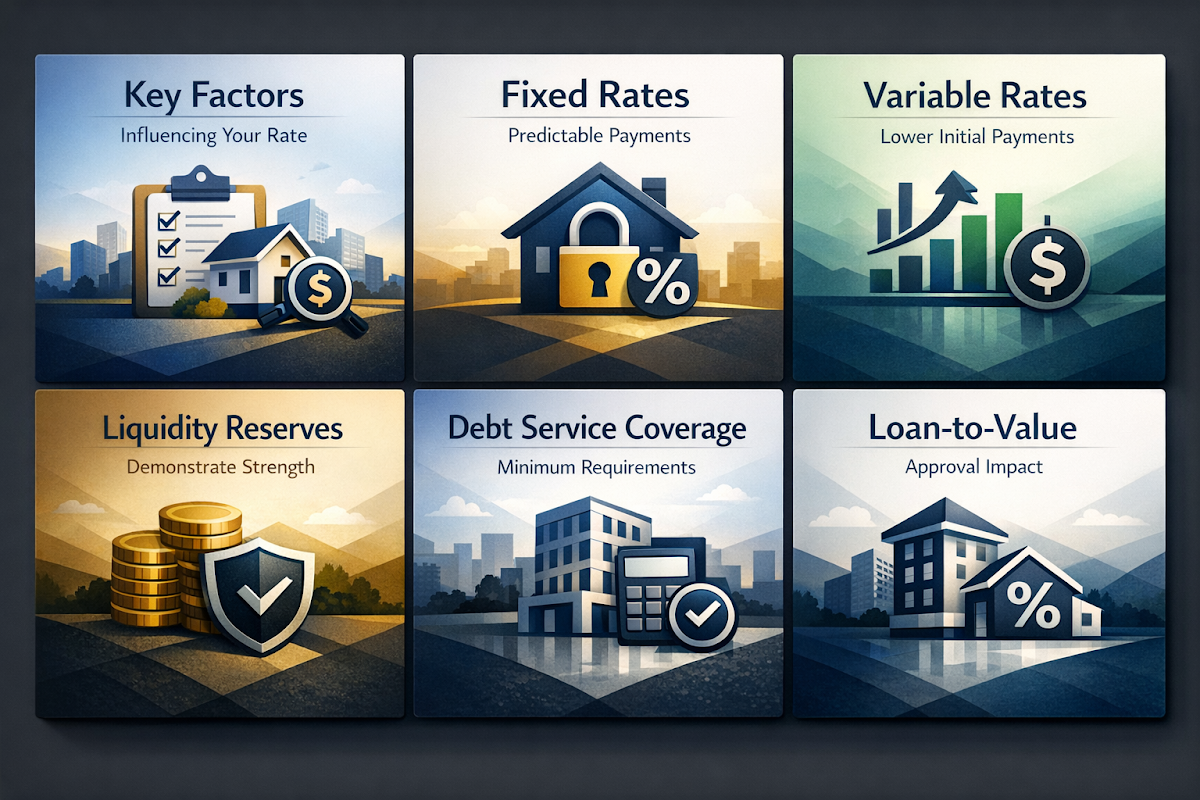
Several key factors influencing your rate determine where you'll land within the current range. These factors often work together to create your final pricing, making it important to understand each component.
- Debt Service Coverage Ratio typically needs to meet minimum lender requirements
- Liquidity reserves can offset lower DSCR ratios in some cases
- Property type and location affect risk assessment
- Credit profile and experience level impact pricing tiers
- Loan-to-value ratio influences both approval and rate structure
Fixed vs Variable Rate Considerations
Fixed vs variable mortgage rates present different advantages depending on your investment timeline and market outlook. Each option carries distinct benefits that might align better with specific investment strategies.
- Fixed rates provide predictable monthly payments for cash flow planning
- Variable rates might offer lower initial payments in certain market conditions
- Portfolio size may influence which option delivers better overall returns
- Exit strategy timeline affects the optimal rate structure choice
How to Secure Competitive Rates
Learning how to get the best mortgage rate requires preparation and strategic positioning. Following these steps could help you access more favorable pricing for your investment properties.
- Strengthen your DSCR by improving property cash flow before applying
- Build adequate liquidity reserves to demonstrate financial strength
- Document your real estate investment experience and track record
- Compare multiple lenders to understand your options
- Consider timing your application when market conditions are favorable
Rate Impact on Investment Returns
Understanding the rate impact on investment returns helps you evaluate deals more effectively and make smarter financing decisions. Small rate differences can translate into significant changes in your bottom line over time.
- Calculate how different rates affect your monthly debt service payments
- Analyze the impact on your cash-on-cash returns for each property
- Consider refinancing existing properties if current rates are significantly lower
- Factor rate costs into your deal analysis when evaluating new acquisitions
Timing Your Financing Decisions
Timing your financing decisions strategically can help you take advantage of favorable market conditions. Current trends suggest opportunities for both new acquisitions and portfolio optimization through refinancing.
- Monitor rate trends to identify optimal application windows
- Consider refinancing existing properties to capture lower rates when available
- Plan acquisitions around favorable financing terms to maximize leverage
- Build relationships with lenders before you need financing for faster processing
- Evaluate your entire portfolio periodically for refinancing opportunities
Strategic Rate Optimization
Strategic rate optimization involves taking a comprehensive approach to your financing across your entire portfolio. With current DSCR rates ranging from 5.875% to 8.75%, investors who understand the factors that influence pricing can position themselves to access better terms. Focus on strengthening your financial profile, maintaining strong property performance metrics, and working with lenders who understand investment property financing to optimize your borrowing costs over time.
●Conclusion
Mortgage loan interest rates explained in the context of real estate investing requires understanding both current market conditions and the specific factors that affect your pricing. With DSCR loan rates currently offering opportunities for qualified investors, now might be an ideal time to evaluate your financing strategy.
Whether you're looking to expand your portfolio or optimize existing financing, focusing on the factors within your control such as DSCR ratios, liquidity reserves, and lender relationships can help you secure more competitive rates. Remember that even small improvements in your interest rates can compound into significant savings and improved returns over the life of your investment properties.