
Mortgage for Multi-Family Home Investment Success
Securing a mortgage for a multi-family home represents one of the most strategic moves in real estate investing today. Multi-unit properties offer investors the opportunity to generate multiple income streams from a single asset, but the financing landscape requires specific knowledge and preparation. Unlike traditional homebuyer mortgages, investor-focused financing for multi-family properties typically emphasizes the property's income-generating potential rather than personal employment history. This shift in evaluation criteria opens doors for investors who understand how to leverage rental income and property performance metrics to secure favorable financing terms.
Common Questions About Multi-Family Property Financing
Multi-family property financing often raises specific questions for investors navigating this specialized market segment.
Q: What makes DSCR loans ideal for multi-family property investments?
DSCR loans focus on the property's debt service coverage ratio rather than personal income documentation, making them particularly suitable for multi-family investments. The rental income from multiple units can demonstrate strong cash flow potential, which lenders evaluate through the DSCR metric to determine loan eligibility and terms.
Key Benefits of Multi-Family Investment Financing
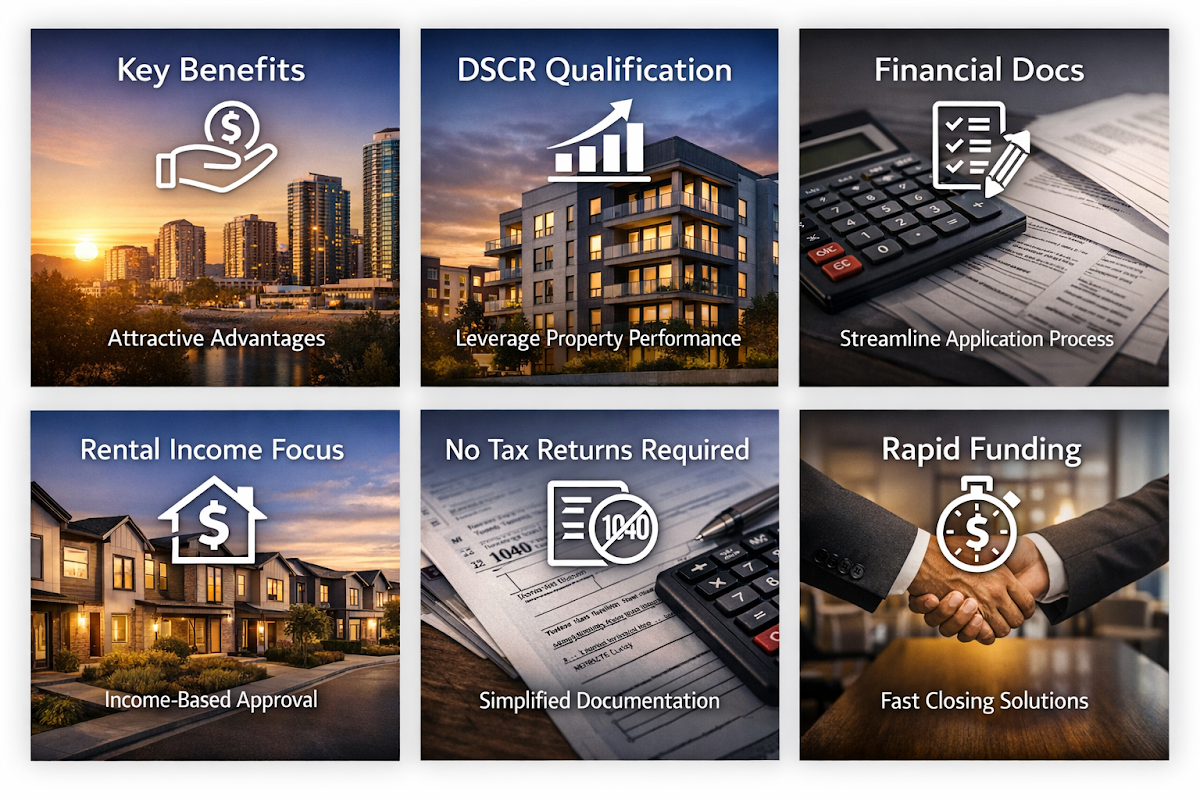
Multi-family investment financing offers distinct advantages that make it attractive to serious real estate investors looking to build wealth through rental income properties.
- Multiple income streams from a single property reduce vacancy risk and provide more stable cash flow compared to single-family rentals
- Economies of scale in property management and maintenance costs can improve overall return on investment
- DSCR-based qualification allows investors to leverage property performance rather than personal employment history
- Portfolio diversification through multi-unit properties can strengthen overall investment strategy
Essential DSCR Requirements for Multi-Family Loans
Understanding DSCR requirements for multi-family loans helps investors prepare their financing strategy and optimize their chances of approval.
- Minimum DSCR ratios typically range from 1.0 to 1.25, though specific requirements may vary by lender and property type
- Credit scores often need to meet minimum thresholds, with many lenders preferring scores above 620 for investment properties
- Reserve requirements might include several months of mortgage payments held in accessible accounts
- Down payment percentages for multi-family properties frequently start at 20% to 25% of the purchase price
Financial Documentation for Multi-Unit Property Loans
Proper documentation streamlines the multi-unit property loan application process and demonstrates investor preparedness to potential lenders.
- Current rent rolls and lease agreements provide evidence of existing rental income and tenant stability
- Property operating statements and expense reports help lenders evaluate net operating income potential
- Tax returns and financial statements may still be required even with DSCR-focused underwriting
- Property appraisals and inspection reports confirm asset value and condition for loan-to-value calculations
Strategic Steps to Secure Multi-Family Financing
Following a systematic approach to multi-family financing can improve approval odds and potentially secure better loan terms for investment properties.
- Evaluate your credit profile and address any issues that might impact loan eligibility before beginning the application process
- Calculate the property's DSCR using current or projected rental income to ensure it meets lender minimum requirements
- Gather comprehensive financial documentation including rent rolls, operating statements, and reserve fund evidence
- Compare multiple lenders who specialize in investor financing to find the most favorable terms and requirements
- Prepare for the application timeline which might take several weeks from pre-qualification through closing
Optimizing Rental Income for Mortgage Qualification
Maximizing rental income presentation can strengthen mortgage qualification for multi-family properties and potentially improve loan terms.
- Document current market rents through comparable property analysis to demonstrate income potential if units are below market rates
- Implement value-add improvements that can justify higher rental rates and improve the property's DSCR calculation
- Maintain detailed records of rental income, expenses, and occupancy rates to present a clear financial picture to lenders
- Consider professional property management to demonstrate stable income collection and operational efficiency
●Conclusion
A mortgage for a multi-family home opens doors to scaled real estate investment opportunities that can generate substantial passive income over time. Success in this market requires understanding DSCR-based qualification criteria, maintaining proper financial documentation, and presenting properties in their best financial light. The key lies in demonstrating strong debt service coverage through reliable rental income while meeting lender requirements for credit, reserves, and down payments. As the investment landscape continues to evolve, multi-family properties remain an attractive option for investors seeking to build wealth through real estate, particularly when paired with appropriate financing strategies that leverage property performance rather than personal income alone.