Finding the right mortgage for a fixer-upper property can transform your investment strategy from good to exceptional. Unlike traditional purchase loans, renovation financing allows you to bundle acquisition costs with improvement expenses, creating powerful leverage opportunities for real estate investors. Recent changes in 2026 have made these programs more flexible than ever, with enhanced disbursement options and expanded property eligibility that could significantly impact your bottom line.
Whether you're eyeing a distressed property for a quick flip or planning to add rental income through strategic improvements, understanding your renovation mortgage options is crucial for maximizing returns while minimizing upfront capital requirements.
Understanding Renovation Mortgage Fundamentals
Renovation mortgage fundamentals center on combining property acquisition and improvement costs into a single financing solution. These specialized loan products allow investors to leverage both the current property value and projected post-renovation worth, typically enabling borrowing up to a certain percentage of the completed property's estimated value.
- Purchase price financing covers the initial property acquisition at competitive rates
- Renovation funding provides capital for improvements based on detailed project plans
- Single closing process eliminates multiple loan applications and associated fees
- Interest-only payment options during construction phases may help manage cash flow
The key advantage lies in accessing renovation capital without requiring separate financing or depleting personal reserves. This approach can be particularly beneficial when market conditions favor quick acquisitions or when multiple investment opportunities arise simultaneously.
HomeStyle Renovation Loan Benefits
HomeStyle renovation loan benefits have expanded significantly with recent program updates that enhance investor flexibility. These conventional loan products now offer improved disbursement schedules and broader project eligibility, making them increasingly attractive for real estate investment strategies.
- Finance up to 75% of total project costs with competitive conventional loan rates
- Access to 50% of renovation funds at closing for improved cash flow management
- 2026 conforming loan limits reaching $806,500 for single-family properties
- Expanded eligibility for accessory dwelling units to boost rental income potential
- Lower down payment options compared to traditional investment property loans
The increased initial disbursement capability represents a significant improvement for investors managing multiple projects or facing unexpected expenses. This enhanced liquidity can accelerate project timelines and reduce carrying costs during the renovation phase.
203(k) Loan Guide for Investors
The 203(k) loan guide reveals opportunities for investors willing to work within FHA parameters while accessing competitive financing terms. These government-backed loans can provide valuable leverage for specific investment strategies, particularly in markets where conforming loan limits might otherwise restrict financing options.
- Borrowing capacity up to 110% of the property's estimated post-renovation value
- FHA insurance backing may provide more flexible qualification standards
- Single mortgage structure combines purchase and renovation financing seamlessly
- Potential for lower down payment requirements in certain scenarios
While these loans typically require owner-occupancy initially, understanding the program mechanics can inform broader investment strategies. The ability to leverage anticipated property value improvements makes this financing particularly useful for investors planning significant property transformations that will substantially increase market value.
Strategic Funding Disbursement Options
Strategic funding disbursement options have evolved to better serve investor cash flow needs throughout the renovation process. Recent program enhancements allow for more flexible fund releases that can significantly impact project profitability and timeline management.
- Initial disbursements of up to 50% of renovation costs available at closing
- Staged release schedules tied to completion milestones rather than rigid timelines
- Improved flexibility for unexpected project scope changes or cost overruns
- Enhanced ability to manage multiple renovation projects simultaneously
These disbursement improvements address one of the most common investor concerns about renovation financing: maintaining adequate working capital throughout the project. By providing more funds upfront, investors can negotiate better contractor rates, purchase materials in bulk, or handle unexpected issues without disrupting project flow.
Essential Steps to Secure Renovation Financing
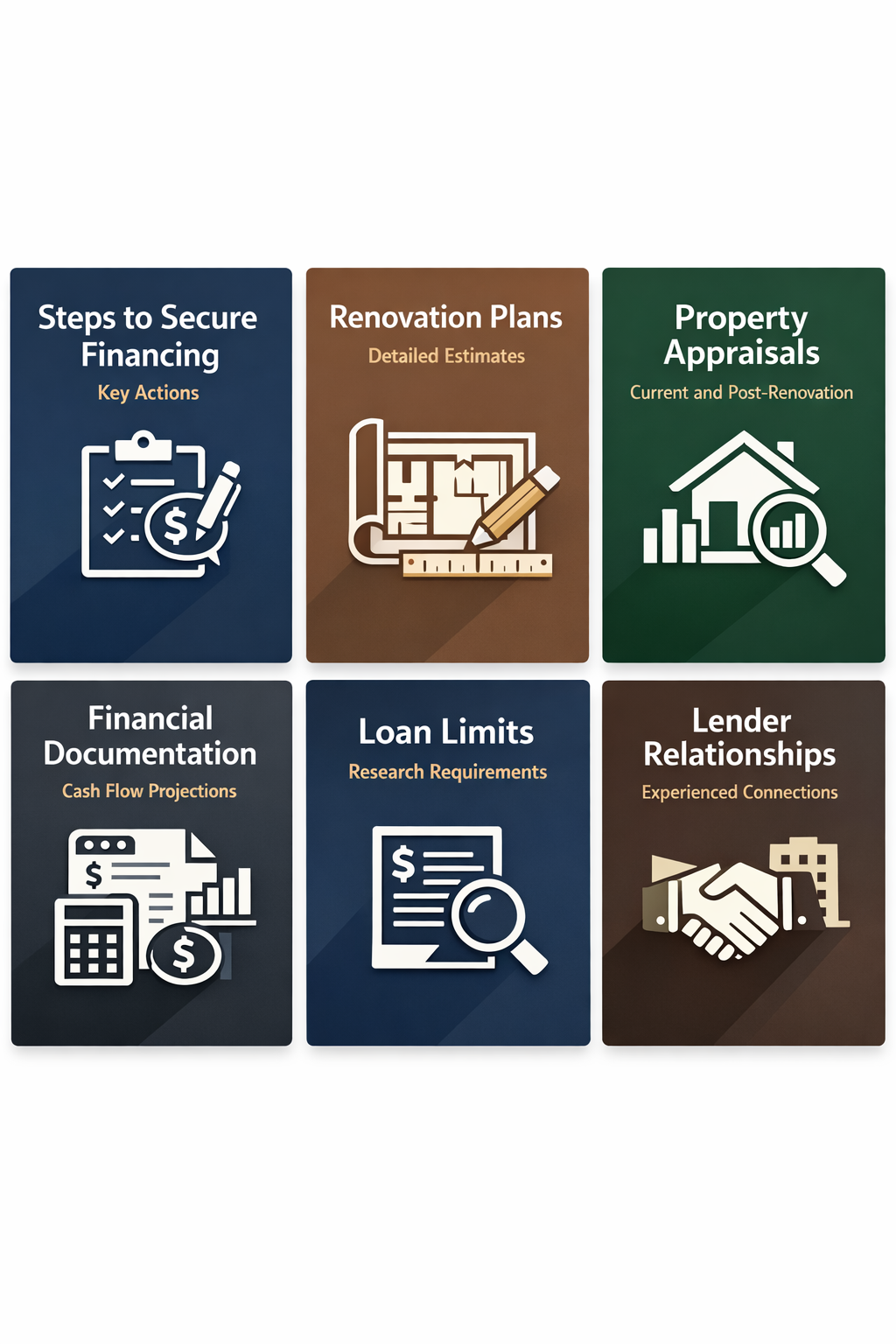
Essential steps to secure renovation financing require careful preparation and strategic timing to optimize your investment outcomes. Following these key action items can streamline your application process and improve approval odds while positioning yourself for maximum leverage.
- Prepare detailed renovation plans with contractor estimates and material costs broken down by project phase
- Obtain professional property appraisals that reflect both current condition and post-renovation value projections
- Organize financial documentation including cash flow projections and existing investment property performance data
- Research current conforming loan limits and program requirements to ensure project alignment with available financing terms
- Establish relationships with renovation-experienced lenders who understand investor timelines and project complexities
Success with renovation financing often depends on demonstrating project viability through comprehensive planning and realistic cost projections. Lenders typically require evidence that proposed improvements will generate sufficient value to justify the loan amount, making thorough preparation essential for approval and optimal terms.
●Conclusion
Securing the right mortgage for a fixer-upper property positions you to capitalize on opportunities that traditional financing might not support. With enhanced HomeStyle loan disbursements, expanded 203(k) eligibility, and improved renovation mortgage options available in 2026, investors have more tools than ever to structure profitable deals.
The key lies in matching your project scope and investment timeline with the most suitable financing structure. Whether you're planning a quick flip or developing long-term rental income through strategic improvements, understanding these renovation mortgage options ensures you can move confidently when the right opportunity presents itself.
Consider consulting with renovation financing specialists who understand the nuances of these programs and can help structure deals that maximize your leverage while minimizing risk exposure across your investment portfolio.