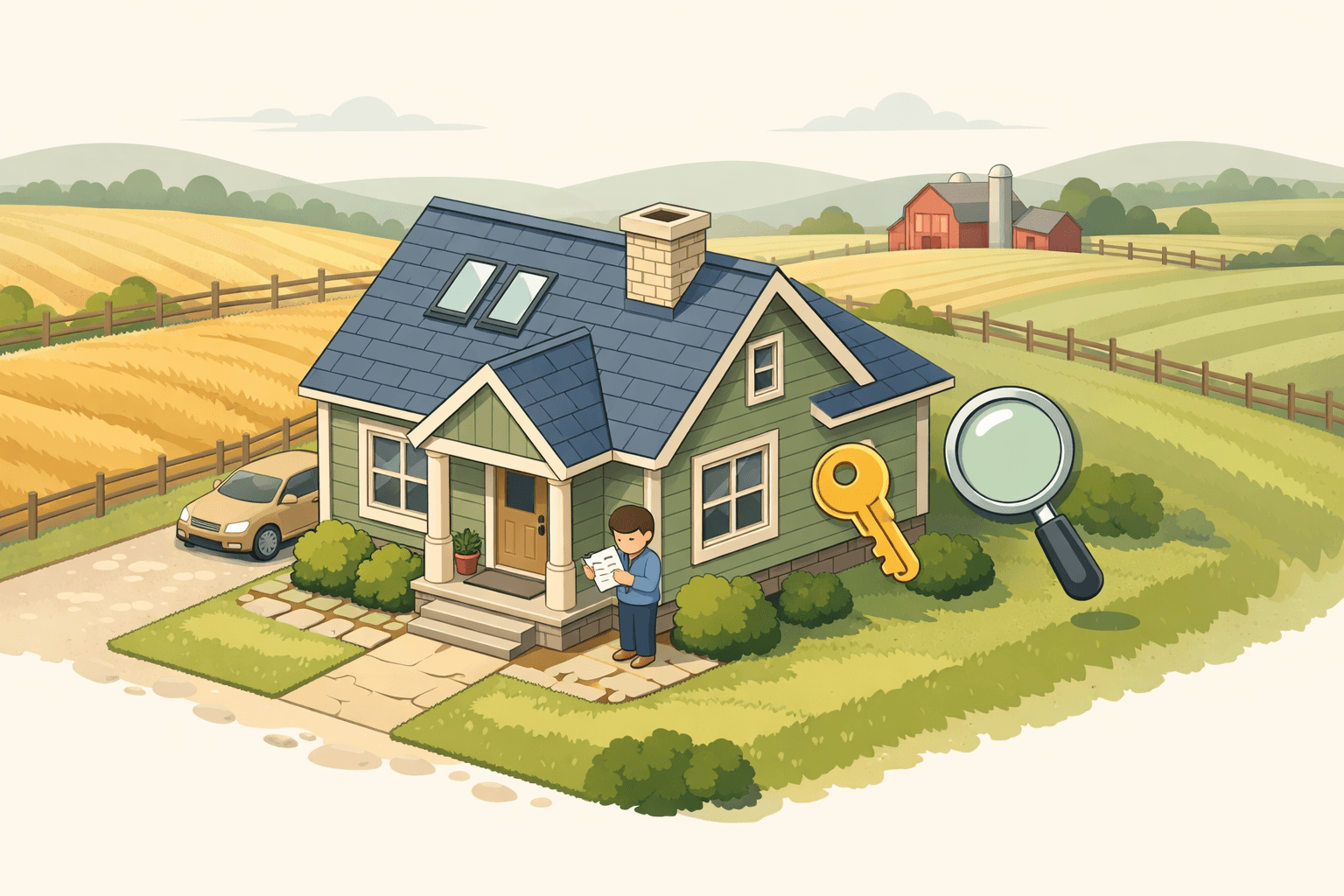
Purchasing a home in a rural area can be an exciting opportunity, especially when government-backed financing is available to help make it more affordable. The USDA loan program is one of the most attractive options for rural homebuyers, offering competitive interest rates and the possibility of no down payment. However, if the property you're eyeing carries agricultural zoning, the path to approval can feel a bit more complicated. Understanding how to qualify for a USDA loan with agricultural zoning restrictions is essential before you begin the application process. This guide breaks down what lenders and the USDA typically look for, so you can move forward with confidence.
What Is a USDA Loan and Who Does It Serve
The USDA loan program is backed by the United States Department of Agriculture and is designed to support homebuyers in eligible rural and suburban communities. It's primarily offered through two channels: the USDA Direct Loan, which is funded directly by the government for lower-income borrowers, and the USDA Guaranteed Loan, which is issued by approved private lenders and backed by the USDA against default.
These loans are especially helpful for first-time homebuyers and moderate-income households who might not have enough savings for a traditional down payment. Because the program focuses on rural development, it comes with specific property eligibility requirements that go beyond what you'd typically see with conventional or FHA financing.
For homebuyers interested in rural property that carries agricultural designations, it's important to understand that USDA loans are intended for residential use. The program aims to finance a primary residence, not farmland or income-producing agricultural operations. That distinction plays a major role in how agricultural zoning is evaluated during underwriting.
Understanding Agricultural Zoning and Why It Matters for USDA Eligibility
Agricultural zoning is a land-use classification assigned by local governments that typically allows farming, ranching, livestock keeping, and related activities on a parcel of land. While this zoning can apply to wide-open rural properties, it doesn't automatically disqualify a home from USDA financing. What matters most is how the property is actually used and whether it primarily functions as a residential dwelling.
The USDA requires that the property be used as a primary residence and that its primary purpose is not agricultural production or commercial farming. This means a single-family home sitting on agriculturally zoned land may still qualify, provided the residential nature of the property is evident and the acreage is considered typical for the area.
Lenders and USDA underwriters will look closely at a few key factors when agricultural zoning is involved:
- Size of the land: Large parcels may raise concerns about whether the property is truly residential or primarily agricultural in nature.
- Presence of income-producing features: Barns, livestock pens, crop fields, or irrigation systems used for commercial farming could complicate eligibility.
- Local market comparisons: The property should be comparable to other residential homes in the area, even if the zoning classification differs.
- Appraisal findings: A USDA-approved appraiser will assess the property's primary use and may exclude agricultural outbuildings from the home's appraised value.
It's worth noting that USDA guidelines do allow some flexibility. Properties with small gardens, hobby farms, or a modest number of animals for personal use may still qualify, as long as the residential use remains dominant.
USDA Loan Requirements for Rural Property Zoning: A Closer Look
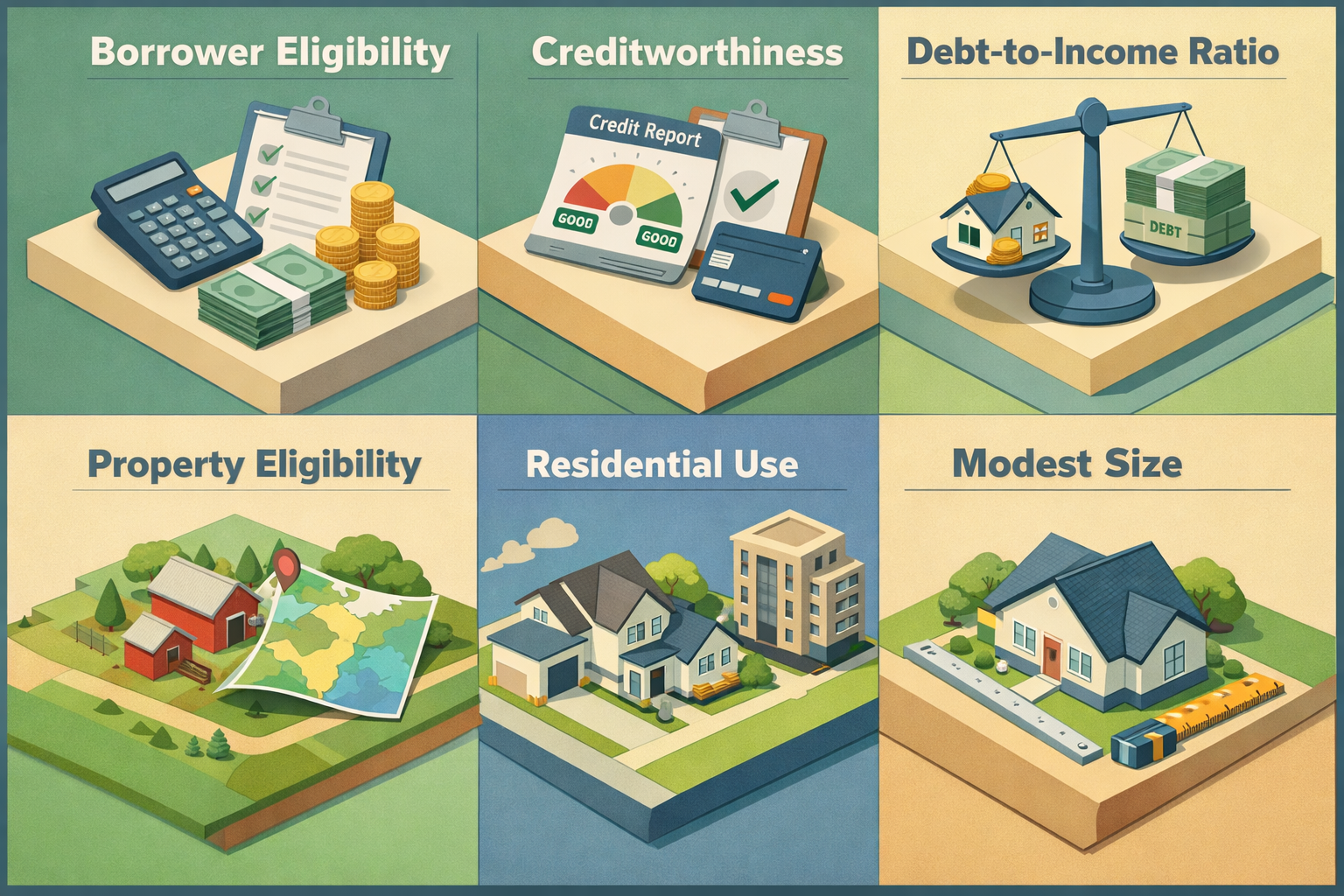
When reviewing USDA loan requirements for rural property zoning, it helps to think about eligibility in two layers: the borrower and the property. Both must meet USDA standards for the loan to move forward.
Borrower Eligibility
To qualify as a borrower, you'll generally need to meet the following criteria:
- Income limits: USDA loans are intended for low-to-moderate income households. Income limits vary by location and household size, and the USDA publishes updated guidelines each year.
- Creditworthiness: Most lenders look for a credit score of at least 640 for the USDA Guaranteed Loan program, though some lenders may manually underwrite applications with lower scores.
- Debt-to-income ratio: A DTI ratio at or below 41% is typically preferred, though exceptions may be granted with compensating factors such as strong reserves or excellent credit history.
- U.S. citizenship or eligible noncitizen status: You must be a U.S. citizen, permanent resident, or qualified alien to participate in the program.
- Primary residence intent: The property must serve as your primary home, not a vacation property or rental investment.
Property Eligibility
For a property with agricultural zoning to qualify for USDA loan approval, it generally must:
- Be located within a USDA-designated eligible rural area
- Function primarily as a single-family residential dwelling
- Be modest in size and value relative to the surrounding market
- Not be used for income-generating agricultural activities
- Meet basic livability and safety standards set by USDA property guidelines
The USDA's property eligibility map is a useful starting point, but always confirm eligibility with your lender or a USDA-approved underwriter, since boundaries can change with each program update.
How to Qualify for USDA Loan with Agricultural Zoning Restrictions Step by Step
If you've found a rural property with agricultural zoning and want to pursue USDA financing, here's a practical approach to strengthen your application and navigate potential hurdles.
Step 1: Confirm the Property's USDA Area Eligibility
Start by visiting the USDA's official eligibility map to verify that the property address falls within an approved rural zone. Keep in mind that population thresholds and boundary lines can shift, so confirming this early saves time and effort.
Step 2: Order a Property Appraisal Early
A USDA-approved appraiser will evaluate the property's condition, size, and primary use. If the land includes agricultural features, the appraiser will determine whether those features impact the home's residential character. Being proactive about the appraisal allows you to identify potential issues before they delay closing.
Step 3: Document the Residential Nature of the Property
If the property has a large acreage, livestock shelters, or farming equipment on-site, prepare to provide documentation showing that these features are incidental to residential living rather than a commercial enterprise. This might include a letter of explanation, local zoning certificates, or a property use history.
Step 4: Work with a USDA-Experienced Lender
Not every mortgage lender is equally familiar with USDA guidelines around agricultural zoning. Choosing a lender with specific USDA experience can make a meaningful difference. They'll know how to present your file to underwriting, what supporting documents to gather, and how to communicate with USDA representatives when clarification is needed.
Step 5: Review and Strengthen Your Financial Profile
Regardless of the property type, your personal financial profile matters. Pay down outstanding debts where possible, avoid opening new credit accounts before applying, and review your credit report for errors. A stronger financial profile may give underwriters more confidence when they're evaluating a nuanced property situation.
Common Challenges Homebuyers Face with Agriculturally Zoned Properties
Even well-prepared buyers can encounter obstacles when applying for USDA financing on agriculturally zoned land. Being aware of these challenges ahead of time can help you respond quickly if they arise.
Excess Acreage Concerns
One of the more common issues is acreage. USDA guidelines indicate that the site should be typical in size for the area, but there's no hard rule on maximum lot size. If a property has significantly more land than neighboring homes, an underwriter may question whether the extra acreage is necessary for residential use. In some cases, the USDA may require that the excess land be separated from the financed parcel, which could require a survey or lot split.
Income-Producing Features
If the property includes operational farming infrastructure — such as active crop leases, commercial orchards, or working livestock operations — lenders may determine that the property's primary purpose is agricultural rather than residential. This could disqualify the property under USDA guidelines unless those commercial activities are discontinued or excluded from the transaction.
Appraisal Complexity
Appraising a home on agriculturally zoned land can be more complex than a standard residential appraisal. Finding comparable sales with similar zoning may be challenging in some markets, which could affect the appraised value and, in turn, the loan amount you qualify for a USDA loan on.
Zoning Conflicts with Lender Overlays
Some lenders apply additional requirements — known as overlays — on top of USDA's standard guidelines. These overlays might result in stricter limits on acceptable zoning types. Shopping multiple lenders can be valuable if one lender's overlays create an obstacle that another lender's policy does not.
Tips to Strengthen Your USDA Loan Application on Rural Zoned Properties
A few targeted strategies can go a long way in improving your chances of approval when agricultural zoning is part of the picture.
- Get pre-qualified early: A pre-qualification with a USDA-experienced lender helps you understand what's realistic before falling in love with a property that may not meet program guidelines.
- Request a zoning letter from the local municipality: This letter confirms the official zoning classification and any permitted uses, which can help an underwriter assess the residential viability of the property.
- Minimize agricultural use before application: If you currently lease land for farming or have livestock operations in place, consider whether those activities could be suspended or restructured before the loan closes.
- Maintain strong reserves: Having cash reserves beyond the down payment and closing costs signals financial stability to underwriters and may serve as a compensating factor.
- Keep your income documentation clean: Rural buyers who are self-employed or earn agricultural income should be especially careful to provide clear, well-organized tax returns and profit-and-loss statements to support their application.
It also helps to be patient and communicative throughout the process. USDA loans can take longer to close than conventional loans, and properties with agricultural zoning may require additional review time. Staying in regular contact with your lender keeps things moving and reduces surprises at the closing table.
●Conclusion
Navigating how to qualify for a USDA loan with agricultural zoning restrictions takes preparation, the right lender, and a clear understanding of what the program is designed to finance. While agricultural zoning doesn't automatically disqualify a property, it does add layers of scrutiny that buyers should be ready to address. By confirming eligibility early, documenting the residential nature of the property, and working with a knowledgeable USDA lender, rural homebuyers can move through the process with greater confidence. At LoanWise, our team is here to help you explore your financing options and find the right path to homeownership in the rural community you've been dreaming of.