
Starting a new job in a new city is exciting — but it can also raise a lot of financial questions, especially when you're ready to buy a home. One of the most common concerns for recently relocated employees is whether their relocation bonus and new income situation will hold up under FHA loan scrutiny. The good news is that it's entirely possible to qualify, but understanding how to qualify for FHA loan with recent relocation bonus income takes some preparation. FHA loans, backed by the Federal Housing Administration, are popular among homebuyers because they tend to offer more flexible credit and down payment requirements compared to conventional loans. However, lenders still follow specific guidelines when evaluating income sources — and a relocation bonus is one of the more nuanced types. This article walks you through what you need to know, from how lenders view bonus income to the documentation that could make or break your application.
What Makes FHA Loans a Strong Option After a Job Relocation
FHA loans are often considered one of the more accessible mortgage programs available to homebuyers in the United States. They're insured by the federal government, which means lenders take on less risk — and that reduced risk often translates into more flexible lending terms for borrowers. For someone who has recently relocated for work, this flexibility can be especially valuable.
Typically, FHA loans allow down payments as low as 3.5% for borrowers with a credit score of 580 or higher. Borrowers with scores between 500 and 579 may still qualify but may need to put down at least 10%. These thresholds make FHA financing attractive for individuals who may still be building financial stability after a major move.
Beyond credit scores, FHA guidelines also tend to be more forgiving when it comes to debt-to-income (DTI) ratios. In many cases, lenders may approve borrowers with DTI ratios up to 43%, and in some circumstances even higher with compensating factors. For a newly relocated employee who may have some moving-related debt or temporary financial adjustments, this wiggle room can matter.
That said, the program still has rules — particularly around income verification and employment history. When a relocation bonus enters the picture, lenders and underwriters need to assess it carefully before it can be counted toward qualifying income.
How Lenders Classify Relocation Bonus Income Under FHA Guidelines
Understanding FHA loan requirements for relocation bonuses starts with understanding how lenders categorize this type of income. A relocation bonus is typically a one-time or short-term payment made by an employer to help cover the costs of moving. Because it's generally not recurring, it presents a challenge in the mortgage world — lenders want to see income that's stable, consistent, and likely to continue.
FHA guidelines, which are outlined in HUD Handbook 4000.1, draw a clear distinction between regular employment income and non-recurring income. Lump-sum relocation bonuses are typically treated as non-recurring income, which means they may not be used as qualifying income on their own. However, the situation becomes more nuanced depending on how the bonus is structured.
- One-time lump sum: If an employer pays a single relocation amount upfront, lenders will generally not count it as part of your ongoing qualifying income. It may, however, help explain reserves or a larger-than-expected deposit in your bank account.
- Recurring bonus structure: If your employer pays relocation assistance in installments or as part of a broader bonus program that recurs annually, lenders may be more willing to factor a portion of it into your qualifying income — especially with a two-year history of similar bonuses from previous employment.
- Employer reimbursements: Some relocation packages reimburse specific expenses rather than offering a cash bonus. These are generally not counted as income at all since they offset costs rather than represent earnings.
The key takeaway here is that a relocation bonus alone is unlikely to serve as primary qualifying income. However, it can play a supporting role in your overall financial picture.
Employment History Requirements When You've Recently Changed Jobs
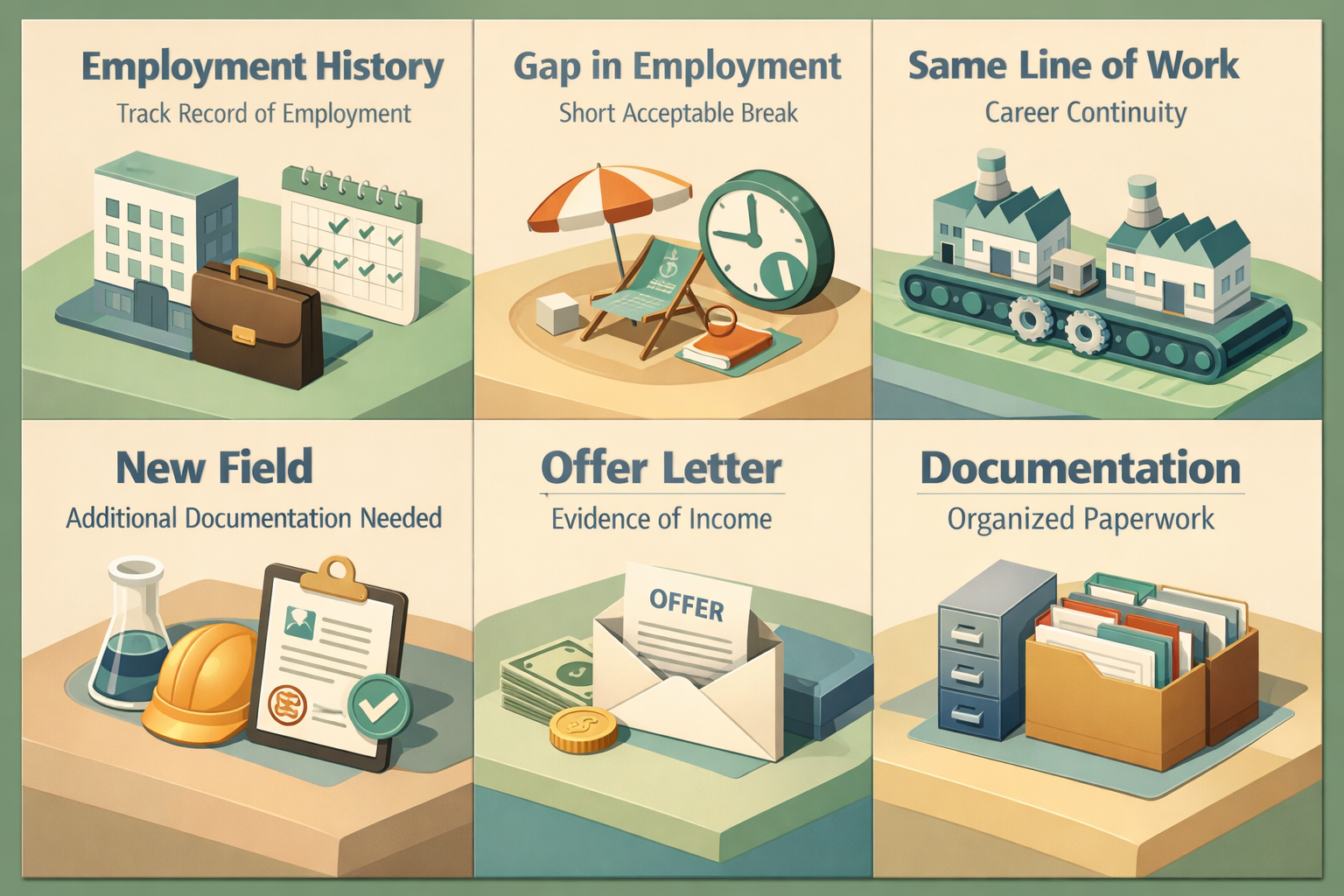
One of the most pressing concerns for relocated borrowers is the employment history requirement. FHA guidelines typically look for a two-year employment history, but this doesn't necessarily mean you need to have been at your current job for two years. What lenders are really trying to confirm is that you have a consistent track record of employment and income.
If you recently relocated for a new job, your lender will likely look at the following:
- Gap in employment: A short gap between your old job and your new one — such as the time needed to physically relocate — is often acceptable when clearly explained. Lenders may ask for a written explanation or a relocation letter from your employer.
- Same line of work: Moving to a new employer in the same field or industry generally strengthens your application. It signals career continuity rather than an unstable job history.
- New field or career change: A career change combined with a job relocation can raise more questions. Lenders may want additional documentation or may apply stricter scrutiny to your qualifying income.
- Offer letter and start date: If you've recently started a new position, your lender may accept a signed employment offer letter as evidence of income — particularly if you have not yet received your first paycheck or have fewer than 30 days of pay stubs.
The bottom line is that transparency matters. Lenders work within FHA guidelines, and unexplained gaps or inconsistencies can slow down or complicate the underwriting process. Providing clear documentation upfront is always the smarter move.
Documentation You'll Need to Support Your Application
When you're working through how to qualify for FHA loan with recent relocation bonus income, documentation is your strongest ally. The more organized and complete your paperwork, the smoother the underwriting process tends to go. Here's what you'll likely need to gather:
- Pay stubs: Your most recent 30 days of pay stubs from your new employer. If you've just started, even a single pay stub may be acceptable alongside a signed offer letter.
- W-2s and tax returns: Lenders typically request two years of W-2 forms and federal tax returns. These help establish your income history and validate the two-year employment record FHA guidelines reference.
- Employer offer letter or relocation agreement: A formal letter from your employer confirming your position, start date, salary, and any relocation assistance provided. This is especially important if you've recently started the new role.
- Bank statements: Two to three months of recent bank statements. If your relocation bonus appeared as a deposit, your lender will likely ask you to source and explain it. A letter from your employer confirming the bonus can satisfy this requirement.
- Gift or bonus letters: If any portion of your funds — including relocation money — was received as a gift or lump-sum payment, you may need a letter explaining the source and confirming it does not need to be repaid.
- Credit report authorization: FHA lenders will pull a tri-merge credit report. Make sure you're aware of your credit profile before applying so there are no surprises.
Being proactive about organizing these documents can meaningfully reduce delays and give your underwriter the clarity they need to move your file forward.
Strategies to Strengthen Your FHA Application as a Relocated Borrower
Even when your bonus income isn't fully countable toward your qualifying income, there are practical steps you can take to make your overall application more compelling. Lenders look at the full picture, and a strong supporting profile can compensate for some of the complexities that come with recent relocation.
Demonstrate Strong Reserves
Having several months of mortgage payments sitting in a savings or checking account after closing signals financial stability. While FHA loans don't always require reserves, having them can be a meaningful compensating factor — especially when your income documentation is still developing.
Keep Your DTI in Check
Before applying, consider paying down any outstanding debts that might be inflating your debt-to-income ratio. Even eliminating a small monthly payment — like a car loan or a credit card balance — can move your DTI into a more favorable range and improve your approval odds.
Work With an Experienced FHA Lender
Not all lenders have the same experience handling complex income situations. Working with a mortgage professional who has a track record with FHA loans and relocated borrowers can make a real difference. They'll know which compensating factors to highlight and how to structure your file for the best possible outcome.
Write a Clear Explanation Letter
If there's anything unusual in your financial history — a job gap, a large deposit, or an unfamiliar income source — a concise, well-written letter of explanation can preempt underwriter concerns. Keep it factual, brief, and supported by documentation wherever possible.
Common Mistakes Relocated Homebuyers Should Avoid
Even well-prepared borrowers can stumble during the FHA loan process when relocation is involved. Being aware of common pitfalls can save you time, stress, and potentially a loan denial.
- Counting the bonus as qualifying income without confirmation: Don't assume your relocation bonus will count toward your income without first discussing it with your lender. Making financial plans based on inflated income figures can lead to disappointment during underwriting.
- Making large undocumented deposits: If your employer sends you a relocation bonus and you deposit it without keeping records, your lender may flag it as an unexplained large deposit. Always retain documentation from your employer confirming the source and purpose of the funds.
- Changing jobs again before closing: Changing employers between application and closing — even for a better opportunity — can derail your loan entirely. Try to maintain employment stability throughout the entire mortgage process.
- Ignoring credit before applying: A recent relocation can sometimes mean overlooked bills, delayed mail, or forgotten accounts. Pull your credit report early and address any inaccuracies or delinquencies before applying.
- Underestimating how long the process takes: Especially when income documentation is more complex, FHA underwriting can take longer. Plan accordingly and avoid committing to a move-in date that doesn't allow enough processing time.
●Conclusion
Navigating the FHA loan process after a job relocation is absolutely manageable — it just requires a clear understanding of the rules and a thoughtful approach to documentation. While a relocation bonus may not always count directly as qualifying income, it can still support your application in important ways, such as demonstrating financial reserves or explaining large bank deposits. The core principle of how to qualify for FHA loan with recent relocation bonus income comes down to transparency, preparation, and working with the right lending partner. If you've recently moved for work and you're ready to put down roots in your new city, don't let the complexity of your income situation hold you back. Connect with a knowledgeable FHA-approved lender at LoanWise to review your specific situation and explore the best path forward toward homeownership.