
Filing for Chapter 7 bankruptcy is one of the most financially difficult experiences a person can go through. But here's the encouraging news — it doesn't have to be the end of your homeownership dream. Many hopeful homebuyers don't realize that the Federal Housing Administration (FHA) offers a realistic and accessible path back to buying a home, even after a recent bankruptcy discharge. What makes this path even more attainable is that FHA guidelines also allow gift funds to cover the down payment, which can be a game-changer for borrowers who are still rebuilding their savings. In this guide, we'll walk through everything you need to know about how to qualify for FHA loan with recent Chapter 7 bankruptcy and gift funds, from waiting periods and credit standards to documentation requirements and lender expectations.
Understanding FHA Loans and Why They're Designed for Borrowers Like You
FHA loans are government-backed mortgages insured by the Federal Housing Administration and originated through approved private lenders. They were created specifically to expand access to homeownership for borrowers who might not qualify for conventional financing — including those with lower credit scores, limited savings, or financial setbacks like bankruptcy.
Unlike conventional loans, which typically require higher credit scores and larger down payments, FHA loans are more flexible in their qualification standards. This flexibility makes them a popular choice for first-time homebuyers, individuals recovering from financial hardship, and even those relying on family assistance for their down payment.
Some of the key features that make FHA loans stand out include:
- Lower minimum credit score requirements compared to most conventional loan programs
- Down payment requirements as low as 3.5% of the purchase price
- Permission to use gift funds for the entire down payment and closing costs
- More lenient debt-to-income ratio guidelines in many cases
- Defined waiting periods after bankruptcy rather than a permanent disqualification
For borrowers who've recently gone through Chapter 7 bankruptcy, the FHA loan program offers a structured and transparent timeline for re-entering the housing market. It's not a loophole — it's a legitimate lending pathway built into the program's design.
FHA Loan Requirements After Bankruptcy: The Mandatory Waiting Period Explained
One of the first things a borrower needs to understand when exploring FHA loan requirements after bankruptcy is the mandatory waiting period. FHA guidelines generally require a minimum two-year waiting period after a Chapter 7 bankruptcy discharge before a borrower may apply for a new FHA-insured mortgage.
The discharge date — not the filing date — is what matters. This distinction is important because the bankruptcy process itself can take several months. The clock on your waiting period starts only once the court has officially discharged your debts.
Here's what that timeline typically looks like in practice:
- Year One Post-Discharge: Focus on rebuilding credit, managing new accounts responsibly, and saving toward housing costs.
- Year Two Post-Discharge: Continue demonstrating consistent financial behavior, avoid new negative marks, and begin consulting with an FHA-approved lender.
- After Two Years: You may be eligible to apply for an FHA loan requirements after bankruptcy, provided you meet all other qualification criteria.
It's worth noting that some lenders may apply additional overlays — meaning they might set their own stricter requirements beyond the FHA minimums. This is why working with an experienced FHA-approved lender is so important. Not all lenders interpret these guidelines the same way.
In certain limited circumstances, FHA guidelines may allow for an exception to the two-year rule — sometimes referred to as an "extenuating circumstances" exception — if the bankruptcy was caused by events largely beyond the borrower's control, such as a serious illness or job loss. However, these exceptions typically require substantial documentation and are evaluated on a case-by-case basis. Borrowers should not assume they'll qualify for an exception without consulting a knowledgeable loan officer first.
Rebuilding Your Credit Profile After Chapter 7: What Lenders Want to See
Meeting the waiting period is just the beginning. To successfully qualify for an FHA loan after Chapter 7 bankruptcy, you'll also need to demonstrate that you've rebuilt a positive credit history. Lenders and FHA guidelines place significant weight on what's happened to your credit since the discharge.
Here's what lenders typically look for when reviewing your post-bankruptcy credit profile:
- Minimum credit score: FHA guidelines generally require a minimum score of 580 to qualify for the 3.5% down payment option. Scores between 500 and 579 may still be eligible but typically require a 10% down payment. Always confirm the current thresholds with your lender, as overlays may apply.
- Re-established credit lines: Having at least two or three new positive accounts opened after the bankruptcy discharge can strengthen your application. These might include a secured credit card, a credit-builder loan, or a car loan.
- On-time payment history: Demonstrating 12 to 24 months of clean, on-time payments on any new or existing accounts is one of the strongest signals of creditworthiness you can send to a lender.
- No new derogatory marks: Additional late payments, collections, or new derogatory accounts opened after the bankruptcy can significantly hurt your chances of approval.
It's also a good idea to regularly review your credit reports from all three major bureaus — Equifax, Experian, and TransUnion — to check for errors or accounts that should have been discharged but are still showing as active. Disputing inaccuracies promptly can help improve your score more quickly.
Rebuilding credit takes time and consistency, but it's entirely achievable. Many borrowers find that within two years of their discharge, they're in a far stronger financial position than they might have expected.
How Gift Funds for Down Payment FHA Rules Work — and Who Can Give Them
One of the most valuable — and often overlooked — features of the FHA loan program is its permissive approach to gift funds. For borrowers recovering from bankruptcy who may not yet have substantial savings, this can make homeownership possible much sooner.
Under FHA guidelines, gift funds for down payment FHA purposes are allowed from a wide range of sources. Acceptable donors typically include:
- A family member (parent, sibling, grandparent, aunt, uncle, or in-law)
- A close friend with a clearly documented relationship to the borrower
- A fiancé or domestic partner
- An employer or labor union
- A charitable organization
- A government agency or public entity offering down payment assistance
Importantly, FHA does not require the borrower to contribute their own funds when a gift funds for down payment covers the entire 3.5% down payment — provided the borrower's credit score meets the 580-or-higher threshold. This is a meaningful distinction from conventional loans, which often require at least a partial borrower contribution when gifts are involved.
However, there are documentation requirements that must be met to use gift funds. Lenders will typically require:
- A signed gift letter from the donor stating the amount, the donor's relationship to the borrower, and confirmation that repayment is not expected
- Evidence of the donor's ability to provide the funds (such as a bank statement)
- Documentation showing the funds were transferred to the borrower's account or directly to closing
What gift funds cannot be is a disguised loan. If the donor expects repayment in any form, the funds do not qualify as a gift under FHA rules. Lenders and underwriters are trained to identify these situations, so transparency is essential throughout the process.
Step-by-Step: How to Qualify for FHA Loan with Recent Chapter 7 Bankruptcy and Gift Funds
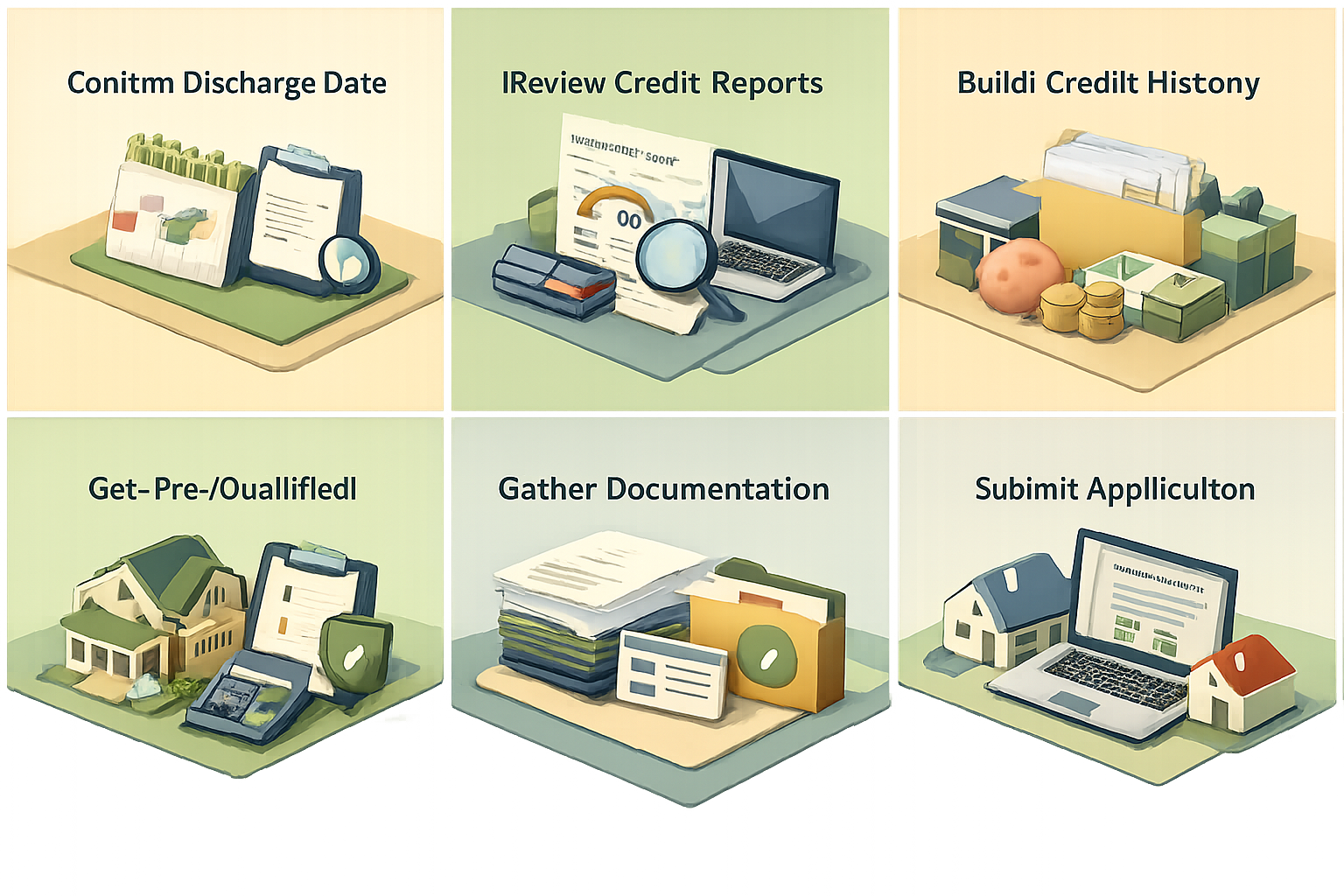
Now that we've covered the individual components, let's bring it all together. Here's a practical roadmap for borrowers who want to understand how to qualify for FHA loan with recent Chapter 7 bankruptcy and gift funds as part of the same application.
Step 1: Confirm Your Discharge Date and Waiting Period
Obtain a copy of your Chapter 7 discharge order from the bankruptcy court. Calculate whether at least two years have passed since that date. If not, use the remaining time productively to rebuild credit and save additional funds.
Step 2: Pull and Review Your Credit Reports
Order your free credit reports and review them carefully. Dispute any errors, confirm that discharged debts are reported correctly, and identify areas where you can strengthen your profile before applying.
Step 3: Build a Positive Post-Bankruptcy Credit History
Open one or two responsible credit accounts if you haven't already. Use them conservatively, pay on time every month, and keep balances low. Aim for at least 12 months of positive history before applying.
Step 4: Organize Your Gift Fund Documentation
If you're relying on gift funds for your down payment, coordinate with your donor early. Have them prepare a formal gift letter and gather the necessary bank statements. Work with your lender to ensure the paper trail meets FHA requirements.
Step 5: Get Pre-Qualified with an FHA-Approved Lender
Work with a lender experienced in FHA financing and post-bankruptcy scenarios. They can assess your full profile — including your discharge timeline, credit score, debt-to-income ratio, and gift fund documentation — and give you an honest picture of where you stand.
Step 6: Gather All Required Documentation
Prepare a comprehensive application package that includes your discharge papers, tax returns, pay stubs or employment verification, bank statements, the gift letter and transfer documentation, and any other materials your lender requests.
Step 7: Submit Your Application and Respond Promptly to Underwriting Requests
Once you've submitted your application, the underwriting process will evaluate every element of your file. Respond to any requests for additional information quickly and completely to avoid delays in your approval timeline.
Other Qualifying Factors That Can Strengthen Your FHA Application
Beyond the waiting period, credit score, and gift fund documentation, several other factors play a role in whether your FHA loan application is approved. Understanding these elements can help you put your best foot forward.
Debt-to-Income Ratio (DTI)
FHA guidelines generally allow a total DTI ratio of up to 43%, though some lenders may go higher with compensating factors such as strong reserves or a higher credit score. After Chapter 7, your discharged debts no longer count against you — which can actually improve your DTI position significantly.
Employment and Income Stability
Lenders want to see stable, verifiable income. Two years of consistent employment in the same field is typically viewed favorably. If your bankruptcy was tied to a period of unemployment, demonstrating steady re-employment since then can be a powerful compensating factor.
Reserves and Additional Assets
While not always required by FHA, having additional assets in savings after your down payment and closing costs can reassure lenders of your financial stability. Even one or two months of mortgage reserves may improve your application's overall risk profile.
Property Requirements
FHA loans also require the property itself to meet certain standards. The home must be appraised by an FHA-approved appraiser and meet minimum property condition requirements. Fixer-uppers with significant safety or structural issues may not qualify unless you use an FHA 203(k) rehabilitation loan.
●Conclusion
Recovering from Chapter 7 bankruptcy is a process that takes time, discipline, and the right information — and qualifying for an FHA loan is an achievable milestone along that journey. The combination of FHA's structured waiting period, flexible credit guidelines, and permission to use gift funds for the down payment creates a genuine opportunity for borrowers who are ready to take the next step toward homeownership.
The key is preparation. Use your waiting period wisely by rebuilding your credit, maintaining financial stability, coordinating gift fund documentation if needed, and working with an experienced FHA-approved lender who understands post-bankruptcy lending. When the time comes to apply, you'll want every piece of your financial story to reflect the responsible borrower you've become since your discharge.
At LoanWise, we're here to help you navigate the path from financial recovery to homeownership with clarity and confidence. Whether you're just starting to rebuild or you're ready to apply, connect with one of our lending specialists today to explore your FHA loan options and take the next step toward owning your home.