Rebuilding your life after a divorce is a big step — and buying a home is often part of that fresh start. If you're wondering how to qualify for an FHA loan with a divorce decree and child support income, you're not alone. Many newly single borrowers are surprised to learn that child support and alimony payments can actually count as qualifying income on a mortgage application. The key is understanding the rules, gathering the right documents, and working with a lender who knows how to structure your file correctly. This guide walks you through everything you need to know.
Why FHA Loans Are a Strong Option After Divorce
The Federal Housing Administration (FHA) loan program is one of the most accessible mortgage options available, especially for borrowers who are rebuilding financially. After a divorce, your credit score may have taken a hit, your savings might be leaner than before, and your income profile may look very different on paper. FHA loans are designed with flexibility in mind, and that's what makes them such a practical choice.
FHA loans typically require a minimum down payment of 3.5% for borrowers with a credit score of 580 or higher. Borrowers with scores between 500 and 579 may still qualify but may need to put down 10%. These thresholds are generally more forgiving than conventional loan requirements, which can be a meaningful advantage for someone who is still stabilizing their finances post-divorce.
Beyond credit flexibility, FHA guidelines also allow a wider range of income sources to be used for qualification — including child support and alimony, when properly documented. This is where your FHA loan divorce settlement paperwork becomes critically important.
How Child Support and Alimony Count as Qualifying Income
One of the most important things to understand is that the FHA does not automatically count child support or alimony as income. These payments must meet specific criteria before a lender can use them to calculate your debt-to-income (DTI) ratio and overall qualifying income.
According to standard FHA guidelines, child support and alimony income is generally eligible if:
- The payments are documented in a court order or legally binding divorce decree
- The income has been received consistently — typically for at least six to twelve months prior to the loan application
- The payments are expected to continue for at least three years after the mortgage closing date
Lenders will want to see evidence that the income is stable and reliable. A court order alone may not be sufficient — most lenders will also require bank statements or deposit records showing that payments have actually been received on a regular basis. Verbal agreements or informal arrangements generally won't qualify, which is why having a formal FHA loan divorce settlement agreement is so important.
It's also worth noting that if the payer of child support is a co-borrower on the loan, those payments might be treated as a liability rather than an asset, which could affect DTI calculations differently. Always discuss your specific situation with a knowledgeable FHA lender.
Essential Documents You'll Need From Your Divorce Decree
Your divorce decree is one of the most important documents in your mortgage file. Lenders need it to verify the terms of your legal separation, confirm custody arrangements, and validate the child support or alimony obligations that will be factored into your income calculation. Being organized with your paperwork can significantly speed up the approval process.
Here's a breakdown of the documentation you'll typically need when applying under the child support FHA qualification guidelines:
- Final Divorce Decree: The complete, court-signed document outlining the terms of your divorce, including child support and alimony amounts and duration
- Child Support or Alimony Award Letter: A formal statement specifying the payment amount and schedule
- Bank Statements: Twelve months of bank statements showing consistent deposits that match the amounts specified in the decree
- Payment History Records: Some lenders may also accept printouts from a state child support enforcement agency as verification
- Tax Returns: Your most recent one to two years of federal tax returns, which may show alimony income reported under prior tax rules
If payments have been inconsistent or your divorce was finalized recently, it may be harder to qualify on that income stream alone. In those cases, a lender might suggest strengthening your application with other income sources or waiting until you have a longer payment history to document.
How to Qualify for FHA Loan With Divorce Decree and Child Support Income Step by Step
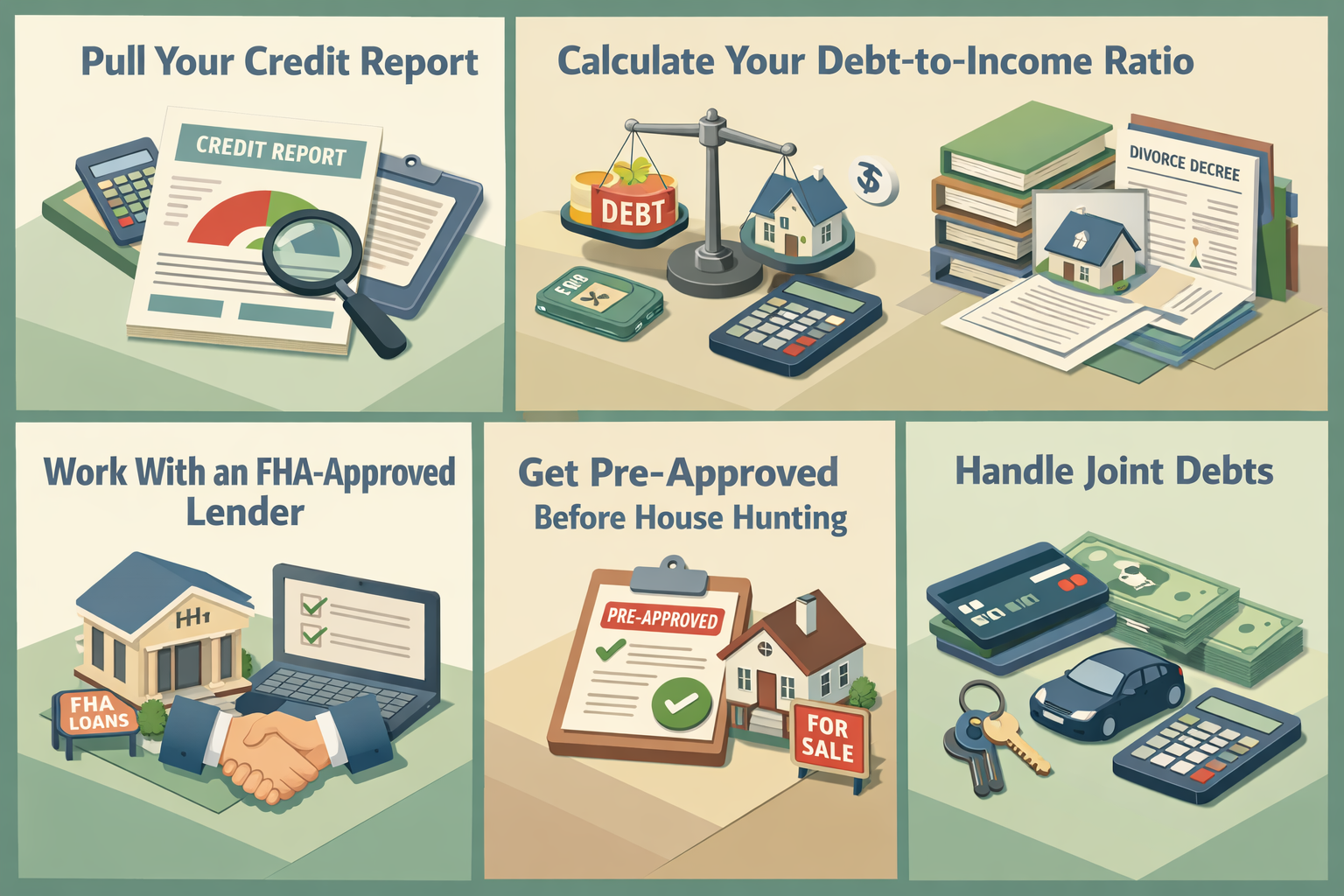
Understanding the practical steps involved can make the process feel far less overwhelming. Here's a step-by-step overview to help you prepare your application and maximize your chances of approval.
Step 1: Pull Your Credit Report
Before anything else, review your credit report from all three major bureaus. Divorce can sometimes lead to accounts that were previously shared now showing late payments or collections. Dispute any errors you find and give yourself time to address any negative items before applying.
Step 2: Calculate Your Debt-to-Income Ratio
FHA guidelines generally allow a back-end DTI ratio of up to 43%, though some lenders may approve borrowers up to 50% with compensating factors. Add up all your monthly debt obligations — including any joint debts you may still be responsible for — and compare that to your gross monthly income, which should now include your child support or alimony if it qualifies.
Step 3: Gather All Divorce-Related Documents
As outlined in the previous section, your divorce decree and supporting payment records are non-negotiable. Get certified copies and organize them clearly before submitting your loan application.
Step 4: Work With an FHA-Approved Lender
Not all lenders are equally experienced with post-divorce mortgage applications. Look for an FHA-approved lender who has handled files involving child support income. They'll know how to structure your application and may offer guidance on overlays — lender-specific requirements that go beyond the minimum FHA guidelines.
Step 5: Get Pre-Approved Before House Hunting
Pre-approval gives you a clear picture of how much home you can afford and signals to sellers that you're a serious buyer. It's especially important when your income sources are non-traditional, as the pre-approval process will surface any documentation gaps early.
Handling Joint Debts and Liabilities From Your Marriage
One of the trickier parts of applying for a mortgage after divorce is dealing with joint debts that may still appear on your credit report. Even if your divorce decree states that your former spouse is responsible for a particular debt, the lender may still count it against your DTI if your name remains on the account.
This is a common sticking point and one that catches many borrowers off guard. Here are a few ways to navigate it:
- Refinancing Joint Debts: If possible, have joint accounts — such as a car loan or credit card — refinanced solely into your ex-spouse's name. This removes the liability from your credit profile.
- Providing a Divorce Decree as Evidence: Some FHA lenders may be willing to exclude a joint debt from your DTI calculation if your divorce decree clearly assigns responsibility to your ex-spouse and you can provide proof that they've been making payments for the past 12 months. This is sometimes called a "divorce decree exclusion."
- Paying Off Balances: If a joint account has a small balance, paying it off entirely before applying can simplify your application considerably.
Being proactive about cleaning up joint liabilities before you apply can meaningfully improve your DTI ratio and make your overall application stronger.
Common Mistakes to Avoid When Applying After a Divorce
Even well-prepared borrowers can run into trouble if they're not aware of a few key pitfalls. Here are some of the most common mistakes to watch out for when you're navigating how to qualify for an FHA loan with a divorce decree and child support income.
- Not documenting income receipt: Having a court order is essential, but lenders also need proof that the money is actually being paid. Don't assume the decree alone is enough.
- Failing to disclose the divorce: Trying to omit divorce-related income or liabilities on your application can be considered mortgage fraud. Always be transparent with your lender.
- Applying too soon after the divorce: If your divorce was just finalized, you may not have the six to twelve months of payment history lenders typically require. Waiting a bit longer could significantly improve your approval odds.
- Ignoring joint accounts: As mentioned, joint debts that remain in your name can drag down your DTI even if your ex is legally responsible for them. Address these before applying.
- Shopping with a weak credit profile: If your credit score dropped during the divorce, take time to rebuild it before applying. Even a modest improvement in your score could mean better interest rates and lower monthly payments.
Tips to Strengthen Your FHA Application as a Newly Single Borrower
Beyond the core documentation requirements, there are several strategies that may help you present a stronger application and improve your chances of closing on a home you love.
Build a Larger Down Payment if Possible
While FHA loans allow down payments as low as 3.5%, putting more down — if your finances allow — can reduce your loan-to-value ratio and may make your application more attractive to lenders. It also lowers your monthly mortgage insurance premium over the life of the loan.
Demonstrate Employment Stability
FHA lenders generally want to see at least two years of consistent employment history. If you changed jobs during or after your divorce, be prepared to explain any gaps and show that your current income is stable and likely to continue.
Use a Housing Counselor
HUD-approved housing counselors offer free or low-cost guidance to homebuyers, including those navigating complex financial situations like post-divorce homeownership. They can help you review your credit, understand FHA requirements, and connect you with additional assistance programs.
Consider Down Payment Assistance Programs
Many state and local housing agencies offer down payment assistance grants or second mortgages for eligible borrowers. These programs can be combined with FHA loans in many cases, helping you bridge the gap if your savings are limited after the divorce settlement.
Maintain Clean Financial Habits Before Closing
Once your application is submitted, avoid opening new credit accounts, making large purchases, or changing jobs. These actions can disrupt your file and potentially delay or derail your closing.
●Conclusion
Qualifying for an FHA loan after a divorce is absolutely achievable, and child support income can play a meaningful role in your mortgage application — as long as it's properly documented and meets FHA's continuity requirements. The process may feel more complex than a standard mortgage application, but with the right preparation and a knowledgeable lender by your side, you can move forward with confidence. Start by pulling your credit report, organizing your divorce decree and payment records, and reaching out to an FHA-approved lender who understands your situation. Homeownership after divorce isn't just possible — for many people, it's a powerful step toward long-term stability and a fresh start. Contact LoanWise today to speak with a lending specialist who can help you evaluate your options and put together the strongest possible application.