Buying a home is one of the biggest financial milestones you can reach — and for many Americans, the FHA loan is the most accessible path to get there. If you're wondering how to qualify for an FHA loan with a 580 credit score and child support income, you're not alone. Many single parents and lower-credit borrowers have successfully used the FHA program to purchase their first home or upgrade to something better suited for their family. The good news is that the FHA loan program is specifically designed to help borrowers who may not meet the stricter standards of conventional financing. With the right preparation and documentation, homeownership could be well within your reach.
What Makes the FHA Loan Program Different From Conventional Financing
The Federal Housing Administration (FHA) backs loans issued by approved lenders, which means lenders take on less risk when they approve borrowers. Because of this government backing, FHA loans typically offer more flexible qualification standards than conventional mortgages. That flexibility includes lower minimum credit score thresholds, reduced down payment requirements, and broader income acceptance policies.
Conventional loans often require a credit score of 620 or higher to qualify for even basic approval. FHA loans, on the other hand, may allow scores as low as 500 under certain conditions. For borrowers with a 580 credit score, the FHA program is particularly attractive because it opens the door to a 3.5% down payment — one of the lowest available in the market today.
It's also worth noting that FHA loans are not just for first-time homebuyers. While they're a popular choice for those purchasing their first property, repeat buyers and even certain real estate investors in specific circumstances may use this program. That said, FHA loans are primarily intended for owner-occupied primary residences, so the property you purchase must be your main home.
Understanding the 580 Credit Score Threshold and What It Means for You
Your credit score plays a major role in determining not just whether you qualify for an FHA loan, but also the interest rate you're offered. A score of 580 sits at the dividing line between the FHA's standard 3.5% down payment tier and its higher-down-payment tier for lower scores.
- 580 or above: You may qualify for the minimum 3.5% down payment under FHA guidelines.
- 500 to 579: You might still be eligible, but lenders typically require a 10% down payment.
- Below 500: Most FHA-approved lenders will not approve the application under standard program rules.
It's important to understand that FHA sets minimum guidelines, but individual lenders can impose their own stricter standards — sometimes called lender overlays. Some lenders may require a 600 or even 620 minimum score even if the FHA technically allows 580. This means shopping around with multiple lenders could significantly impact whether you get approved and at what cost.
If your score is currently right at 580, you might want to consider taking a few months to build it slightly higher before applying. Even a modest improvement in your score could open up more lender options and potentially lower your interest rate over the life of the loan.
How Child Support Income Is Evaluated by FHA Lenders
One of the most encouraging aspects of the FHA program for single parents is its willingness to count child support as qualifying income — provided you can document it properly. Understanding how to qualify for an FHA loan requirements with a 580 credit score and child support income means knowing exactly what lenders need to see before they'll include these payments in your debt-to-income calculation.
FHA guidelines generally allow child support income to be counted toward your qualifying income if the following conditions are met:
- The child support must be documented through a divorce decree, court order, or legally binding separation agreement.
- You must demonstrate that the payments have been received consistently — typically for at least 12 months prior to the loan application.
- You should provide bank statements or other records showing a history of regular deposits matching the agreed-upon amount.
- The payments must be expected to continue for at least three years from the date of the mortgage closing.
If child support payments are irregular, have been missed in the past, or are expected to end soon, lenders may reduce the amount they count toward your income or exclude it altogether. Being upfront with your loan officer about the history and consistency of these payments will help avoid surprises during underwriting.
Debt-to-Income Ratio: Balancing Child Support Obligations as Both Income and Expense
Here's something many borrowers overlook: child support can affect your FHA application in two directions at once. If you receive child support, it may boost your qualifying income. But if you pay child support, it counts as a monthly obligation that increases your debt load — and that directly affects your debt-to-income (DTI) ratio.
The FHA program generally looks for a front-end DTI (housing costs divided by gross income) of around 31% and a back-end DTI (all monthly debts divided by gross income) of around 43%. However, FHA guidelines allow for DTI ratios above 43% in some cases, particularly when compensating factors are present, such as a larger down payment, strong cash reserves, or a history of paying similar housing costs.
If you pay child support monthly, that amount will be added to your total monthly obligations alongside your proposed mortgage payment, car loans, student loans, and minimum credit card payments. This can make it harder to stay within acceptable DTI limits. To improve your chances, consider paying down other debts before applying, increasing your income through additional employment or documented side income, or finding a less expensive property to keep your projected mortgage payment manageable.
FHA Loan Requirements Beyond Credit Score and Income
While credit score and income documentation are central to FHA loan qualification, there are other requirements you'll need to meet as well. Understanding the full picture of FHA loan requirements for low credit score and child support scenarios will help you enter the process fully prepared.
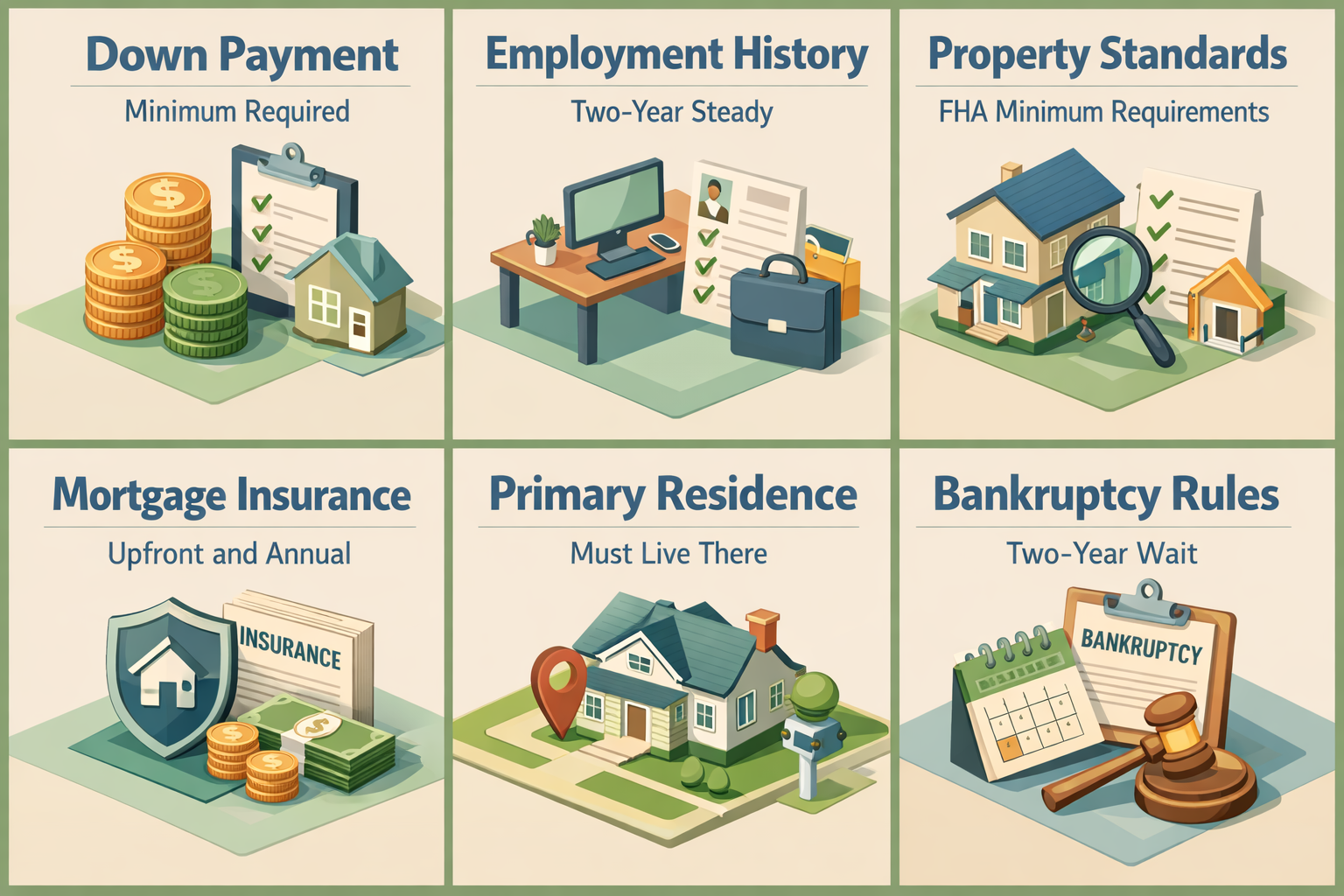
- Down payment: With a 580 score, you'll need at least 3.5% of the purchase price. This can come from your own savings, a gift from a family member, or eligible down payment assistance programs.
- Employment history: Lenders typically want to see a two-year history of steady employment or self-employment. Job changes within the same field are usually acceptable.
- Property standards: The home must meet FHA minimum property requirements (MPRs). A government-approved appraiser will assess the property's safety, soundness, and security.
- Mortgage insurance premiums (MIP): FHA loans require both an upfront MIP (typically 1.75% of the loan amount) and an annual MIP paid monthly. This adds to your overall housing cost.
- Primary residence requirement: You must intend to live in the home as your primary residence within 60 days of closing.
- No recent bankruptcies or foreclosures: FHA generally requires at least two years after a Chapter 7 bankruptcy discharge and three years after a foreclosure before you can qualify.
Meeting these benchmarks doesn't guarantee approval, but it does put you in a much stronger position when a lender reviews your full application file.
Tips to Strengthen Your FHA Loan Application as a Single Parent
Single parents navigating the mortgage process face unique challenges, but there are practical steps you can take to make your application as competitive as possible. Even with a 580 credit score and child support income, lenders want to see that you're a responsible borrower who can manage a mortgage alongside your other obligations.
Here are some strategies that may help:
- Gather thorough documentation early. Collect court orders, bank statements showing consistent child support deposits, tax returns for the past two years, pay stubs, and W-2s. The more organized your file, the smoother the underwriting process tends to go.
- Work with an FHA-experienced loan officer. Not every lender handles FHA files the same way. Finding someone who regularly works with FHA borrowers — especially those with non-traditional income sources — can make a meaningful difference.
- Check for down payment assistance. Many state and local housing agencies offer grants or second mortgage programs to help with the 3.5% down payment requirement. These programs often have income limits, so check your eligibility early.
- Avoid opening new credit accounts before applying. New inquiries and accounts can temporarily lower your credit score, which could push you below the 580 threshold if your score is already borderline.
- Pay down revolving debt. Reducing your credit card balances relative to your credit limits can improve your score and lower your DTI at the same time — a double benefit for your application.
●Conclusion
Understanding how to qualify for an FHA loan with a 580 credit score and child support income is genuinely achievable with the right preparation and the right lending partner. The FHA program was built to serve borrowers who don't fit the conventional mold — and that includes single parents rebuilding their financial footing, buyers with limited credit history, and households that rely on non-traditional income sources like child support. By documenting your income carefully, managing your debt obligations, and working with an experienced FHA lender, you could be much closer to homeownership than you think. At LoanWise, we're here to help you explore your options and take that next confident step toward owning your home.