
Filing for bankruptcy is one of the most difficult financial experiences a person can face. But it doesn't have to be the end of your path to homeownership. Many hopeful homebuyers are surprised to learn that qualifying for a conventional mortgage after bankruptcy is genuinely possible — especially when you understand the rules around waiting periods, credit recovery, and down payment assistance through gift money. If you've been wondering how to qualify for a conventional loan with recent bankruptcy and gift funds, this guide breaks down exactly what you need to know, step by step.
Understanding What a Conventional Loan Requires After Bankruptcy
Conventional loans are mortgage products that follow guidelines set by Fannie Mae and Freddie Mac. Unlike government-backed loans such as FHA or VA mortgages, conventional loans tend to have stricter eligibility requirements — but they also offer competitive interest rates and flexible terms for qualified borrowers.
When it comes to bankruptcy, conventional loan guidelines establish mandatory waiting periods that begin the moment your bankruptcy is officially discharged or dismissed. These waiting periods exist because lenders view bankruptcy as a significant credit event, and they want to see evidence that you've rebuilt your financial footing before approving a new mortgage.
It's important to understand the two most common types of personal bankruptcy and how they affect your eligibility timeline:
- Chapter 7 Bankruptcy: This is a liquidation bankruptcy that wipes out most unsecured debts. For a conventional loan, you'll typically need to wait four years from the discharge date before you can qualify for a conventional loan under standard guidelines.
- Chapter 13 Bankruptcy: This type involves a structured repayment plan rather than full debt elimination. The waiting period for a conventional loan after Chapter 13 is generally two years from the discharge date, or four years from the dismissal date.
These waiting periods may feel long, but they give you a meaningful window to strengthen your financial profile before applying. In some cases involving documented extenuating circumstances — such as a serious illness or job loss beyond your control — lenders may consider reduced waiting periods. However, this typically requires strong supporting documentation and is evaluated on a case-by-case basis.
Rebuilding Your Credit Profile After Bankruptcy
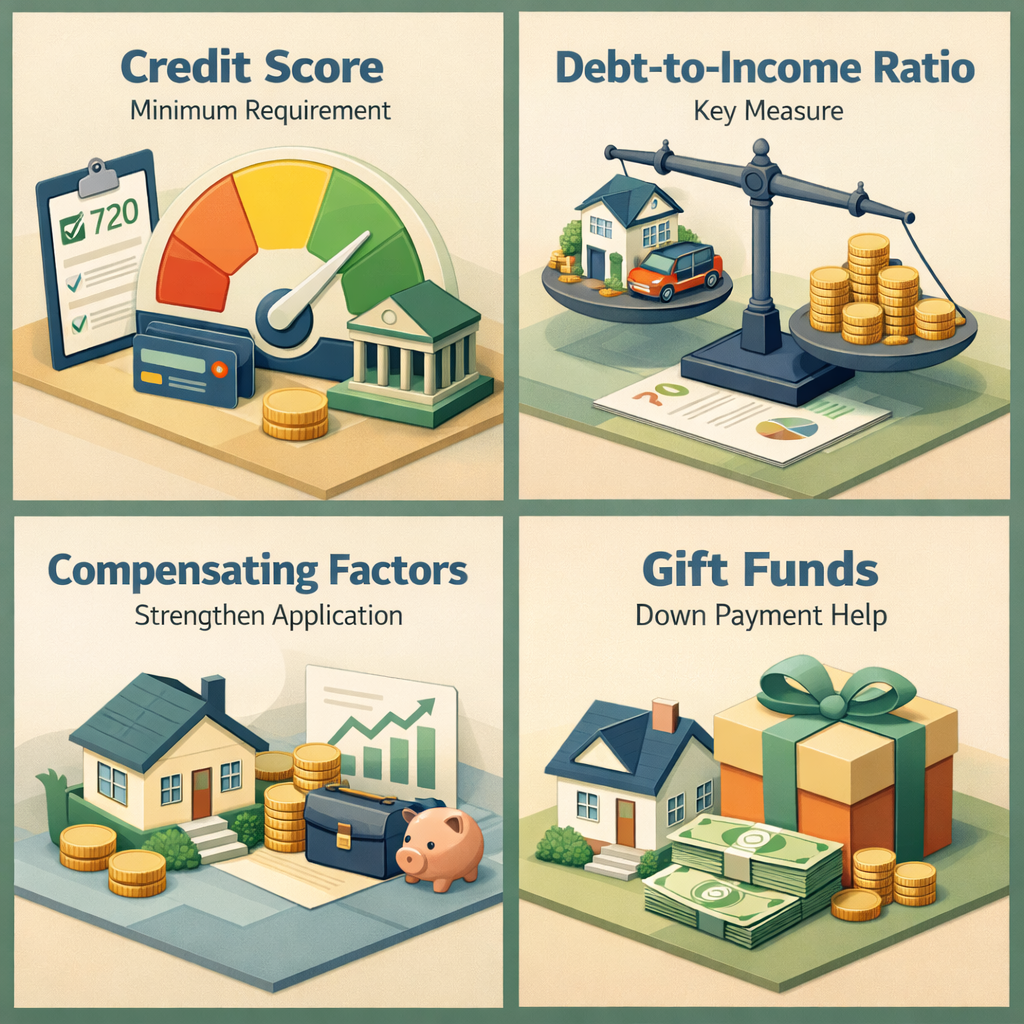
One of the most critical components of how to qualify for a conventional loan with recent bankruptcy and gift funds is your credit score. Conventional loans generally require a minimum credit score, and lenders will closely examine the quality of your credit history since the bankruptcy was resolved.
Here's what borrowers should focus on during the recovery period:
- Open new credit responsibly: Secured credit cards or small installment loans can help you establish a positive payment history. Even modest, timely payments contribute meaningfully to score recovery over time.
- Pay every bill on time: Payment history is the single largest factor in credit scoring models. A consistent record of on-time payments following bankruptcy signals reliability to future lenders.
- Keep credit utilization low: Try to use less than 30% of any available revolving credit. Lower utilization rates typically correlate with stronger credit scores.
- Avoid applying for too much credit at once: Multiple hard inquiries in a short period can drag your score down. Space out any new credit applications strategically.
- Monitor your credit reports: Check all three major credit bureaus regularly to ensure that discharged debts are properly reported and that no errors are dragging your score down unnecessarily.
Many borrowers find that with disciplined effort, their credit scores can recover meaningfully within two to three years after a bankruptcy discharge. By the time your waiting period expires, you may be in a much stronger position than you expect.
Gift Funds and the Conventional Loan After Bankruptcy
Saving for a down payment is one of the biggest challenges homebuyers face — and this challenge can feel especially steep after a bankruptcy. That's where gift funds can play a pivotal role. Gift money refers to funds given to a borrower by an eligible donor, typically a family member, to help cover the down payment or closing costs on a home purchase.
The good news is that conventional loan guidelines from Fannie Mae and Freddie Mac do allow gift funds for down payment purposes, but there are specific rules that must be followed:
- Eligible donors: Gift funds must typically come from a relative, domestic partner, fiancé or fiancée, or in some cases a close family friend. The donor cannot be someone with an interest in the transaction, such as a real estate agent or seller.
- Gift letter requirement: The donor must provide a signed gift letter stating the amount of the gift, the donor's relationship to the borrower, and confirmation that the funds are a true gift — not a loan that must be repaid.
- Down payment percentage matters: For primary residence purchases with a down payment of 20% or more, the entire down payment may consist of gift funds. If the down payment is less than 20%, conventional guidelines may require the borrower to contribute a minimum amount from their own funds, depending on the loan scenario.
- Documentation of the transfer: Lenders will typically request bank statements showing the withdrawal from the donor's account and the deposit into the borrower's account to verify the source of the funds.
Using conventional loan after bankruptcy gift money is a legitimate and commonly used strategy. It allows borrowers who may have limited savings — which is understandable following a financial hardship — to still meet down payment requirements and move forward with a home purchase.
Debt-to-Income Ratio and Financial Stability Standards
Beyond your credit score and down payment, lenders evaluating a conventional loan application will also scrutinize your debt-to-income ratio (DTI). This ratio compares your total monthly debt obligations to your gross monthly income, and it's a key measure of whether you can comfortably manage a new mortgage payment.
Conventional loan guidelines generally prefer a DTI at or below 43% to 45%, though this can vary by lender and by automated underwriting results. Some borrowers with strong compensating factors — such as significant reserves, a high credit score, or a large down payment — may be approved with slightly higher DTI ratios in certain cases.
If you're recovering from bankruptcy, here are some practical ways to improve your DTI before applying:
- Pay down existing debts: Reducing balances on car loans, student loans, or credit cards lowers your monthly obligations and improves your ratio.
- Increase your income: A raise, promotion, or additional income source can shift your DTI favorably. Just make sure new income can be documented and verified by the lender.
- Avoid taking on new debt: In the months leading up to your mortgage application, try to avoid financing new purchases that would add to your monthly obligations.
Lenders will also want to see stable, verifiable employment. A consistent two-year employment history in the same field is generally preferred. If you changed jobs after your bankruptcy, that's not necessarily disqualifying — lenders are often more concerned with stability and income continuity than with a specific employer.
Compensating Factors That Strengthen Your Application
When your application involves a recent bankruptcy, lenders may look for compensating factors that offset the perceived risk. These are positive elements of your financial profile that demonstrate you're a reliable borrower despite your past hardship.
Common compensating factors that could work in your favor include:
- Larger down payment: A down payment above the minimum requirement reduces the lender's exposure and may make them more willing to work with a post-bankruptcy borrower.
- Significant cash reserves: Having several months' worth of mortgage payments saved in liquid accounts after closing signals financial stability and responsibility.
- Strong post-bankruptcy credit history: A clean record with no late payments since the discharge is often viewed favorably by underwriters.
- Low debt-to-income ratio: If your DTI is well below the maximum threshold, it strengthens your overall application profile.
- Stable long-term employment: Remaining with the same employer — or in the same industry — throughout and after the bankruptcy period can add credibility to your application.
It's worth speaking with a knowledgeable mortgage professional who can review your full profile and advise you on which compensating factors to highlight. Every application is different, and an experienced loan officer can help you present your financial story in the most favorable, accurate way possible.
Choosing the Right Lender and Loan Program for Your Situation
Not all lenders approach post-bankruptcy applications the same way. While Fannie Mae and Freddie Mac set baseline guidelines, individual lenders may apply their own lender overlays — additional requirements that go beyond the standard rules. This means one lender might require a higher credit score or longer waiting period than another, even for the same loan type.
Shopping around and comparing multiple lenders is especially important when you have a bankruptcy in your history. Here's what to look for:
- Lenders experienced with post-bankruptcy borrowers: Some mortgage companies specialize in helping borrowers with credit challenges and may be more familiar with navigating the nuances of your situation.
- Transparent overlay policies: Ask prospective lenders directly whether they have overlays that exceed standard conventional guidelines, particularly regarding bankruptcy waiting periods and credit score minimums.
- Clear gift fund acceptance: Confirm that the lender accepts gift funds for down payment purposes and understand exactly what documentation they'll require from both you and your donor.
If you're not yet eligible for a conventional loan due to a waiting period that hasn't expired, it may also be worth exploring government-backed alternatives like FHA loans in the interim. FHA loans generally have shorter waiting periods after bankruptcy and may be a useful bridge on your path to eventually qualifying for conventional financing. Once your waiting period for conventional loans has passed and your credit has recovered, you could refinance into a conventional product.
●Conclusion
Recovering from bankruptcy and working toward homeownership is a journey that requires patience, planning, and the right guidance. The good news is that learning how to qualify for a conventional loan with recent bankruptcy and gift funds is entirely achievable with a clear understanding of the waiting periods involved, a disciplined approach to rebuilding your credit, and smart use of allowable gift money for your down payment. By focusing on the factors within your control — your payment history, your debt levels, your savings, and your employment stability — you can put yourself in a genuinely strong position when the time comes to apply. At LoanWise, we're here to help you navigate every step of that process. Connect with one of our experienced mortgage advisors today to review your unique situation and build a personalized plan for your path to homeownership.