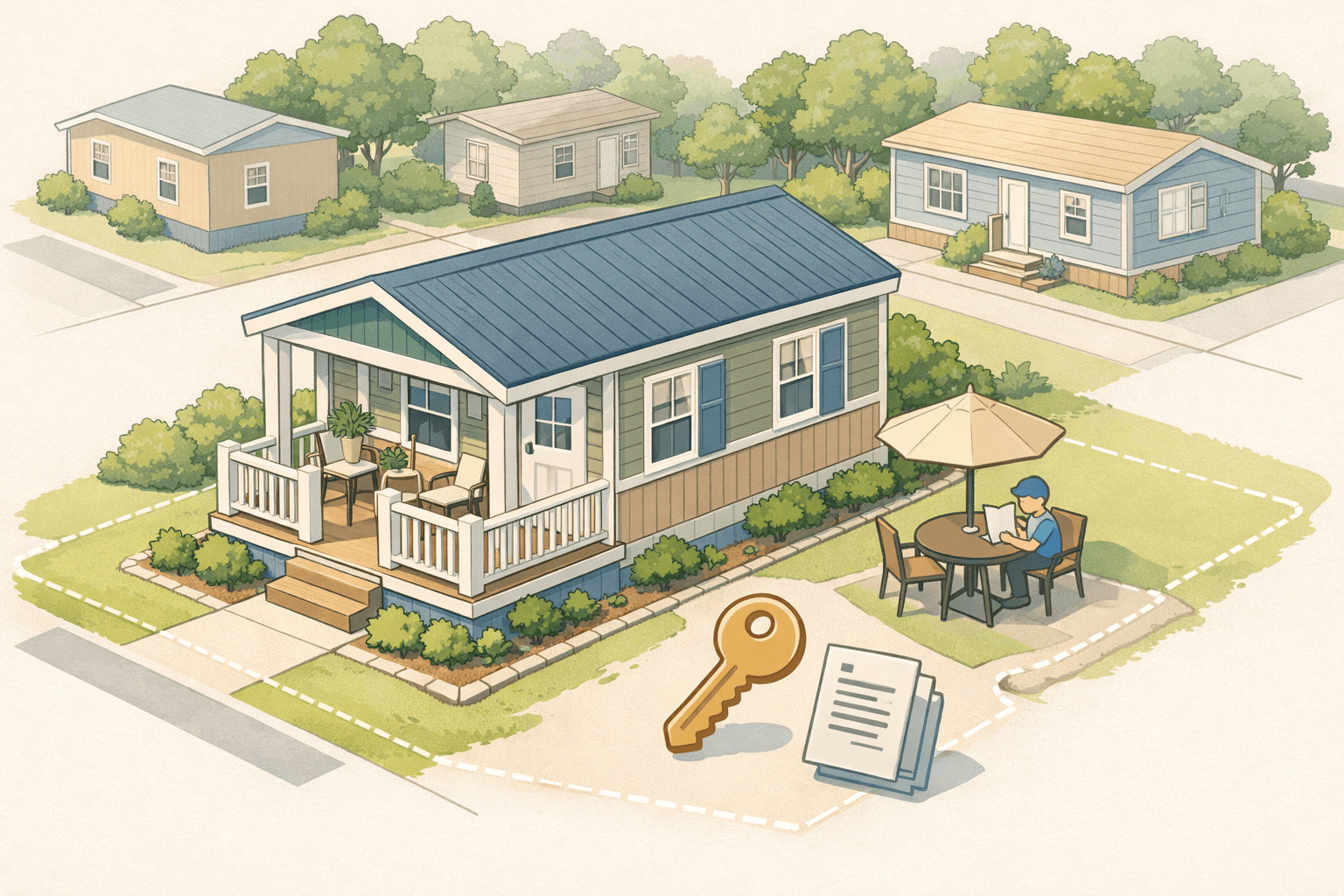
For veterans and active-duty service members, the VA home loan benefit is one of the most powerful financial tools available. It offers competitive interest rates, no down payment in many cases, and flexible credit guidelines. But what happens when the home you want isn't a traditional stick-built house? Understanding how to qualify for a VA loan with a mobile home on leased land is a question many veterans face, and the answer involves navigating a specific set of rules that differ significantly from standard VA purchase loans. This guide breaks down what you need to know so you can approach the process with confidence.
What the VA Actually Covers When It Comes to Manufactured Housing
First, it helps to understand the terminology. The VA uses the term manufactured home rather than mobile home, though many borrowers use these terms interchangeably. Technically, a manufactured home is a factory-built structure constructed after June 15, 1976, and must meet HUD (U.S. Department of Housing and Urban Development) safety standards. Older units built before that date are generally not eligible for VA financing.
The VA does allow financing for manufactured homes under certain conditions, but the program is narrower than most borrowers expect. The loan may cover:
- The purchase of a manufactured home and the lot it will sit on
- The purchase of a manufactured home alone, when the borrower already owns or is purchasing suitable land
- Refinancing of an existing manufactured home loan
- Improvements or alterations to an existing manufactured home
However, when it comes to VA loan mobile home eligibility on leased land — meaning the borrower does not own the ground beneath the home — lenders become considerably more cautious. The VA technically permits certain leased land scenarios, but approval depends heavily on the lender's willingness to finance the loan and the terms of the lease agreement itself.
Understanding the Leased Land Challenge for VA Loan Borrowers
When a home sits on land you don't own — such as a lot inside a manufactured home community or mobile home park — the property is considered to be on leased land. This creates a layer of complexity for lenders, because land ownership is a significant factor in determining collateral value and the long-term security of the loan.
From the VA's perspective, a manufactured home on leased land may still be eligible, but several conditions typically need to be met. Lenders will likely want to see that:
- The lease term is long enough to extend beyond the loan repayment period, often requiring at least a one-year renewable lease with protections for the borrower
- The park or community meets local zoning requirements for manufactured housing
- The lease provides clear terms about what happens if the park closes or the land is redeveloped
- The borrower has legal protections against sudden eviction without reasonable notice
It's worth noting that even when the VA permits a loan in principle, individual lenders are not required to offer it. Many lenders choose to impose overlays — stricter requirements on top of VA guidelines — which can make leased land VA loan requirements harder to meet in practice. This means finding a lender who actively works with manufactured housing and leased land scenarios is a critical first step.
Core Borrower Requirements You Need to Satisfy First
Before getting into the property-specific rules, it's important to confirm that you meet the personal eligibility requirements for a VA loan. These apply regardless of the property type you're financing.
Service Eligibility and the Certificate of Eligibility
To use a VA loan, you must be an eligible veteran, active-duty service member, surviving spouse, or member of the National Guard or Reserves who meets service requirements. You'll need a Certificate of Eligibility (COE), which confirms your entitlement. You can request this through the VA directly, through your lender, or online via the VA's eBenefits portal.
Credit Score and Financial Health
The VA itself does not set a minimum credit score, but most lenders require at least a 620 score for manufactured home loans — and some may require higher scores for leased land scenarios due to the increased risk. Your debt-to-income (DTI) ratio also matters. Lenders typically prefer a DTI at or below 41%, though exceptions may be made with strong compensating factors such as significant savings or stable long-term employment.
Residual Income
One unique feature of VA loans is the residual income test. After accounting for all monthly obligations and taxes, you must have a minimum amount of money left over each month. This threshold varies by family size and geographic region. Meeting residual income requirements may actually make it easier to qualify even with a higher DTI in some cases.
Property Standards the Manufactured Home Must Meet
Even if you personally qualify for a VA loan, the home itself must satisfy the VA's Minimum Property Requirements (MPRs). These standards ensure the property is safe, structurally sound, and sanitary. For manufactured homes, the bar can be higher than for traditional housing.
Key property-related requirements typically include:
- HUD compliance: The home must have been built on or after June 15, 1976, and display the HUD certification label (also called a HUD tag or data plate).
- Permanent foundation: The VA generally requires the home to be permanently affixed to a foundation. Homes that remain on wheels or are not permanently set are unlikely to qualify.
- Single-family designation: The home must be used as the borrower's primary residence, not as an investment or rental property.
- Real property classification: In many cases, the home needs to be titled as real property rather than personal property. Converting a manufactured home from personal to real property can be a complex process involving the local government and the DMV in some states.
On leased land, the real property conversion requirement becomes especially tricky, because real property classification typically requires land ownership. Some states have frameworks that allow manufactured homes on leased land to be titled as real property under specific conditions, but this varies significantly by location. Working with a knowledgeable real estate attorney or a lender experienced in manufactured housing can help you navigate this challenge.
Steps to Improve Your Chances of VA Loan Approval on Leased Land
Qualifying for a VA loan in this situation is more involved than a typical home purchase, but it's not out of reach. Taking a strategic approach can meaningfully improve your chances of approval.
Work with a VA-Approved Lender Experienced in Manufactured Housing
Not every VA-approved lender handles manufactured home loans, and even fewer work with leased land scenarios. Seek out lenders who specifically advertise experience with these transactions. Ask directly whether they have completed VA manufactured home loans on leased land, and how many they've done recently.
Review the Lease Agreement Carefully
Before applying, obtain a copy of the land lease from the park or community management. Review it — ideally with a real estate attorney — to confirm that the lease meets the lender's minimum requirements. Look for provisions covering lease length, renewal terms, notice periods for eviction, and what happens in the event of a park sale or closure.
Strengthen Your Financial Profile
Because leased land loans carry added risk for lenders, presenting the strongest possible financial picture matters more than ever. Pay down existing debts where feasible, avoid opening new credit accounts before applying, and gather documentation of stable income well in advance.
Explore Alternative Programs as a Backup
If VA financing proves difficult, it may be worth exploring FHA Title I or Title II loans, which have their own manufactured housing programs. The USDA also offers manufactured home financing in eligible rural areas. Understanding your options gives you more flexibility if the VA path hits a roadblock.
Common Reasons VA Manufactured Home Loans on Leased Land Get Denied
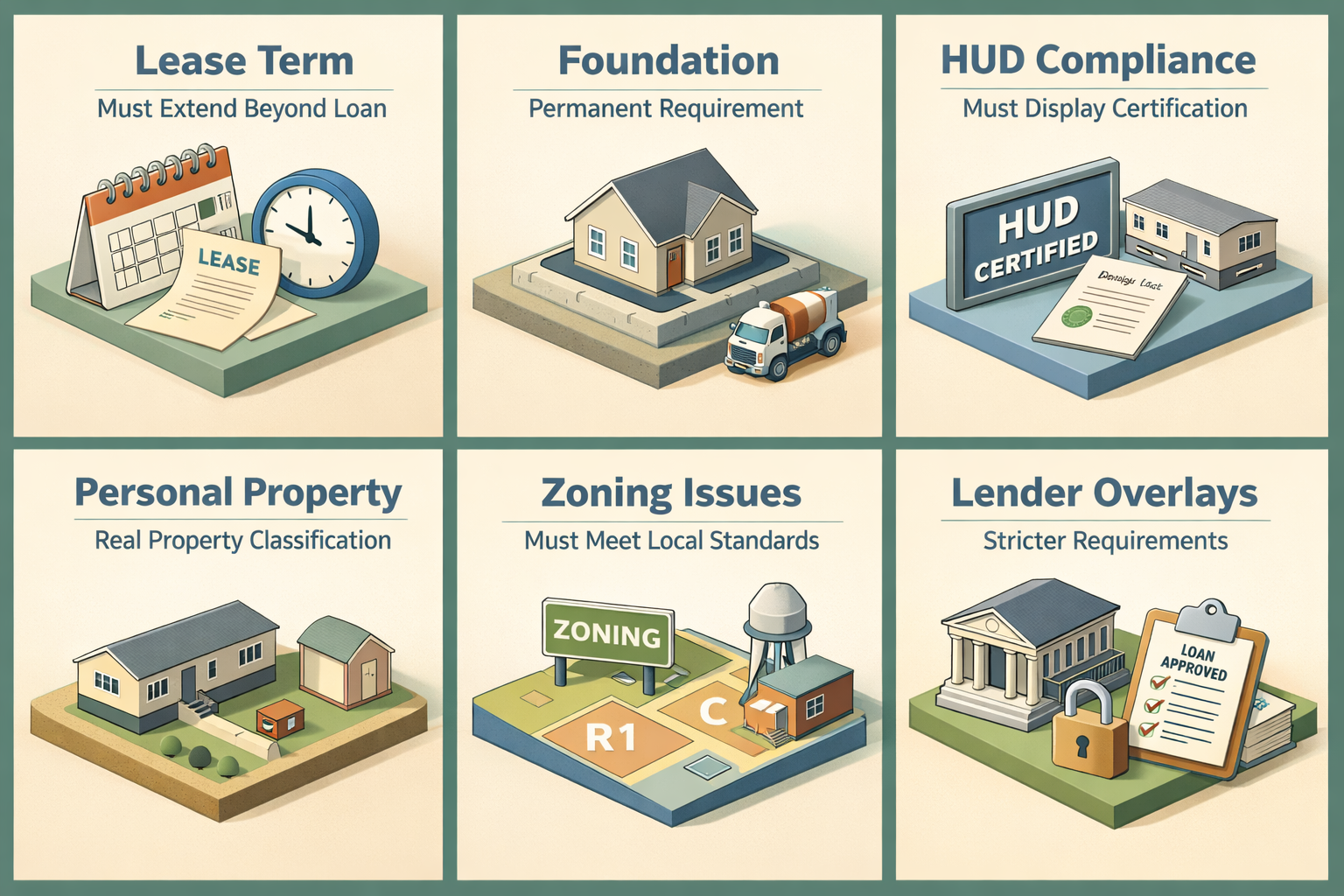
Understanding potential pitfalls can save you time and frustration. Here are some of the most common reasons these loan applications don't make it to the closing table:
- Insufficient lease term: If the lease doesn't extend well beyond the loan term or lacks automatic renewal provisions, lenders may decline to proceed.
- No permanent foundation: Homes not affixed to a compliant permanent foundation typically don't meet VA MPRs.
- Missing HUD tags: If the original HUD certification labels are missing from the home, it may require a letter of label verification from an authorized agency, which can be a lengthy process.
- Personal property title: Lenders often require real property classification, which may be difficult or impossible to achieve on leased land depending on state law.
- Lender overlays: Some lenders simply won't do manufactured home loans on leased land, regardless of how well the borrower qualifies personally.
- Park zoning issues: If the manufactured home community isn't properly zoned or doesn't meet local housing standards, the loan may be declined at the appraisal stage.
Being aware of these obstacles early allows you to address them proactively or make informed decisions about whether to pursue a different property or loan type.
●Conclusion
Navigating how to qualify for a VA loan with a mobile home on leased land requires patience, preparation, and the right team of professionals. While the path is more complex than a standard VA purchase, it's one that some veterans successfully travel each year. The key is understanding the specific requirements for both borrower eligibility and property standards, finding a lender with real experience in this niche, and ensuring the land lease meets the conditions most lenders and the VA expect to see. If you're a veteran exploring this option, start by connecting with a VA-experienced mortgage professional who can evaluate your specific situation and help you build the strongest possible application. Your service has earned you this benefit — it's worth taking the time to pursue it the right way.