
Qualifying for a mortgage might feel overwhelming at first, but understanding what lenders are looking for can make the entire process far less stressful. Whether you're a first-time homebuyer, a homeowner looking to refinance, or a real estate investor exploring new opportunities, knowing how to qualify for a mortgage puts you in a much stronger position. Lenders typically evaluate several key factors — your credit score, income, debt levels, and down payment — before approving a home loan. In this guide, we'll walk you through each of these elements so you can approach your mortgage application with confidence.
Why Your Credit Score Plays a Central Role in Mortgage Approval
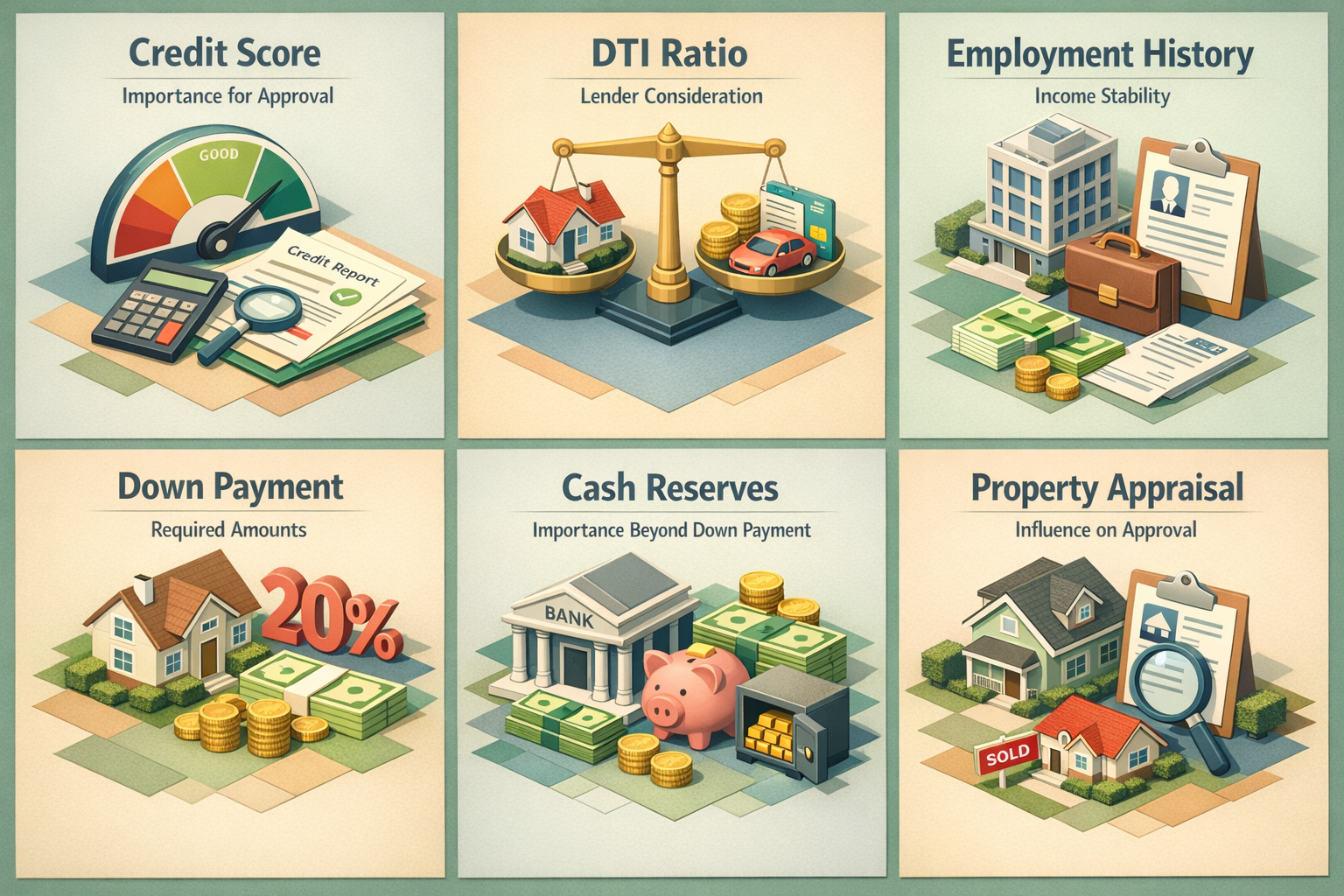
Your credit score is often one of the first things a lender checks when you apply for a home loan. It gives lenders a quick snapshot of how responsibly you've managed debt in the past. A higher score typically signals lower risk, which may translate into better interest rates and more favorable loan terms.
Most conventional mortgage programs may require a minimum credit score of around 620, though some lenders prefer higher scores. Government-backed loan programs, such as FHA loans, could allow borrowers with scores as low as 580 to qualify with a lower down payment. VA and USDA loans may have more flexible credit guidelines depending on the lender.
If your credit score needs improvement, there are practical steps you can take. Paying down existing credit card balances, making all payments on time, and avoiding new credit inquiries in the months before applying could help boost your score. Even a modest improvement in your score might open doors to significantly better loan options.
Understanding Debt-to-Income Ratio and Why Lenders Care About It
Beyond your credit score, lenders also look closely at your debt-to-income (DTI) ratio. This figure compares your total monthly debt payments to your gross monthly income. It helps lenders determine whether you can realistically afford a new mortgage on top of your existing financial obligations.
Most conventional loan programs typically look for a DTI ratio at or below 43%, though some lenders may allow higher ratios with compensating factors like strong credit or significant cash reserves. A lower DTI ratio generally strengthens your application and may give you access to a wider range of loan products.
To calculate your DTI, add up all your monthly debt payments — including car loans, student loans, credit card minimums, and any existing mortgage — then divide that total by your gross monthly income. If your ratio is higher than you'd like, consider paying down smaller debts before applying. Increasing your income through additional work could also help lower this ratio over time.
How Stable Income and Employment History Affect Your Home Loan Eligibility
Lenders want to see that you have a reliable source of income to support your mortgage payments over the long term. Most lenders typically require at least two years of steady employment history, though the exact requirements can vary depending on the loan type and the lender's guidelines.
If you're a salaried employee, verifying your income is usually straightforward through pay stubs, W-2 forms, and tax returns. Self-employed borrowers or freelancers may face a more complex documentation process. Lenders might ask for two years of tax returns, profit and loss statements, and bank statements to assess income stability for non-traditional earners.
It's worth noting that recent job changes don't necessarily disqualify you from getting a mortgage. If you've moved to a similar role with equal or higher pay, many lenders may still consider your application favorably. However, switching industries or moving from salaried to self-employed status shortly before applying could raise questions about income continuity.
Down Payment Requirements and the Loan Programs That May Work for You
One of the biggest hurdles for many homebuyers is saving enough for a down payment. The amount you put down can affect your interest rate, monthly payment, and whether you'll need to pay private mortgage insurance (PMI). While a 20% down payment has traditionally been considered ideal, there are many loan programs that require far less upfront.
- Conventional loans may allow down payments as low as 3% for qualified first-time homebuyers, though PMI is typically required until you reach 20% equity.
- FHA loans could require as little as 3.5% down for borrowers with qualifying credit scores.
- VA loans are available to eligible veterans and active-duty service members and may offer zero down payment options.
- USDA loans may also provide 100% financing for eligible rural and suburban homebuyers who meet income guidelines.
Down payment assistance programs are available in many states and localities, and they could help bridge the gap for buyers who are short on savings. Exploring these programs with a knowledgeable lender early in the process might reveal options you didn't know existed.
Assets, Reserves, and Why Having Savings Beyond the Down Payment Matters
Many homebuyers focus entirely on saving for the down payment and overlook another important piece of the qualification puzzle — cash reserves. Lenders often want to see that you have additional savings after closing, sometimes referred to as mortgage reserves. These reserves demonstrate that you could continue making payments even if you experienced a temporary financial setback.
The amount of reserves required can vary based on the loan type, the lender, and the property. Some programs may only require one or two months of mortgage payments in reserve, while others — particularly for investment properties or jumbo loans — might ask for six months or more.
Acceptable sources of reserves typically include checking and savings accounts, retirement accounts (often counted at a percentage of their value), and investment accounts. Gifts from family members are generally not counted as reserves, though they may be used toward the down payment depending on the loan program. Having solid reserves could also serve as a compensating factor if other parts of your application are less than perfect.
The Role of Property Appraisal and How It Influences Your Mortgage Approval
Even if your personal financial profile is strong, the property itself plays a critical role in the mortgage approval process. Lenders require an independent appraisal to confirm that the home's market value supports the loan amount being requested. If the appraisal comes in lower than the purchase price, it could affect the terms of your loan or even put the deal at risk.
An appraiser will evaluate the home's condition, size, location, and recent comparable sales in the area. Major structural issues, safety hazards, or significant deferred maintenance could affect the appraised value and may need to be addressed before the lender proceeds with the loan.
For refinancing homeowners, a low appraisal could limit how much equity you're able to access or potentially prevent you from qualifying for certain refinance programs. Understanding property values in your area and choosing a home priced appropriately for the neighborhood can help reduce appraisal-related surprises.
Practical Steps to Strengthen Your Mortgage Application Before You Apply
Knowing how to qualify for a mortgage is one thing — taking action to improve your position before applying is another. The good news is that there are several proactive steps you can take months before submitting your application to give yourself the best possible chance of approval.
- Review your credit reports: Check for errors or inaccuracies on your credit reports from all three major bureaus. Disputing incorrect information could improve your score.
- Reduce outstanding debt: Paying down revolving credit balances can improve both your credit utilization ratio and your DTI, making your application more attractive to lenders.
- Avoid large purchases: Hold off on financing major items like a car or furniture before closing, as new accounts and increased debt could affect your qualification status.
- Save consistently: Building up your savings over time not only helps with the down payment but also demonstrates financial discipline to lenders.
- Get pre-approved: A mortgage pre-approval gives you a clear picture of what you can afford and signals to sellers that you're a serious buyer.
Working with an experienced mortgage professional early in the process can also help you identify any potential red flags before they become obstacles. A good lender will guide you through the requirements, help you understand your options, and tailor a strategy to fit your unique financial situation.
●Conclusion
Learning how to qualify for a mortgage doesn't have to be a mystery. By focusing on the factors that matter most — your credit score, income, debt levels, down payment, and overall financial health — you can approach the homebuying or refinancing process with clarity and confidence. Every borrower's situation is different, and the right loan program for you will depend on your specific goals and financial profile. If you're ready to take the next step, connecting with a knowledgeable lending professional at LoanWise could help you find the path to homeownership that works best for you.