
Buying a home is one of the most exciting milestones in life, but for commission-based earners and those who've recently switched jobs, the path to mortgage approval can feel uncertain. If you've been wondering how to qualify for a conventional loan with 1099 commission income and recent job change, you're not alone. Many talented professionals — from real estate agents to independent sales consultants — face extra scrutiny when applying for a mortgage simply because their income doesn't arrive in a predictable weekly paycheck. The good news is that lenders do work with commission-based borrowers, and understanding the process can put you in a much stronger position to get approved.
Why Commission Income Complicates the Mortgage Process
Lenders who offer conventional loans want to feel confident that a borrower can make their monthly payments consistently over the long term. When income varies month to month — as it often does with commission-based work — lenders apply a higher level of scrutiny. This doesn't mean approval is out of reach, but it does mean you'll need to provide more documentation than a salaried employee typically would.
Commission income is considered variable income, which means lenders typically won't simply accept your most recent pay stub. Instead, they'll want to see a pattern of earnings over time. For 1099 earners, this usually means providing tax returns, profit and loss statements, and sometimes bank statements to verify that the income is real, consistent, and likely to continue.
There's also the matter of tax deductions. Many self-employed and 1099 workers write off significant business expenses, which lowers their taxable income on paper. While that's a smart tax strategy, it can reduce the income figure a lender uses to calculate your debt-to-income ratio — making it harder to qualify for the loan amount you need. This is one of the most common challenges borrowers face, and it's worth knowing before you apply.
Understanding Conventional Loan Requirements for Commission Earners
Conventional loans follow guidelines set by Fannie Mae and Freddie Mac, the two government-sponsored enterprises that buy most conventional mortgages on the secondary market. When it comes to conventional loan requirements for self-employed with commission income, these guidelines are fairly specific about how income must be calculated and documented.
Generally speaking, lenders will look at your average income over the past two years when evaluating a commission-based application. This is sometimes called a two-year income history requirement. If your 1099 income has been growing, lenders may use the average of both years. If it has been declining, some lenders may only use the most recent year's figure — or may require an explanation for the drop.
- Two years of federal tax returns — both personal and, if applicable, business returns
- 1099 forms from all sources of commission or self-employment income
- Year-to-date profit and loss statement if you're self-employed, typically prepared by a CPA or licensed tax professional
- Bank statements — usually two to three months — to verify deposits and cash flow
- Documentation of any business accounts to separate personal and professional finances
Beyond income documentation, conventional loans also require a minimum credit score — often cited at 620 or higher, though many lenders prefer scores in the 680 to 740 range for more favorable terms. You'll also need a manageable debt-to-income ratio, typically below 45%, and a down payment of at least 3% to 5%, though putting down 20% avoids private mortgage insurance.
How a Recent Job Change Affects Your Loan Eligibility
A recent job change is one of the most common reasons mortgage applications get delayed or denied — but it doesn't automatically disqualify you. The key is understanding how lenders view employment history and what kinds of job changes are considered acceptable versus risky.
In general, lenders prefer to see a two-year continuous employment history. A job change within that window isn't necessarily a dealbreaker, especially if the new role is in the same field or industry and represents a lateral move or promotion. What lenders are really assessing is career stability and the likelihood that your income will continue.
However, changing from a W-2 salaried position to a 1099 commission-only role — especially within the past year or two — can create more complications. If you made that shift recently, you may not yet have the two-year track record of commission income that lenders typically want to see. In those cases, you may need to wait until you have at least one or two full years of commission income documented on your tax returns before applying.
That said, there are some nuances worth knowing. If your commission income is supplemental to a base salary — meaning you receive a W-2 base pay plus commission — lenders may treat your application more like that of a traditional salaried employee. The commission portion might still require a history to be counted, but your base salary alone could be enough to qualify for a conventional loan depending on the loan amount.
How to Qualify for a Conventional Loan With 1099 Commission Income and Recent Job Change: Key Strategies
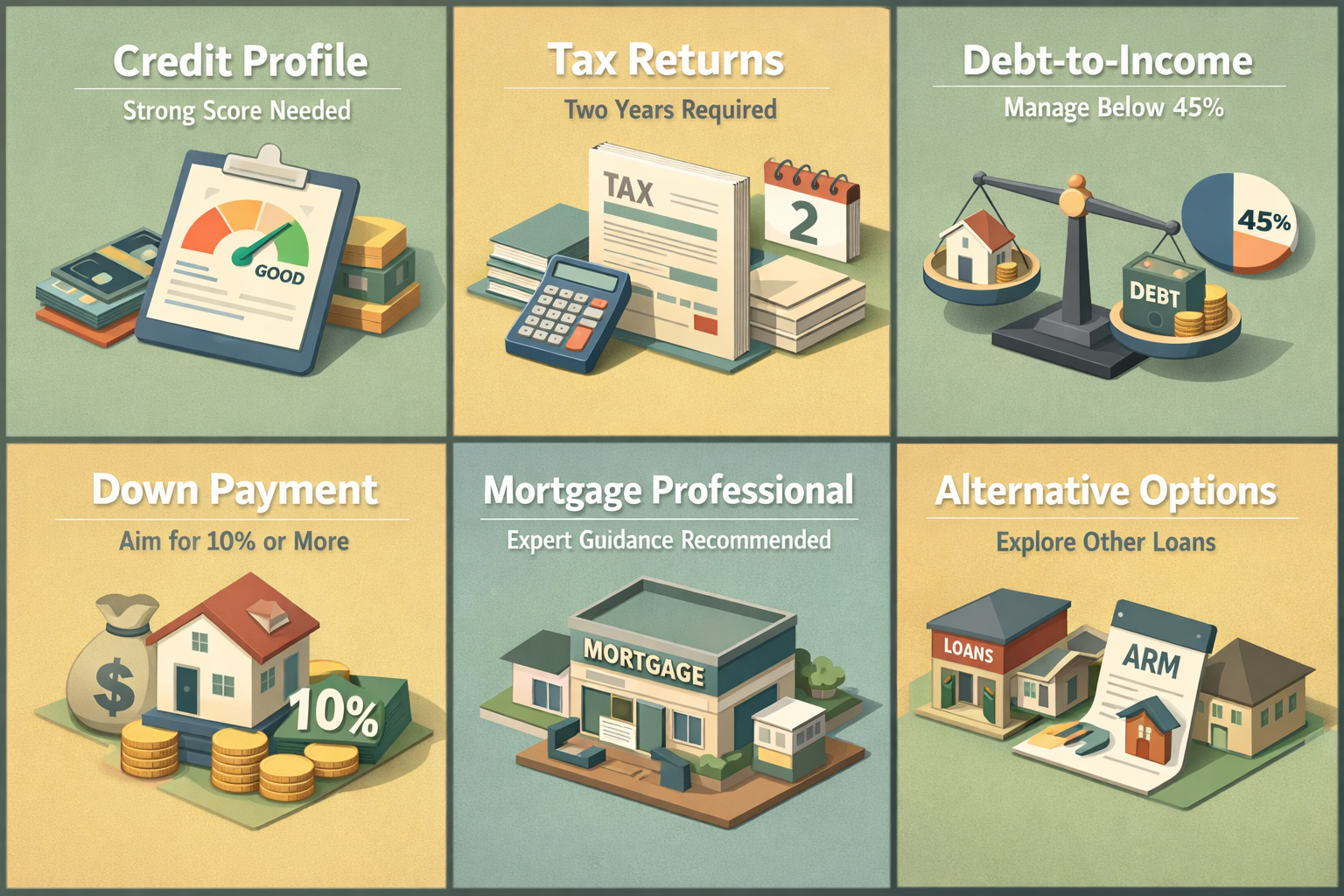
If you're ready to pursue homeownership despite a variable income history or recent career transition, there are several concrete strategies that may improve your chances of qualifying. None of these are guaranteed results, but each one addresses a real concern that underwriters evaluate when reviewing your file.
Build and Maintain a Strong Credit Profile
Your credit score is one of the most powerful factors in your mortgage application. For commission earners who can't rely solely on steady income documentation, a high credit score can demonstrate financial responsibility and help offset income-related concerns. Focus on paying all bills on time, reducing revolving credit balances, and avoiding new credit inquiries in the months before you apply.
Keep Two Years of Clean Tax Returns
If you've recently transitioned to commission-based or 1099 work, your best move may be to wait until you have two full tax years of commission income to show. Lenders are much more comfortable when they can see a consistent earnings pattern, even if the amounts vary. Use those two years wisely — minimize unnecessary deductions if you're planning to apply for a mortgage, since a higher reported income will make it easier to qualify.
Lower Your Debt-to-Income Ratio
Your debt-to-income (DTI) ratio is calculated by dividing your monthly debt payments by your gross monthly income. For commission earners, lenders may calculate your income more conservatively, which can push your DTI higher. To counteract this, consider paying down credit cards, auto loans, or student loans before applying. Even small reductions in monthly obligations can make a meaningful difference in how lenders view your application.
Make a Larger Down Payment
A larger down payment reduces the lender's risk by giving you more equity in the home from day one. If your income documentation is complicated by 1099 status or a recent job change, putting down 10%, 15%, or even 20% may help you qualify where a minimum down payment might not. It also eliminates the cost of private mortgage insurance, which can improve your approval odds overall monthly budget.
Work With a Mortgage Professional Who Understands Commission Income
Not all loan officers have the same experience with non-traditional income situations. Finding a lender or mortgage broker who regularly works with commission-based borrowers and self-employed applicants can make a significant difference. They'll know which lenders have more flexibility in how they calculate variable income and can guide you toward the programs that best fit your profile.
Alternative Loan Options Worth Exploring
If a conventional loan feels out of reach right now due to your income documentation challenges, there are other mortgage products that might serve you in the meantime — or alongside a conventional application.
Bank statement loans are a type of non-QM (non-qualified mortgage) product designed specifically for self-employed borrowers and 1099 earners. Instead of tax returns, lenders use 12 to 24 months of personal or business bank statements to calculate qualifying income. This can be a strong option if your actual cash flow is much higher than what your tax returns show after deductions.
Asset-based mortgages allow lenders to qualify you based on your liquid assets rather than income. If you have significant savings, investments, or retirement funds, this approach may allow you to qualify even if your documented income is lower than required.
It's worth discussing these alternatives with a lending professional who can help you determine which route makes the most financial sense based on your specific situation. Each loan type carries its own terms, rates, and qualification criteria, so comparing options carefully is essential.
Preparing Your Application for the Best Possible Outcome
Organization and preparation can make a meaningful difference when applying for a mortgage with non-traditional income. Lenders and underwriters are looking for clarity — they want to see that your income is real, consistent, and well-documented. The more clearly you can present your financial picture, the smoother the process tends to go.
Start by gathering your last two years of federal tax returns, including all schedules. Compile your 1099 forms from every source of commission income. If you're self-employed, have a licensed CPA prepare a year-to-date profit and loss statement. Pull two to three months of bank statements from all accounts, and be prepared to explain any large or unusual deposits.
It also helps to write a brief letter of explanation if you've recently changed jobs or if there are any gaps in your employment history. Lenders appreciate transparency, and a clear, professional explanation can sometimes prevent a misunderstanding from turning into a denial.
Finally, get pre-approved before you start shopping for homes. A pre-approval gives you a realistic sense of what you can qualify for, helps sellers take your offer seriously, and surfaces any documentation issues early enough to address them before you're under contract.
●Conclusion
Understanding how to qualify for a conventional loan with 1099 commission income and recent job change is the first step toward making your homeownership goals a reality. While the process requires more documentation and planning than a standard W-2 application, it's entirely achievable with the right preparation and guidance. Focus on building a strong credit profile, documenting your income thoroughly, reducing your debt load, and working with a lender who understands variable income situations. At LoanWise, we're here to help you navigate every step of the journey — from your first question to your closing day. Reach out today to speak with a mortgage specialist who can evaluate your unique situation and point you toward the best path forward.