
Buying a home is one of the most exciting milestones in life, but the mortgage qualification process can feel complicated — especially if your income doesn't come from a traditional W-2 paycheck. If you earn commissions reported on a 1099, receive child support payments, or both, you may be wondering whether a conventional loan is even within reach. The good news is that it absolutely can be. Understanding how to qualify for a conventional loan with 1099 commission income and child support comes down to knowing what lenders look for, how they measure your earnings, and how to present your financial picture as clearly and completely as possible. This guide walks you through everything you need to know.
What Makes 1099 Commission Income Different From W-2 Income
When a lender reviews your mortgage application, one of their first tasks is verifying your income. For W-2 employees, this process is fairly straightforward — pay stubs and tax returns tell a clear story. For 1099 earners, however, the picture is a bit more complex.
If you're a real estate agent, mortgage broker, insurance professional, independent contractor, or any type of commission-based earner, your income may fluctuate month to month and year to year. Lenders understand this, but they also need assurance that your earnings are stable enough to support ongoing mortgage payments.
Conventional loans backed by Fannie Mae and Freddie Mac guidelines typically require commission-based borrowers to demonstrate a two-year history of self-employment or commission income. This helps lenders assess income consistency rather than relying on a single strong month or quarter.
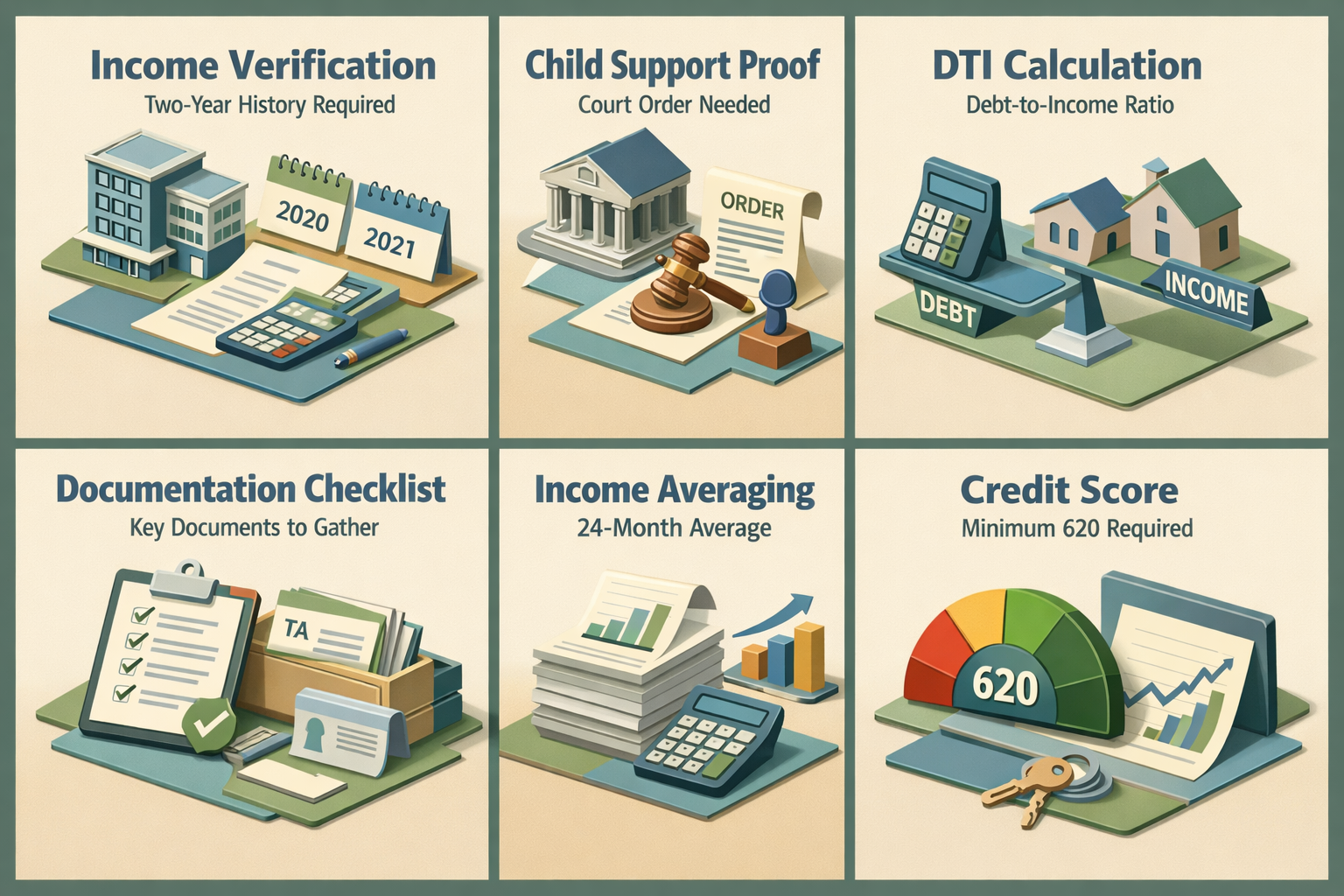
- Two years of federal tax returns are generally required to establish an income baseline.
- 1099 forms from all sources help verify gross earnings before deductions.
- Year-to-date profit and loss statements may be requested, particularly if your income has shifted recently.
- Bank statements can serve as supporting documentation to confirm cash flow.
It's worth noting that lenders typically use your net income after business deductions — not your gross 1099 earnings — to calculate qualifying income. This is an important distinction because many commission earners and independent contractors write off significant expenses, which can reduce the income figure a lender uses. Working with a tax professional ahead of your home purchase could help you balance tax efficiency with qualifying income needs.
How Lenders Average Your Commission Income for Qualification
One of the most common questions 1099 earners have is: which year's income does the lender use? In most cases, conventional lenders average your commission income over a 24-month period to arrive at a monthly qualifying figure.
Here's a simplified example of how this works:
- Year 1 net income (after deductions): $60,000
- Year 2 net income (after deductions): $84,000
- Total over two years: $144,000
- Monthly qualifying income: $144,000 ÷ 24 = $6,000 per month
However, if your income is declining from year one to year two, lenders may use the lower of the two years or apply additional scrutiny. Fannie Mae and Freddie Mac guidelines generally require that declining income trends be addressed and explained before a loan can be approved.
On the other hand, if your income is rising consistently, that trend works in your favor and may support a stronger qualifying scenario. Lenders want to see stability and ideally an upward trajectory, as this suggests your earning capacity is sustainable.
For borrowers whose commission income started less than two years ago, qualification can become more challenging. Some lenders may allow exceptions if you transitioned from a related salaried role into commission work in the same field, but policies vary by lender. It's always wise to speak directly with a licensed mortgage professional about your specific situation.
Using Child Support as Qualifying Income on a Conventional Loan
Child support can be counted as qualifying income for a conventional mortgage — but only if it meets specific criteria established by Fannie Mae and Freddie Mac guidelines. Simply receiving payments isn't enough; lenders need confidence that the income will continue long enough to matter.
Generally speaking, to use child support as qualifying income, you'll need to show the following:
- A court order or legally binding divorce decree that documents the payment obligation and amount.
- Proof that payments have been received consistently — typically for the past 12 months, often verified through bank statements or payment records.
- Evidence that payments will continue for at least three years from the date of your mortgage application, based on the terms of the court order.
If the child support is expected to end within a short timeframe, lenders may not be able to include it in your qualifying income calculation. This is an important detail to discuss with your loan officer early in the process, as it can significantly affect how much home you're able to qualify for.
It's also worth knowing that child support is typically treated as non-taxable income by the IRS. Some lenders may allow a gross-up of this income — meaning they can increase it by a certain percentage (often around 25%) to reflect what the equivalent pre-tax income would be. This gross-up can modestly improve your qualifying income and overall debt-to-income ratio.
Conventional Loan DTI Calculation With Freelance Income and Financial Obligations
Your debt-to-income (DTI) ratio is one of the most critical numbers in any mortgage application. It compares your total monthly debt obligations to your gross monthly qualifying income, and it plays a major role in whether a lender will approve your loan.
For conventional loans, most lenders prefer a DTI at or below 45%, though some automated underwriting systems may approve ratios up to 50% with strong compensating factors like a high credit score or significant cash reserves. The conventional loan DTI calculation with freelance income follows the same formula as with salaried income — what changes is how the income portion is determined.
Here's how DTI is generally calculated:
- Monthly qualifying income: Your averaged 1099 net income plus any eligible child support payments.
- Monthly debt obligations: This includes the proposed mortgage payment (principal, interest, taxes, and insurance), plus any recurring debts such as car loans, student loans, credit card minimum payments, and personal loans.
Let's say your monthly qualifying income is $6,500 (combining averaged commission income and child support). If your total monthly debts including the new mortgage payment come to $2,860, your DTI would be approximately 44% — which may fall within acceptable range for many conventional lenders.
It's important to note that alimony or child support payments you make as an obligation — rather than receive — are counted as a monthly debt in your DTI. If you're both receiving child support and paying alimony, both figures factor into the equation. Understanding this distinction is essential when planning your home purchase budget.
Credit Score and Down Payment Requirements to Keep in Mind
Beyond income, lenders evaluate two other major pillars of your conventional loan application: your credit score and your down payment. These factors work together with your DTI to determine not just whether you qualify, but what interest rate and loan terms you may be offered.
For conventional loans, a minimum credit score of 620 is typically required, though scores of 700 or higher generally unlock more favorable pricing. If your credit score falls in a lower range due to past financial challenges, it may be worth taking time before applying to pay down balances, resolve any errors on your credit report, and build a stronger credit profile.
Down payment requirements for conventional loans can start as low as 3% to 5% for primary residences, depending on the loan program and your qualifications. However, putting down at least 20% allows you to avoid private mortgage insurance (PMI), which can add to your monthly costs. For commission-based borrowers who want to strengthen their application, a larger down payment can also serve as a compensating factor that may offset other areas of risk in the lender's eyes.
It's worth noting that the source of your down payment matters too. Lenders will typically ask for bank statements covering the past two months to verify that your funds are properly sourced and seasoned. If child support payments have been deposited into your account, those records can also serve as income verification while simultaneously documenting your down payment savings.
Documentation Tips to Strengthen Your Loan Application
One of the best things you can do when learning how to qualify for a conventional loan with 1099 commission income and child support is to prepare a thorough and well-organized file before you even speak with a lender. Underwriters want a clear, consistent story, and the more complete your documentation, the smoother the process tends to go.
Here are some key documents to gather in advance:
- Two years of signed federal tax returns (all schedules included, especially Schedule C if applicable)
- Two years of 1099 forms from all commission-paying clients or employers
- Year-to-date earnings statement or profit and loss summary
- Two to three months of bank statements showing consistent income deposits
- Divorce decree or court order documenting child support terms and amounts
- 12 months of child support payment records (bank statements or deposit history work well)
- Proof that child support will continue for at least three years
If your income situation is more nuanced — for example, if you recently transitioned from W-2 to 1099, or if your child support arrangement was recently modified — consider writing a brief letter of explanation to accompany your file. Lenders appreciate transparency, and a clear explanation of any unusual circumstances can prevent unnecessary delays.
Working with a mortgage professional who has experience with non-traditional income types can also make a meaningful difference. They can help you identify the right loan product, prepare your documentation strategically, and set realistic expectations about what you may qualify for.
●Conclusion
Qualifying for a conventional home loan as a 1099 commission earner who also receives child support may require more preparation than a standard W-2 application, but it's entirely achievable with the right approach. By understanding how lenders calculate and verify your income, how child support factors into your qualifying profile, and how to manage your debt-to-income ratio effectively, you can walk into the mortgage process with confidence.
Start by organizing your documentation early, work with a knowledgeable loan officer, and don't hesitate to ask questions about how your specific income sources will be evaluated. The path to homeownership is open to you — and with the right guidance, a conventional loan may be well within your reach. Reach out to the team at LoanWise today to explore your options and take the next step toward owning your home.