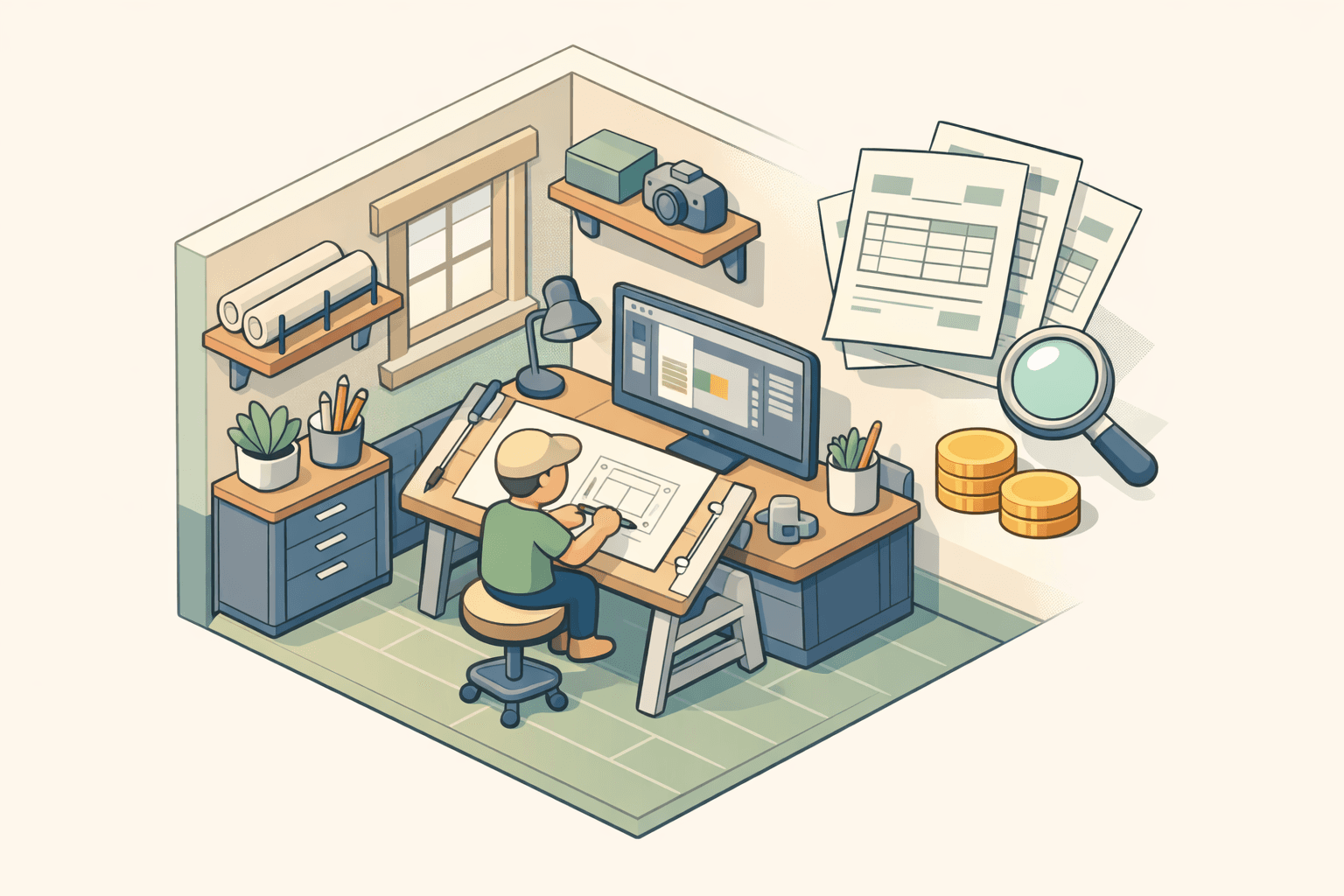
Freelancing offers creative freedom, but it comes with a real financial challenge: waiting to get paid. If you're a freelance graphic designer juggling multiple clients, you've probably experienced the frustration of completing a project and then watching 30, 60, or even 90 days pass before that invoice clears. That waiting period can make it hard to cover software subscriptions, equipment costs, or even everyday business expenses. The good news is that there's a practical funding solution designed exactly for this situation. Understanding how to get invoice financing for freelance graphic designers could be the key to keeping your cash flow steady without taking on traditional debt or giving up creative control.
What Invoice Financing Actually Means for Independent Creatives
Invoice financing is a type of short-term funding that allows you to unlock the value of unpaid invoices before your clients actually pay them. Instead of waiting for payment, you work with a lender or financing company that advances you a percentage of the invoice amount — often somewhere in the range of 70% to 90% of the total value — and then collects the remainder (minus fees) once your client pays.
There are two main forms of this type of funding that freelancers tend to encounter:
- Invoice factoring: You sell your unpaid invoices to a factoring company, which then takes on the responsibility of collecting payment from your client. This is sometimes called freelance graphic designer invoice factoring, and it's particularly useful if you'd rather not manage collections yourself.
- Invoice discounting: You retain control of collections, but the lender advances you funds against your outstanding invoices. This option may offer more privacy, since your clients may not know a third party is involved.
Both approaches can be helpful for independent creatives who work with business clients on net-30 or net-60 payment terms. As a freelance graphic designer, your invoices represent real, earned income — and invoice financing lets you access that income sooner.
Why Freelance Graphic Designers Face Unique Cash Flow Challenges
Graphic designers who work independently often face a cash flow cycle that's unpredictable by nature. Projects can be large or small, clients can be prompt or slow, and the gap between completing work and receiving payment can stretch considerably. This inconsistency creates real pressure — especially when you need to invest in new tools, pay subcontractors, or simply cover your monthly overhead.
Some of the most common cash flow pain points for freelance designers include:
- Clients with long payment terms that don't align with your own monthly expenses
- Seasonal slowdowns that reduce project volume for stretches of time
- Large one-time projects that take up significant time but pay out slowly
- Difficulty qualifying for traditional small business loans due to variable income
- Limited credit history as a sole proprietor or single-member LLC
These challenges are common across the freelance economy, and they're part of why invoice financing has become an increasingly discussed option among self-employed professionals. Because the financing is tied to your invoices — not your personal credit score or years in business — it may be more accessible than conventional lending products for many designers.
How to Get Invoice Financing for Freelance Graphic Designers Step by Step
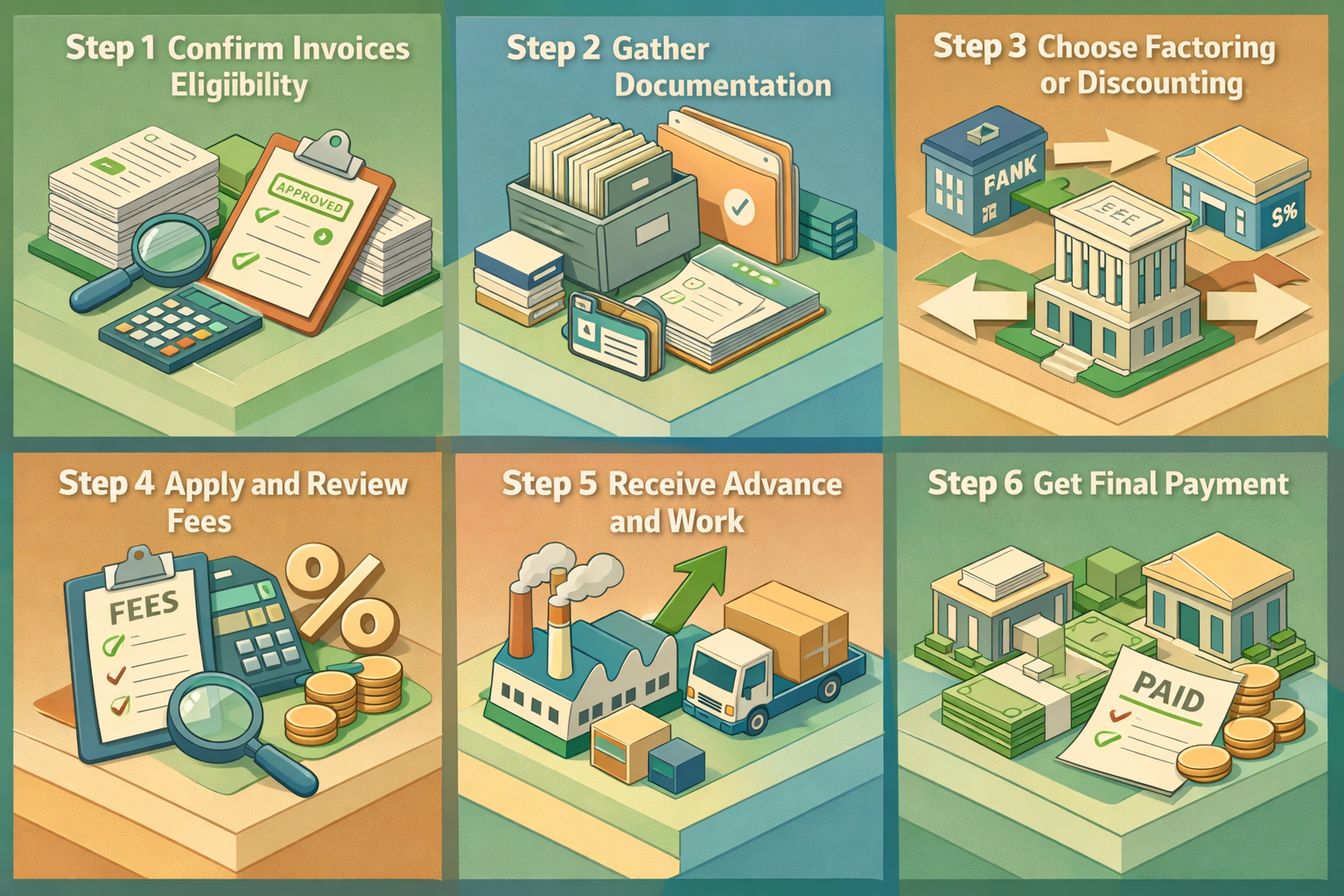
If you're ready to explore this funding option, the process is generally more straightforward than applying for a traditional business loan. Here's a practical look at how it typically works:
Step 1: Confirm Your Invoices Are Eligible
Most invoice financing companies work with business-to-business (B2B) invoices. This means your clients need to be other businesses or commercial entities — not individual consumers. If your graphic design work is primarily for corporate clients, marketing agencies, or other companies, you're likely in a good position to qualify. Some lenders may also require that invoices are free of liens and that payment terms are clearly defined.
Step 2: Gather Your Documentation
You'll typically need to provide a few key documents when applying, which may include:
- Recent unpaid invoices with client details and due dates
- Basic business information, such as your business name, structure, and EIN or Social Security Number
- Bank statements to verify your transaction history
- Contracts or agreements with the clients whose invoices you're financing
Step 3: Choose Between Factoring and Discounting
Consider how involved you want the financing company to be. If you'd prefer to hand off collections, invoice factoring might be a better fit. If you want to maintain the client relationship and handle follow-ups yourself, invoice discounting could be more appropriate.
Step 4: Apply and Review the Fee Structure
Once you submit your application, a lender will review your invoices and client creditworthiness. If approved, you'll receive an offer that outlines the advance rate and fees. Fees are typically expressed as a percentage of the invoice value and may vary based on invoice amount, client payment history, and how long it takes your client to pay. Make sure you understand the full cost before signing.
Step 5: Receive Your Advance and Continue Working
After agreeing to terms, you'll typically receive the advance within a few business days. Once your client pays, you'll receive the remaining balance minus the lender's fees. This cycle can repeat with each new invoice, giving you an ongoing working capital solution.
Key Qualifications Lenders May Look for in Freelance Designer Applications
One of the more appealing aspects of invoice financing is that lenders often place more weight on your clients' creditworthiness than on your own. This can make it a more accessible option if you're earlier in your freelance career or if your personal credit is still developing. That said, there are still some baseline requirements that most lenders tend to look for.
- Established business clients: Lenders want to know your clients are reputable companies likely to pay their invoices on time. Working with well-known brands or established businesses may improve your approval odds.
- Clear invoice documentation: Your invoices should be professional, clearly dated, and free of disputes. Vague or contested invoices are less likely to be accepted.
- Business structure: While sole proprietors may qualify, operating as an LLC or registered business entity could strengthen your application with some lenders.
- Minimum invoice amounts: Some factoring companies set minimum thresholds per invoice or per month. This may vary widely depending on the lender, so it's worth comparing multiple providers.
- Time in business: Some lenders prefer applicants who've been operating for at least six months to a year, though this isn't universally required.
It's worth noting that because invoice financing is asset-based — the invoice itself serves as collateral — many traditional credit metrics carry less weight than they would in a standard business loan application. This may make it a viable path even for designers who wouldn't qualify for other types of financing.
Comparing Invoice Financing to Other Funding Options for Freelancers
Invoice financing isn't the only funding tool available to freelance graphic designers, but it does have some distinct advantages when compared to alternatives. Here's how it stacks up against a few common options:
Business Line of Credit
A business line of credit gives you flexible access to funds up to a set limit, which you can draw from and repay as needed. This can be a great ongoing tool, but it typically requires a stronger credit profile and more established business history than invoice financing. It may also take longer to set up and approve.
SBA Microloans
SBA Microloans are designed for small and early-stage businesses and can offer relatively affordable funding. However, the application process tends to be more involved, and funds aren't tied to specific receivables. If you need funding tied to a current project or invoice, this option may not be the fastest solution.
Business Credit Cards
Credit cards offer convenience and can work well for smaller, recurring expenses. But they typically carry higher interest rates than most forms of invoice financing, and carrying a balance month to month can become costly quickly.
Personal Loans
Some freelancers turn to personal loans when business financing isn't accessible. While these may be easier to qualify for in some cases, they mix personal and business finances, which can complicate taxes and financial planning.
For many freelance graphic designers, invoice financing stands out because it's directly tied to revenue that's already been earned. You're not borrowing in the traditional sense — you're simply accessing money that's already owed to you, just sooner than your client would otherwise pay it.
Tips for Getting the Most Value from Invoice Factoring as a Designer
If you decide to move forward with freelance graphic designer invoice factoring or another form of invoice financing, a few thoughtful strategies can help you make the most of it:
- Invoice promptly and professionally: The sooner you send a clear, accurate invoice after completing a project, the sooner the financing process can begin. Delays in invoicing lead to delays in funding.
- Work with creditworthy clients: Because lender decisions often hinge on your clients' ability to pay, building relationships with financially stable businesses can improve your financing terms over time.
- Compare multiple lenders: Fee structures can vary considerably between invoice financing providers. Taking time to compare offers — including advance rates, factoring fees, and any additional charges — can save meaningful money.
- Understand recourse vs. non-recourse factoring: With recourse factoring, you're responsible for repaying the advance if your client doesn't pay. Non-recourse factoring shifts that risk to the lender, but it typically comes with higher fees. Choose the option that matches your risk tolerance.
- Use advances strategically: Invoice financing works best when used to cover specific, predictable business expenses — not as a substitute for sound financial planning. Think of it as a bridge, not a permanent funding strategy.
- Keep clean records: Organized invoicing, contracts, and payment histories will make future applications smoother and may even improve the terms you're offered.
●Conclusion
For freelance graphic designers, cash flow gaps are an unavoidable part of the business — but they don't have to derail your growth. Understanding how to get invoice financing for freelance graphic designers gives you a practical way to access the money you've already earned, cover your operating costs, and take on new opportunities without waiting on slow-paying clients to catch up. Whether you explore invoice factoring or invoice discounting, the key is to compare your options carefully, understand the cost structure, and choose a lender that fits your specific situation. With the right financing in place, you can spend less time worrying about cash flow and more time doing the creative work that drives your business forward. Ready to explore your options? LoanWise is here to help you find the right lending solution for your unique needs as a self-employed professional.