Buying a home is one of the biggest financial steps you'll ever take — but what happens when your credit score isn't exactly where you'd like it to be? Many hopeful homebuyers assume that a low credit score means the door to homeownership is closed. The good news is that it often isn't. There are several mortgage programs, lender options, and practical strategies that may help you get approved even when your credit history has a few rough patches. In this article, we'll walk through what lenders typically look for, which loan programs could be a fit, and what you can do right now to strengthen your application.
What Lenders Really Look at Beyond Your Credit Score
It's easy to think of your credit score as the single number that determines your mortgage fate. In reality, lenders typically evaluate your full financial picture before making a decision. Your credit score is important, but it's just one piece of a larger puzzle.
Mortgage underwriters generally look at several key factors when reviewing your application:
- Debt-to-income ratio (DTI): This compares your monthly debt payments to your gross monthly income. A lower DTI may help offset a lower credit score in some cases.
- Employment history: Lenders often want to see stable, consistent income over at least two years.
- Down payment size: A larger down payment could signal lower risk to a lender and may improve your approval odds.
- Payment history on major accounts: Even if your score is low, a clean recent track record on rent or utilities can work in your favor.
- Cash reserves: Having savings left over after your down payment and closing costs may reassure lenders that you can handle unexpected expenses.
Understanding what lenders weigh can help you approach the application process more strategically. Even if your score needs work, strengthening these other areas could meaningfully improve your position.
Mortgage Programs Designed for Lower Credit Scores
Not all mortgage programs hold borrowers to the same credit standards. Several government-backed loan options are specifically structured to help people with less-than-perfect credit access home financing.
FHA Loans
Federal Housing Administration (FHA) loans are among the most accessible mortgage options for buyers with lower credit scores. Borrowers may qualify with credit scores as low as 580 with a 3.5% down payment. Those with scores between 500 and 579 might still be eligible, but would typically need to put down at least 10%. FHA loans also tend to be more forgiving of past financial setbacks like late payments or prior collections.
VA Loans
If you're a veteran, active-duty service member, or eligible surviving spouse, a VA loan could be an excellent path to homeownership. The Department of Veterans Affairs doesn't set a minimum credit score requirement, though individual lenders typically establish their own thresholds — often around 580 to 620. VA loans also don't require a down payment, which removes another common barrier.
USDA Loans
For buyers looking to purchase in eligible rural or suburban areas, USDA loans may offer a low-cost path to ownership. While the USDA doesn't publish a strict minimum credit score, most lenders participating in the program look for scores of at least 640 for streamlined processing. Borrowers with lower scores may still qualify through a manual underwriting process.
Conventional Loans with Manual Underwriting
Some conventional lenders may consider applicants who don't meet standard automated approval thresholds through a manual underwriting process. This involves a more detailed review of your finances and may require stronger compensating factors like low debt or significant reserves.
How to Get Approved for a Mortgage with a Low Credit Score
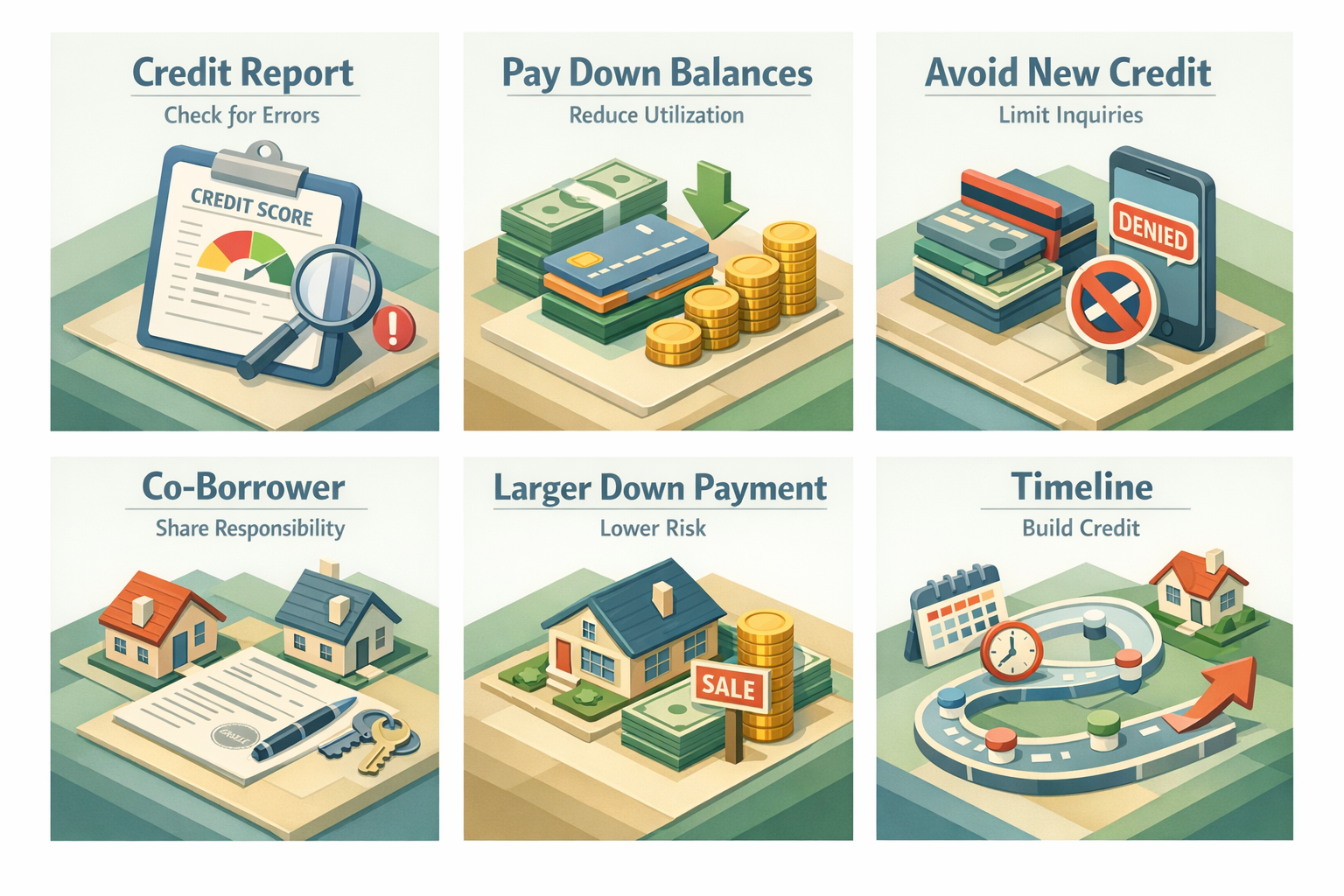
Getting approved for a mortgage with a low credit score requires a thoughtful approach. While there's no instant fix, several steps could genuinely improve your chances of approval — either right now or after a few months of preparation.
Check Your Credit Reports for Errors
Mistakes on credit reports are more common than many people realize. Incorrect account balances, duplicate entries, or accounts that don't belong to you could be dragging your score down unfairly. You're entitled to free copies of your credit reports from the three major bureaus, and disputing errors could result in a meaningful score improvement.
Pay Down Revolving Balances
Your credit utilization ratio — how much of your available credit you're using — plays a significant role in your score. If you're carrying high balances on credit cards, paying them down before applying for a mortgage may noticeably lift your score.
Avoid Opening New Credit Accounts
Every time you apply for a new credit card or loan, a hard inquiry is added to your report. Multiple recent inquiries can lower your score, so it's generally wise to hold off on new credit applications in the months leading up to your mortgage application.
Consider a Co-Borrower
If you have a creditworthy family member or partner willing to co-sign or co-borrow, their stronger credit profile may help the application qualify for better terms. Keep in mind that both borrowers share responsibility for the loan.
Save for a Larger Down Payment
A bigger down payment reduces the lender's exposure and can sometimes compensate for a lower credit score. Even a modest increase in your down payment percentage might open doors that would otherwise remain closed.
The Role of Non-QM Loans for Credit-Challenged Borrowers
Beyond government-backed programs, there's a growing segment of the mortgage market known as non-qualified mortgages (Non-QM). These loans don't meet the standard guidelines set by Fannie Mae or Freddie Mac, but they're designed to serve borrowers who fall outside conventional lending boxes — including those with lower credit scores, self-employed income, or past credit events like bankruptcy or foreclosure.
Non-QM lenders may evaluate your ability to repay using alternative documentation, such as bank statements, asset depletion, or investment income rather than traditional W-2s. Credit score requirements can vary widely by lender and product, and some Non-QM programs may be more flexible than conventional options.
That said, Non-QM loans often come with higher interest rates and fees to reflect the additional risk the lender is taking on. It's important to weigh the costs carefully and consider whether waiting to improve your credit profile might save you more money in the long run. Speaking with a knowledgeable mortgage advisor could help you understand whether a Non-QM loan makes sense for your situation.
Building Credit Before You Apply — A Smart Timeline
If you're not in an urgent rush to buy, taking six to twelve months to actively build your credit before applying for a mortgage could make a significant difference — both in your approval odds and in the interest rate you're offered.
Here's a general framework that may help guide your preparation:
- Months 1–2: Pull your credit reports, dispute any errors, and get a clear picture of what's holding your score back.
- Months 2–4: Focus on paying down credit card balances to reduce utilization. Set up autopay to ensure no missed payments.
- Months 4–6: Avoid applying for new credit. Let your positive payment behavior accumulate and allow disputed items time to update.
- Months 6–12: Monitor your score monthly using a free credit monitoring service. Once your score has improved, begin shopping for lenders and getting pre-qualified.
Even a modest improvement — such as moving from a 560 to a 600 credit score — could change which loan programs you're eligible for and may lower your interest rate. Over the life of a 30-year mortgage, that difference could translate into thousands of dollars in savings.
Shopping for the Right Lender Makes a Difference
Not all lenders interpret credit guidelines the same way. While one bank might decline your application at a 580 score, a mortgage broker or credit union might find a program that works. This is why shopping around is especially important when you have a lower credit score.
Mortgage brokers, for example, have access to multiple wholesale lenders and can match your profile to programs you might not find on your own. Credit unions sometimes take a more relationship-based approach to lending and may have more flexibility in how they evaluate your application.
When comparing lenders, pay attention to more than just the interest rate. Look at:
- Annual percentage rate (APR): This reflects the true cost of the loan including fees.
- Loan origination fees and closing costs: These vary between lenders and can add up quickly.
- Lender overlays: Some lenders add stricter requirements on top of program minimums, while others stick closer to the base guidelines.
- Customer service and communication: Especially with a complex application, having a responsive loan officer can make the process much smoother.
Getting pre-qualified with multiple lenders within a short window (typically 14 to 45 days) is generally treated as a single inquiry by credit scoring models, so comparison shopping shouldn't significantly hurt your score.
●Conclusion
A low credit score may feel like a roadblock, but for many homebuyers, it's a temporary obstacle — not a permanent barrier. Whether you pursue an FHA loan, explore a VA or USDA program, or take a few months to strengthen your credit profile, there are real paths forward. The key is to understand your options, take deliberate steps to improve your financial standing, and work with lenders who are experienced in helping buyers navigate credit challenges. At LoanWise, we believe that informed borrowers make better decisions. If you're ready to explore your mortgage options, consider speaking with a loan advisor who can evaluate your specific situation and help you find the right path to homeownership.