Getting approved for a home loan is one of the most important financial steps you'll ever take. Whether you're a first-time homebuyer eager to stop renting or a seasoned homeowner looking to upgrade, understanding what lenders look for can make all the difference. The mortgage approval process might feel complex at first glance, but it becomes much more manageable once you know what to expect. In this guide, we'll walk you through everything you need to know — from building your credit profile to choosing the right loan program — so you can approach your home purchase with clarity and confidence.
Understanding What Lenders Evaluate During the Approval Process
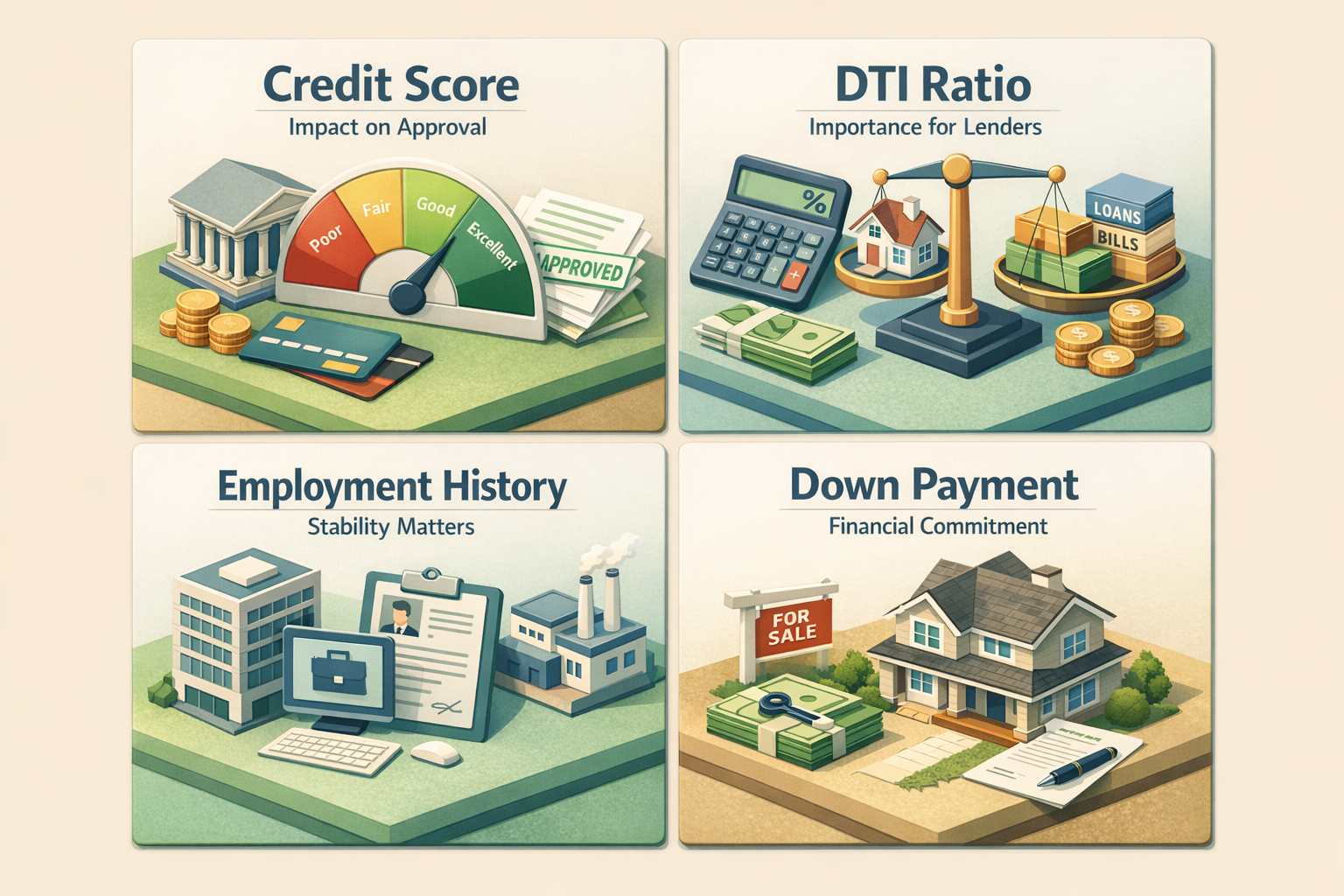
When you apply for a mortgage, lenders don't simply look at your income and call it a day. They evaluate a combination of financial factors to assess how likely you are to repay the loan. These factors typically include your credit score, debt-to-income ratio, employment history, assets, and the value of the property you're purchasing.
Your credit score is often the first thing a lender checks. It signals how responsibly you've managed debt in the past. Most conventional loan programs may require a minimum score in the mid-600s, while government-backed options like FHA loans could accept scores as low as 580 — or even lower in some cases with a larger down payment. A higher score generally opens the door to better interest rates and more favorable loan terms.
Your debt-to-income (DTI) ratio measures how much of your monthly gross income goes toward debt payments. Lenders typically prefer a DTI below 43%, though some programs may allow higher ratios depending on other compensating factors like strong savings or a large down payment. Keeping your monthly debt obligations manageable before applying can significantly improve your chances of approval.
Employment stability also plays a meaningful role. Lenders generally want to see at least two years of consistent employment or self-employment history. Frequent job changes or gaps in employment may require additional documentation, but they don't automatically disqualify you from getting a home loan.
How Your Credit Profile Shapes Your Mortgage Options
If you're wondering how to get approved for a home loan, your credit profile is one of the most influential starting points. It not only affects whether you qualify but also determines the interest rate you'll be offered — which has a direct impact on your monthly payment and total loan cost over time.
Before applying, it's a smart idea to pull your credit reports from all three major bureaus — Equifax, Experian, and TransUnion. Review them carefully for any errors, outdated accounts, or inaccuracies that could be dragging your score down. Disputing legitimate errors may help improve your score without any major financial moves.
Beyond correcting errors, there are several habits that could strengthen your credit over time:
- Pay all bills on time — payment history is typically the largest factor in your credit score calculation.
- Reduce credit card balances — keeping your credit utilization below 30% of your available limit is generally recommended.
- Avoid opening new credit accounts shortly before applying for a mortgage, as multiple hard inquiries can temporarily lower your score.
- Keep older accounts open when possible, since the length of your credit history contributes positively to your profile.
Even modest improvements to your credit score before applying could translate into meaningfully better loan terms, potentially saving you thousands of dollars over the life of your mortgage.
Choosing the Right Loan Program for Your Financial Situation
Not all home loans are created equal, and the right program for you depends on your financial profile, the type of property you're buying, and your long-term goals. Understanding your options is a key step in figuring out how to get approved for a home loan that truly fits your needs.
Conventional Loans
Conventional loans are not backed by the federal government and are typically offered through private lenders. They often require stronger credit and a down payment of at least 3% to 5%, though putting down 20% allows you to avoid private mortgage insurance (PMI). These loans tend to offer competitive rates for borrowers with solid credit profiles.
FHA Loans
Backed by the Federal Housing Administration, FHA loans are popular among first-time homebuyers and those with less-than-perfect credit. They typically allow lower down payments — as little as 3.5% — and more flexible qualification guidelines. However, they do require mortgage insurance premiums regardless of your down payment amount.
VA Loans
Available to eligible veterans, active-duty service members, and surviving spouses, VA loans offer significant benefits including no down payment requirement and no private mortgage insurance. They're backed by the U.S. Department of Veterans Affairs and often come with competitive interest rates.
USDA Loans
For buyers in qualifying rural and suburban areas, USDA loans may offer 100% financing with no down payment required. They're designed for low-to-moderate income borrowers and come with income and geographic eligibility requirements.
Taking the time to compare programs — or working with an experienced mortgage professional — can help you identify which path may offer the best combination of approval likelihood and long-term affordability.
The Role of Down Payments and Reserves in Getting Approved
Your down payment is more than just a required upfront cost — it's a signal to lenders about your financial commitment and risk level. A larger down payment reduces the lender's exposure and may make it easier to qualify, even if other areas of your application aren't perfect.
Down payment requirements vary by loan type. Conventional loans may require as little as 3% for qualified buyers, while FHA loans typically require 3.5% for those with qualifying credit scores. VA and USDA loans may allow no down payment at all for eligible borrowers. If you're purchasing a higher-priced or jumbo property, expect down payment expectations to be more substantial.
Beyond the down payment, lenders often look at your cash reserves — the money you have left over after closing. Having two to six months of mortgage payments in accessible savings can strengthen your application, especially if your credit score is on the lower end or your income is variable. It demonstrates that you have a financial cushion and can handle unexpected expenses without defaulting on your loan.
If saving for a down payment feels out of reach, it's worth exploring down payment assistance programs. Many state housing finance agencies and nonprofit organizations offer grants or low-interest second loans to help eligible buyers bridge the gap. Your mortgage lender may be able to point you toward programs available in your area.
Getting Pre-Approved: Why It Matters and How to Prepare
Before you start touring homes, getting pre-approved for a mortgage is one of the smartest moves you can make. A pre-approval letter tells real estate agents and sellers that you're a serious buyer who has already been evaluated by a lender. In competitive markets, it can make the difference between having your offer accepted or overlooked.
Pre-approval involves a more thorough review than pre-qualification. The lender will pull your credit, verify your income and assets, and assess your financial profile to determine a specific loan amount you're likely to qualify for. It's not a final commitment, but it's a strong indicator of your borrowing power.
To prepare for pre-approval, gather the following documents in advance:
- Recent pay stubs (typically the last 30 days)
- Two years of W-2s or tax returns, especially if self-employed
- Two to three months of bank and investment account statements
- A valid government-issued ID
- Documentation of any other income sources (rental income, alimony, etc.)
Being organized and responsive during the pre-approval process can help things move quickly and smoothly. If the lender requests additional documentation, provide it promptly to avoid delays. The goal is to present a clear, consistent financial picture that instills confidence in your application.
Common Reasons Home Loan Applications Get Denied — and How to Avoid Them
Understanding why mortgage applications are sometimes denied can help you take proactive steps to avoid the same pitfalls. A denial doesn't mean homeownership is out of reach — it often just means there's some preparation work to do first.
Some of the most common reasons for denial include:
- Insufficient credit score — If your score falls below the minimum threshold for the loan program you applied for, the lender may not be able to approve you. Working to improve your credit before reapplying is often the recommended path forward.
- High debt-to-income ratio — Carrying too much debt relative to your income can make lenders nervous. Paying down existing balances or increasing your income may help bring your DTI to an acceptable range.
- Unstable employment history — Gaps in employment or recent job changes can raise red flags. Waiting until you've established more consistent income history may improve your odds.
- Insufficient down payment or assets — If you don't have enough funds for the required down payment or closing costs, the application may be declined. Exploring assistance programs or saving longer could resolve this.
- Property issues — Sometimes the property itself doesn't meet the lender's or program's requirements, such as failing a home appraisal or having structural concerns.
If you receive a denial, lenders are typically required to provide an adverse action notice explaining the reasons. Use that feedback as a roadmap for your next steps.
●Conclusion
Learning how to get approved for a home loan is ultimately about preparation, patience, and making informed decisions along the way. From understanding what lenders evaluate to choosing the right loan program and getting pre-approved, each step builds toward the goal of homeownership. It's worth taking the time to strengthen your financial profile before applying, explore all available loan options, and work with knowledgeable professionals who can guide you through the process. At LoanWise, we're here to help you navigate the mortgage landscape with confidence — so you can focus on finding the home that's right for you.