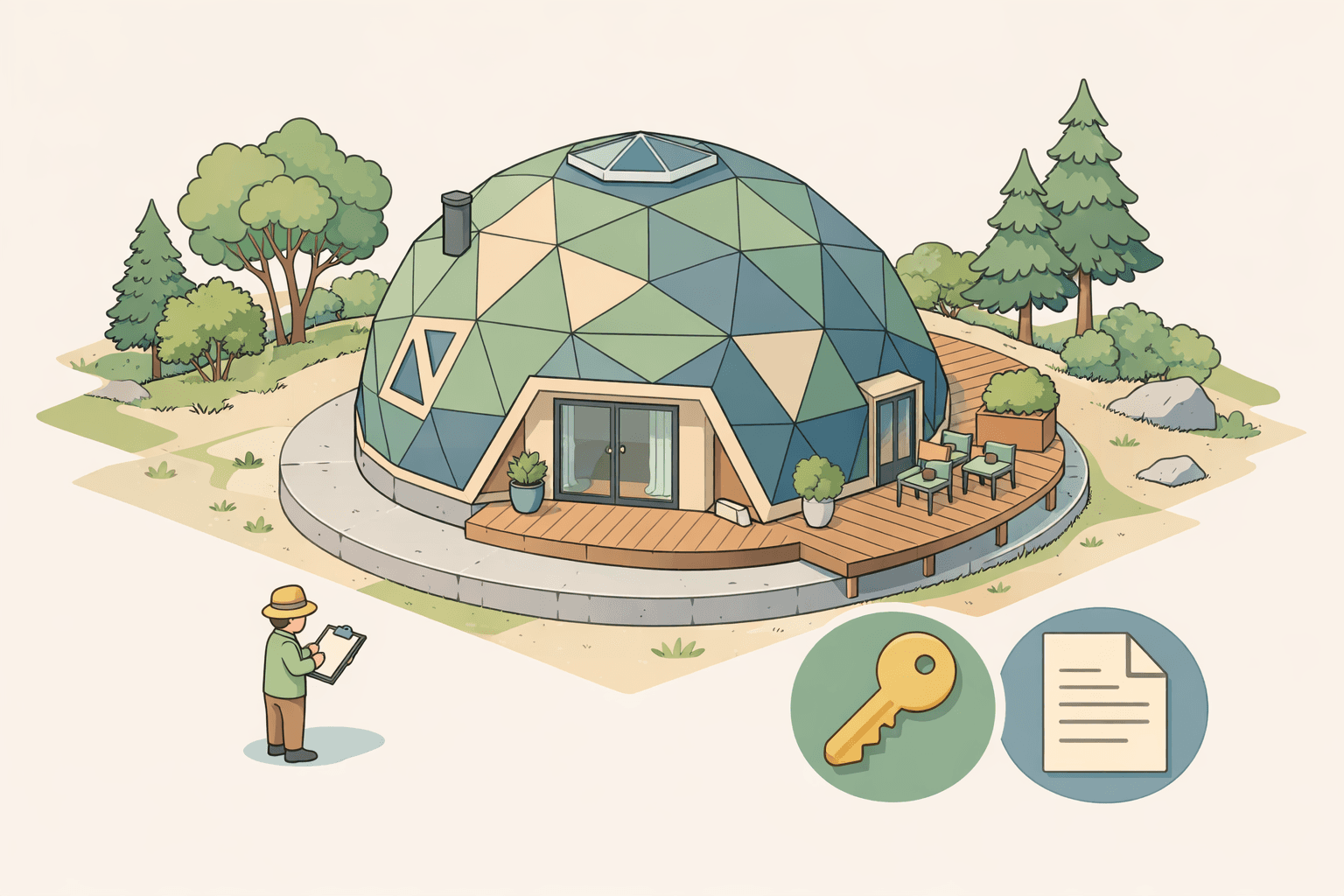
Geodesic dome homes are unlike anything else on the market. Their curved triangular panels, open interiors, and impressive structural strength make them a favorite among eco-conscious buyers and design lovers alike. But when it comes to financing, these homes sit firmly outside the comfort zone of most traditional lenders. If you're wondering how to get an FHA loan for a geodesic dome home with a unique foundation, you're asking exactly the right question — and the honest answer is that it's possible, but it takes preparation, patience, and the right lending partner. This guide walks you through what FHA guidelines say about non-traditional properties, what lenders typically look for, and how you can position yourself for the best chance of approval.
Why Geodesic Dome Homes Are Considered Non-Traditional Properties
Before diving into loan mechanics, it helps to understand why geodesic dome homes create challenges in the mortgage world. Most lenders — including those offering FHA-backed loans — rely heavily on comparable sales data, often called "comps," to determine a property's market value. A licensed appraiser will look at recently sold homes in the area that are similar in size, style, and condition to estimate what your home is worth.
Here's the problem: geodesic dome homes are rare. In most markets, there simply aren't enough similar dome homes nearby to generate reliable comps. This makes the appraisal process significantly harder and sometimes results in undervalued estimates or outright appraisal challenges. On top of that, dome homes often feature:
- Non-standard foundations — including slab-on-grade, pier systems, or custom poured footings that may differ from conventional designs
- Curved exterior walls that don't align with standard framing measurements
- Unique roof systems that double as structural walls, complicating standard inspection categories
- Custom-built interiors that are difficult to compare against typical square footage calculations
None of these features automatically disqualify a geodesic dome from FHA financing, but they do mean the path forward requires extra documentation and a lender experienced with unique home financing situations.
What FHA Guidelines Actually Say About Alternative Construction
The Federal Housing Administration does not outright prohibit financing for geodesic dome homes or other forms of FHA loan for alternative construction. However, the FHA's guidelines — outlined in the HUD Single Family Housing Policy Handbook — require that any property receiving FHA backing must meet specific minimum property standards (MPS) and be deemed safe, sound, and sanitary.
For a geodesic dome home to qualify, it typically must:
- Be affixed to a permanent foundation that meets local building codes
- Be classified as real property, not personal property
- Pass an FHA appraisal conducted by an FHA-approved appraiser
- Meet all applicable local zoning and building regulations
- Show no structural deficiencies, safety hazards, or deferred maintenance concerns
The foundation issue is often the most scrutinized element. FHA guidelines generally require that homes have permanent foundations — meaning the structure is anchored to the ground in a way that meets local code. Custom or unconventional foundations used in dome construction may need a structural engineer's certification to confirm compliance before a lender will proceed.
It's also worth noting that FHA appraisers are expected to use their professional judgment when standard comps aren't available. They may pull sales from a wider geographic area or use cost-approach valuation methods when market-based comps simply don't exist. This flexibility can help, but it also introduces more variability into the process.
How to Get an FHA Loan for a Geodesic Dome Home With a Unique Foundation: Step-by-Step
Knowing how to get an FHA loan for a geodesic dome home with a unique foundation starts with building a strong file before you ever approach a lender. Here's a practical roadmap to guide the process:
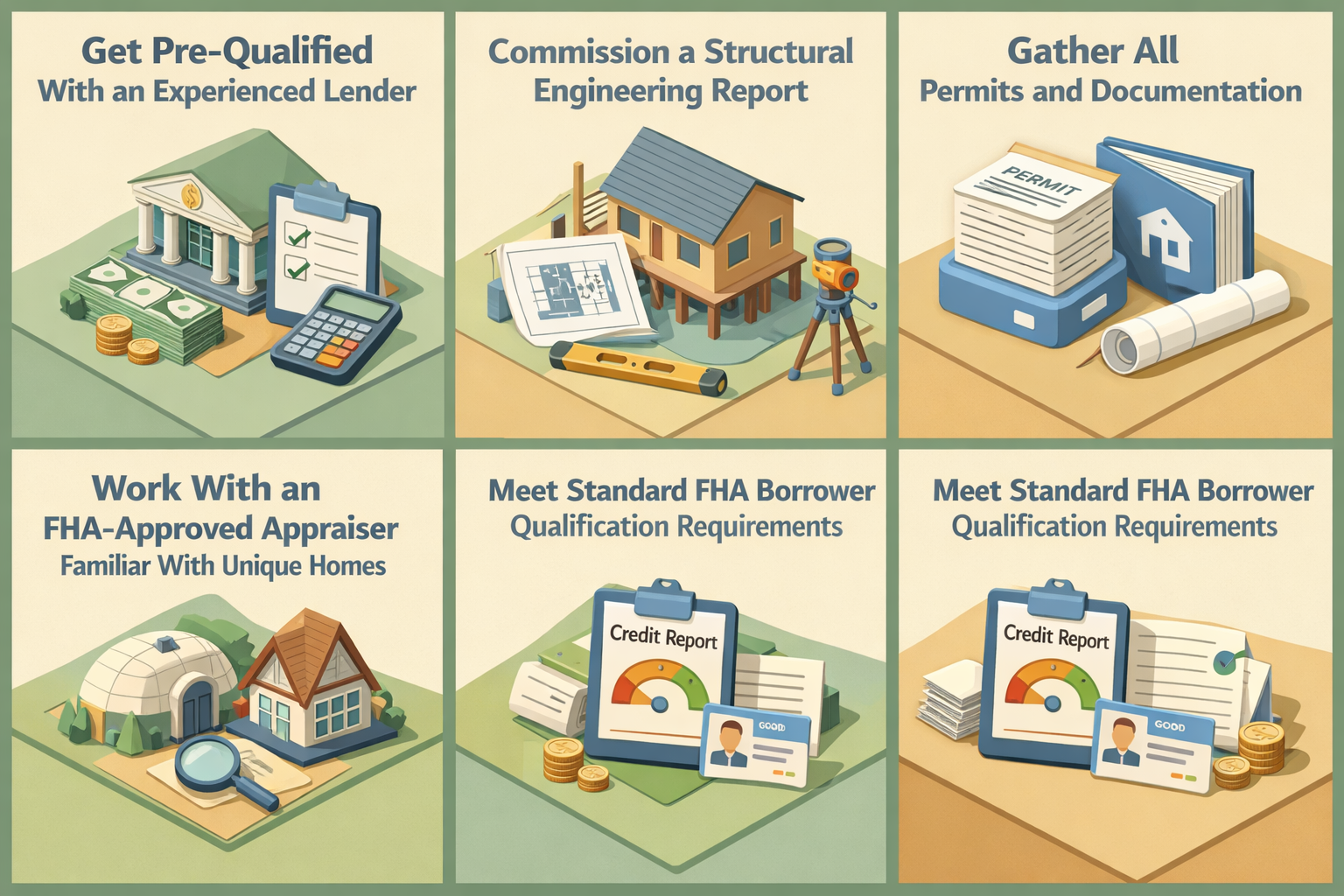
Step 1: Get Pre-Qualified With an Experienced Lender
Not every lender has experience with non-traditional properties. Seek out mortgage professionals who have a track record with geodesic dome mortgage requirements or alternative construction loans. Ask directly whether they've closed FHA loans on dome homes or unconventional structures before. This matters more than you might think — an inexperienced loan officer could miss critical documentation requirements or fail to properly guide the appraisal process.
Step 2: Commission a Structural Engineering Report
Because dome homes have unique load-bearing systems and often non-standard foundations, lenders will likely request a structural engineer's report confirming that the home meets local building code requirements. This report should address the foundation type, its permanency, and any specific features of the dome's construction that differ from conventional homes. Having this ready upfront can prevent costly delays later in the process.
Step 3: Gather All Permits and Documentation
Make sure the home has all required building permits on file, including permits for the foundation, framing, electrical, plumbing, and any additions or renovations. Lenders and appraisers will want to verify that the home was built legally and inspected by local authorities. Missing permits can create major obstacles to FHA approval.
Step 4: Work With an FHA-Approved Appraiser Familiar With Unique Homes
Your lender will order the appraisal, but you can advocate for an appraiser who has experience valuing non-traditional properties. The appraiser must be FHA-approved, and they'll need to use appropriate valuation methods when standard comps are scarce. The cost approach — which estimates value based on land cost plus the depreciated replacement cost of the structure — may be especially relevant for geodesic dome homes.
Step 5: Meet Standard FHA Borrower Qualification Requirements
Beyond the property itself, you'll need to meet standard FHA borrower criteria, which typically include a minimum credit score of 580 for a 3.5% down payment, a debt-to-income ratio within FHA guidelines, and documented income and employment history. These borrower-side requirements don't change just because the property is unusual.
Foundation Types That May Affect Your FHA Approval
The foundation of a geodesic dome can take several forms, and each carries its own implications for FHA eligibility. Understanding these differences can help you and your lender prepare the right documentation.
Poured Concrete Perimeter Foundations
These are the most lender-friendly option for dome homes. A continuous poured concrete perimeter foundation closely resembles what conventional homes use, making it easier for appraisers and lenders to assess compliance. If the dome sits on this type of foundation, FHA financing may be more straightforward to obtain.
Pier and Beam Foundations
Some dome homes are built on pier and beam systems, where the structure rests on a series of concrete piers drilled into the ground. FHA guidelines generally permit pier foundations if they meet local code requirements and are properly engineered. A structural engineer's certification is typically needed to confirm permanency and adequacy.
Slab-on-Grade Foundations
Dome homes on slab-on-grade foundations may also qualify, provided the slab was poured to local code standards and the dome structure is properly anchored. Again, documentation and an engineering report are key.
Non-Standard or Custom Foundations
Some dome homes — particularly older or owner-built ones — may have custom foundation systems that don't fit neatly into standard categories. These present the greatest challenge for FHA approval. In these cases, a detailed structural engineering report and possibly local building department sign-off may be required before a lender will proceed. In some instances, the lender may determine the property doesn't meet FHA minimum property standards, in which case alternative financing may need to be explored.
Alternative Financing Options If FHA Approval Proves Difficult
Even with the best preparation, some geodesic dome homes may not qualify for FHA financing — particularly if the foundation is non-standard, comps are unavailable, or the appraisal comes in below the purchase price. If that happens, it's worth knowing what other paths exist for unique home financing.
- Conventional loans with portfolio lenders: Some lenders hold loans "in-house" rather than selling them to the secondary market. These portfolio lenders can set their own underwriting standards and may be more flexible about unusual property types. They often charge higher rates or require larger down payments to compensate for the added risk.
- Construction-to-permanent loans: If you're building a geodesic dome from scratch, a construction loan that converts to a permanent mortgage upon completion could be an option. These loans fund the build in stages and roll into a standard mortgage once the home passes inspection.
- USDA loans: If the property is in a qualifying rural area, a USDA loan might be an alternative to FHA. USDA loans also have minimum property standards, but the guidelines around alternative construction may vary by lender and region.
- Jumbo or non-QM loans: For higher-priced dome homes or buyers with strong financial profiles, non-qualified mortgage (non-QM) products or jumbo loans may offer more flexibility on property type, though typically at higher rates.
It's always worth speaking with multiple lenders before assuming a dome home is unfinanceable. Lending policies differ widely, and persistence often pays off when it comes to non-traditional property types.
Tips for Strengthening Your Mortgage Application on a Non-Traditional Home
When you're pursuing geodesic dome mortgage requirements through an FHA or alternative loan program, your borrower profile matters just as much as the property. A stronger application can offset some of the lender's concerns about property uniqueness.
Improve Your Credit Score Before Applying
A higher credit score gives lenders more confidence in your ability to repay the loan. For FHA loans, scores above 580 qualify for the minimum 3.5% down payment, but scores above 620 or 640 may open doors with additional lenders and improve your rate options. Pay down revolving balances, avoid new credit inquiries, and review your credit report for errors before applying.
Increase Your Down Payment
Offering a larger down payment — say, 10% or more — reduces the lender's risk and may make them more willing to work through the unique property challenges. It also reduces your mortgage insurance premium costs over time.
Document Everything About the Home
The more documentation you can provide about the home's construction, permits, inspections, and structural integrity, the smoother the underwriting process tends to go. Create a comprehensive property file that includes blueprints, builder information, permit history, warranty documents, and any prior inspection reports.
Be Patient and Communicate Proactively
Non-traditional property loans often take longer to process than standard mortgages. Stay in close communication with your loan officer, respond quickly to information requests, and try to anticipate what documentation might be needed next. Proactive borrowers tend to have better outcomes in complex loan scenarios.
●Conclusion
Financing a geodesic dome home is genuinely more complex than buying a conventional house, but it's far from impossible. Understanding how to get an FHA loan for a geodesic dome home with a unique foundation starts with knowing the rules, assembling the right team, and preparing a thorough documentation package. The FHA program doesn't exclude dome homes outright — it simply requires that they meet the same safety, soundness, and permanency standards as any other property. With an experienced lender, a solid borrower profile, and a well-documented property file, many buyers successfully navigate this process. If FHA financing turns out not to be the right fit, alternative options like portfolio loans or construction-to-permanent products may bridge the gap. The key is to stay informed, stay patient, and partner with professionals who understand the nuances of unique home financing. At LoanWise, we're here to help you explore every available path to homeownership — no matter how unconventional your dream home may be.