For many homebuyers, the dream of owning a home feels just out of reach — especially when saving for a down payment seems like climbing an endless hill. That's where the USDA loan program steps in. Backed by the U.S. Department of Agriculture, this government-sponsored mortgage option allows eligible buyers to purchase a home with zero down payment. While many people associate USDA loans with new construction, you can absolutely use one to buy an existing home. If you're wondering how to get a USDA loan for existing home purchase, this guide walks you through everything — from eligibility basics to closing day. Whether you're a first-time homebuyer or someone ready to settle down in a quieter community, understanding this loan program could open a door you didn't know existed.
What Is a USDA Loan and Who Is It Designed For?
The USDA Single Family Housing Guaranteed Loan Program is a federal mortgage initiative designed to help low-to-moderate income households purchase homes in eligible rural and suburban areas. Unlike conventional mortgages, USDA loans are not issued directly by the government. Instead, the USDA guarantees the loan, which means approved private lenders take on less risk — and can offer borrowers more favorable terms.
This program is specifically aimed at buyers who might not qualify for traditional financing or who lack the savings needed for a standard down payment. It's a strong fit for:
- First-time homebuyers looking for affordable entry into homeownership
- Moderate-income households who meet the program's income caps
- Buyers interested in rural housing outside of major metropolitan centers
- Those seeking lower monthly costs compared to FHA or conventional loans
It's worth noting that there are two main USDA loan types: the Guaranteed Loan Program (processed through approved lenders) and the Direct Loan Program (issued directly by the USDA for very low-income applicants). Both can be used to purchase existing homes, though the Guaranteed program is more widely used and accessible through most mortgage lenders.
Eligibility for a USDA Existing Home Loan: What You Need to Qualify
Understanding eligibility for a USDA existing home loan is one of the first steps in the process. The program has three primary qualification pillars: location, income, and creditworthiness. Meeting all three is essential before you apply.
Location Eligibility
The property you're purchasing must be located in a USDA-designated eligible area. These are typically rural or small suburban communities with populations under 35,000. You can check a property's eligibility through the USDA's official online eligibility map. Interestingly, some areas that feel suburban may still qualify, so it's worth checking even if you're not buying in a remote location.
Income Limits
USDA loans are income-restricted. Your household income — including all adult members, not just the borrowers — must fall at or below 115% of the area median income (AMI) for your county. Income limits vary by location and household size, so what qualifies in one region may not apply in another. Checking the USDA's income eligibility tool with your specific county and household details is highly recommended.
Credit and Financial Standing
Most lenders prefer a credit score of 640 or higher for streamlined USDA processing. Borrowers with scores below this threshold may still qualify, but they'll likely face more manual underwriting requirements. In addition to credit score, lenders will review:
- Debt-to-income (DTI) ratio — typically preferred at 41% or below
- Employment history and income stability
- No recent foreclosures or bankruptcies within required timeframes
- Ability to repay the mortgage as determined by standard underwriting guidelines
You also must be a U.S. citizen, U.S. non-citizen national, or qualified alien to participate in the program.
USDA Loan Property Requirements for Existing Construction
One common question among buyers is whether a USDA loan can be used on an older or pre-owned home. The good news is yes — USDA loan property requirements do allow for existing construction, including move-in ready homes, provided the property meets the program's condition standards.
What the Home Must Meet
For a rural housing loan for existing construction, the property must be considered decent, safe, and sanitary at the time of purchase. USDA appraisers will evaluate the home accordingly. Here's what typically matters:
- The home must be a single-family dwelling used as a primary residence
- It must be structurally sound with no major defects that compromise safety
- Functional plumbing, electrical, heating, and cooling systems are required
- The roof must be in adequate condition with no significant leaks or damage
- The home must have adequate access to a paved or all-weather road
- No pest infestations or environmental hazards that aren't remediated
What Properties Are Not Eligible
Not every existing home will pass USDA requirements. Properties that are typically ineligible include:
- Homes used as investment properties or vacation rentals
- Mobile homes or manufactured housing that doesn't meet specific HUD standards
- Properties with income-producing land beyond what's typical for a residential lot
- Homes with in-ground pools in some USDA jurisdictions (varies by state)
If the home requires minor repairs, those may sometimes be rolled into the loan or addressed as a condition of approval. Major structural issues, however, could disqualify the property outright. A thorough home inspection before making an offer is strongly advisable.
How to Get a USDA Loan for Existing Home Purchase: Step-by-Step Process
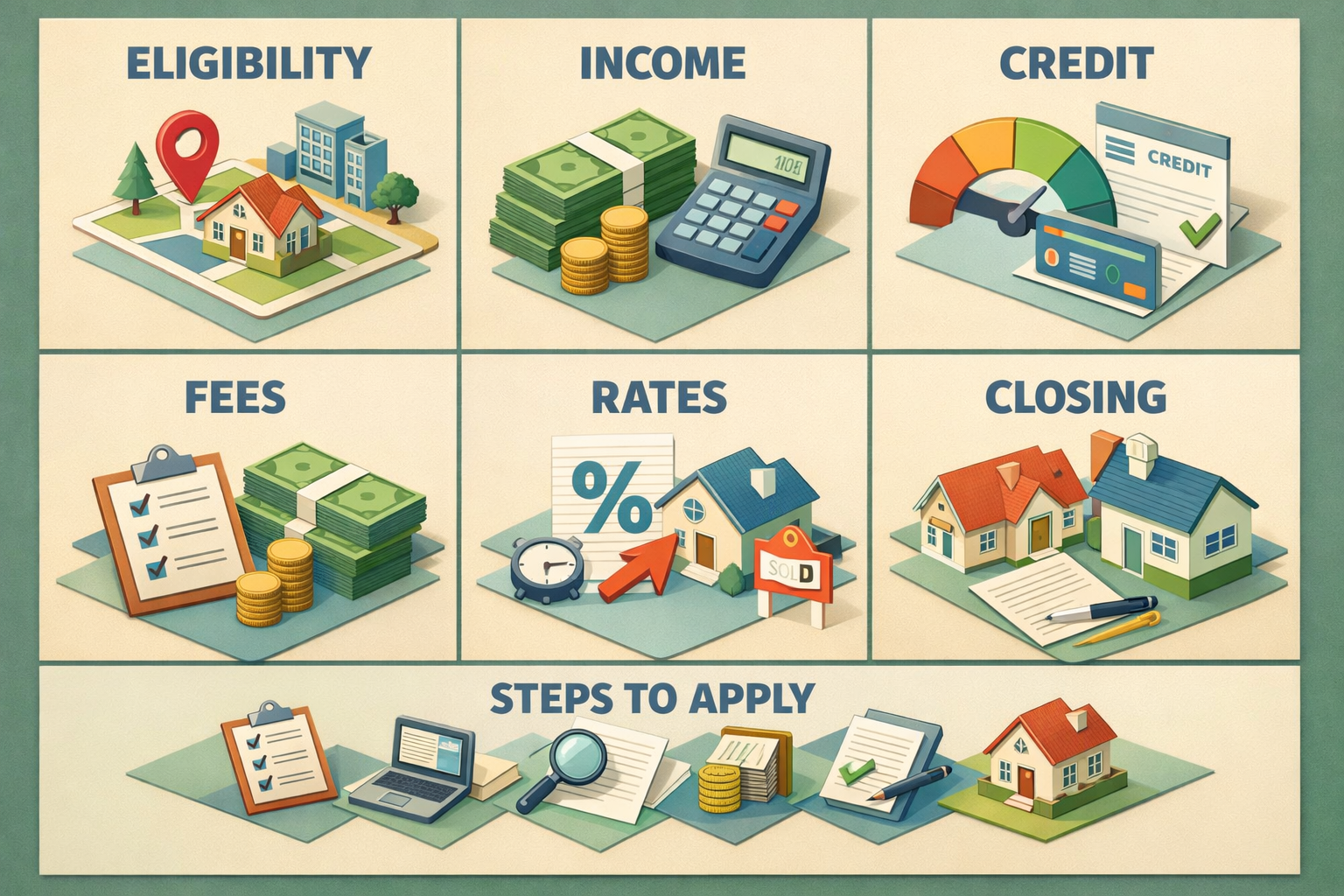
If you meet the eligibility rules and you've found a property that may qualify, here's a practical walkthrough of how to get a USDA loan for existing home purchase.
Step 1: Check Location and Income Eligibility
Before anything else, visit the USDA's online eligibility portal to confirm that both your income and the target property location meet program guidelines. This saves time and avoids pursuing properties that won't qualify.
Step 2: Find a USDA-Approved Lender
Not all mortgage lenders offer USDA loans. You'll need to work with a lender approved by the USDA to participate in the Guaranteed Loan Program. Many banks, credit unions, and mortgage companies are approved — but it's smart to ask directly. Look for lenders with experience in USDA loans, as they'll navigate the process more efficiently.
Step 3: Get Prequalified or Preapproved
A preapproval gives you a clear picture of your budget and signals to sellers that you're a serious buyer. During this phase, your lender will review your income, credit, employment history, and debts. Be prepared to provide recent pay stubs, W-2s, tax returns, and bank statements.
Step 4: Find Your Home and Make an Offer
With preapproval in hand, work with a real estate agent familiar with rural properties to identify homes in USDA-eligible areas. Once you find a match, submit your offer. It's helpful to note in your offer that financing is contingent on USDA loan approval, which gives you protection if the appraisal or property review doesn't go as planned.
Step 5: USDA Appraisal and Underwriting
After your offer is accepted, your lender will order a USDA appraisal. This appraisal both confirms the property's market value and verifies that it meets the program's condition standards. Once the appraisal is complete, your loan file moves into underwriting — where the lender and USDA both review your application in detail.
Step 6: USDA Conditional Commitment and Closing
For Guaranteed loans, your lender submits the file to the USDA for a conditional commitment. Once issued, the loan proceeds to final approval and closing. USDA loans typically take 30 to 60 days to close, though timelines can vary based on lender workload and USDA processing times in your area.
Understanding USDA Loan Costs: Fees, Rates, and What to Expect
While USDA loans eliminate the need for a down payment, they do come with some associated costs that buyers should plan for. Understanding these fees upfront helps you budget accurately and avoid surprises at closing.
Guarantee Fee and Annual Fee
USDA Guaranteed loans include two mortgage insurance-style charges:
- Upfront Guarantee Fee: Typically charged as a percentage of the loan amount and can be financed into the loan rather than paid out of pocket.
- Annual Fee: Charged as a percentage of the remaining loan balance each year and added to your monthly payment. This is generally lower than FHA mortgage insurance premiums, which can make USDA loans more cost-effective over time.
Interest Rates
USDA loan interest rates are generally competitive with conventional and FHA rates. Because the USDA guarantees a portion of the loan, lenders may offer rates that are comparable — or in some cases slightly better — than what a buyer might receive with a conventional loan at a similar credit profile. Rates are still influenced by market conditions, your credit score, and the lender you choose.
Closing Costs
Closing costs on a USDA loan are similar to other mortgage types and may include appraisal fees, title insurance, origination fees, and prepaid items like taxes and homeowners insurance. One advantage is that USDA guidelines allow sellers to contribute toward the buyer's closing costs, and some lenders may permit closing costs to be rolled into the loan if the home appraises above the purchase price.
USDA Loan for Move-In Ready Homes vs. Fixer-Uppers: What's the Difference?
If you're browsing the rural housing market, you'll likely come across a mix of move-in ready properties and homes needing work. Understanding how USDA financing applies to each helps you shop smarter.
Move-In Ready Homes
A USDA loan for move-in ready homes is the most straightforward path. These properties typically pass the USDA appraisal without conditions, meaning the process moves faster and with fewer complications. The home's systems are functional, the structure is sound, and no significant repairs are needed before occupancy. These are the easiest transactions for USDA financing.
Homes That Need Repairs
If a home requires repairs to meet USDA standards, the process gets more complex. In some cases, the seller may agree to complete repairs before closing. In others, the lender may place repair escrow conditions on the loan. Homes with extensive structural damage or safety concerns may not qualify at all under standard USDA guidelines.
It's also worth knowing that the USDA does offer a separate Section 504 Home Repair program for existing homeowners who need to make improvements — but that program is distinct from the full application process and applies only after you own the home.
The Bottom Line on Property Condition
If you're buying an existing home with a USDA loan, the property doesn't need to be brand new — but it does need to be livable and structurally sound. Working with a knowledgeable real estate agent who understands USDA requirements can help you filter out properties likely to fail the appraisal before you invest time and money into the process.
●Conclusion
Buying a home in a rural or suburban community doesn't have to mean taking on a large down payment or settling for a subpar loan. The USDA loan program offers a genuine path to homeownership for buyers who meet the location, income, and credit requirements — and it's fully compatible with purchasing existing homes. From verifying eligibility to navigating the appraisal and closing process, knowing how to get a USDA loan for existing home purchase puts you in a stronger position to act confidently. If you think you might qualify, the smartest next step is connecting with a USDA-approved lender who can review your specific situation and guide you through the details. At LoanWise, we're here to help you explore every option and find the financing path that fits your goals.