Whether you're launching a new venture, expanding an existing operation, or managing a cash flow gap, knowing how to get a small business loan is one of the most valuable skills an entrepreneur can develop. Business financing can open doors to new equipment, additional staff, better inventory, and long-term growth — but the process can feel overwhelming if you don't know where to start. The good news is that with the right preparation and a clear understanding of your options, securing a business loan is a very achievable goal. This guide breaks down everything you need to know, from evaluating loan types to improving your approval odds.
Understanding Why Small Business Financing Matters
Small businesses are the backbone of the economy, yet many entrepreneurs struggle to access the capital they need to grow. Whether you're a solo founder or managing a team of ten, there often comes a point where your current revenue simply can't keep pace with your ambitions. That's where business lending comes in.
Business loans may be used for a wide range of purposes, including purchasing commercial real estate, buying equipment, covering payroll during slow seasons, investing in marketing, or funding a major expansion. Unlike personal loans, business loans are typically evaluated based on the financial health of the business itself — including revenue, credit history, and time in operation.
Understanding your financing needs before approaching a lender is a critical first step. Ask yourself: How much do I need? What will the funds be used for? How quickly can my business repay the debt? Clear answers to these questions will help you identify the right loan product and present a compelling case to lenders.
Exploring the Main Types of Small Business Loans
Not all business loans are created equal. The right loan for your business will depend on your goals, financial profile, and how quickly you need the funds. Here's an overview of the most common options available to small business owners and entrepreneurs:
- SBA 7(a) Loans: Backed by the U.S. Small Business Administration, these loans are among the most popular options for small businesses. They may be used for working capital, equipment, real estate, and more. Loan amounts can be substantial, and repayment terms are often flexible.
- SBA 504 Loans: Designed primarily for purchasing fixed assets like commercial real estate or heavy equipment, SBA 504 loans typically offer long repayment terms and competitive rates.
- Term Loans: A straightforward lump-sum loan repaid over a set period. Term loans are commonly offered by banks, credit unions, and online lenders, and they can be used for a variety of business purposes.
- Business Lines of Credit: Similar to a credit card, a business line of credit gives you access to a set amount of funds you can draw from as needed. This is especially useful for managing cash flow fluctuations.
- Equipment Financing: If you need to purchase machinery, vehicles, or technology, equipment loans use the asset itself as collateral — which may make approval somewhat easier.
- Invoice Financing: Businesses with outstanding invoices can use them as collateral to access immediate cash, helping bridge gaps between billing and payment.
- Merchant Cash Advances: A revenue-based financing option where a lender advances funds in exchange for a percentage of future sales. These tend to carry higher costs and are best used sparingly.
- Microloans: Smaller loan amounts — often under $50,000 — designed for startups or businesses with limited credit history. The SBA Microloan program is one well-known option.
Each product comes with its own eligibility requirements, cost structure, and repayment timeline. Taking the time to compare these options carefully could save your business significant money over the life of the loan.
Key Eligibility Factors Lenders Typically Evaluate
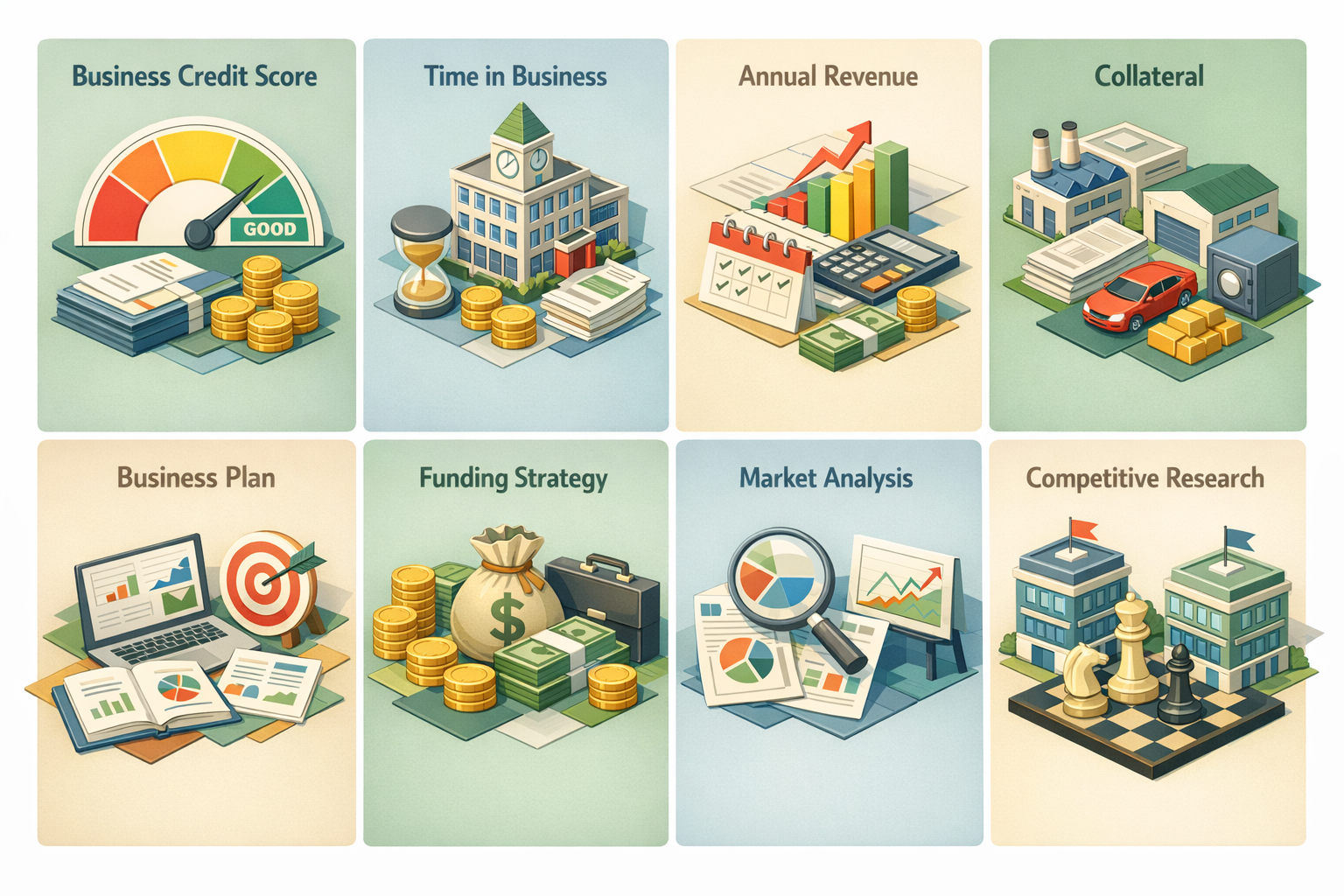
If you want to know how to get a small business loan successfully, you need to understand what lenders look for. While requirements vary by lender and loan type, several core factors tend to influence approval decisions across the board.
Business Credit Score and Personal Credit History
Many lenders review both your business credit score and your personal credit score, especially for smaller businesses where the owner's financial behavior is closely tied to the company's. A stronger credit profile may improve your chances of approval and help you qualify for lower interest rates. If your scores need work, it's worth taking steps to improve them before applying.
Time in Business
Most traditional lenders prefer to work with businesses that have been operating for at least one to two years. Startups may find it more challenging to qualify for conventional loans but might be well-suited for SBA Microloans, alternative lenders, or startup-specific programs.
Annual Revenue and Cash Flow
Lenders want to see that your business generates enough revenue to comfortably cover loan repayments. They'll often request bank statements, profit and loss statements, and tax returns to assess your financial performance. Strong, consistent cash flow is a positive signal to underwriters.
Collateral
Some loans require collateral — assets the lender can claim if you default. This might include real estate, equipment, or inventory. Secured loans may come with lower rates, but they also carry more risk for the borrower.
Business Plan and Purpose of Funds
Particularly for larger loans or SBA products, lenders may want to see a detailed business plan that outlines how the funds will be used and how the loan will be repaid. A clear, well-organized plan demonstrates professionalism and reduces perceived risk for the lender.
Steps to Prepare Before You Apply for a Business Loan
Preparation is everything when it comes to business loan applications. Taking deliberate steps before you submit an application could meaningfully improve your approval odds and help you secure financing on more favorable terms.
- Review your credit reports: Check both your personal and business credit reports for errors. Dispute any inaccuracies, as these could be dragging your scores down unnecessarily.
- Organize your financial documents: Gather recent tax returns, bank statements, profit and loss statements, and balance sheets. Having these ready in advance speeds up the process and signals preparedness to lenders.
- Calculate how much you actually need: Borrowing too little may leave you underfunded, while borrowing too much increases your debt burden. Aim for a precise figure based on real cost estimates.
- Research multiple lenders: Banks, credit unions, online lenders, and SBA-approved lenders each have different products, rates, and requirements. Comparing multiple options helps you find the best fit for your situation.
- Understand your debt service coverage ratio (DSCR): This metric compares your net operating income to your total debt obligations. Lenders often use it to determine whether your business can handle additional debt.
- Consider working with a loan advisor: A knowledgeable lending professional can help you identify the right products, avoid common pitfalls, and present the strongest possible application.
Navigating the Application Process With Confidence
Once you've done your homework, it's time to move forward with the application. Here's what the process typically looks like for most business loan types:
Choose the Right Lender and Loan Product
Based on your research, select a lender whose requirements align with your financial profile and whose loan product matches your needs. If you're pursuing an SBA loan, make sure the lender is an SBA-approved institution.
Submit a Complete Application
Incomplete applications are one of the most common reasons for delays or denials. Double-check that all required documents are included and that your application is filled out accurately. Even minor errors can slow down the underwriting process.
Respond Promptly to Lender Requests
During underwriting, lenders may request additional documentation or clarification. Responding quickly and thoroughly keeps your application moving and demonstrates professionalism. Delays on your end could push back your funding timeline.
Review the Loan Terms Carefully
Before signing anything, read the loan agreement carefully. Pay close attention to the interest rate, repayment schedule, prepayment penalties, and any fees. If something is unclear, don't hesitate to ask your lender to explain it.
Plan for Repayment from Day One
A loan is only a tool — its value depends on how you use it. Build repayment into your business budget from the moment the funds arrive, and track how the borrowed capital is being deployed to ensure it's generating the return you anticipated.
Tips to Strengthen Your Approval Chances Over Time
If you've been turned down before, or if you're still building your business's financial foundation, there are several strategies that may improve your position as a borrower over time.
- Build business credit separately from personal credit: Open a dedicated business bank account, get a business credit card, and establish trade lines with vendors who report to business credit bureaus.
- Keep your finances clean and documented: Lenders value transparency. Maintain clear records and separate your business and personal expenses rigorously.
- Reduce existing debt where possible: A lower debt load improves your DSCR and signals to lenders that your business is financially disciplined.
- Establish a banking relationship early: Some lenders favor borrowers who already have accounts or a history with their institution. Building that relationship before you need a loan can work in your favor.
- Start small if needed: A smaller loan that you repay successfully can establish a positive borrowing history, making it easier to qualify for larger amounts in the future.
It's worth noting that the lending landscape continues to evolve. Alternative and online lenders have made financing more accessible for businesses that might not meet the strict requirements of traditional banks. Exploring these channels may open up options you hadn't previously considered.
●Conclusion
Understanding how to get a small business loan doesn't have to be an intimidating process. By knowing your options, preparing your financial documents, and presenting a clear picture of your business's health and goals, you put yourself in a strong position to access the capital you need. Whether you're funding your first venture or scaling an established operation, the right financing could be the catalyst that takes your business to the next level. At LoanWise, we're committed to helping entrepreneurs like you navigate the lending landscape with clarity and confidence. Reach out today to explore the business loan solutions that may be right for you.