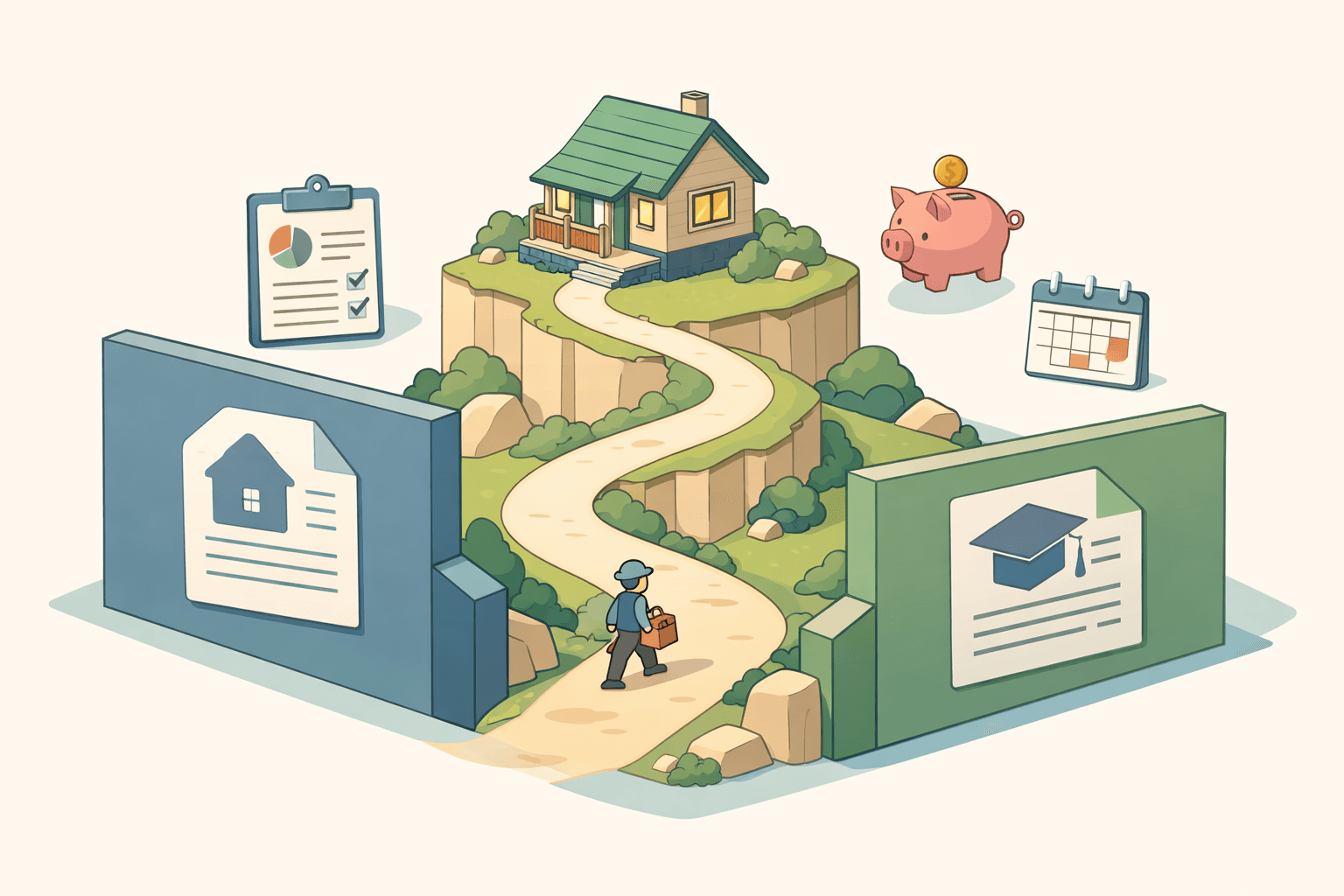
Facing a foreclosure on your record while carrying significant student loan debt can feel like a double barrier standing between you and homeownership. It's a situation more borrowers encounter than you might expect, and the good news is that it doesn't have to be permanent. Understanding how to get a conventional loan with a recent foreclosure and large student debt requires patience, preparation, and a clear view of what lenders are actually evaluating. This guide walks you through the key hurdles, realistic timelines, and practical strategies that could put a conventional mortgage within reach — even with these challenges on your financial profile.
What a Conventional Loan Actually Requires
Conventional loans are mortgage products that aren't backed by a government agency like the FHA or VA. Instead, they conform to guidelines set by Fannie Mae and Freddie Mac, the two government-sponsored enterprises that purchase most conventional mortgages on the secondary market. Because these loans carry no federal insurance, lenders typically apply stricter qualification standards.
To qualify for a conventional loan, borrowers generally need to meet minimum thresholds across several categories:
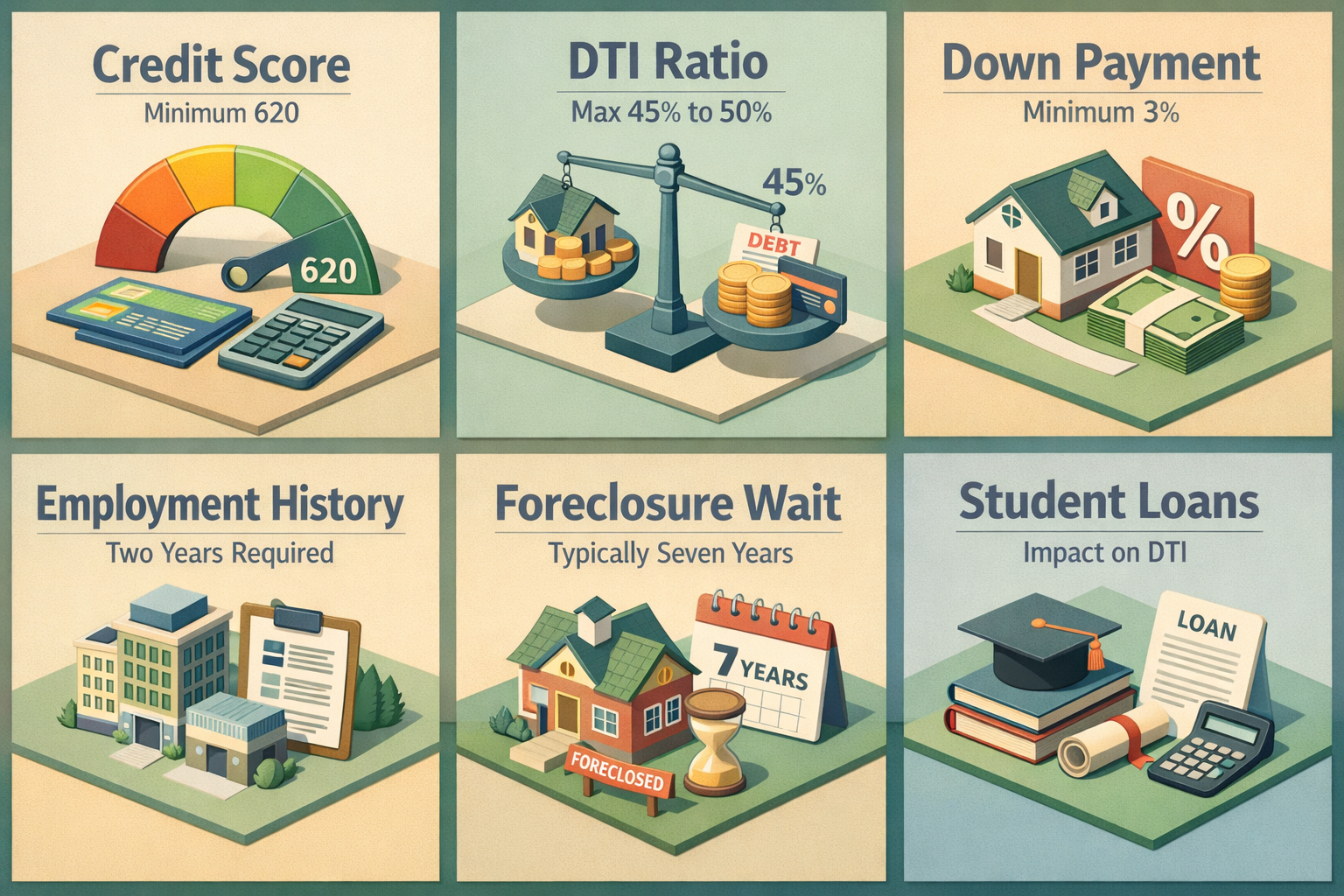
- Credit score: Most conventional lenders look for a score of at least 620, though higher scores typically unlock better interest rates.
- Debt-to-income ratio (DTI): Fannie Mae and Freddie Mac generally allow a maximum DTI of 45% to 50%, depending on other compensating factors.
- Down payment: A minimum of 3% is possible for some borrowers, though putting down 20% eliminates private mortgage insurance (PMI).
- Stable employment and income history: Lenders typically want to see at least two years of consistent income documentation.
When you add a foreclosure history and large student loan balances to this picture, the path becomes more complex — but not impossible. Each of these factors is weighed individually and in combination, so understanding how they interact is the first step toward building a strong application.
The Mandatory Waiting Period After Foreclosure
One of the most important things to know about how to get a conventional loan with a recent foreclosure and large student debt is that conventional guidelines enforce a mandatory waiting period before you can qualify again. This waiting period exists because lenders view a foreclosure as a significant indicator of credit risk.
Under standard Fannie Mae and Freddie Mac guidelines, the conventional loan waiting period after a foreclosure is typically seven years from the date the foreclosure was completed. This is notably longer than the waiting periods associated with government-backed loans. For example, FHA loans may allow borrowers to reapply in as little as three years, and VA loans may offer a two-year window for eligible veterans.
However, there are some circumstances where the seven-year conventional waiting period could be shortened. Fannie Mae has historically allowed a three-year exception in cases involving extenuating circumstances — meaning the foreclosure was caused by events beyond the borrower's control, such as a serious illness, death of a co-borrower, or sudden job loss. This exception typically requires strong documentation and may come with additional requirements, such as a larger down payment and a clean credit history since the event.
It's worth noting that the foreclosure completion date matters more than when the financial hardship began. If your foreclosure was finalized recently, you may still be within the mandatory waiting window regardless of how long the process took. Checking your credit report for the exact recorded date is an important early step.
How Student Loan Debt Affects Your DTI Calculation
Large student loan balances can create a significant challenge when applying for a conventional mortgage. Lenders don't just look at your total debt balance — they're focused on your monthly payment obligations and how they affect your debt-to-income ratio. The higher your required monthly payments, the harder it can be to stay within the DTI limits lenders require.
Fannie Mae and Freddie Mac have specific rules about how student loan payments are counted in the DTI calculation. If you have an income-driven repayment (IDR) plan with a low or even $0 monthly payment, lenders may not simply use that figure. Guidelines have shifted over time, and under current Fannie Mae rules, if your monthly student loan payment is $0 or unverifiable, lenders may be required to count a percentage of the outstanding loan balance — often around 1% — as a hypothetical monthly payment. This can significantly inflate your calculated DTI even if you're not currently paying that amount.
Freddie Mac has similar provisions, though specific calculations can vary by loan product and investor overlay. Some lenders may use the actual documented payment if it appears on your credit report or in a servicer statement, provided the repayment plan is fully amortizing. It's critical to ask any potential lender exactly how they'll calculate your student loan obligation before you apply.
Here are a few strategies that may help manage student loan DTI impact:
- Increase your income: A higher gross monthly income lowers your DTI percentage even without reducing debt.
- Pay down other debts: Eliminating smaller revolving debts like credit cards can free up DTI room.
- Choose a repayment plan carefully: Switching to a fully amortizing plan with a documented monthly payment may be more favorable under certain lender guidelines.
- Consider co-borrowers: Adding a co-borrower with strong income could improve your combined DTI profile.
Rebuilding Your Credit Score After a Foreclosure
A foreclosure typically causes a substantial drop in your credit score, and its negative mark can remain on your credit report for up to seven years. However, the impact of a foreclosure on your score tends to diminish over time, particularly as you build new positive credit history on top of it.
Lenders reviewing a conventional mortgage application after a foreclosure will want to see that you've demonstrated responsible credit use since the event. Here are some of the most effective ways to rebuild your credit profile during the waiting period:
- Open and maintain secured credit accounts: Secured credit cards report to the major bureaus and help establish a new track record of on-time payments.
- Keep utilization low: Try to keep your credit card balances below 30% of your available limit, as high utilization can drag down your score.
- Never miss a payment: Payment history is the single largest factor in most credit scoring models. Even one missed payment can set back your rebuilding efforts.
- Monitor your credit reports: Check all three major bureaus regularly to catch errors, dispute inaccuracies, and track your progress.
- Avoid unnecessary new credit inquiries: Applying for multiple new accounts in a short time can signal financial stress to lenders.
By the time the waiting period ends, a well-managed credit profile could help you qualify for competitive conventional mortgage rates, even with the historical foreclosure on record. Lenders are generally more interested in recent credit behavior than in events that happened years ago.
Saving for a Down Payment and Reducing Financial Risk Signals
During the waiting period, one of the most productive things you can do is build substantial savings. A larger down payment doesn't just reduce how much you need to borrow — it also communicates financial discipline to lenders and can sometimes help offset weaker areas of your application.
While conventional loans technically allow down payments as low as 3%, borrowers with a foreclosure history and significant student debt may find that putting down 10% or more strengthens their overall application. A larger down payment reduces the lender's risk, lowers your loan-to-value (LTV) ratio, and may help you qualify even if your DTI is close to the lender's limit.
Additionally, building cash reserves beyond the down payment can be a meaningful compensating factor. Lenders often look favorably on borrowers who have several months of mortgage payments saved in liquid accounts after closing. This demonstrates that you could continue making payments even if your income were temporarily disrupted — a particularly meaningful signal given your foreclosure history.
Other ways to strengthen your application during this time include:
- Maintaining steady employment with the same employer or in the same field
- Documenting any supplemental income sources reliably over at least two years
- Avoiding large financial moves like cosigning loans for others or making undocumented large deposits
Exploring Loan Options Beyond Standard Conventional Products
If the seven-year waiting period hasn't passed yet, it may be worth understanding your alternatives while you continue building toward conventional loan eligibility. Each option carries its own trade-offs, but knowing the landscape helps you make informed decisions.
FHA loans are often the most accessible path for borrowers recovering from a foreclosure. With a three-year waiting period and more flexible DTI and credit score guidelines, an FHA loan could allow you to re-enter homeownership sooner. However, FHA loans require mortgage insurance for the life of the loan in most cases, which adds to the overall cost.
Non-QM (non-qualified mortgage) loans are another avenue worth discussing with a knowledgeable lender. These are products that fall outside the standard Fannie Mae and Freddie Mac guidelines and are typically offered by portfolio lenders — institutions that keep loans on their own books rather than selling them on the secondary market. Non-QM lenders may have more flexible policies around foreclosure waiting periods and student debt calculations, though they typically come with higher interest rates to compensate for the added risk.
It's also worth speaking with a HUD-approved housing counselor. These nonprofit professionals can help you review your specific financial situation, understand your options across loan types, and build a realistic timeline for homeownership. Their guidance is often free or low-cost and can be especially valuable for borrowers navigating complex credit histories.
Working With the Right Lender for Your Situation
Not all lenders handle complex borrower profiles the same way. Some institutions have strict overlays — meaning they apply standards even more conservative than Fannie Mae or Freddie Mac guidelines — while others are experienced in working with borrowers who have non-traditional credit histories. Finding the right lender is often as important as meeting the minimum guidelines.
When evaluating potential lenders for a conventional mortgage after foreclosure student loans situation, consider asking the following questions:
- How do you calculate student loan payments for DTI purposes?
- Do you accept extenuating circumstance exceptions for the foreclosure waiting period?
- What compensating factors do you consider for borrowers with complex histories?
- Do you offer any in-house portfolio products for borrowers who don't fully meet conventional guidelines?
Working with a mortgage broker can also be helpful in this situation. Brokers have access to multiple lenders and can shop your profile across several institutions at once, identifying which ones are most likely to approve your conventional mortgage after foreclosure application under favorable terms.
Transparency is essential throughout this process. Being upfront with your loan officer about your foreclosure history and student loan situation from the start allows them to guide you toward the right product — and avoids surprises during underwriting that could delay or derail your application.
●Conclusion
Understanding how to get a conventional loan with a recent foreclosure and large student debt starts with accepting that this is a process that rewards preparation and patience. The waiting periods are real, the DTI math can be challenging, and rebuilding credit takes consistent effort over time. But none of these obstacles are permanent. By using the waiting period productively — saving aggressively, managing student loan repayment strategically, rebuilding your credit profile, and working with lenders who understand complex borrower situations — you can realistically position yourself for conventional mortgage approval. At LoanWise, we believe every borrower deserves a clear path forward. If you're ready to explore your options, connect with one of our lending specialists today for a personalized consultation.