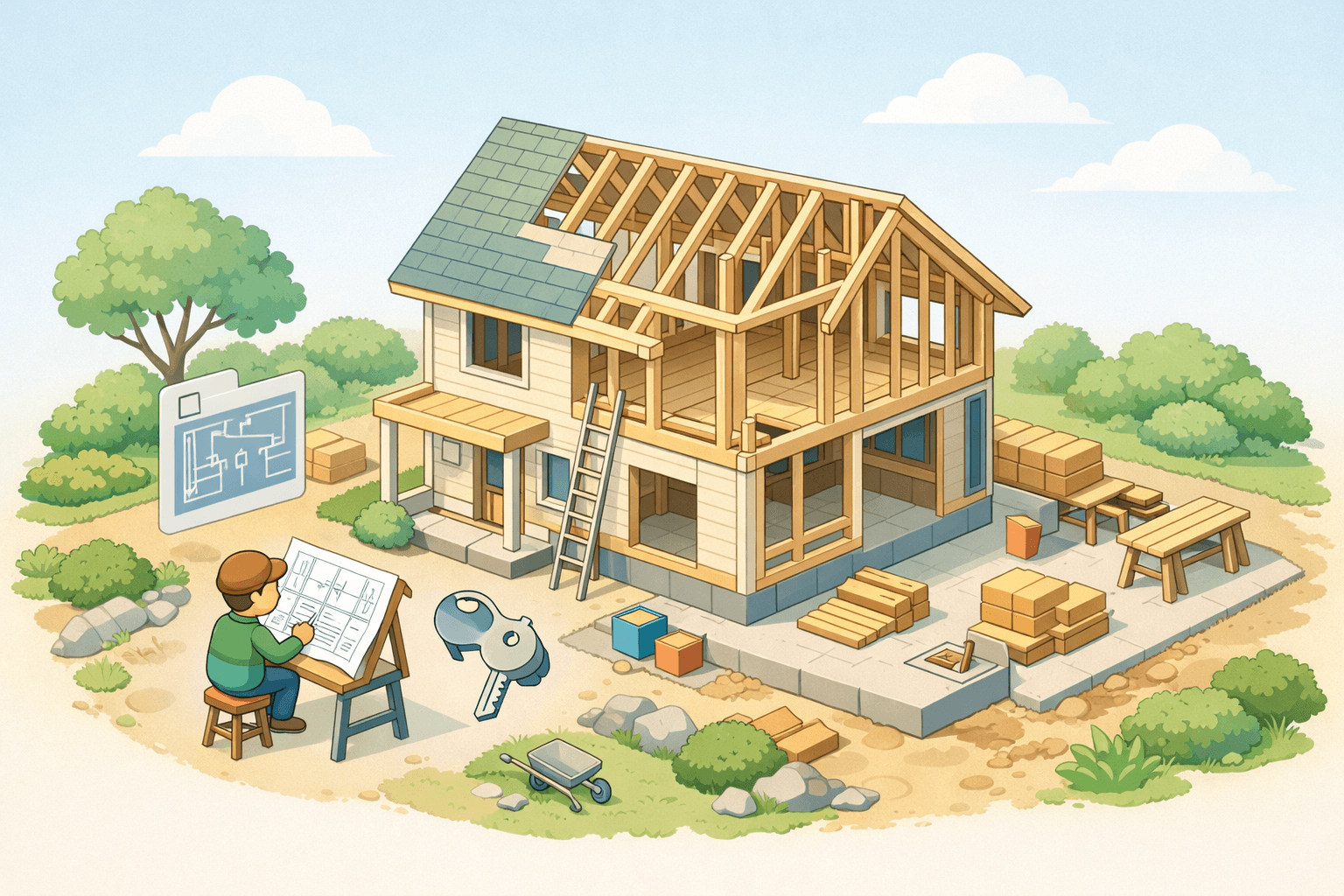
Building a custom home is one of the most rewarding decisions a homebuyer can make. You get to design every detail, from the floor plan to the finishes, exactly the way you want. But before the first nail goes in, you'll need to secure the right financing. Understanding how to get a construction loan for a custom build is the critical first step that separates a successful project from a costly headache. Unlike a traditional mortgage, a construction loan works in stages, carries different requirements, and comes with its own set of rules. If you're ready to break ground on your dream home, this guide will walk you through everything you need to know.
What Is a Construction Loan and How Does It Differ from a Traditional Mortgage
A construction loan is a short-term financing product specifically designed to fund the building of a new home. Unlike a conventional mortgage, which pays out a lump sum upfront to purchase an existing property, a construction loan releases funds in incremental payments called draws. Each draw corresponds to a completed phase of the build, such as foundation work, framing, roofing, or interior finishing.
Because the home doesn't yet exist as collateral, lenders typically view construction loans as higher-risk products. This generally means stricter qualification standards, higher down payment requirements, and closer lender oversight throughout the project. Most construction loans are structured as short-term instruments, often with terms of 12 to 18 months, giving the builder enough time to complete the project.
There are two common structures borrowers should understand:
- Construction-to-permanent loans: These combine the construction phase and the permanent mortgage into a single loan. Once building is complete, the loan automatically converts to a long-term mortgage. This option typically involves only one closing, which can save on costs and simplify the process.
- Stand-alone construction loans: These cover only the building phase. Once the home is finished, you'll need to apply for a separate mortgage to pay off the construction loan. This means two closings and potentially two sets of closing costs.
Choosing between these two structures depends on your financial situation, your timeline, and the lender options available in your market. Many homebuyers prefer the construction-to-permanent route for its convenience, though stand-alone loans may offer more flexibility in some scenarios.
Lot Purchase and Construction Loan: Financing the Land First
One question that often comes up when planning a custom build is whether you need to own the land before applying for a construction loan. The short answer is: it depends on your lender and loan structure. In many cases, a lot purchase and construction loan can be combined, allowing you to finance both the land acquisition and the build under one product.
Some lenders offer what's known as a lot loan or land loan, which is a separate product used to purchase raw land before construction begins. Once you're ready to build, you'd then apply for a construction loan and use your land equity as part of your down payment. This two-step approach could work well if you find a great piece of land before your building plans are finalized.
Alternatively, if you already own the lot outright, its appraised value may count toward your equity in the project. This can reduce the cash down payment you need to bring to closing. Lenders will typically order an appraisal of the land and review your building plans to determine the projected after-construction value, also known as the as-completed appraised value.
Whether you're buying land and building at the same time or financing a build on land you already own, it's important to work with a lender who specializes in construction financing. Not every mortgage lender offers these products, so shopping around early in the process is a smart move.
General Contractor Requirements for Construction Loan Approval
One of the most overlooked parts of the construction loan process involves the builder or contractor you choose. Lenders don't just evaluate you — they also scrutinize the professional responsible for completing the project. Meeting the general contractor requirements for construction loan approval is essential for keeping your application on track.
Most lenders require that the general contractor be licensed and insured in the state where the project is located. They may also want to review the contractor's track record, including previous projects, references, and financial stability. Some lenders maintain an approved builder list, meaning your contractor may need to apply for lender approval before your loan can proceed.
Here's what lenders typically look for in a general contractor:
- Valid state licensing: The contractor must hold the appropriate licenses for the type of construction being performed.
- General liability and workers' compensation insurance: This protects both you and the lender from financial exposure if an accident occurs on-site.
- Completed projects and references: Lenders may request proof that the contractor has successfully completed similar builds, particularly custom homes.
- Signed construction contract: A detailed, fixed-price or cost-plus contract outlining the full scope of work is typically required at closing.
- Draw schedule agreement: The contractor and lender must agree on a draw schedule that ties fund releases to verified construction milestones.
If you're considering acting as your own general contractor — known as an owner-builder arrangement — be aware that most lenders are very cautious about this option. Owner-builder loans do exist but are far less common and may require you to demonstrate significant construction experience and financial reserves.
The Construction Loan Process for a Self-Build: Step by Step
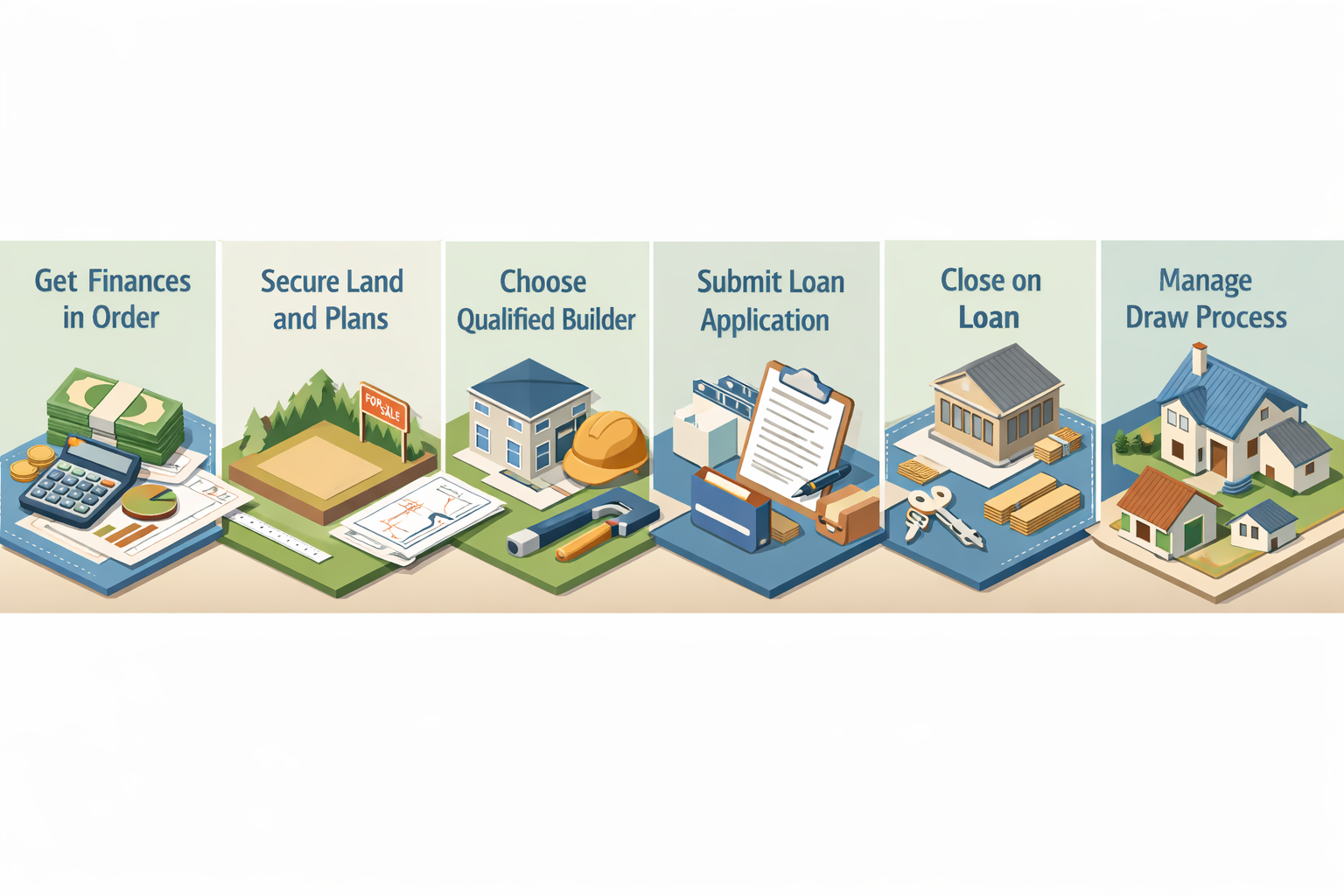
Understanding the construction loan process for a self-build helps you prepare well in advance and avoid costly delays. Unlike a standard mortgage application, the construction loan process involves additional documentation and ongoing lender involvement throughout the project. Here's a general overview of what to expect:
- Step 1 — Get your finances in order: Lenders typically look for a solid credit score, a low debt-to-income ratio, and sufficient cash reserves. Down payment requirements often range from 20% to 25% of the total project cost, though this can vary by lender and loan type.
- Step 2 — Secure your land and finalize your plans: Before you can apply, you'll generally need a signed purchase contract for the land (or proof of ownership), along with detailed architectural plans, engineering drawings, and a full project budget.
- Step 3 — Choose a qualified builder: As discussed, your contractor must meet lender standards. Have your builder's credentials and contract ready for submission.
- Step 4 — Submit your loan application: Your lender will review your financial profile, the project plans, and the contractor's qualifications. An appraiser will evaluate the plans and comparable sales to estimate the after-completion value of the home.
- Step 5 — Close on the loan: At closing, you'll finalize terms and the lender will establish the draw schedule. You'll typically begin making interest-only payments on funds as they're drawn.
- Step 6 — Manage the draw process: As each construction phase is completed, you or your contractor will request a draw. The lender may send an inspector to verify work before releasing funds.
- Step 7 — Convert or refinance: Once construction is complete and a certificate of occupancy is issued, your loan either converts to a permanent mortgage or you refinance into one.
Staying organized, communicating regularly with your lender, and keeping detailed records throughout the build can make the process significantly smoother.
Financing a Custom-Built Home: Key Qualification Criteria
When it comes to financing a custom-built home, lenders apply a more rigorous review process than they would for a standard home purchase. Because the home doesn't yet exist, there's inherently more risk involved. Meeting the following criteria can strengthen your application considerably.
Credit Score and Financial History
Most construction lenders look for a minimum credit score in the mid-to-upper 600s, though some may require 700 or higher depending on the loan program and the size of the project. A strong payment history, limited recent credit inquiries, and a manageable level of existing debt all contribute to a favorable review.
Down Payment and Equity
As mentioned, down payments for construction loans are typically higher than for conventional mortgages. Expect to contribute at least 20% of the total project cost, which includes both land and construction expenses. If you already own the land, its equity may partially satisfy this requirement.
Debt-to-Income Ratio
Lenders will calculate your debt-to-income (DTI) ratio based on your current obligations plus the projected mortgage payment after construction. Keeping your DTI within acceptable limits — often below 45%, though this varies — is important for approval.
Cash Reserves
Beyond the down payment, lenders may want to see that you have additional cash reserves available. Construction projects can encounter unexpected costs, and demonstrating financial cushion reassures the lender that you can handle overruns without defaulting.
Detailed Project Documentation
Your loan package will need to include a comprehensive set of building plans, a detailed line-item budget, the signed contractor agreement, and the projected draw schedule. The more complete and organized your documentation, the smoother the underwriting process tends to be.
Common Pitfalls to Avoid When Applying for a Construction Loan
Even well-prepared borrowers can run into trouble during the construction loan process. Being aware of common mistakes can save you significant time, money, and stress.
- Underestimating the total project cost: One of the most frequent issues is submitting a budget that doesn't account for all costs. Material price increases, permit fees, landscaping, and site preparation costs can add up quickly. Build in a contingency buffer — often 10% to 15% of the total budget — to account for the unexpected.
- Choosing an unqualified contractor: Working with a builder who doesn't meet lender requirements can stall or derail your application. Vet your contractor thoroughly before submitting your loan package.
- Making major financial changes during the process: Taking on new debt, changing jobs, or making large purchases between application and closing can negatively affect your approval. Maintain financial stability throughout the process.
- Neglecting to understand the draw process: Failing to track draws carefully or submit draw requests promptly can slow construction and create cash flow problems for your contractor.
- Not locking in your rate early enough: If you're using a construction-to-permanent loan, understanding your rate lock options and timing is important. Speak with your lender about when and how your permanent rate will be determined.
Taking the time to avoid these pitfalls upfront can make the difference between a smooth project and a stressful one.
●Conclusion
Learning how to get a construction loan for a custom build takes time, preparation, and the right lending partner. From securing your lot to finalizing your contractor and submitting a complete loan package, every step in the process requires careful planning. The good news is that with the right guidance, building a custom home is very much within reach for qualified borrowers. At LoanWise, we're here to help you navigate the construction financing process with confidence. Whether you're just starting to explore your options or you're ready to apply, our lending experts can walk you through the details and help you find the right product for your project. Reach out to a LoanWise specialist today and take the first step toward building the home you've always envisioned.