Receiving an inheritance can be a life-changing financial event — and for many people, it opens the door to homeownership that might have otherwise felt out of reach. But turning that windfall into a mortgage approval isn't always straightforward. Lenders have specific rules about gift funds, sourced assets, and how a larger down payment affects what you can borrow. Understanding how to calculate mortgage affordability with inheritance as down payment funds is an important first step before you start shopping for homes. In this guide, we'll walk you through the key formulas, lender expectations, and practical strategies to help you make the most of your inherited funds.
What Mortgage Affordability Really Means for Homebuyers
Mortgage affordability isn't just about how much money you have saved. It's a broader picture that lenders use to determine how large a loan you can responsibly carry. When you sit down to calculate mortgage affordability with inheritance as down payment funds, you need to look at several interconnected factors.
The two most important ratios lenders use are your debt-to-income ratio (DTI) and your loan-to-value ratio (LTV). Your DTI compares your monthly debt obligations — including the proposed mortgage payment — to your gross monthly income. Most conventional lenders prefer a DTI at or below 43%, though some programs may allow higher ratios depending on compensating factors.
Your LTV, on the other hand, measures how much you're borrowing relative to the home's appraised value. A larger down payment lowers your LTV, which often results in better interest rates, lower monthly payments, and may even eliminate the need for private mortgage insurance (PMI). This is one of the clearest benefits of using inherited funds as a down payment.
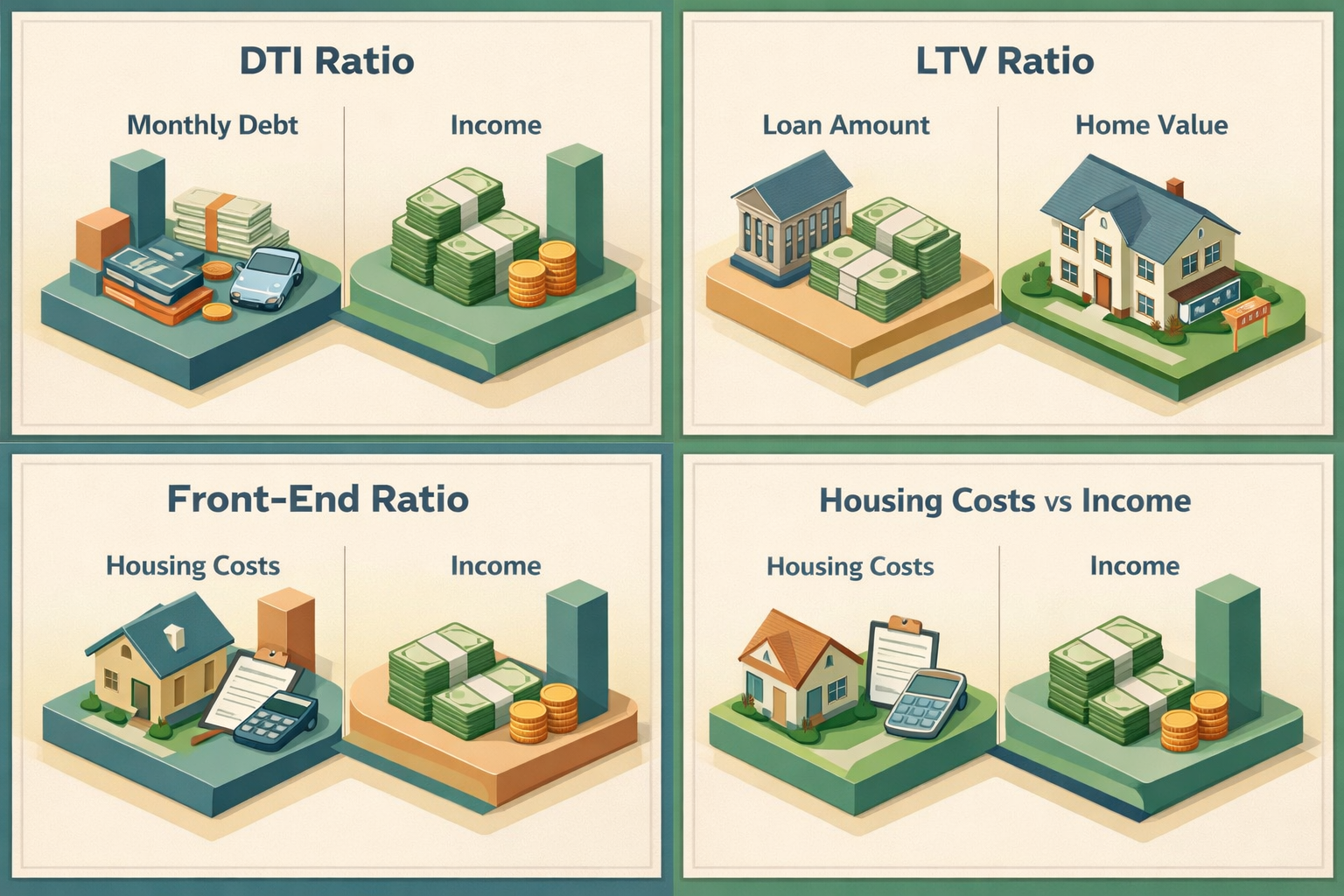
- DTI Ratio: Total monthly debts ÷ Gross monthly income
- LTV Ratio: Loan amount ÷ Appraised home value
- Front-end ratio: Housing costs only ÷ Gross monthly income (lenders often prefer this below 28%)
Together, these ratios paint a picture of risk for the lender. The good news is that a meaningful inheritance can significantly strengthen your position by reducing the loan amount you need and lowering your LTV.
How Lenders View Inherited Funds as a Down Payment Source
One of the most common questions homebuyers ask is whether inherited money counts the same as personal savings when it comes to a mortgage application. The short answer is: it can — but lenders will want to verify where the money came from and confirm it's fully available to you.
Most lenders categorize inherited funds differently depending on how the money was received. If you've already received the funds and they've been sitting in your bank account for 60 to 90 days or more, many lenders will treat them as seasoned assets — essentially no different from your regular savings. This is often the simplest path because it minimizes the documentation burden.
However, if the funds were received recently, lenders will typically require what's called a paper trail. This may include:
- A copy of the estate settlement or probate documents
- Bank statements showing the deposit and its origin
- A letter from the estate attorney or executor confirming the disbursement
- Documentation showing there are no repayment obligations attached to the funds
That last point is critical. Lenders need to confirm that the inherited money is a true asset — not a loan disguised as a gift. If there's any expectation of repayment, the funds could be counted as a liability rather than an asset, which would negatively affect your DTI and overall affordability calculation.
It's worth checking with your specific lender or loan officer early in the process, since documentation requirements can vary between conventional loans, FHA loans, and other mortgage programs.
Step-by-Step: Using a Mortgage Affordability Calculator With Inheritance Funds
Using a mortgage affordability calculator with inheritance down payment inputs is one of the most practical ways to get a preliminary sense of your buying power. Here's how to approach it in a methodical way.
Step 1 — Determine Your Available Inheritance Amount
Start by identifying exactly how much of the inheritance you plan to use toward the home purchase. Keep in mind that you may not want to use all of it — setting aside funds for closing costs, an emergency reserve, or future home maintenance is generally considered smart financial planning. Many financial advisors suggest keeping at least two to three months of housing expenses in reserve after closing.
Step 2 — Choose a Target Down Payment Percentage
Decide what percentage of the home's purchase price you'd like to put down. Common thresholds include:
- 3% to 5%: Minimum for many conventional and FHA loans
- 10%: Reduces LTV meaningfully and may improve rate pricing
- 20%: Typically eliminates PMI on conventional loans
- 25% or more: May unlock better pricing tiers on some loan programs
Step 3 — Calculate the Maximum Home Price You Can Afford
Divide your planned down payment by your target down payment percentage. For example, if you have $60,000 available and want to put 20% down, your maximum target home price would be $300,000. From there, your loan amount would be $240,000.
Step 4 — Estimate Your Monthly Payment
Use an online mortgage calculator to estimate your principal and interest payment based on the loan amount, current interest rate estimates, and loan term (typically 30 years). Add in estimated property taxes, homeowners insurance, and HOA fees if applicable. This gives you your total estimated housing payment.
Step 5 — Check Against Your Income
Divide your estimated total monthly housing payment by your gross monthly income. If the result is below 28%, most lenders would consider your front-end ratio healthy. Then calculate your full DTI by adding all other monthly debt payments to your housing cost and dividing by gross income. Keeping this below 43% is a common benchmark, though some programs may allow flexibility.
How a Larger Down Payment Can Shift Your Affordability Range
One of the most powerful effects of using an inheritance as a down payment is how it can meaningfully expand your home-buying options — without necessarily requiring a higher income. Let's explore how this works in practice.
When you put more money down, you reduce the loan amount you need. A smaller loan means a lower monthly payment, which in turn lowers your DTI ratio. This can allow you to qualify for a home at a higher purchase price while still keeping your ratios within lender guidelines. It's a ripple effect that works in your favor.
Additionally, a lower LTV ratio may qualify you for a better interest rate. Mortgage rates are often tiered based on LTV — borrowers who put down more may receive more favorable pricing. Even a small reduction in your interest rate can translate to thousands of dollars saved over the life of a 30-year loan.
There's also the matter of PMI. For conventional loans, PMI is typically required when your down payment is less than 20% of the purchase price. PMI can add anywhere from a modest to a significant amount to your monthly payment, depending on the loan size and your credit profile. Using an inheritance to reach that 20% threshold could eliminate this added cost entirely.
Keep in mind that these benefits compound. A lower rate, no PMI, and a smaller loan balance all work together to make homeownership more affordable on a month-to-month basis — which is exactly what lenders and financial planners mean when they talk about sustainable homeownership.
Documentation and Underwriting: What to Expect During the Process
Even with a strong down payment from an inheritance, the mortgage underwriting process will still require careful documentation. Underwriters are trained to verify every source of funds used in a transaction, and inherited money is no exception.
Here's what you might be asked to provide:
- Bank statements: Typically the most recent two to three months, showing the deposit and its timing
- Estate or probate documentation: Court-issued letters of administration or executor letters confirming your entitlement to the funds
- Wire transfer records or cashier's check copies: Showing the movement of funds from the estate to your personal account
- A signed letter confirming no repayment is required: Similar to a gift letter used in other scenarios
If the inheritance came in the form of non-cash assets — such as stocks, bonds, real estate, or valuable personal property — additional steps may be required. You'd typically need to liquidate those assets, document the sale, and show the proceeds deposited into your bank account before they can be counted toward your down payment.
Working with an experienced loan officer who understands asset documentation can make this process significantly smoother. They can flag potential issues early and help you gather the right paperwork before you formally apply, reducing the chance of delays during underwriting.
Tax Considerations and Financial Planning Before You Buy
Before you commit your inheritance entirely to a home purchase, it's worth taking a step back to consider the broader financial picture. While we're not tax advisors and individual situations vary, there are a few general concepts that may be relevant for homebuyers using inherited funds.
In many cases, inherited assets receive what's known as a stepped-up cost basis for tax purposes. This means that if you inherited investments or other appreciated assets, the taxable gain may be calculated from the date of the original owner's death rather than when they first purchased the asset. When you sell those assets to fund your down payment, this could potentially reduce your capital gains tax exposure — though you should always consult a qualified tax professional for guidance specific to your situation.
From a financial planning perspective, consider the following before making your move:
- How much of the inheritance will remain after the down payment and closing costs?
- Do you have adequate emergency savings separate from the home purchase?
- Are there outstanding estate debts or obligations that could reduce the net amount available?
- Would it make sense to use only a portion of the inheritance now and keep the rest as a financial cushion?
Homeownership comes with ongoing costs — maintenance, repairs, property taxes, and insurance — that can add up quickly. Entering homeownership with a healthy financial buffer often leads to a more stable and less stressful experience over the long term.
Practical Tips for Maximizing Your Home Buying Power With Inherited Funds
Knowing how to calculate mortgage affordability with inheritance as down payment funds is just the beginning. Here are some actionable strategies to help you put that knowledge to work effectively.
Get Pre-Approved Early
Before you start touring homes, seek mortgage pre-approval. This gives you a realistic picture of your buying power and signals to sellers that you're a serious buyer. During pre-approval, your lender will review your income, credit, and assets — including the inherited funds — so having your documentation ready in advance can speed things up considerably.
Strengthen Your Credit Profile
A higher credit score can help you qualify for better interest rates, which directly improves your mortgage affordability. If your score has room to grow, consider paying down existing revolving balances and avoiding new credit inquiries in the months leading up to your application.
Compare Multiple Loan Programs
Different loan programs handle down payment requirements differently. Conventional, FHA, VA, and USDA loans each have their own rules around minimum down payments, PMI, and asset sourcing. A larger inherited down payment might make a conventional loan more attractive, but it's worth exploring your options with a knowledgeable lender.
Don't Overextend Your Budget
Just because an inheritance increases what you could spend doesn't mean you should spend the maximum amount a lender approves. Build a budget based on what feels comfortable for your lifestyle, factoring in all the true costs of homeownership beyond just the mortgage payment.
Work With Professionals You Trust
A skilled real estate agent, an experienced loan officer, and a financial advisor can each add real value when you're navigating a home purchase funded in part by an inheritance. Their combined expertise can help you avoid common pitfalls and make confident, informed decisions.
●Conclusion
Using an inheritance to fund a down payment is a meaningful opportunity — and with the right approach, it can put homeownership well within reach. From understanding how lenders verify inherited assets to running the numbers on your DTI and LTV ratios, knowing how to calculate mortgage affordability with inheritance as down payment funds gives you a clear advantage in the home-buying process. Take your time, gather your documentation, explore your loan options, and don't hesitate to lean on experienced professionals along the way. Your inherited funds could be the foundation for a home — and a financial future — that honors the legacy behind them. Ready to explore your mortgage options? Connect with a LoanWise lending specialist today and take the first step toward your new home.