Buying a home for the first time is one of the most exciting financial decisions you'll ever make. But before you start browsing listings or falling in love with a property, it's important to understand what you can realistically afford. Learning how to calculate mortgage affordability for first time buyer situations isn't just about crunching numbers — it's about setting yourself up for long-term financial confidence. From understanding your debt-to-income ratio to knowing how much you'll need for a down payment, this guide walks you through every key step so you can move forward with clarity and purpose.
Why Mortgage Affordability Matters Before You Start House Hunting
Many first-time homebuyers make the mistake of searching for homes before understanding their financial boundaries. This can lead to frustration, wasted time, and even heartbreak when a dream home turns out to be out of reach. Affordability isn't just about qualifying for a loan — it's about finding a mortgage payment that fits comfortably within your monthly budget without stretching your finances too thin.
Lenders evaluate a range of financial factors when deciding how much they're willing to lend you. But just because a lender approves you for a certain amount doesn't necessarily mean that amount is comfortable for your lifestyle. True affordability takes into account your income, your existing debts, your savings, your everyday living expenses, and your future financial goals.
Starting with a clear picture of affordability helps you shop smarter, negotiate with confidence, and avoid being "house poor" — a situation where your mortgage consumes so much of your income that little is left for anything else. The good news is that there are practical, straightforward ways to assess where you stand before you even speak with a lender.
Key Income and Expense Factors That Shape Your Buying Power
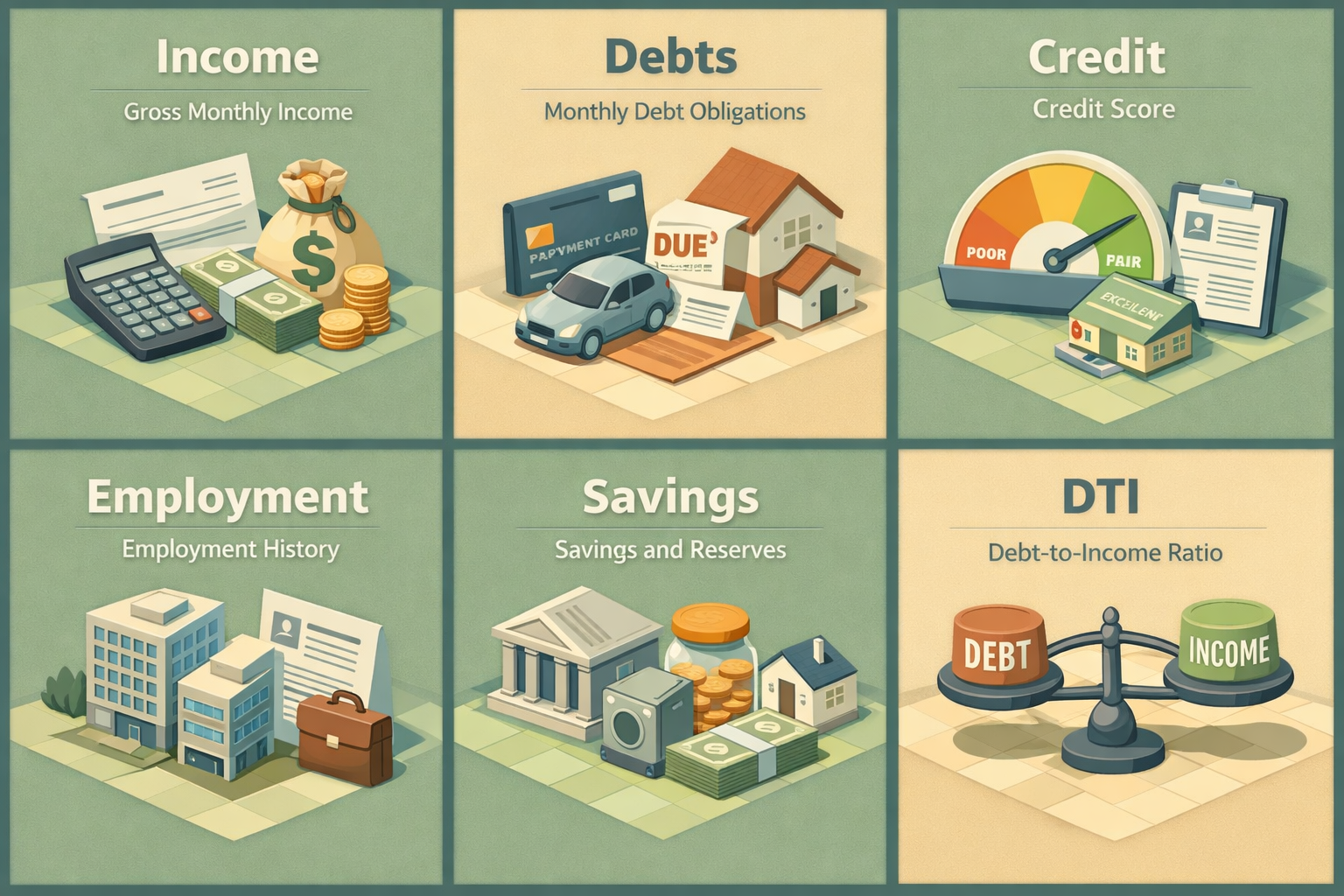
Your mortgage amount you can afford is largely determined by your gross monthly income and your recurring monthly debts. Lenders typically look at both figures together to assess how much of your income is already committed to existing obligations. Here are the core variables that influence how much home you may be able to buy:
- Gross Monthly Income: This is your income before taxes and deductions. Lenders use this figure — not your take-home pay — to calculate affordability ratios.
- Monthly Debt Obligations: These include car payments, student loans, credit card minimum payments, personal loans, and any other recurring debts that appear on your credit report.
- Credit Score: A higher credit score typically unlocks better interest rates, which directly affects how much home you can afford at a given monthly payment level.
- Employment History: Lenders generally prefer at least two years of consistent employment or self-employment history, as it signals income stability.
- Savings and Reserves: Beyond the down payment, lenders may want to see that you have additional reserves — typically a few months of mortgage payments — sitting in your accounts after closing.
Understanding how each of these factors interacts gives you a more complete view of your buying power. It also helps you identify areas where you might be able to improve your position before applying for a mortgage.
What Is a Good DTI Ratio for First Time Buyer Applicants
One of the most important metrics in the mortgage qualification process is the debt-to-income ratio, commonly referred to as DTI. Your DTI is calculated by dividing your total monthly debt payments by your gross monthly income and expressing the result as a percentage. Lenders use this number to gauge how much of your income is already committed to debt before adding a mortgage payment.
There are actually two types of DTI ratios that lenders evaluate:
- Front-End DTI (Housing Ratio): This measures only your proposed monthly housing costs — including principal, interest, property taxes, homeowner's insurance, and any HOA fees — divided by your gross monthly income. Many lenders prefer this figure to be no higher than roughly 28% to 31%.
- Back-End DTI (Total Debt Ratio): This includes all your monthly debt obligations plus the proposed housing payment, divided by gross monthly income. Lenders commonly prefer this to stay at or below 43%, though some loan programs may allow slightly higher ratios under specific conditions.
So, what is a good DTI ratio for first time buyer applicants? Generally speaking, a back-end DTI below 36% is considered strong, while ratios between 36% and 43% may still qualify depending on the loan type and lender. Government-backed programs such as FHA loans may allow higher DTI ratios compared to conventional loans, which could be helpful if you're carrying student debt or other obligations.
Improving your DTI before applying — by paying down existing debts or increasing your income — can meaningfully expand your purchasing power and open access to more competitive mortgage products.
Using a First Time Home Buyer Affordability Calculator Effectively
A first time home buyer affordability calculator is one of the most practical tools available to prospective homeowners. These online tools allow you to input key financial details and receive an instant estimate of how much home you might be able to afford. While they don't replace the advice of a mortgage professional, they provide a valuable starting point for your research.
When using an affordability calculator, you'll typically be asked to enter the following information:
- Your annual gross income (or combined income if applying with a co-borrower)
- Your total monthly debt payments
- Your estimated down payment amount
- The loan term you're considering (commonly 15 or 30 years)
- An estimated interest rate based on current market conditions
- Your location, to account for estimated property taxes and insurance
The calculator then produces an estimate of the maximum home price and monthly payment you may be able to manage based on standard affordability ratios. It's a great way to quickly test different scenarios — for example, seeing how increasing your down payment or paying off a car loan might change your buying power.
Keep in mind that calculator results are estimates. Your actual loan eligibility will depend on a full review of your credit history, employment documentation, and assets. That said, spending a few minutes with an affordability calculator before meeting with a lender can make that first conversation much more productive.
Down Payment Requirements for New Homeowners Explained
The down payment is one of the biggest upfront costs in buying a home, and understanding your options can make a significant difference in your planning. Down payment requirements for new homeowners vary depending on the loan program you choose, your credit profile, and the property type.
Here's a general overview of common down payment thresholds by loan type:
- Conventional Loans: Typically require a minimum of 3% to 5% down for first-time buyers who meet specific guidelines. However, putting down less than 20% generally requires private mortgage insurance (PMI), which adds to your monthly cost.
- FHA Loans: Backed by the Federal Housing Administration, these loans may allow down payments as low as 3.5% for borrowers with qualifying credit scores. They're often a popular choice for first-time buyers with limited savings.
- VA Loans: Available to eligible veterans, active-duty service members, and surviving spouses, VA loans may offer zero down payment options in many cases — a significant benefit for those who qualify.
- USDA Loans: Designed for buyers in eligible rural and suburban areas, USDA loans may also offer no-down-payment options for qualifying applicants.
It's also worth exploring down payment assistance programs offered through state and local housing agencies. Many of these programs provide grants or low-interest second loans to help first-time buyers cover upfront costs. Eligibility requirements vary by location and program, so checking with your state's housing finance agency is a helpful starting point.
Remember, a larger down payment typically results in a lower loan amount, reduced monthly payments, and potentially better interest rate terms — so saving more upfront, when possible, can pay off significantly over the life of the loan.
Practical Steps to Strengthen Your Mortgage Application Before Applying
Understanding how to calculate mortgage affordability for first time buyer scenarios is only part of the journey. Once you know where you stand, there are concrete steps you can take to improve your financial profile and potentially qualify for better loan terms.
Review and Improve Your Credit Score
Your credit score plays a major role in determining the interest rate you'll be offered. Even a modest improvement in your score — say, moving from the low 600s to the mid-700s — could result in a meaningfully lower rate over the life of your loan. Check your credit reports for errors, pay down revolving balances where possible, and avoid opening new credit accounts in the months leading up to your application.
Build Up Your Savings
Beyond the down payment, lenders may look for cash reserves to ensure you can handle unexpected expenses after closing. Aim to have at least two to three months of projected mortgage payments available in liquid savings, in addition to your down payment and closing cost funds.
Avoid Major Financial Changes Before Closing
Once you've started the mortgage process, try to keep your financial profile stable. Changing jobs, taking on new debt, or making large unexplained deposits can raise red flags for underwriters and potentially delay or jeopardize your approval. Consistency and transparency are key throughout the process.
Get Pre-Approved Before You Shop
A mortgage pre-approval gives you a lender-reviewed estimate of how much you may borrow based on your actual financial documentation. It strengthens your position as a buyer and signals to sellers that you're a serious, qualified candidate. Pre-approval is different from pre-qualification, which is typically based on self-reported information without verification.
●Conclusion
Buying your first home is a meaningful milestone, and approaching it with solid financial knowledge makes the entire experience more rewarding. Knowing how to calculate mortgage affordability for first time buyer situations — from understanding your DTI ratio to choosing the right down payment strategy — puts you in control of the process rather than at the mercy of it. Take time to use available tools like affordability calculators, explore loan programs designed for first-time buyers, and work with a trusted mortgage professional who can guide you through the details. At LoanWise, we're here to help you find the right financing path forward — one that fits your goals today and supports your financial well-being for years to come. Ready to take the next step? Connect with a LoanWise mortgage expert and start your home buying journey with confidence.